Crocheting in a hammock while my youngest plays in the sunshine is a rather nice way to spend a spring afternoon. We’ve been cooped up for awhile, and the weather was great, so I grabbed a ball of yarn I spun a while ago and a crochet hook as we headed out the door. The plan is to make a small bag, because there isn’t much wool, using crochet lace stitches, so I can experiment with more lace.
I made up another batch of student spindles. These are made from dowels, wooden toy wheels, and cup hooks. The only thing I work on is the dowel; shaping the top to friction fit the wheel, drilling a pilot hole for the cup hook, and this time, shaping a head on the other end so the whole thing can be flipped and used as a bottom whorl spindle or a top whorl spindle. Oh, I did also put a notch in the wheel because I read that helps beginning spinners, but my first student using one of these didn’t need it. Maybe another will.
New student spindles (right) versus my first handmade top whorl spindle (left)
The student spindles weigh in at under an ounce, which is much nicer than the behemoth top whorl spindle I made the first go round with a post oak whorl that tips the scales over two ounces.
I keep a stash of these spindles so that if I encounter someone that shows interest in learning to spin, I have something they can practice with right away.
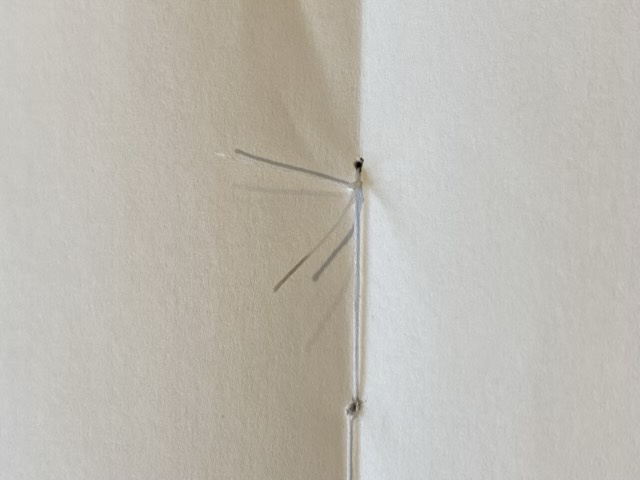
I spend a chunk of money on sketch books, both for me and my kids. I want them to practice their art skills, and they enjoy it, so it is a worthwhile sacrifice of paper. But purchased journals are usually heavy as well as expensive. To help lighten up my youngest’s backpack, I made some simple blank journals from printer paper, card stock, and upholstery thread.
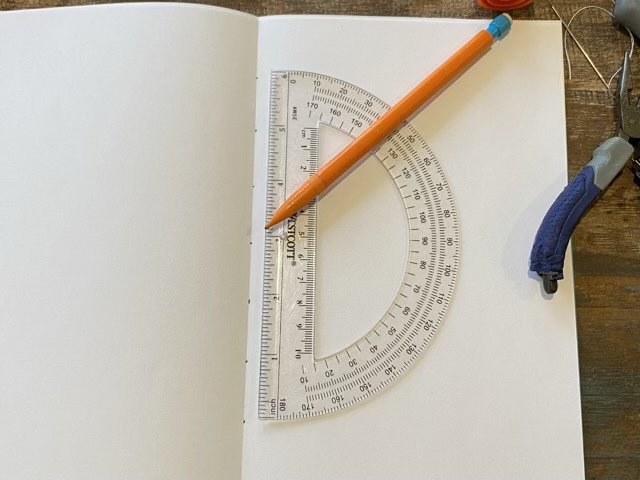
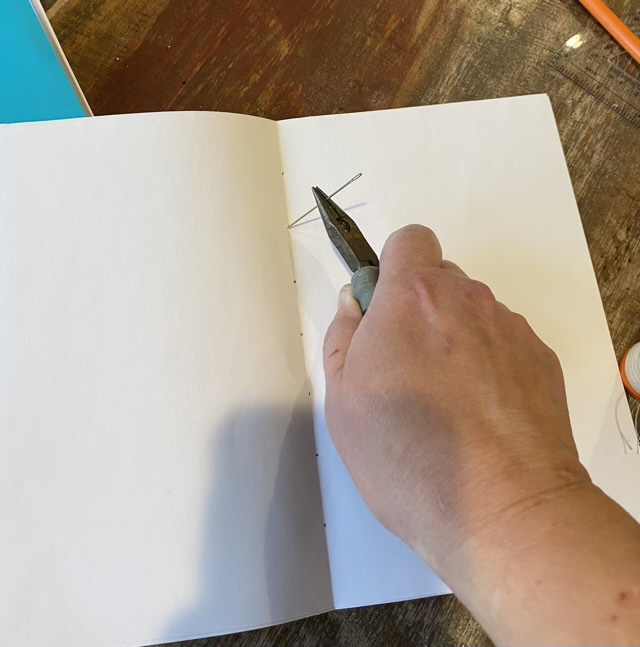
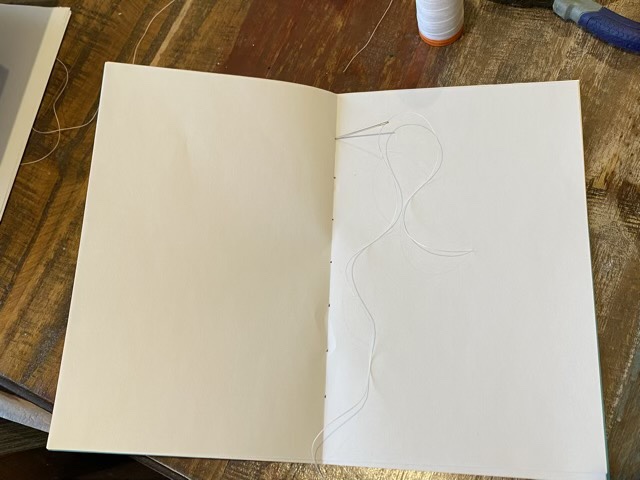
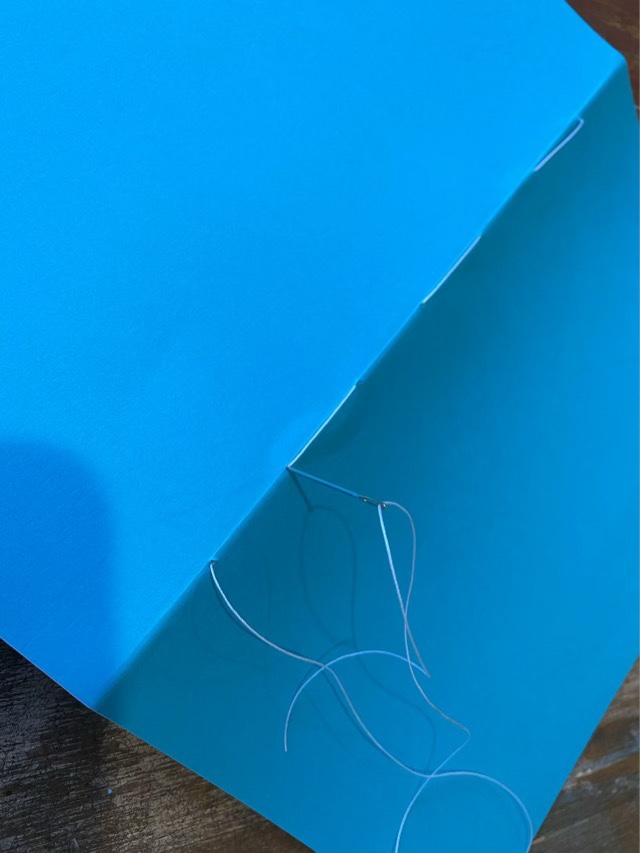
Fold 2-4 pieces of printer paper and one piece of card stock in half, open up, and mark points an inch apart along the inside foldPoke holes through all sheets of paper and cardstock using an awl or needle and pliers (if you’ve broken your awl)Cut a length of upholstery thread three times longer than the fold. Using a threaded needle, start at the top hole from the inside.When you get to the bottom hole, sew back up. This will cover the gaps with thread.On the inside, tie a square knot and trim the ends.You now have a simple, light, blank journal for a fraction of the cost of store bought.
I have been plugging away at my hand-spun Shetland wool yarn, learning how to make Shetland lace. It is full of mistakes, but I think for future projects it will just take some practice, and making sure I’m not distracted while I knit. Blocking the lace (getting it wet, and pinning it in shape to dry) made a huge difference.
Unblocked lace (left), compared to blocked lace (right)
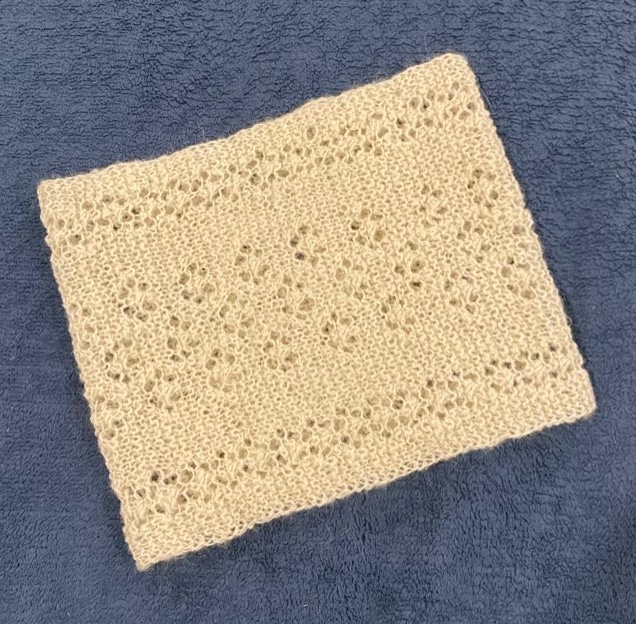
Since I didn’t have enough yarn to make a long scarf, and I would rather start over than continue on this one, I sewed the ends together to make a cowl.
Shetland lace cowl
Alas, the wool is too itchy for my neck, but it does OK as a head cover. I think I put too much twist in the singles. When I spin the next batch, I will go a little easier on the twist. I rather like spinning fine, and that goes well with lace knitting, so is worth pursuing.
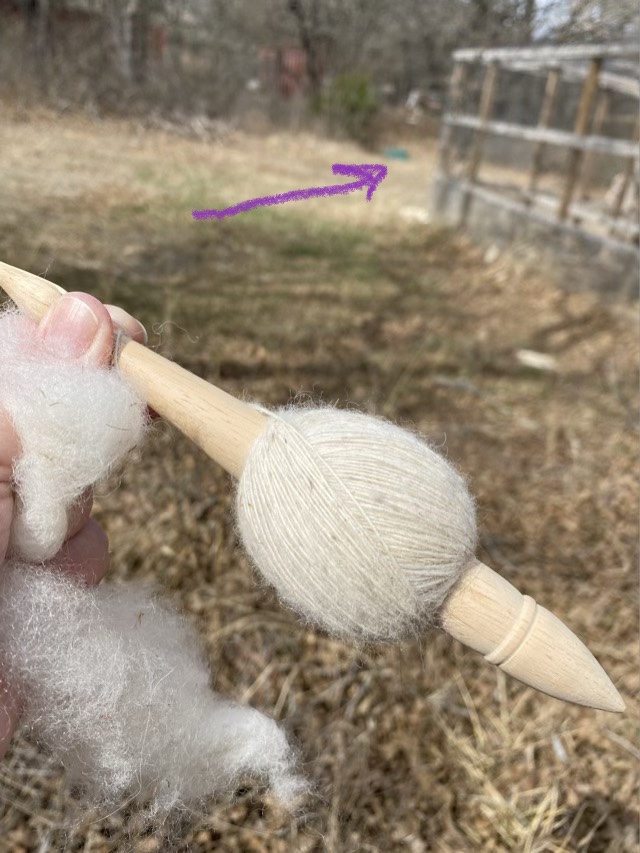
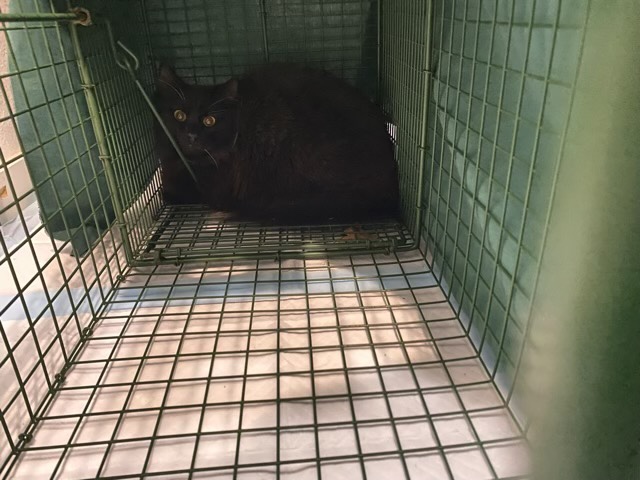
I did another stake out to trap feral cats, but during the day when my eldest was at school. I set up a bench on the opposite side of the meadow, and brought my spinning with me because stake outs are boring spiked with moments of adrenaline. I ultimately had to abandon the spinning because the cats could see me across the meadow and get spooked. If I sat still, even staring directly at them, they wouldn’t care if I was there. I did eventually trap one, and a feisty black one at that. My eldest came home and trapped a second. She actually trapped two, but the first one was a repeat offender (her ear was clipped, so we’d already taken her in for sterilization). There are at least two more black cats in the colony, and they are definitely the most feral. These poor things will probably go back to their buddies and tell of alien abductions.
Spinning in the meadow (purple arrow points out the live trap)Very scared black kitty