Well that snuck up on me. I had plans to lay out a lovely leather carving for the third anniversary of my blog, but the time suddenly loomed so I whipped up a quick stamped leather oblong instead. Three years can be an awkward age.
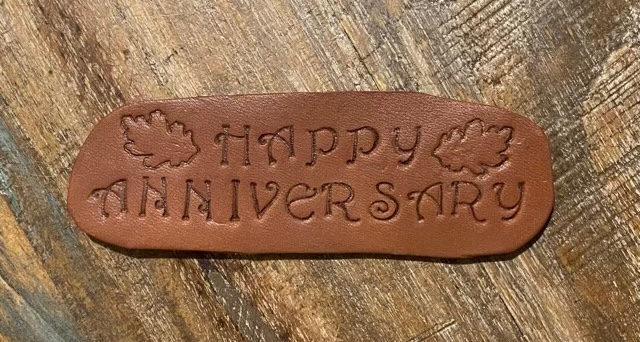

Well that snuck up on me. I had plans to lay out a lovely leather carving for the third anniversary of my blog, but the time suddenly loomed so I whipped up a quick stamped leather oblong instead. Three years can be an awkward age.
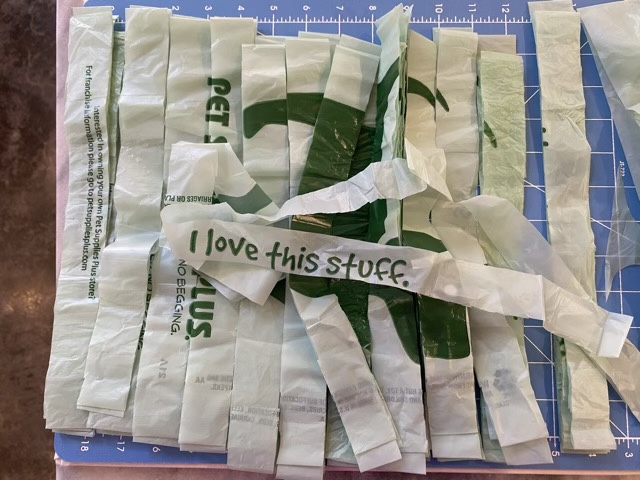
I have had plastic grocery bags waiting to be processed into plarn (plastic yarn) for … well, let’s just say it has been awhile.
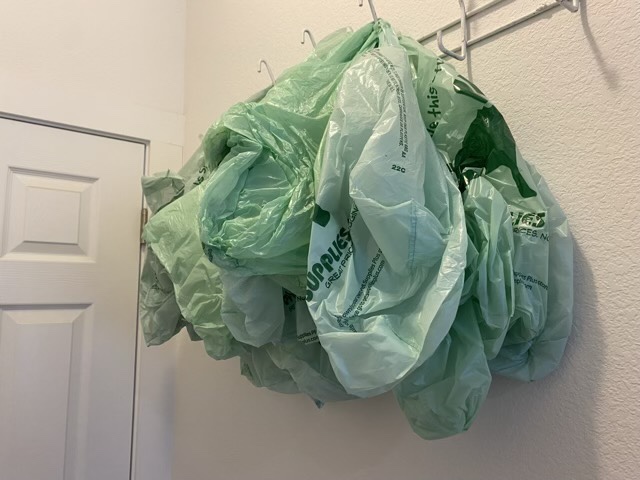
The technique I have been using involves folding and cutting one bag at a time, which is why they have languished on the hook, waiting. I decided to try a different method, using a cutting board and a rotary wheel. I pull each bag flat, which easiest by finding the bottom corner and pulling on the handle, and stack it on the cutting board. Pictured is a stack of five bags. I then used a ruler that is one inch wide and my rotary cutter to cut off the sealed bottom.
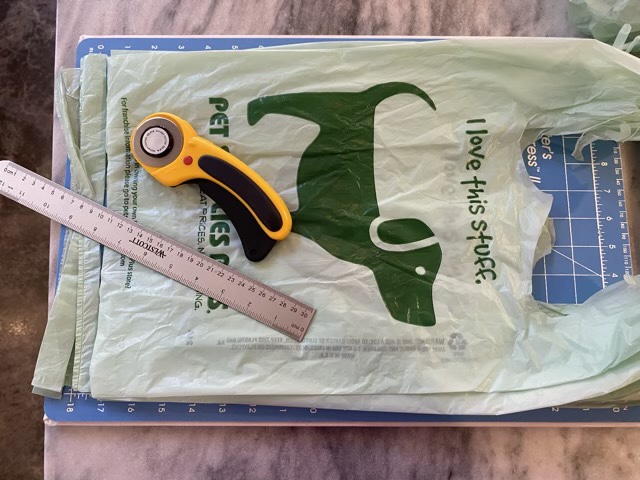
I continue up the bags, cutting one inch strips using the ruler, until I reach the handles. This gives me approximately 60 plastic loops for 13 passes of the cutter. I do discard the bottom and top of the bag. I have cut up to seven bags at the same time comfortably, and could probably go higher, when I’m feeling brave.
It is definitely worth getting out the cutting board and rotary cutter to process bags, this goes so much faster than with scissors. The loops are more consistent as well, using the ruler, than eyeballing the angle with scissors.
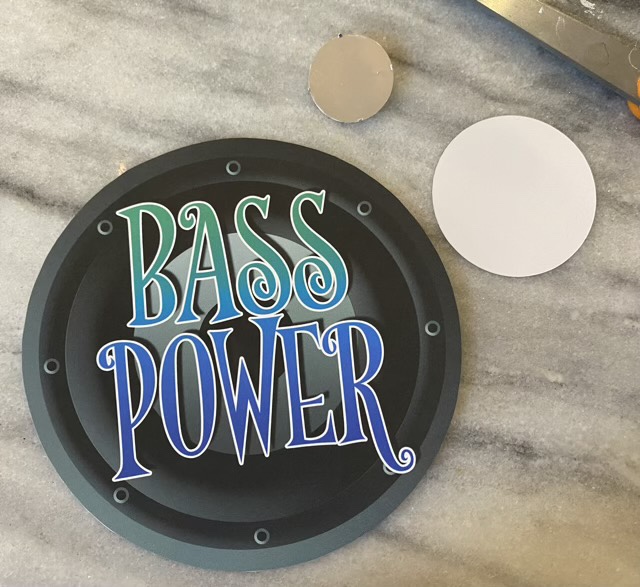
I love singing harmony, especially four-part harmony. I sing with a women’s barbershop chorus and on coaching night we needed a way to distinguish the sections and do a little team building, so I made pins for the basses. I did the design in Adobe Illustrator, printed on card stock, then cut out the 5” circles. To make the circles into pins, I had 1” pin bases in my stash. I cut out 2” card stock circles to hold the pin bases.
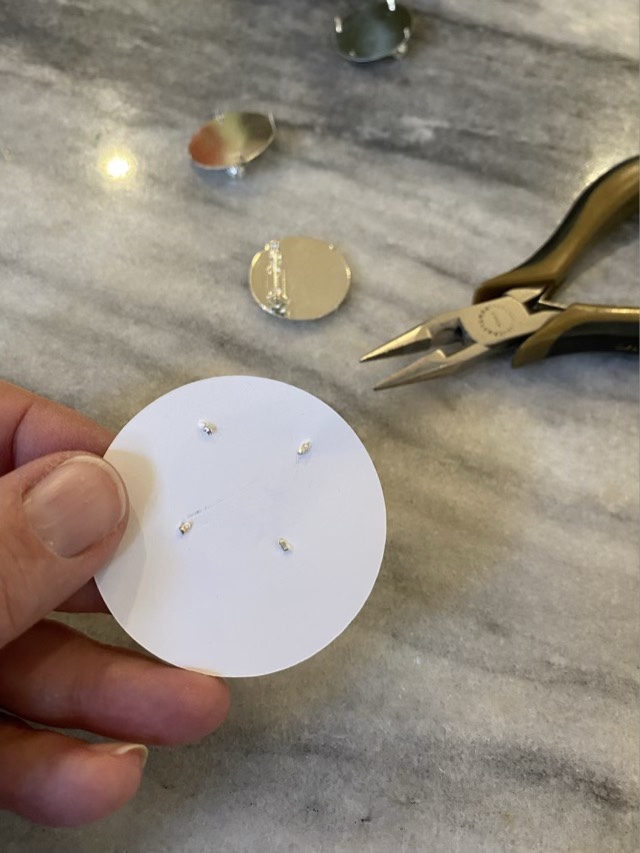
The pin base has prongs, which I poked through the card stock and bent over with pliers to hold it to the smaller circle.
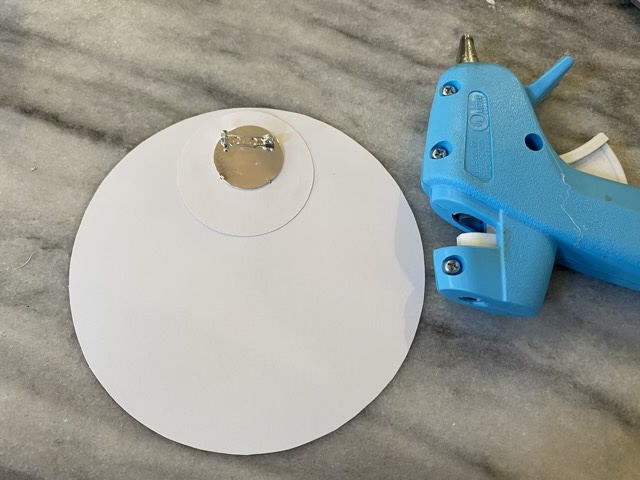
Then I used hot glue to attach the pin and circle to the larger sign.
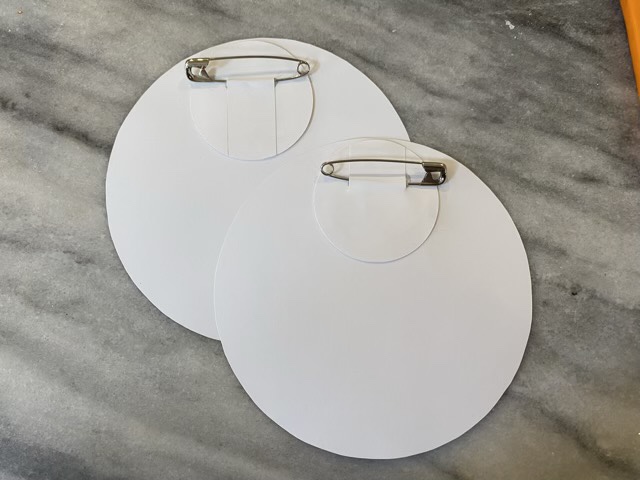
I didn’t have quite enough pin bases, but the technique works great with safety pins as well. I cut two slits in the card stock circle to hold the safety pin, then used hot glue
So it seemed like a good idea. (That’s usually how Pinterest fail stories start, don’cha know.) Instead of dipping apples in caramel, hollow them out and fill them with caramel. More caramel! My eldest wanted to try, and volunteered to make the caramel (we did get a kit, but it was still a long time at the stove). The caramel tasted amazing! Apples are actually not hard to hollow out with a regular spoon, it is just tricky to do it neatly. Then the trouble began. Filling the apples made them tip and the caramel run out. Oops. So something to keep the apples from tipping should be added to the list.
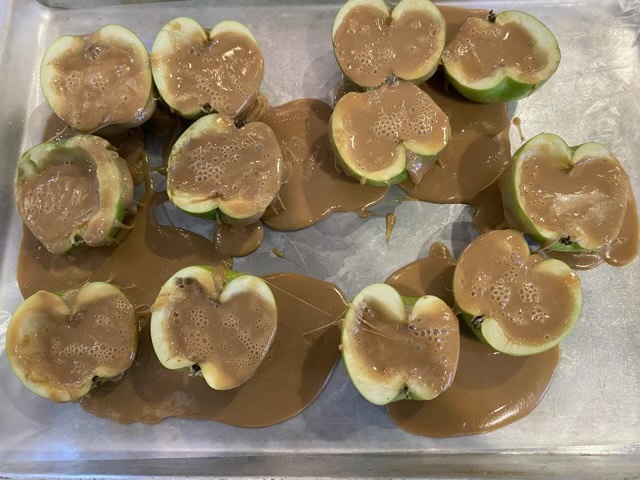
Then when the apples were refrigerated to cool the caramel, the apples juiced. The moisture from the apples made the caramel watery and gross. I did go back and read a couple of the “instructions” (neither of which actually tested their recipe (clue #1)), and it was recommended to dry out the apples first. Hm. Even dipping them in lemon juice and drying them off wouldn’t have prevented the sugary caramel from drawing out the massive amount of water from the apples. As for slicing the apples into neat caramel-filled crescents, forget about it. The caramel popped right out of the apple.

I’m not sure what magic was wrought to create the pictures, but we didn’t have it. I see now from the picture that the original craftsperson put the apples in a muffin tray. They also added something from a bottle. Hm. Even if I were to find the proper instructions, the ratio of apple to caramel is hard to eat. And apple slices should be refrigerated and caramel should not. So the idea is intriguing but the execution, even when perfect, is a tiny window. Now a good dipped caramel apple can sit on a shelf for days, and be enjoyed at room temperature.
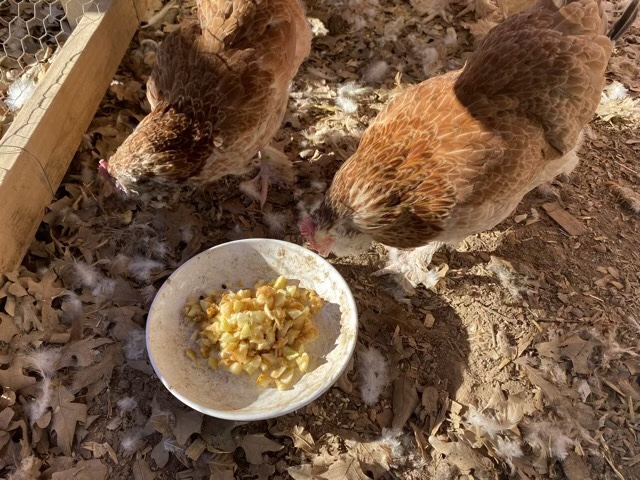
The good thing was that the chickens enjoyed the left-over apple innards! (I did not give them the sugar soaked shells.)
My eldest recently found a beautiful crocheted drawstring bag from a local shop (I’m very excited about the new shop, there are fibers to spin and classes being lined up!) The bag is beautiful, but needed a liner to hold the dice my eldest wanted to put in there. We pawed through my fabric stash and found some light weight black knit that would stretch well with the crochet and wouldn’t show through.

Because the bag had a round base and cylindrical sides, I matched the design with the lining, cutting a circle of fabric the size of the base, and a rectangle slightly oversized.

I started sewing the long edge of the rectangle to the circle, leaving room on the rectangle for the side seam. I used a jersey stitch on my sewing machine to keep it stretchy.

When I finished the base seam, there was extra fabric on the rectangle, which is OK, better than not enough. I trimmed the extra fabric off and sewed up the side seam.
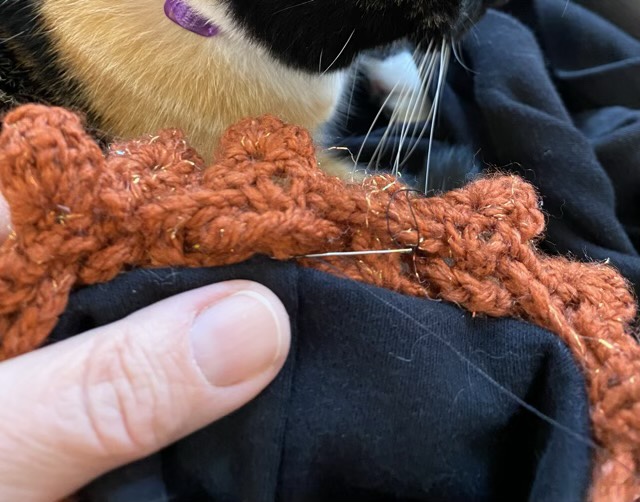
With the seams facing out, I fit the liner to the bag, folding over the top of the liner, and hand stitching the folded edge to the yarn work. I was very careful to follow the bag just below the drawstrings so as not to impede their function.
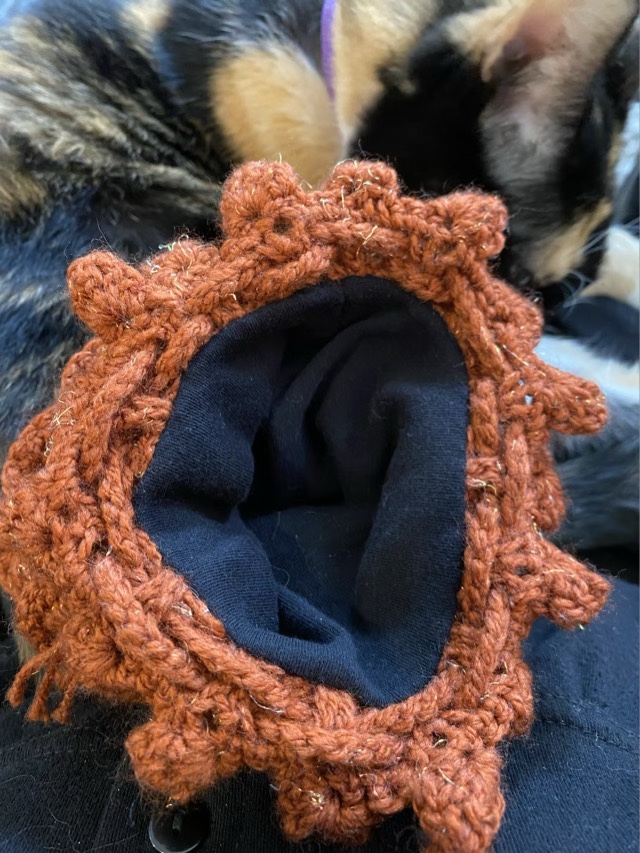

I am pleased with the liner, it expands very well with the crochet, doesn’t peek through the stitches, and should keep anything put inside nice and safe.

