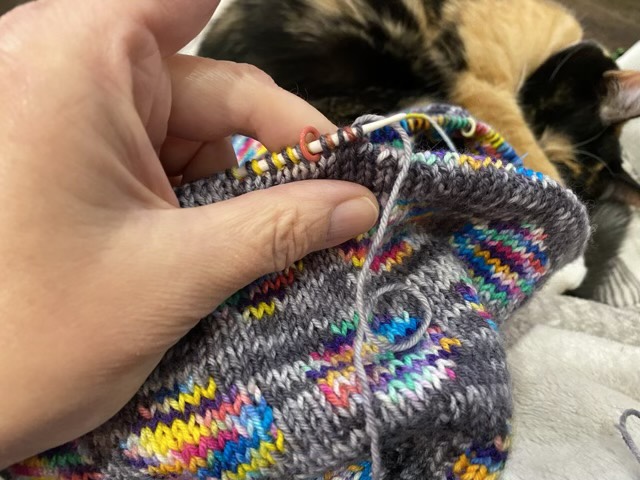
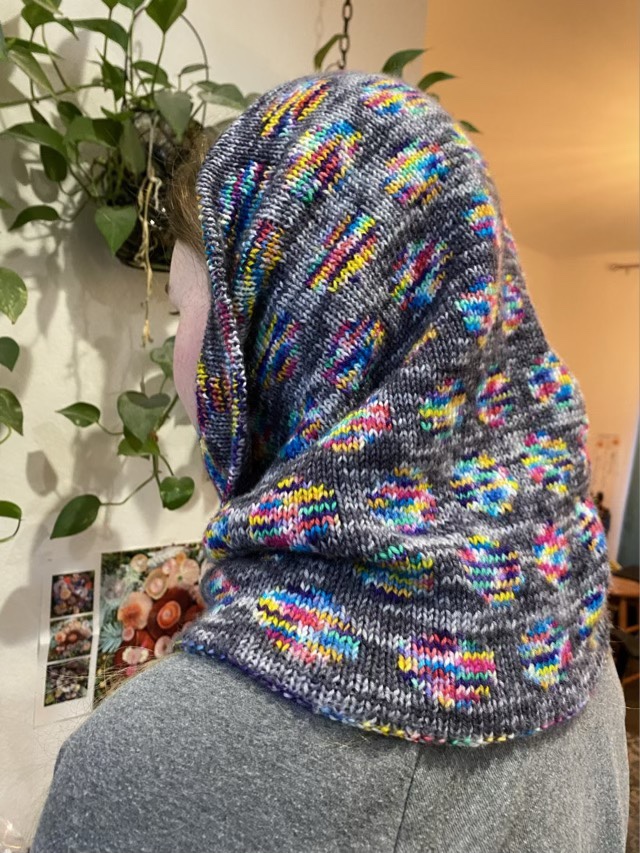
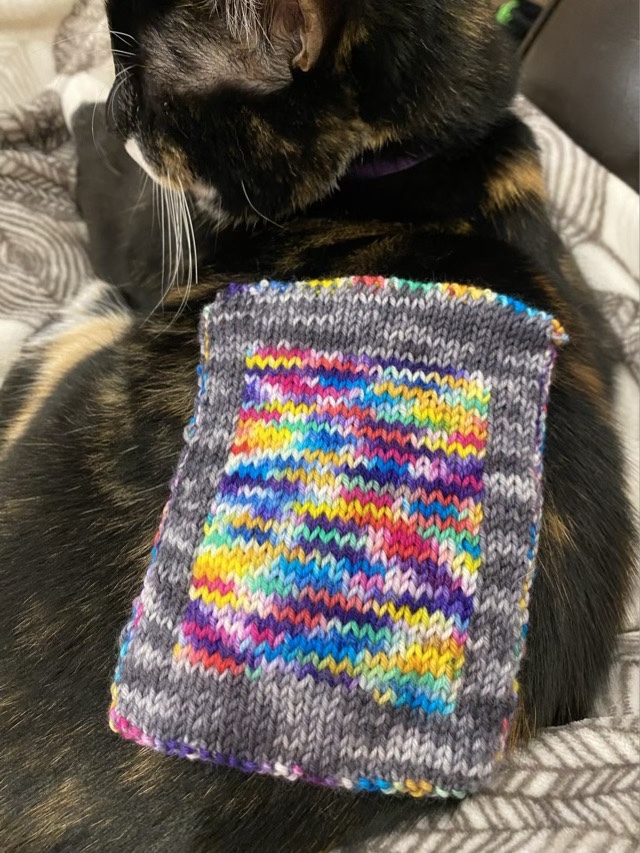
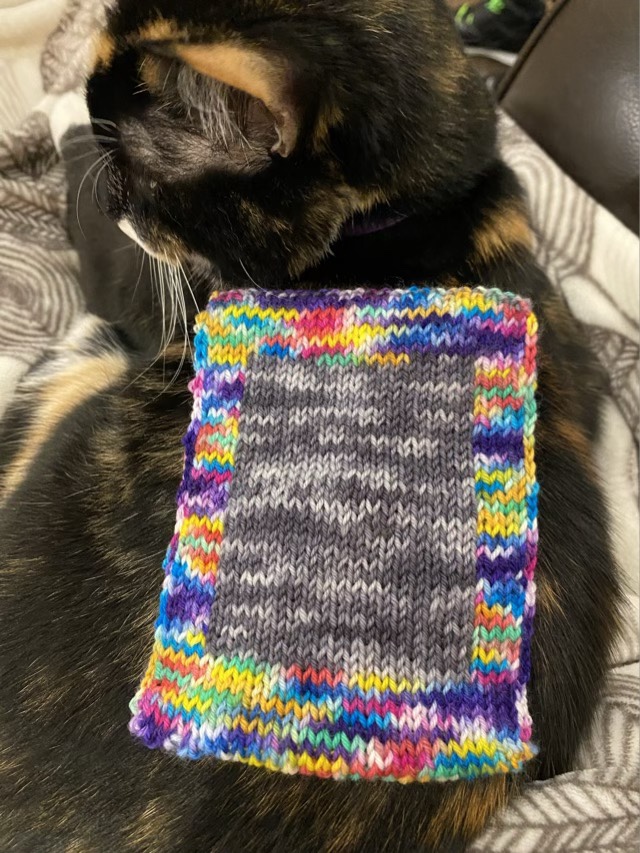
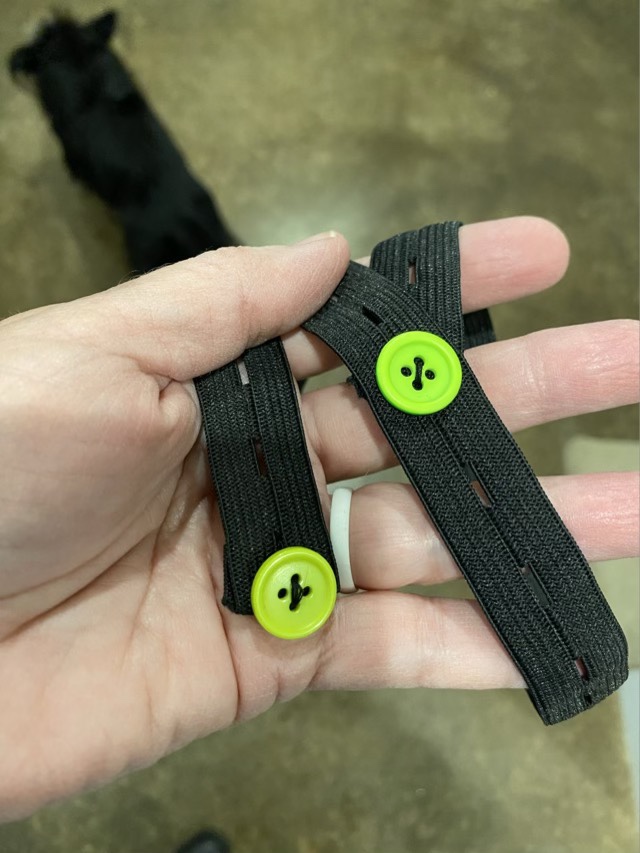
Done! I have finished my first knit along! It took me 15 days to complete (working in fits and starts), and I have learned a new knitting technique. The finished cowl is nice and squishy and quite appropriate for its intended use. The stitching is easier than I anticipated once I learned to recognize the brioche stitches versus regular stitches. The Field Guide 21 from Modern Daily Knitting is a good resource.
I bought some beautifully dyed yarn from a hand dyer. In the dying process, the yarn is left in skein form, which is basically a large circle secured in several places with twists of yarn. To store the skein it is twisted and one end tucked into the other. The skein form is beautiful, and shows off the dye, but is not friendly for direct use. It must first be wound into a ball or cake to be nice for crochet or knitting. You can have one person hold the skein open on their hands, and hand wind a ball, if you have someone with extra patience. Or a swift does the job of holding the skein open, and there are many types. I have an umbrella swift (named thus because it opens like an umbrella). I also have a ball winder (sometimes called a new wool winder), that has a rotating handle and makes center-pull yarn cakes. The sound of the Swift and ball winder turning makes a nice swoosh and clickty clack I find soothing.
I have downloaded the free 3D modeling software called Blender. The first thing I decided to build is a drop spindle of my own design. I know a local company that does 3D printing and I’ve been itching to create something. The 3D print came out exactly like my model (after I had some help with sizing), which is very exciting. The printer used an ABS like resin, which is less brittle than regular resin, which I appreciate.
3D printed drop spindle, prototype
I tried out the spindle with some alpaca yarn.
It works! But, the design could use some tweaking. The head, that looked so big in the software, was too small to securely hold the newly spun yarn, and the resin is more dense than I anticipated, so I need to address that. The possibilities of this kind of design are intoxicating. I could be dangerous.
The holes drilled through the ballister to hold the spindle on my mini bike spinning wheel (still with me? Good, let’s move on) worked fine for a time, but the stress of the spinning maladjusted the holes and the spindle was binding instead of turning. Taking my engineer husband’s advice, I made an axel. I installed a tube for the spindle rather than just two holes. I had to open the existing holes a bit to fit the tube, and the only tube I could find locally that was small enough was square, but I was able to affix the tube and the spindle shaft fits well.
Tube installed to stabilize the shaft
Because the axel has metal on metal, I needed some lubricant to ease the motion. I found my youngest’s old valve oil for her coronet. Works a treat. Another benefit of musicians in the house.
After wrapping my two-ply yarn onto a PVC niddy noddy, I rinsed the fibers and left it to dry. When it was dry, I used my yarn swift and cake winder to get the yarn ready for use. This 100% alpaca yarn will join the other yarn I’ve spun from Sugar Plum’s fleece in a knit lace shawl project.
Yarn on a niddy noddyYarn cake (center), swift (top), niddy noddy (right), ball winder (bottom)
The PVC niddy noddy is an easy DIY. The swift and ball winder are good investments for yarn enthusiasts, although your local specialty yarn store may have a set and be willing to help wind skeins into cakes.