Spinning on the road

We recently returned from a long road trip, and on the trip I spun when I wasn’t driving. I love it. I can put it down with a few seconds warning, there are no dropped stitches when we go over bumps in the road, it keeps my hands busy, is productive, and calms my soul.

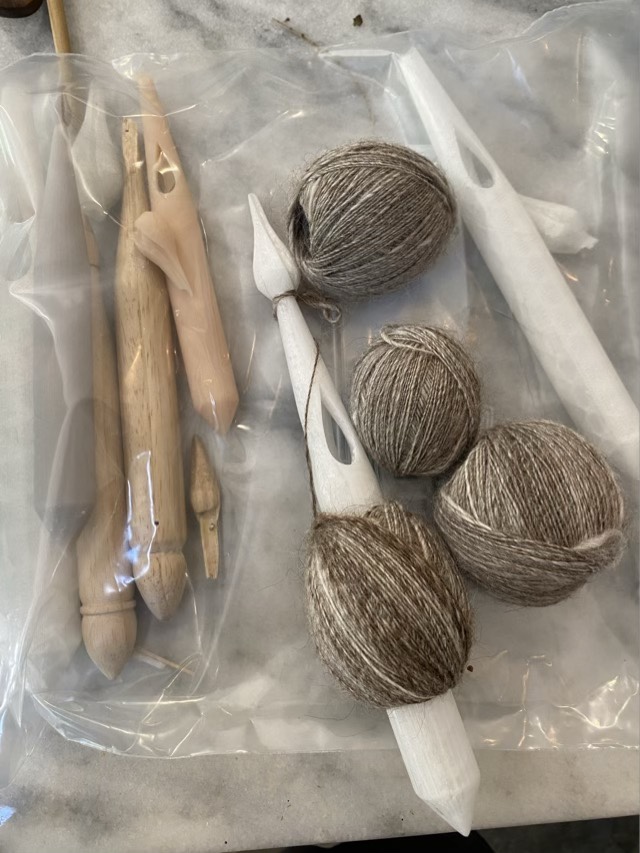
Using a drop spindle to spin prepared alpaca fiber on a road trip

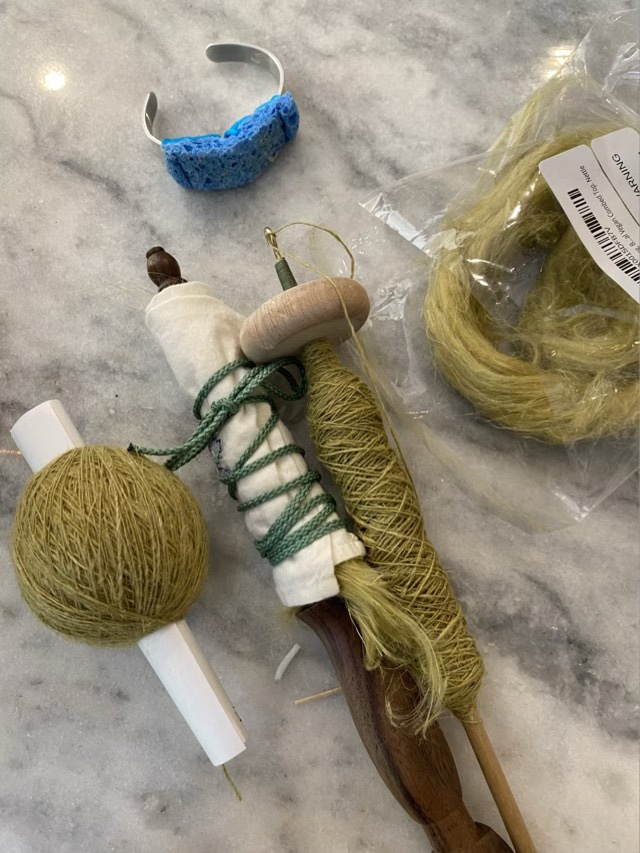
Plying is also possible if I do a 2-ply and use both ends of a ball of single ply (inside and outside ends). I prefer a top whorl spindle to ply, which I happened to pack as my backup spindle. I did not rinse or set the twist with water for any of the spinning, instead relying on time to do the magic.

Plied yarn with top whorl spindle
Five plied balls finished on the trip

I love it so much, that I think I will keep fiber and a spindle in a shoebox in the vehicle, for those parked and waiting moments that occur so often.

Cat hammock physics

One of the commercial cat hammocks I had in the catio broke (it really wasn’t designed for outdoor use and degraded in the sunlight). I had what I thought was a brilliant idea to make a triangular hammock to fit a corner.

Double layer outdoor fabric with rivets for attachment (corners) and draining (center)

The old hammock was square and needed support for all four corners. A triangular hammock would only need three supports. I used a large washer and screw to attach the hammock to the wood, and originally had it flat. Here is where the physics part comes in. The fabric sags when weight is applied. The hypotenuse of the triangle sagged too much and made a slide rather than a hammock when the corners were all at the same height. It took some experimentation to get the corners at the right heights so a pouch formed to hold a cat comfortably. My cat was remarkably patient with me putting her in and out of the hammock.

Izzy waiting for me to figure it out

In the end, the right angle corner needed to be much lower than the hypotenuse corners to keep the cat from falling out. We got there, but it wasn’t pretty.

Success!
Izzy trying another angle

Replacing a belt buckle

My husband loves his Italian made leather belt, but the metal fatigued and broke the other day. Luckily I had a buckle in my stash, and the belt is so well designed, I could fix it.

Loop broke off the metal belt buckle

First I took out the broken metal, which was held on with a screw rivet (love these) and some stitches.

Disassembled buckle, with new buckle on left

I used waxed linen cord and the saddle stitch to sew the new buckle into the leather. I made the final knot between the layers of leather so it would be hidden.

Saddle stitching in progress

Then I reassembled the belt reusing the screw rivet, being careful to catch the leather loop and stay in the right places, and making sure the buckle faced the right direction. Did I mention I love screw rivets? If you assemble incorrectly, it is easy to remove the rivet and try again.

Fixed belt

For the love of spinning

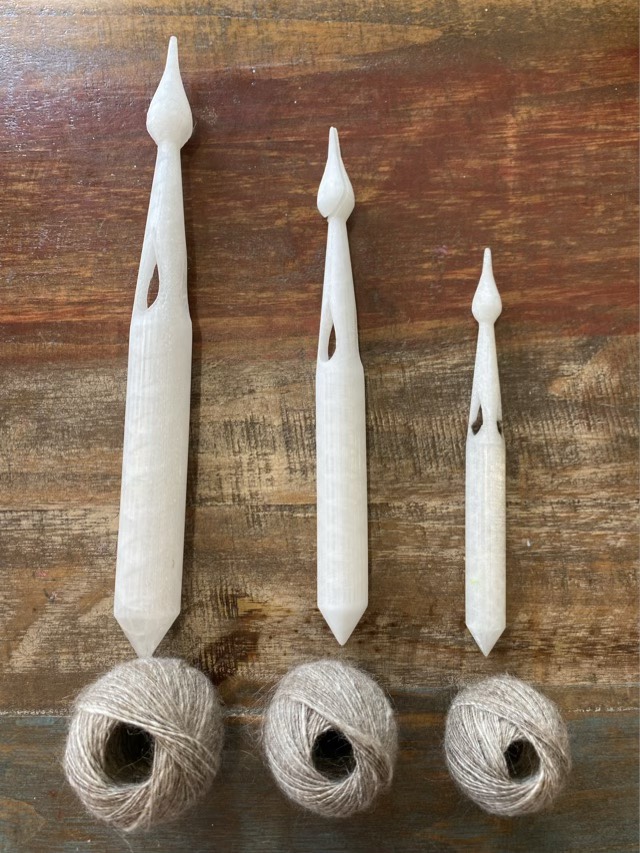
I was testing a drop spindle while waiting in the car, and struck up a conversation with someone who had hoped to learn spinning, but didn’t get to due to the pandemic. I didn’t have any student spindles in the car. The horror! So I gathered up the spindles I made at home and paired them with some Shetland wool strips torn from a batt (these strips can also be called slivers).

Student spindles with balls of wool

The wool and spindles went into bags with a half sheet of paper filled with as many resources as I could think of to help a beginning spinner.

Fiber resource sheet to go into beginning bags

I have handed out a couple of these kits when I’ve been about town, and even gave a quick spinning demonstration out my car window. Spinning is not for everyone, but they won’t know until they try!

Discovering double knitting

Since I finished the brioche cowl, I decided to try the next project in the Modern Daily Knitting Brioche Field Guide. It was a long honey comb scarf, but I wasn’t sure I wanted another scarf (we are in Texas) so set out to learn the stitch pattern with scrap yarn to see if I liked it.

I don’t.

About 2” into the test I decidedly did not like the emerging fabric. The pattern is interesting, but the fabric is flat with almost no depth. I was hoping to make a bag, but did not think the thin holey knit would do well. So now what? In perusing Pinterest double knit items caught my eye. Double knit also uses two colors of yarn, as does brioche, and produces a double-sided fabric, as does brioche, so I gave that a go.

I like it. Especially after I rigged up a wire ring to hold the two strands of yarn on my finger, but slightly apart.

Double knitting ring made from 20 gauge brass wire

The resulting fabric from double knit is also thick and has a nice feel. I think it will do quite well in many applications, so I shall tuck it into my bag of tricks. The cotton test knit shall go into the dish cloth drawer.

Test knit, honey comb brioche on the bottom, double knit tests above