I enjoy using my Cricut cutter to design cards. This one is for a fellow singer who is getting married this year. I particularly like the trifold and how nice it looks in the standing position.
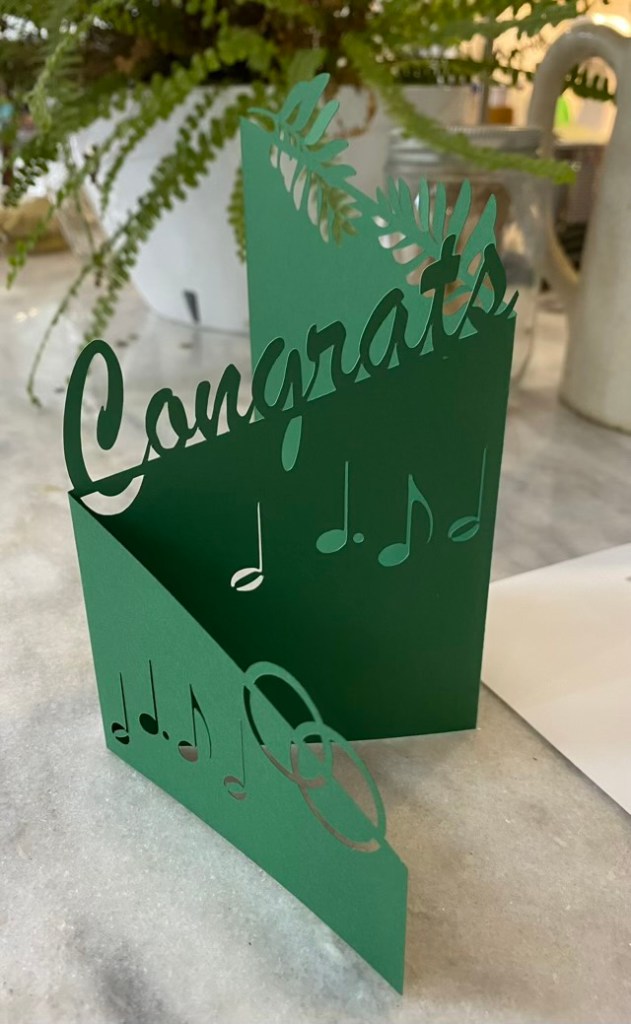

I enjoy using my Cricut cutter to design cards. This one is for a fellow singer who is getting married this year. I particularly like the trifold and how nice it looks in the standing position.
A good way to neaten up the last bit of yarn from a project is to take the label, roll it up, and wrap the yarn nostepinne style around the label. Then the information stays with the yarn bit, and the yarn stays neat in your stash. I’ve mentioned this before, but it came up again in my life, and I discovered if the label is small, wrapping it around a pen gives a temporary handle, and makes winding yarn easier.
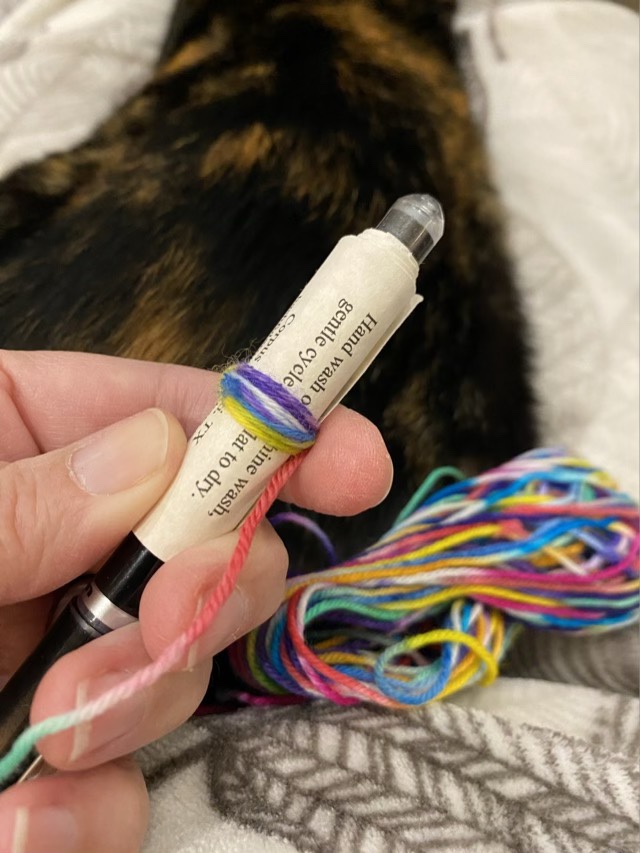
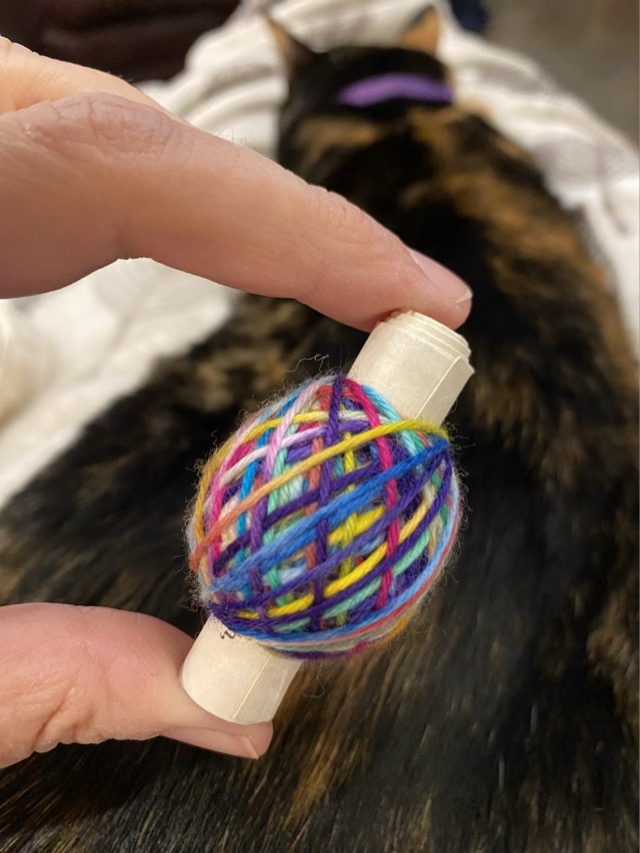
Here is the video I did on nostepinne style wrapping a year ago.
I’m getting back to my alpaca combing and spinning project, but last time I delved in it was summer and relatively humid. In the depths of winter there is far less moisture in the air and the static build up during combing was driving me up a wall. Luckily, Spin Off magazine has an article on this very problem, with first hand recommendations from many long-time spinners. The majority just use a spritz of water to calm with electrical surge. Hm. I dug out another glasses cleaning spray bottle (I do seem to have an unending supply of these), and filled it with water. It works wonders. The mist is very fine, so it doesn’t take much, and the fibers are happy and free rather than a staticky mess.

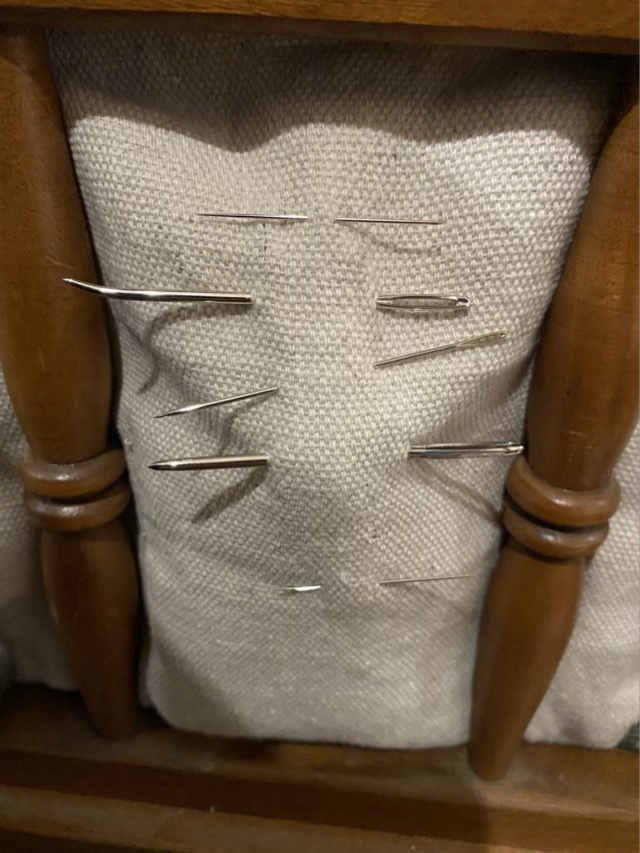
I do have a sewing basket. Inside that sewing basket are a couple pin cushions. Is that where I store my needles? No, it is all the way in the other room most of the time. I do have a cloth divider in my side table, and the needles go well there, and are at hand when I need them.
My eldest finished putting together a wooden puzzle adorned with leaves and a dragonfly. It was much too pretty to go back in the box! So I bought a 20×30 inch frame for it, which included the glass and backing. This wood puzzle fit together so well that I was able to gently pick it up and turn it over without resorting to using glue. The puzzle dimensions were just shy of the 20×30 frame measurement, but it fit inside without needing matting. (If you can’t tell, I’m really impressed with the construction of this puzzle.)
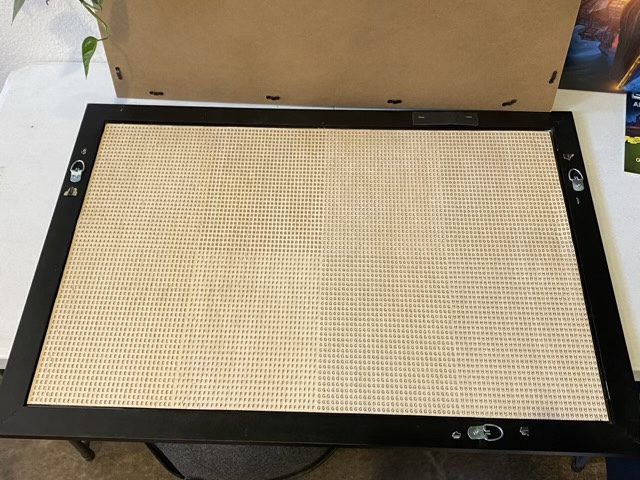
The rotating tabs on the back were tight, but with the help of a pair of pliers, I was able to get them locked in. It helped also that there was a fraction of space between the puzzle and the frame, and the backing could flex a bit. The result was a tight fit that holds the puzzle in place. Still without glue.
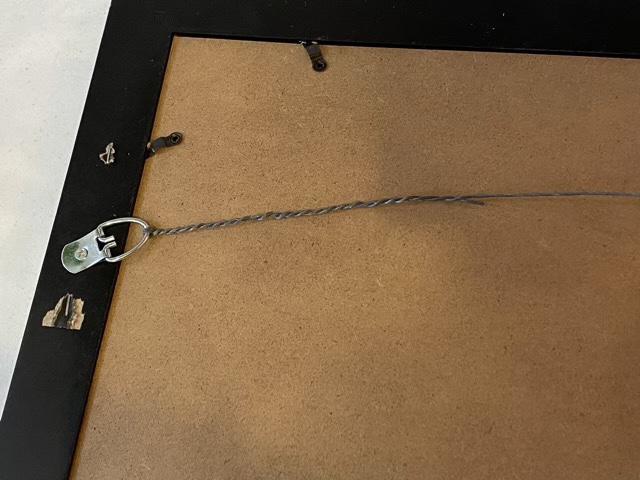
The frame came with attached loops, so I strung some framing wire (multi-stranded steel cable) from loop to loop, and wrapped it on itself on both sides. This makes it much easier to hang and adjust the level of the picture. I used a monkey hook to hang the picture on the wall. I find the monkey hooks to be superior to command strips because small holes are easier to fix than ripped out paint and texture (as can happen if the contact strip is removed too fast).
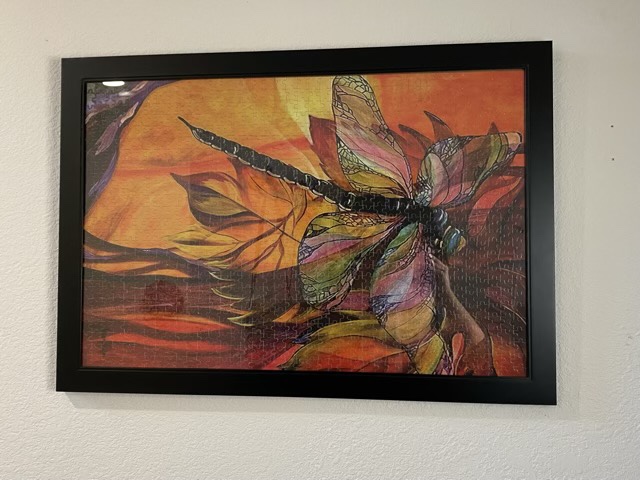
This was by far the easiest framing project I’ve done, and I’m still in a little bit of shock.
 Critters and Craft