Feet are free

I’ve started a new crochet project. I’m using up yarn from my stash to make what I hope will be a 1960s style duster length vest. We’ll see how much yarn I have. Since the piece is worked from the bottom up, I figure I can keep working until I’m almost out of yarn, then finish the arm holes. At that point I should know about how much yarn that will take. I’m working from a vintage 1969 pattern, and as per my standard method, I’ve deviated. It is an easy thing to pick up and put down, so makes an ideal chair project. I just have to count to five (5 chain stitches to create the net lace). Missy the dog noticed that even though my hands are busy, my feet are free. Good thing that I can kick the ball and still count.
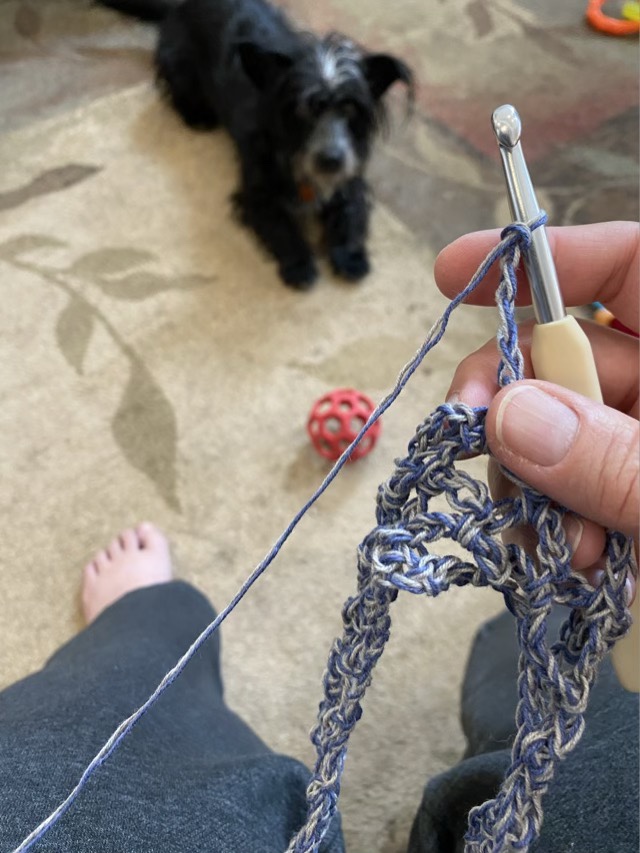
Missy presenting her ball for a kick while I crochet

Weights and measures

I put together seven top/bottom whorl spindles to sell at our local spinning/game store. I put the length and weight on each one on a custom stamped tag. I consider these student spindles, since the whorls are made from wooden toy wheels. I did shape the shaft with a notch on one end, and a reinforced hook at the other end, so they are fancier than the mass produced versions. Each spindle is also slightly different, which I think it good to appeal to different preferences.

Student spindles, weighed and measured

Pan handle

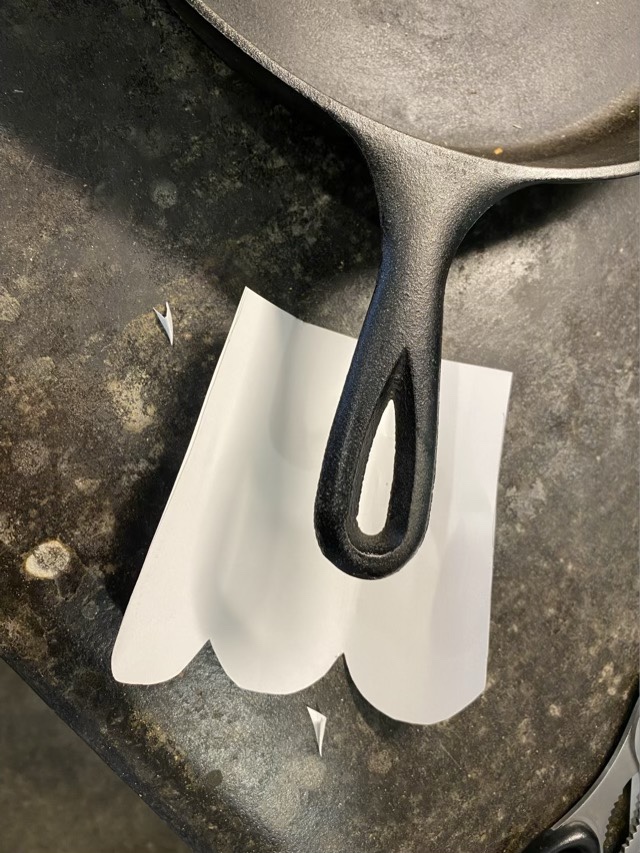
One of my Dad’s favorite cooking implements is a cast iron pan. I saw ideas on leather handle covers so thought I would make him one. I started out with some card stock to make a template. I liked the idea of a wrap around handle cover because it seemed it would be more comfortable to grip.

Making a paper template

I used the template and leather shears to cut the design from tooling leather. With the wrap around design, only the end needs sewing, the wrap has enough give to slide onto the handle, but should stay in place. I wetted the leather and punched holes, then I lashed the end with a strip of leather.

Securing the end with leather thong

I let the sewn assembly dry in place on a cast iron pan (both my sister and I have pans at our house in case Dad needs to cook something while he is visiting.) When it was dry I sealed it with Resolene to protect it from food spills.

Finished leather pan handle

New skills

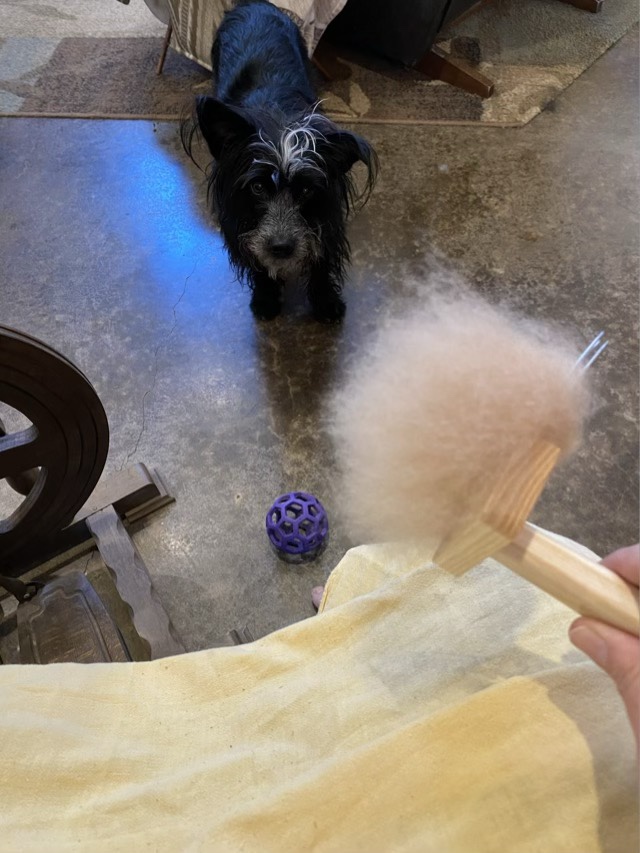
Kicking a ball while combing alpaca fiber

Thanks to Missy (IAB (Identified At Birth) dog) , I am learning new skills. I can now kick a ball while combing out alpaca fiber. I started singing and she thinks that is my signal I want to throw the ball (laughter also prompts her to bring someone a ball, hmm). My hand were full of combs, but my feet were available to send the ball in various directions. She was quite disappointed when I started to spin and both hands and feet were busy.

Reinforcing

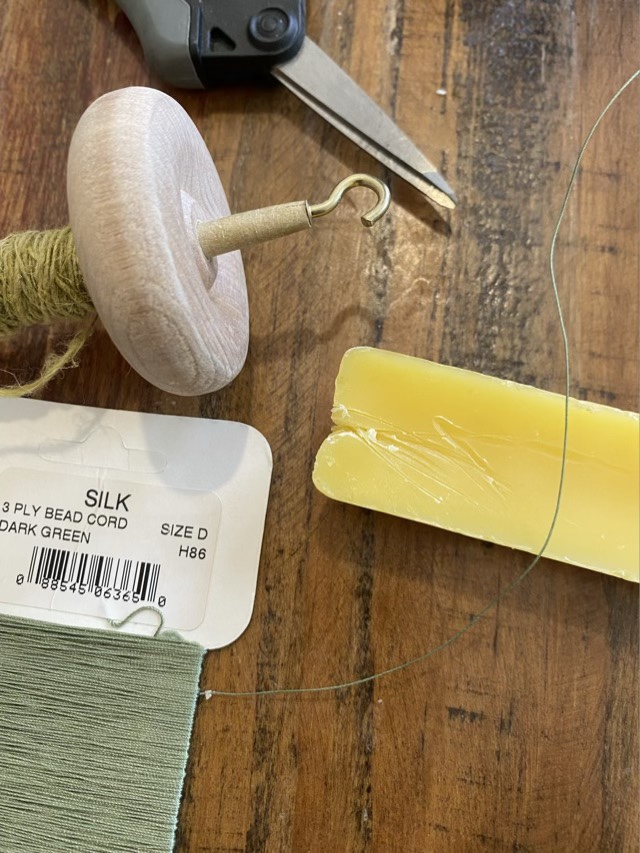
Spindles with hooks have a weak point where the hook screw connects with the wood, especially if the shaft is slender. I like slender shaft drop spindles because I feel I can control the spin better and the light weight is more comfortable. I don’t like when I drop it and the shaft cracks. To give the metal to wood join some reinforcements, I decided the wrap the weak area with waxed silk.

Clockwise: scissors, beeswax, silk cord size D, drop spindle

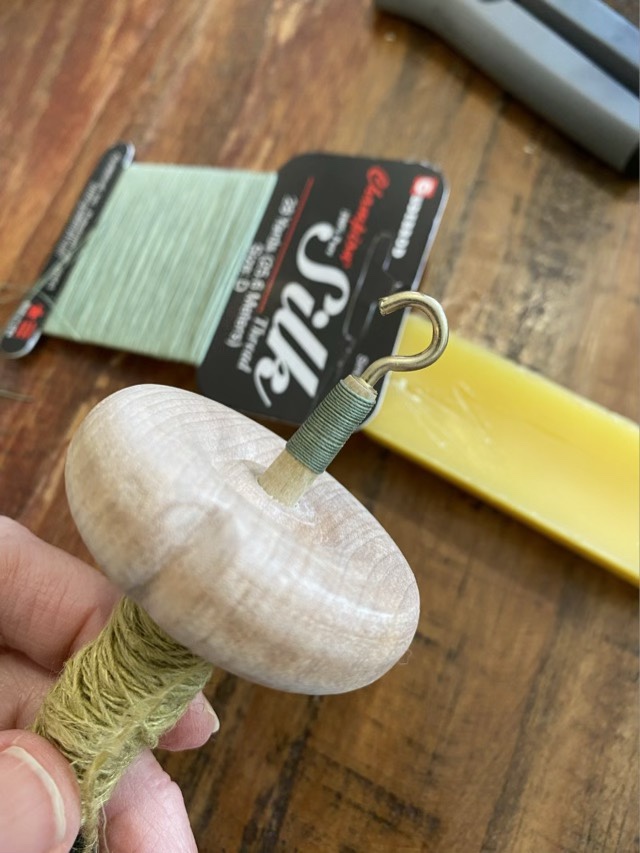
The method I used to wrap is called common whipping. Plugging those two words into your search engine will generate all sorts of illustrations and tutorials, as long as you get the words right. It took me an hour of searching to find the right words, I had a synonym of whipping in my head that I couldn’t dislodge. So, two words: “common whipping” are my gift to my readers today.

Common whipping on a drop spindle with waxed silk cord

I ran an arms span of the silk cord through my wax block three or four times to build up a layer of wax. The wax helps protect the cord and makes it stay in place better. I start my whipping with a loop laid along the shaft. I wrap toward the loop, run the end of the cord through the loop, then pull the loop end to draw the ends into the middle of the wrap. (This is where the internet search comes in handy if you are a visual learner.)

I used silk because I tried hemp and it wasn’t strong enough and the diameter made a wrap thicker than I wanted. Waxed linen is also commonly used, and is strong, but I didn’t have any on hand.