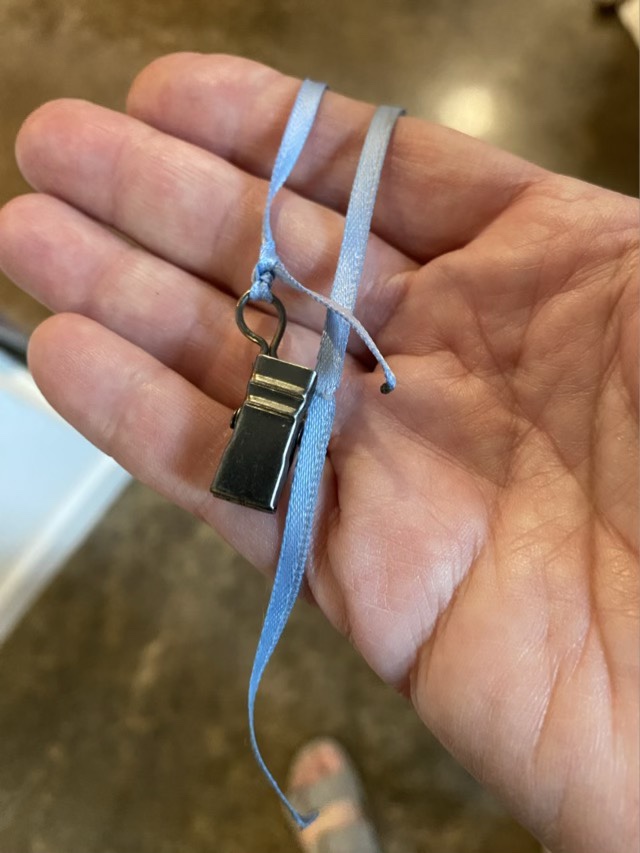
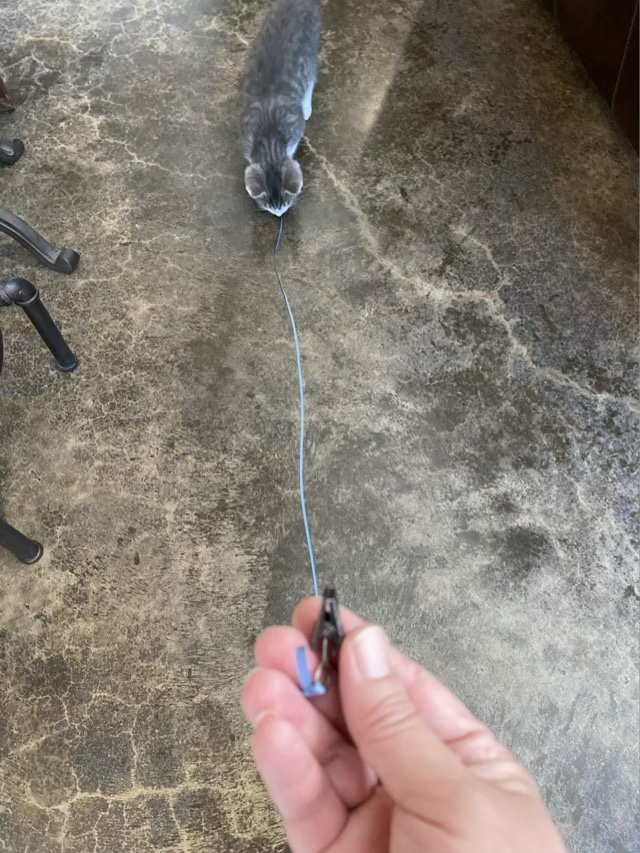
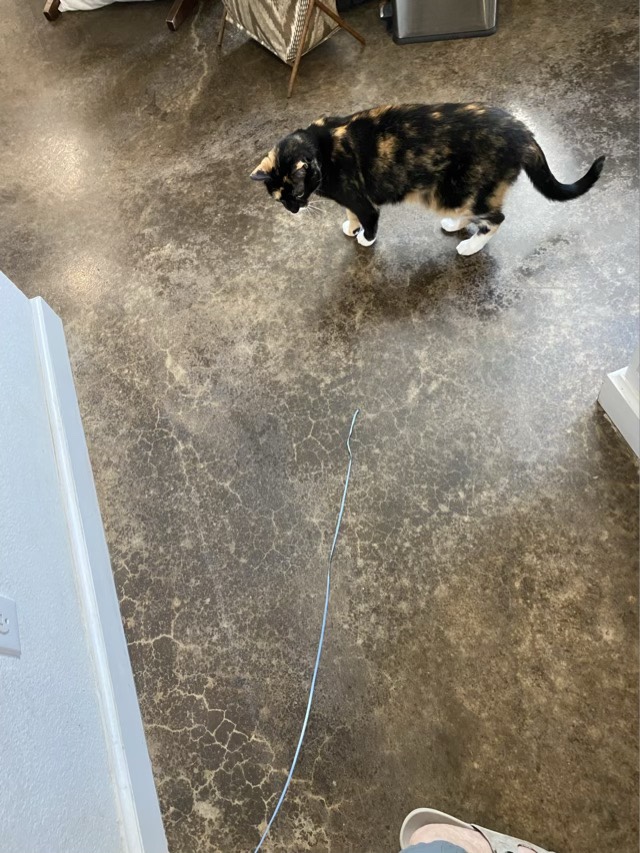
The Texas summer is ramping up, and I don’t like walking when it is hot outside. Luckily, I have a large kitchen counter with room to walk circuits in the house. To keep the kitten occupied, I tied a ribbon to a small clip and clipped it on the back of my shirt.
Ribbon tied to a clipKitten following the ribbonIzzy also finds the ribbon enticing
The drier air is also better for my spinning, since heat, moisture, and pressure are the factors that felt wool. Missy the dog also thinks spinning time is kick the ball time, and it is amusing to watch her figure out the timing to drop the ball in my path so I can kick it before walking past. So yes, I walk the house spinning with a drop spindle, kicking the ball for the dog, trailing a ribbon for the cats. I am walking entertainment, but I’m getting in those steps!
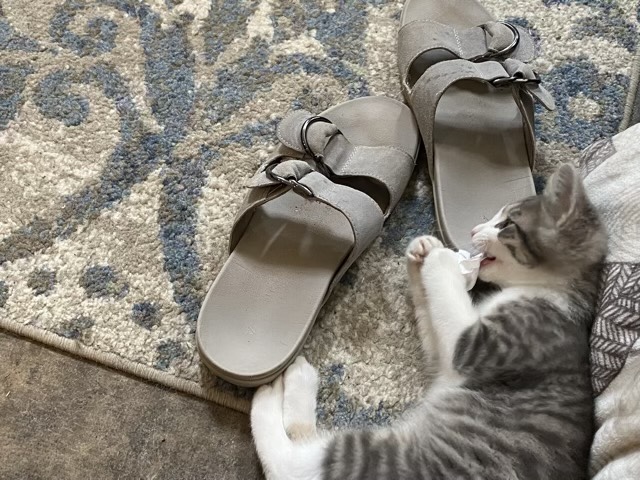
I personally do not like my nose to get up close and personal with my shoes. Thor the kitten loves everyone’s shoes, which I’ve heard and read is normal kitten behavior. He isn’t small enough to crawl inside, but he’ll stick his head in, or take his toy over to the shoes to play. If I’ve been outside, he will come give my shoes a thorough sniff, gathering info. Cats and dogs have much better scent receptors than humans, and are able to get more information from those invisible particles than we can. Familiar scents can also be a comfort (which happens to humans as well).
Thor playing with crumpled paper on my shoes
So I realize my blog has had a kitten take over. This is my first cat this age in my care, I usually get cats that are six-months-old or older. I’m not apologizing, just letting my readers know that I am aware of the invasion and as a warning that it will continue.
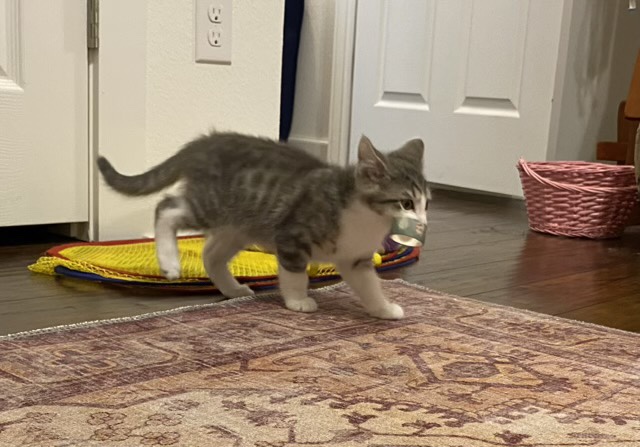
The kitten likes to carry things. He especially likes to carry fun skittery things to new locations to make them skitter again.
Trying to carry the red light
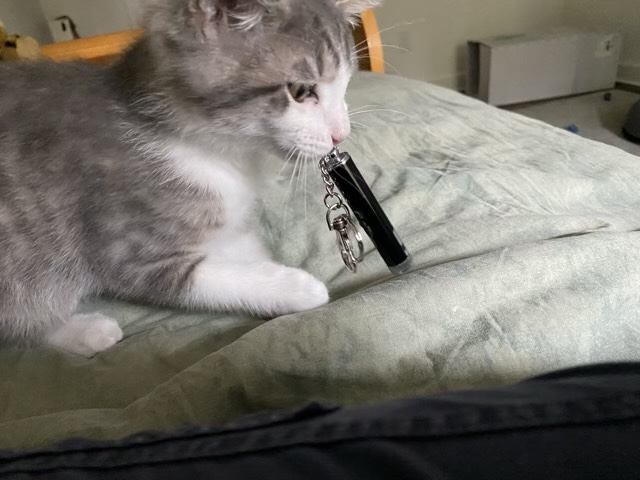
He likes the red light game, and tried to take that from me and carry it off. He can’t work the button, but the chain makes nice noises.
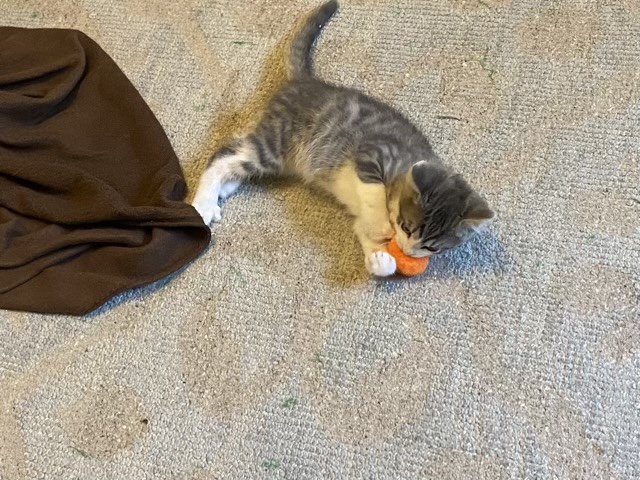
Pompom kitten death roll
We bought a bag of large pompoms to see if we can’t teach him to fetch. He keenly watches Missy the dog fetch her ball and you can practically see his little gears turning. But with all the things we’ve bought, his favorite thing is a bit of crumpled scrap paper. Those skitter wonderfully on the floor and are easy to pick up and move.
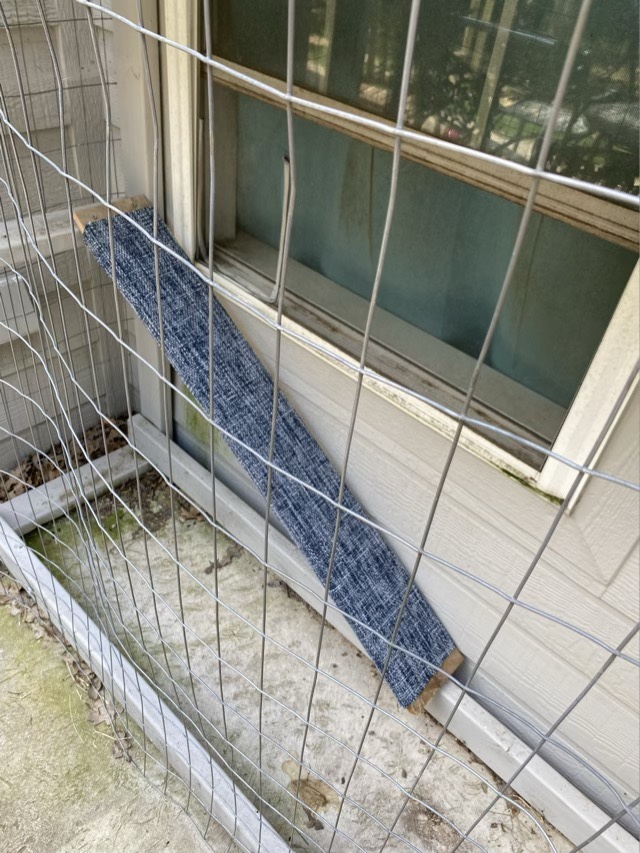
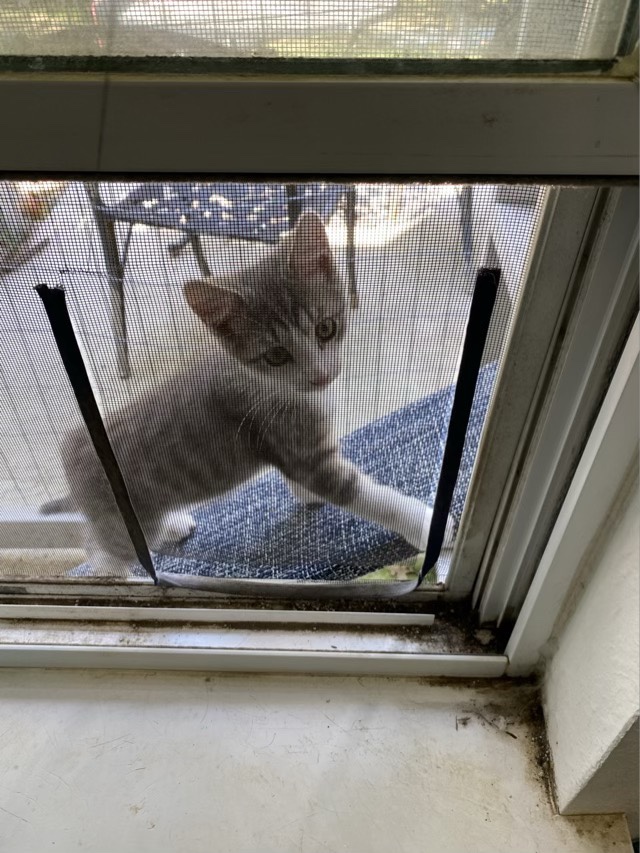
Thor the kitten was very interested in going out into the catio. The problem was, he is too small to jump back in the window. Hm. I grabbed a length of hardwood, wrapped it in outdoor fabric, secured the fabric with heavy duty staples, and screwed the end of the board to the catio structure. Now he has a ramp.
Kitten ramp
Like all good accommodations, this one can be used by everybody (well, every cat body), or easily by-passed by the older cats.
Thor using the kitten ramp.
Thor took a very long afternoon nap after spending time exploring the catio. He is relegated to the bottom layers until his muscles develop and his limbs get longer to make the big jumps possible, but that is OK because it gives Izzy the adult cat a place to escape.
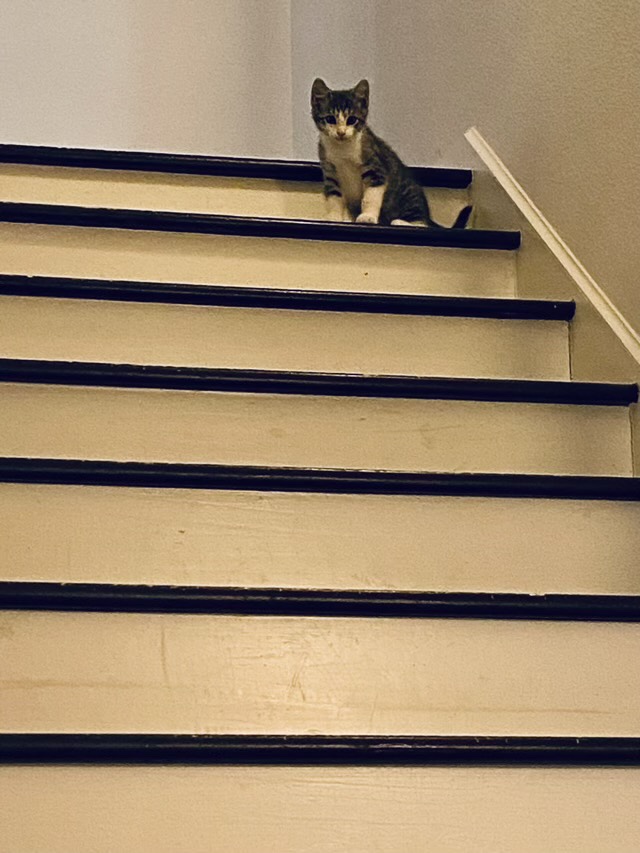
It didn’t take long before we moved the gate to the bottom of the stairs and let Thor the kitten come see the rest of the fuzzy family. The gate means he has a safe space to go when the dogs are too much, and keeps the dogs out of his food and litter upstairs.
Thor’s first time on the stairs
The stairs were a non-issue, which is a big difference between cats and dogs. As a puppy, it took Missy longer to learn to navigate stairs. Thor had no issues.
Dogs in wait
While Thor is exploring, we have the dogs lay down and wait, so they don’t overwhelm the kitten. We’ve also been letting the the old dog, Griffin, go lay in his bed in the other room with the door closed, which doesn’t bother him at all.
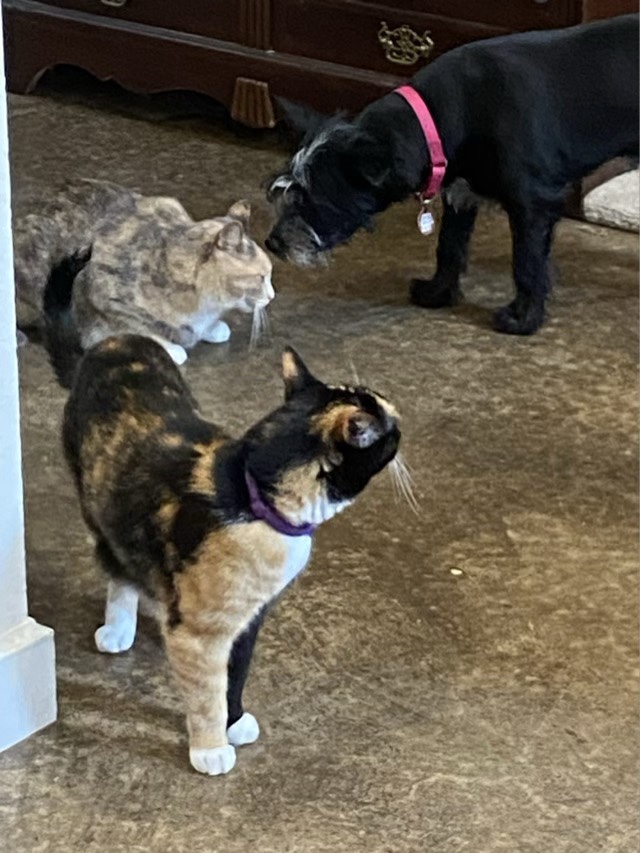
Unusual group
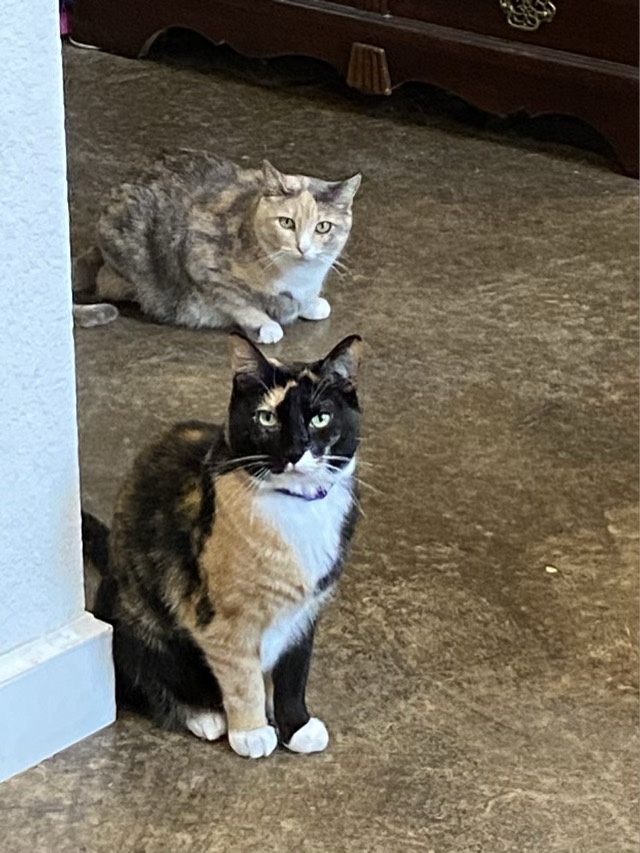
Our older female cats are on a temporary truce while they assess the new situation. Missy the dog sniffing noses with Sophie the cat is not unusual, but that Izzy is in close proximity without hissing is an occasion to mark. Mostly they go where the kitten can’t find them.
Cats asking me what I’ve done
Missy the dog has had the most interaction with the kitten, and it is amusing to watch them try to figure out play signals between species. Here is a video of Thor watching Missy play ball. Missy has learned to back off when Thor hisses, which makes Thor quite bold.
Thor’s nap spot
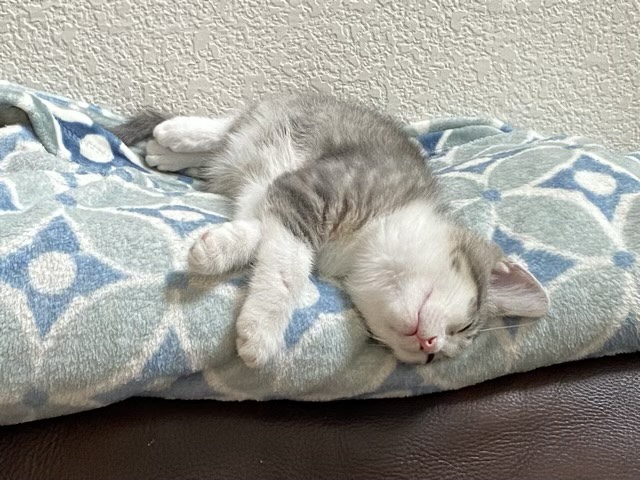
We made a fuzzy blanket bed on the top of a couch, which is an spot neither older cat has claimed. Thor feels safe up there, enough to nap. All this meet and greet is exhausting.