Today I present to you the toe beans of feetsies of the mighty Thor the gray tabby cat in two of his favorite spots.
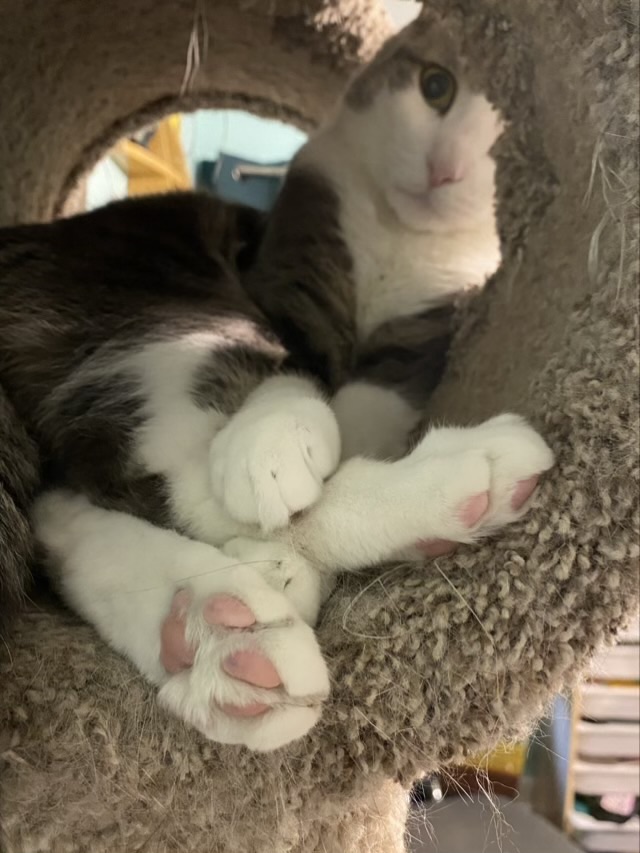
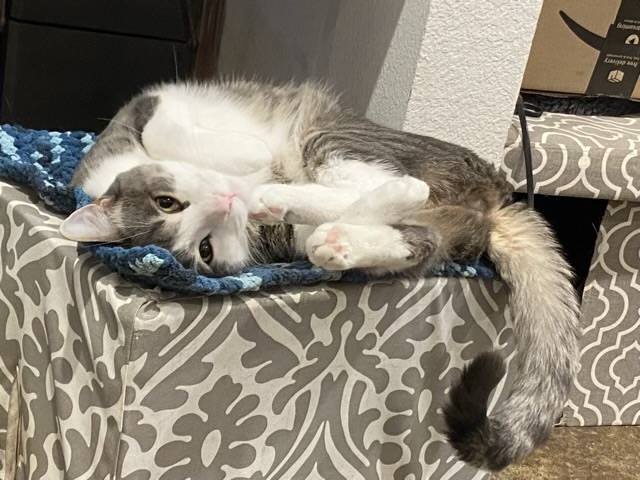
You’re welcome.

Today I present to you the toe beans of feetsies of the mighty Thor the gray tabby cat in two of his favorite spots.
You’re welcome.
I have two plied my rose top. I spun the single a little thicker, so a two ply is sufficient to make a nice yarn. The rose fiber is harvested from the stems and leaves of the rose plant, processed in a similar way to Tencel, extracted from plant waste. I like the feel of the rose fiber and it spins up nicely. I plied from a center pull ball, then wrapped the plied yarn into a nostepinne style ball (my favorite kind of center pull ball).
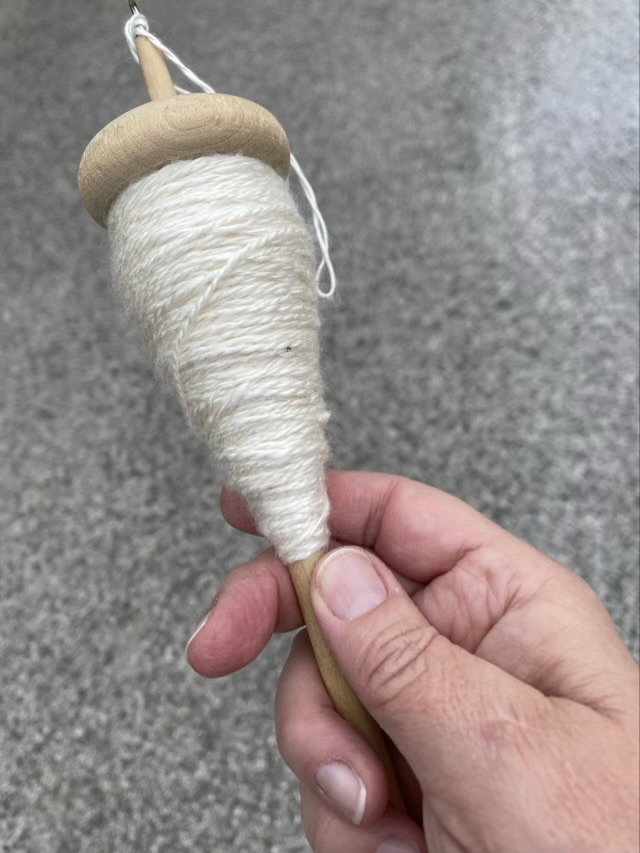
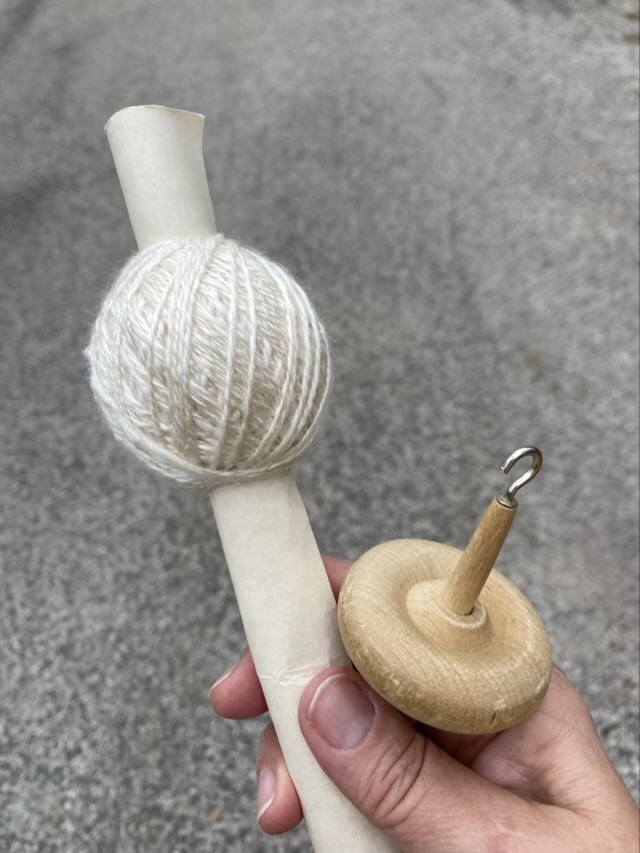
I’m not going to wet block this yarn. I have time to let it sit while I finish up other projects, which will set the twist.
My Mom requested a stretchy woven watch band. I took one of the plain purchased bands she had so I had the hardware, and I purchased colored shirring elastic thread. I set up a 22 card tablet weave on my Inkle Loom using a pattern I found on Pinterest. An interesting thing about tablet weaving patterns is that the result changes depending on how the cards are turned. It took me a little time to figure out how the pattern worked, so I decided to make four different patterns on the same band, then cut them later. I also had quite a shock when I removed the band from the loom and the elastic contracted, creating different issues.
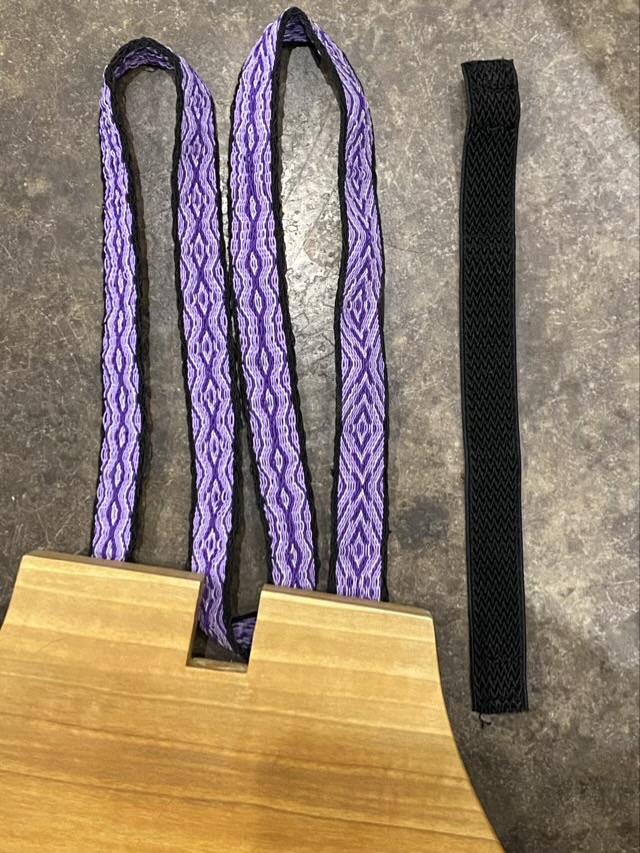
When I warped the loom, I didn’t pull the thread completely tight, it is quite elastic, but on hindsight could have loosened it up a little more. I did pull the weft thread taught. If someone is reading this to get hints on the how, I recommend trying a non elastic weft. On the final band three of the designs puckered strangely, one in the middle and the other two on the edges. I think this is due to the tension or uneven tension on the warp and the pattern. It was difficult to get an even pull on all 88 threads when it was so elastic.
I had at least one decent section, so the next quandary was how to cut it. Ideally, it needed to be cut and sealed to prevent the elastic from unraveling. I happen to have a laser cutter. I couple experiments with settings, and I was able to cut and, in the same process, seal the band.
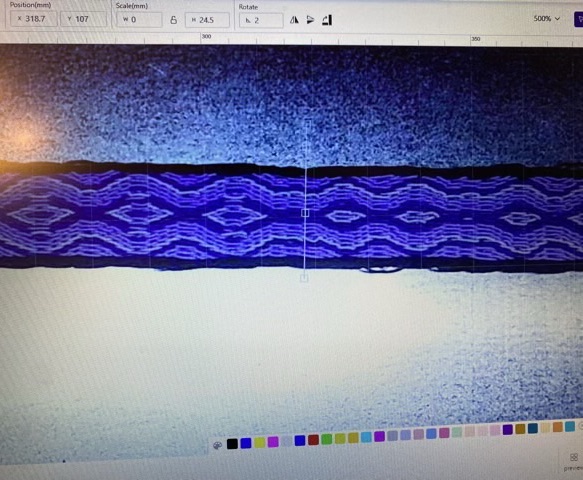
I put the band on a sheet of steel, and used high power and a slow speed to cut the band. It look a couple of experiments with settings to get a cut with minimal burn.

To protect the end while threading it through the hardware, I wrapped it in washi tape.

Sewing was a little challenging because of the thickness, but this little three-in-one sewing tool was a life saver.
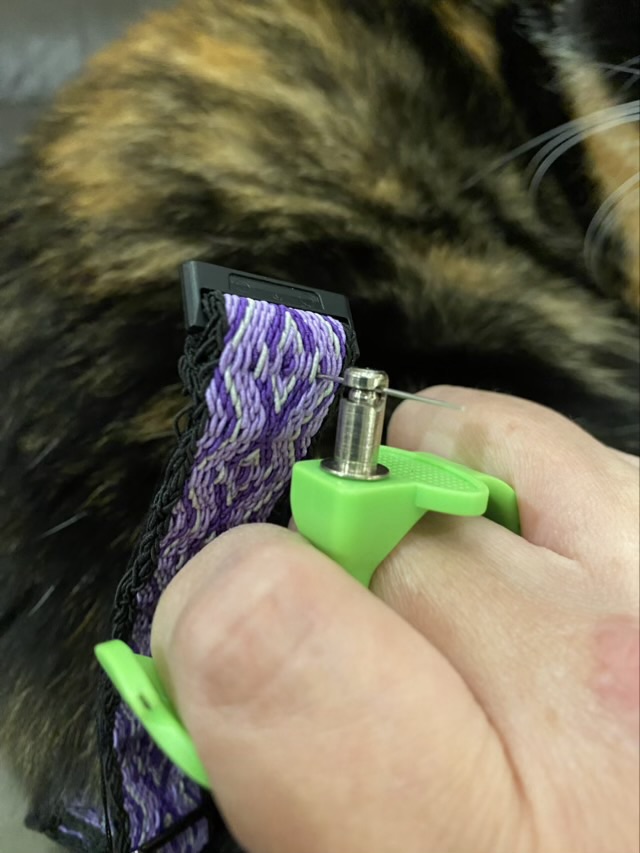

The most unfortunate part of the whole project is that I didn’t realize the slides on the ends have an up and down. I installed them both upside down. Nuts.
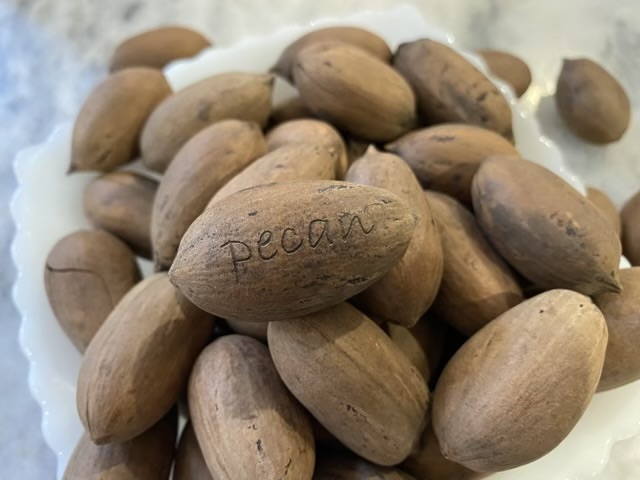
What can I engrave? Can I engrave an orange? A pecan? An acorn? A cookie? Yes, yes, yes, yes. Oh the possibilities.


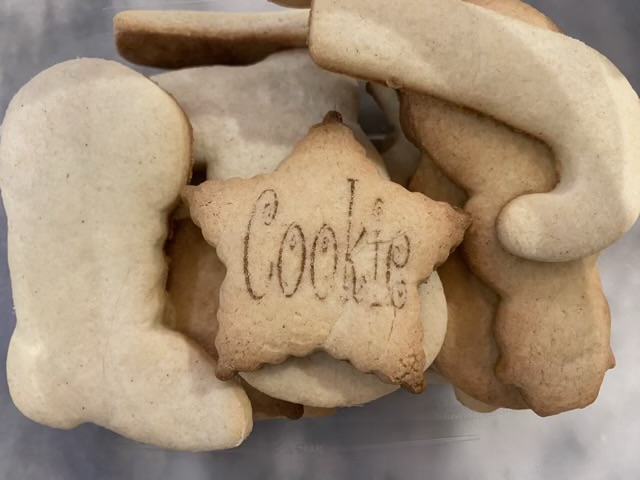
And the bonus for today’s post, a leaf. Leaves are actually a material choice in the software’s menu, so I knew I could engrave those, although I did find that the leaf engraves better when it still has some moisture in it, the very dry and curly post oak leaves would not hold still for the laser. Those I’d have to press flat when fresh, then engrave.
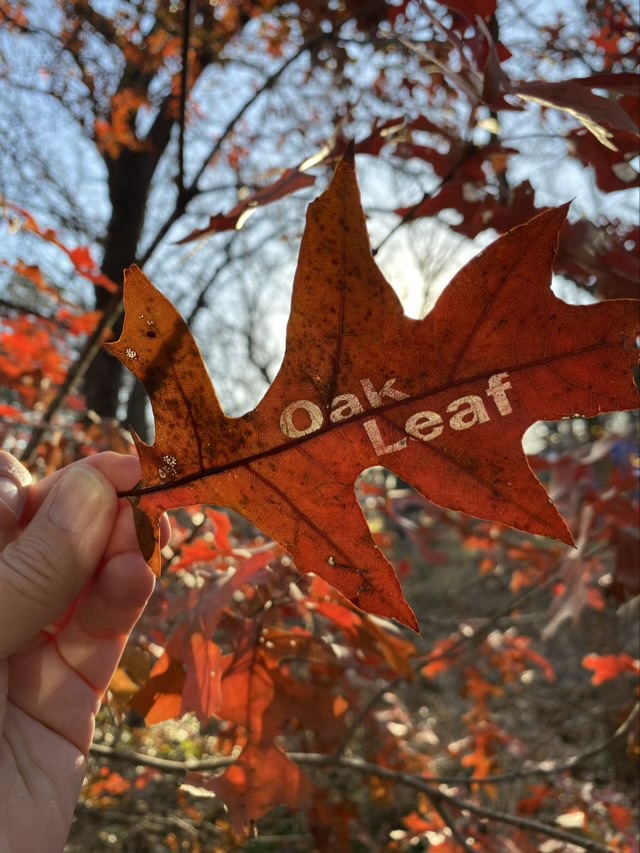
Engraving words was an easy way to experiment. I can now move on to designing my own fills and cuts.
My folks gave me a laser engraver, because I spent so much time at their house playing with their laser. My level of craft ability has now reached dangerous (on a scale of “beginner”, “how cute”, “nice”, “wow”, “dangerous”, “how?”, “mastery”). I started with my business logo on rock, painted brass, and a thin slice of purple heart wood that I sliced on my band saw.

The rock ended up with a mottled white design that does not wash off. It has a pleasant texture but probably won’t survive a sealant (testing on that later).
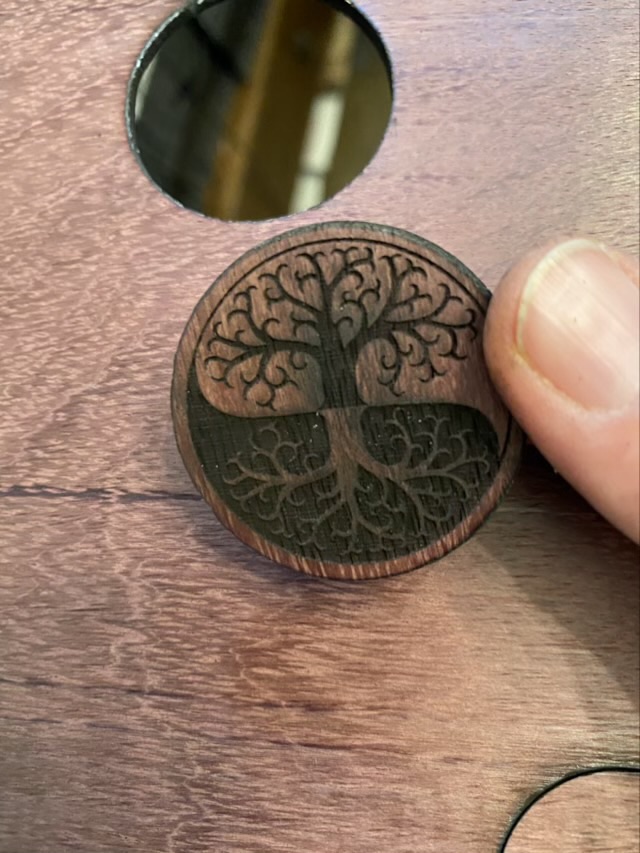
I’m still experimenting with settings. The purple heart with logo was a little too intense and the burn carried outside the design.

I tried a circle of brass (I used a jeweler’s saw to cut it, the blue diode laser won’t cut brass). I originally did clean brass, but it only made a ghost image, so I spray painted the blank with black primer paint, let it dry, and ran it again. I quite like the result.
My head is swimming with all the possibilities.

