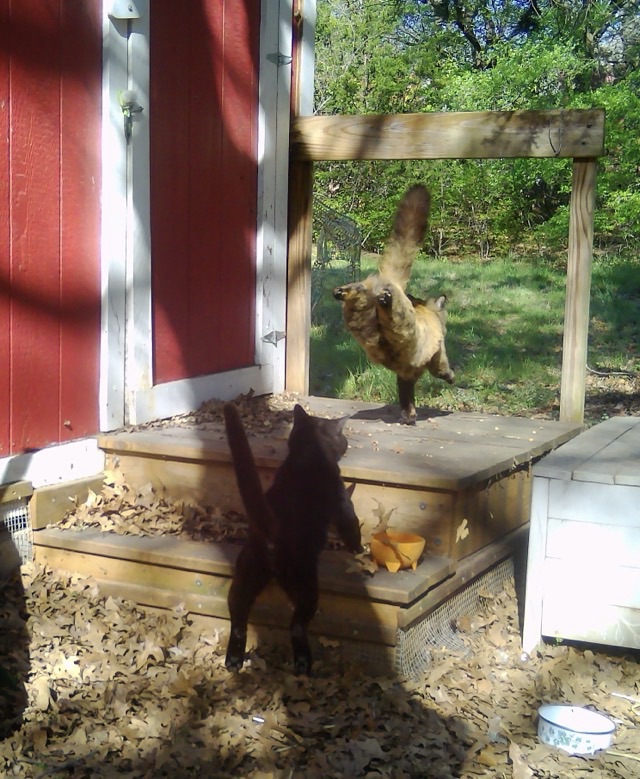
Here is an amusing trail cam capture. I’m sure the fight wasn’t funny, but the frozen chase is an unusual find.
Photo description: chase scene with a long haired calico running from a short haired black cat, both captured with back paws up
There were no photos on either side of this one with these two cats, so I assume the chase was all that was within the camera’s field. It is set up to take photos every three seconds, so those cats were indeed high-tailing it.
I’m surprised that I don’t see more chases and fights on the trail cam, honestly.
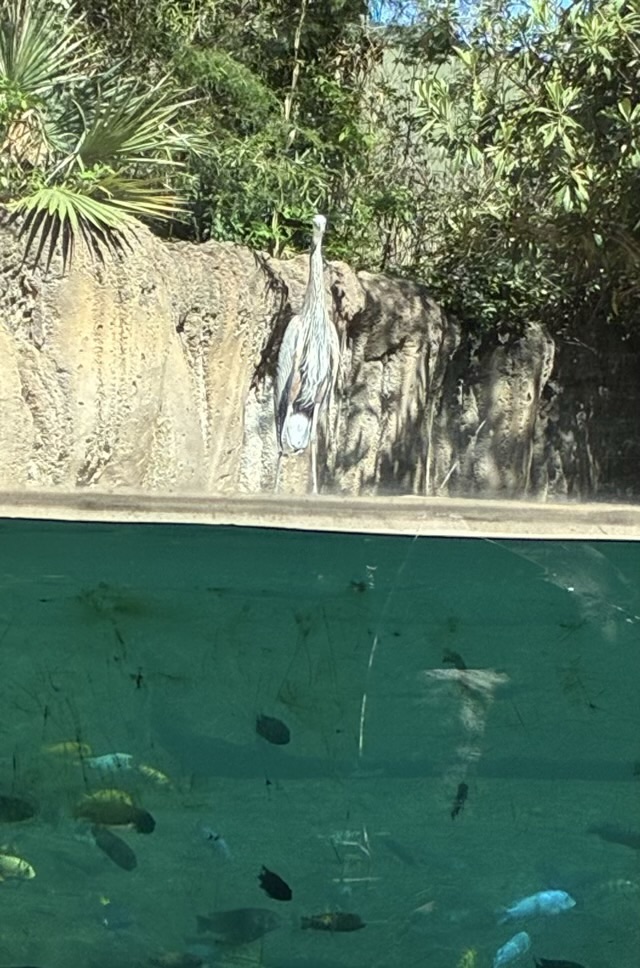
We went to the Fort Worth Zoo the other day and I got a kick out of seeing the wild heron fishing at the fish stocked hippo tank.
Photo description: slightly damp heron standing at the edge of the hippo pool, which is full of fish as seen through the glass on the bottom half of the photo
Fish are kept in the hippo pool as a natural cleaning crew for dung, algae, and hippo skin.
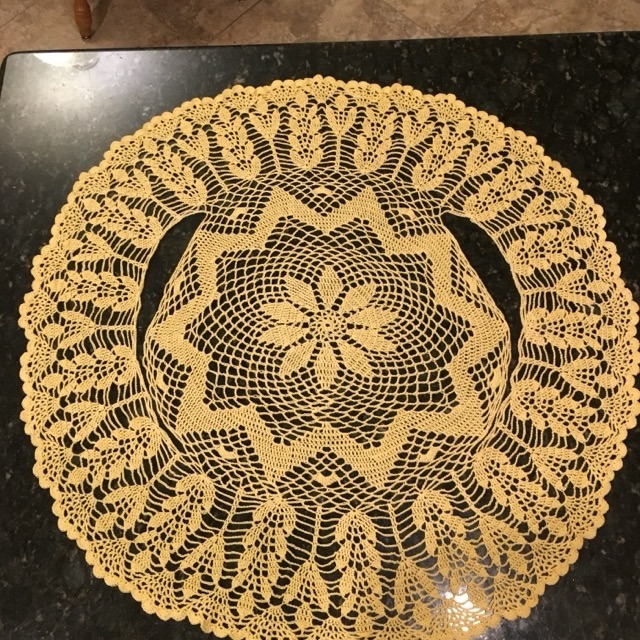
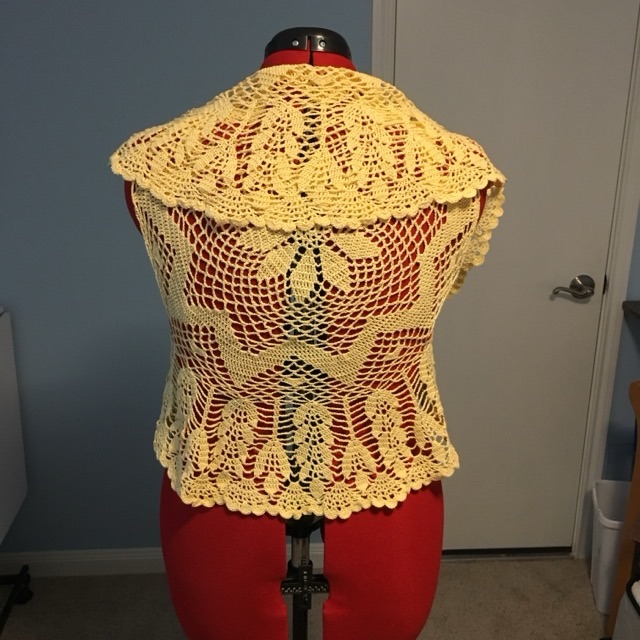
In March of 2017 I was crocheting a yellow lace circle vest for my sister. The pattern included classic crocheted lace elements.
Photo description: yellow crocheted circle vest made with #10 cotton with slits between the center and edging for arms, shown after blockingPhoto description: lace circle vest on a red mannequin showing the fold down collar
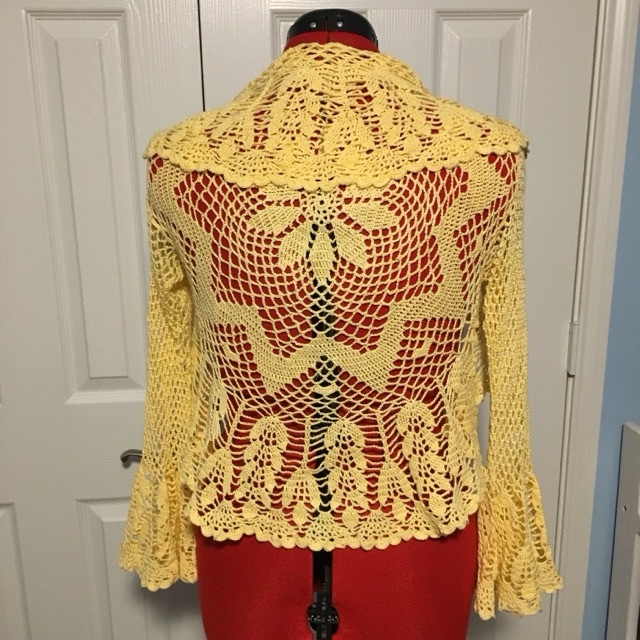
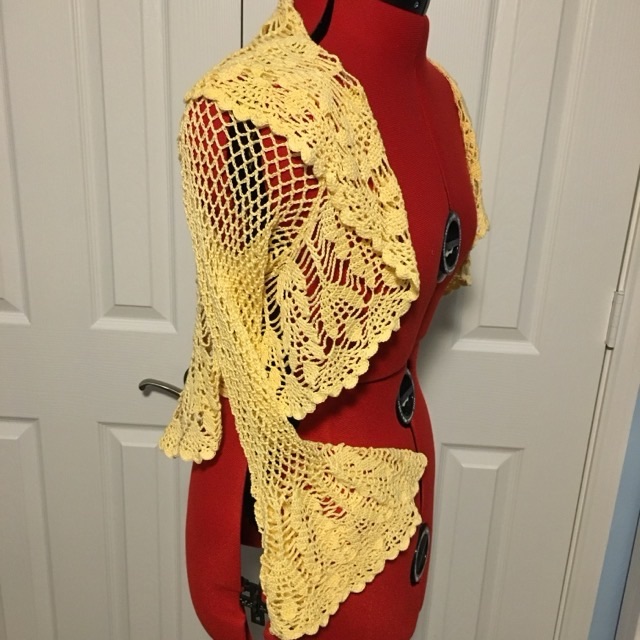
My sister was visiting, so we did a fitting and she requested sleeves. By June of 2017 I had finished the sleeves by doing a simple net for the arms, and a matching edge pattern for the bell sleeves at the elbows.
Photo description: same vest, but now with bell sleevesPhoto description: side view of the mannequin with the bell sleeve spread out a little to show the pattern
Although it was pretty, the delicate lace was, well, delicate. It didn’t hold up well to use.
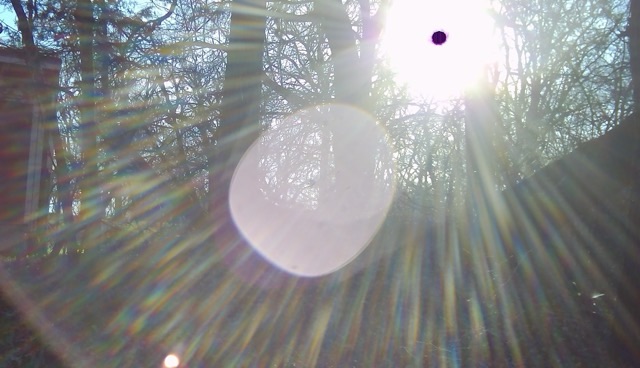
Photo description: trail cam photo with a black sun
Yes, it is April 1st, but this is a real photo from my digital trail camera. No, it is not the end of the world, the sun isn’t collapsing into a black hole, but there are quite a few things going on in this shot.
The sun looks black because it is so bright that it overloaded the sensors in the digital camera, which, when overwhelmed, sets the value to black instead of white. The white halo around the black dot is not bright enough to overload the sensor, but does washout the surrounding tree branches.
The rainbow rays shooting from the sun are a form of lens flare, and are an artificial artifact in photography, sometimes used deliberately for effect.
The amorphous white blob in the middle of the photo is most likely a sensor flare, where the bright sunlight reflects off the sensor then the lens, and then back to the sensor.
I don’t usually use my trail cam for avant-garde photography, so the fix for this was to make sure the camera wasn’t facing directly east or west so it wasn’t framing the rising or setting sun.

 Critters and Craft