After removing the rotting wood top and wire brushing the rust and wasp nests from the Singer Treadle machine base, it was time to refinish the cast iron.
Photo description: Singer Treadle machine base from 1907 before polish
I chose to treat the cast iron with black stove polish to keep the rust away and keep it close to the original color.
Photo description: using a soft bristle brush to apply the black stove polish into the intricate cast emblem on the side of the treadlePhoto description: completed application of black stove polish
I used squares of cotton and a small brush to get the polish in the cracks and crevices. It was satisfying to see the paste melt into the iron.
The wheels all rolled well, so I cleaned them with a brass wire brush on my rotary tool and treated them with sewing machine oil.
Photo description: steel wheel before picturePhoto description: steel wheel after picture with the dust and dirt removed
The plan is to put on a table top, but keep the treadle functional by putting holes in the top so the drive band can come up through and run a device on the surface. I may experiment with some scrap wood first.
Making blocks is a great thing to do with the odds and ends of left over yarn you have in your stash. Warm Up America is a non-profit organization that gives warmth to those in need. One of their many ongoing projects takes 7”x 9” blocks either crocheted or knitted. Volunteers join the blocks together to make blankets. They have many free patterns, which is another way to increase your skill level with a smaller time investment, and make something truly meaningful. There is more than warmth in handmade items, there is connection and the knowledge that another person put time and effort into helping a fellow human. It is a philanthropic activity that is both physically and psychologically beneficial to both the maker and the receiver.
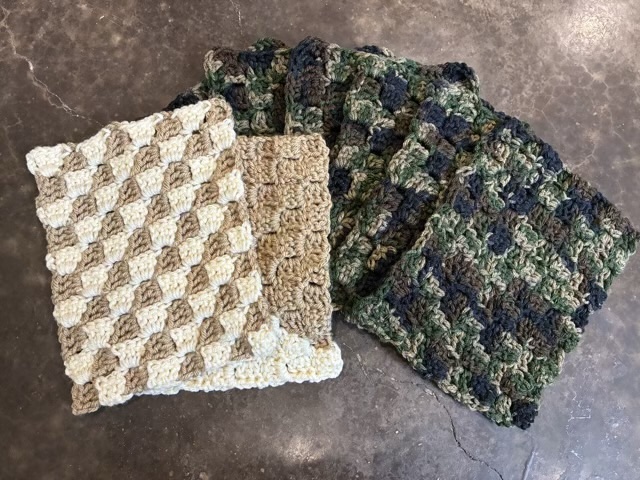
I made blocks with the diagonal squares pattern from Mary Maxim, which I love so much. I found worsted weight acrylic yarn crocheted with a size K hook with 8 squares by 10 squares makes a 7” x 9” block.
Photo description: 7” x9” crocheted blocks made with left-over yarn
The block on top in the picture above was made with alternating rows of color, which was an interesting experiment, but resulted in many, many, many ends that had to be woven in. Please weave in your ends!
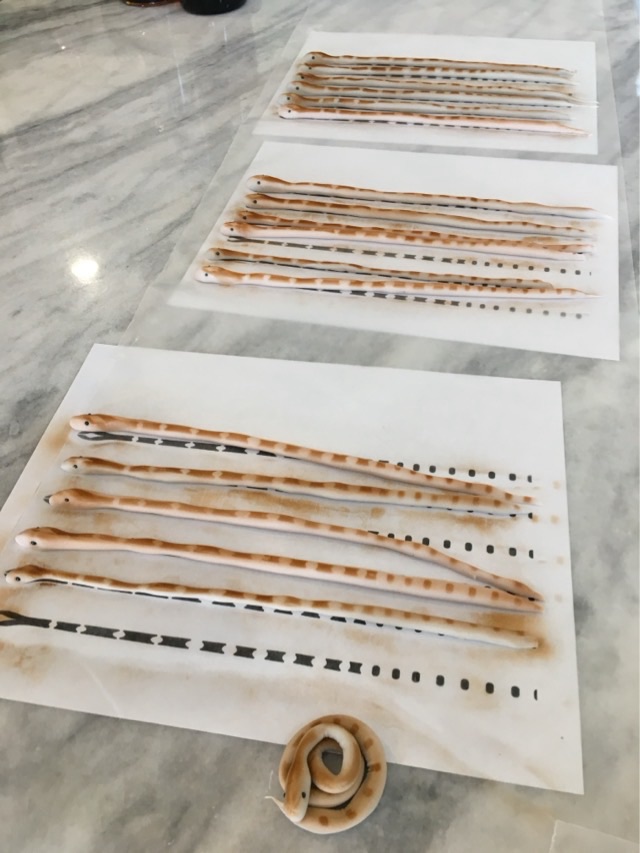
In March 2018 my eldest received a corn snake from her grandparents for her birthday. She requested snake themed cupcakes for her cake, and so we made little fondant corn snakes with air brushed patterns.
Photo description: fondant snakes on templates to make them consistent and for lining up the stencil for airbrushing the pattern
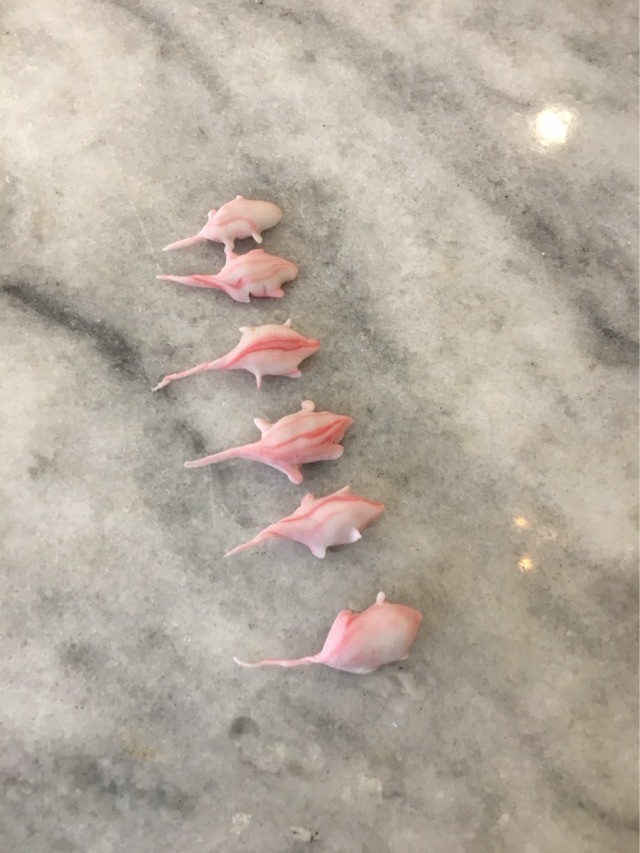
I remember the snake themed cupcakes, what I didn’t remember were the tiny fondant baby mice.
Photo description: baby mice made from fondant icing colored pink
Oh yes, we set up the cupcakes with the snakes and the mice.
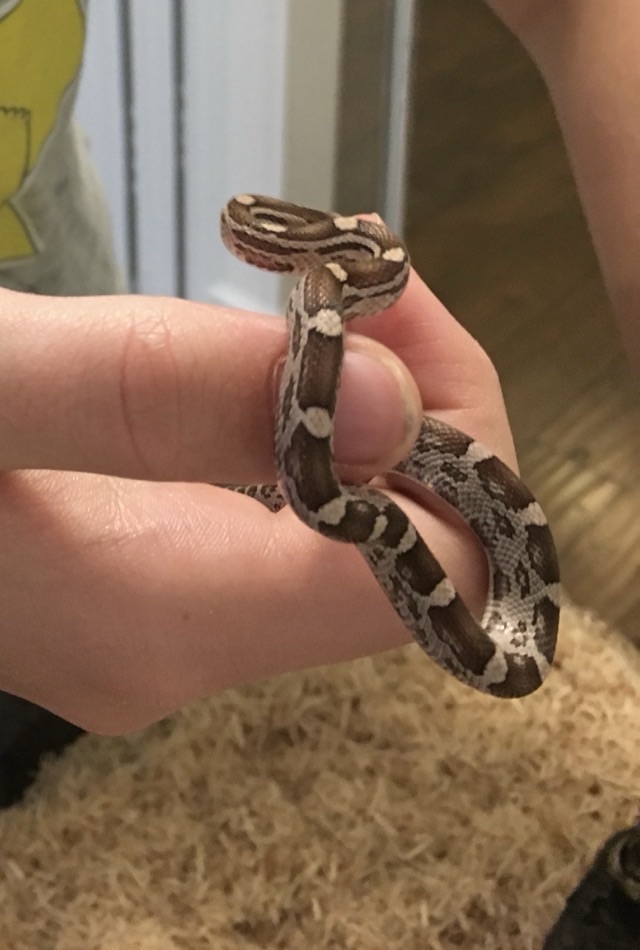
Photo description: finished vanilla cupcakes with chocolate frosting, some with mice caught in the snakes’ coils, some without, and a few extra fondant snakes in betweenPhoto description: real living snakelet held in my eldest’s hand
I found this copper disc lying in my washing machine.
Photo description: copper circle with wear marks
It is an old penny, by the evidence on the other side.
Photo description: badly worn penny
The year is completely worn off, as is Lincoln’s face, but the fact that it is still copper colored and not silvery zinc tells me (according to the internet) that is was made before pennies were only copper plated, around 1982.
I think it was stuck in my washer until it was worn thin enough to escape. I’m keeping it because the wear pattern looks like a tree and roots, very similar to my graphic design logo.
There are so many applications for the word “twining” in crafting. I was going to start this blog post talking about twining wool, but I think I have to specify that I was making twine from wool. Typically twine is made from plant bast fibers: cotton twine, jute twine, hemp twine, for example, and forms a dense strong string. I took a long staple wool, Teeswater, and twined it in a similar manner. Twining wool could also refer to construction techniques in weaving or knitting, but not in this case. Here I am making yarn, nålbinding a few stitches, then making more yarn (I’m going to call it yarn because it is softer than typical twine, yes, I’m splitting hairs (haha)).
The problem I encountered was a strong twist in the small pouch I was constructing. I experienced this with a different project, so decided to try twining the opposite direction, by switching hands, but the twist still happened. I think it is in my nålbinding stitch. I do not enjoy twining with my left hand as much, so I halted the project.
Photo description: start of a nålbinding project that has a Z twist bias making it spiral
Then I had the problem of what to do with the abandoned project. Undoing nålbinding is a difficult, sometimes impossible task, which is what makes it good for items that need to be sturdy. So what could I make from a small bit of wool? Well, a cat toy, of course. Thor the cat loves wool, and steals socks and doll clothes that are made from wool. So I sewed up the seam, stuffing it with un-spun wool as I went, and ended up with a little roll.
Photo description: stuffed tube made from wool
The new cat toy was a big hit with Thor the cat. He loved it and it was very difficult to get a photo of him as he carried it around the house, flipping it and chasing it at speed.
Photo description: large gray tabby going in for the grab of the wool roll