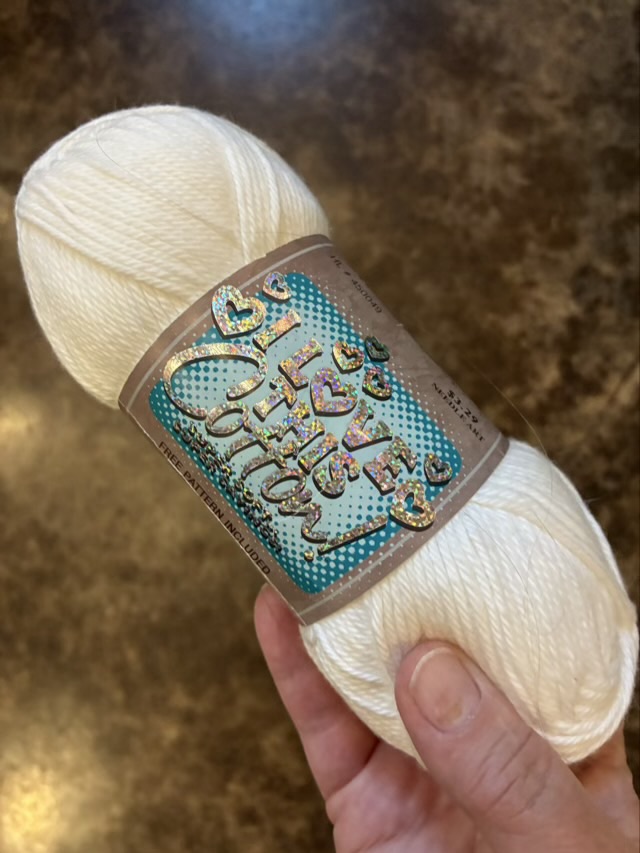
I have found an exception to my rule of always taking yarn from the center of the commercial skein. The “I love this yarn” in cotton produces repeated yarn barf if drawn out from the center: clumps of tangled yarn that pop out of the skein like an angry Obscurus.
Photo description: white cotton yarn skein from the brand “I love this yarn”
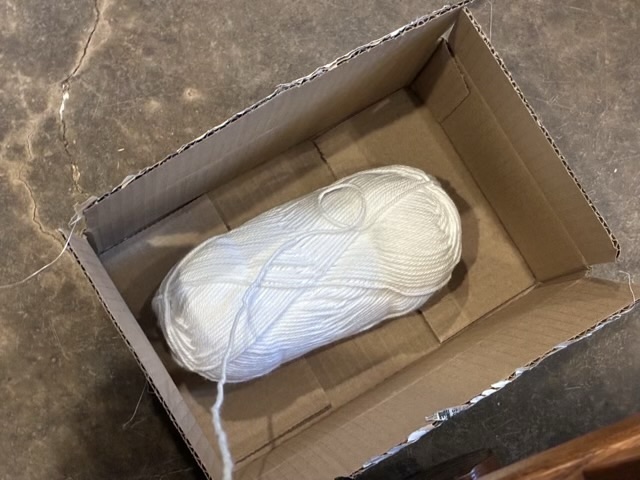
For these skeins, I pull yarn from the outside. To keep the yarn from getting away as it flips around, I put it in a box.
Photo description: white skein of cotton yarn in a small cardboard box with the yarn coming off the outside of the skein.
I see why the free hanging yarn holders are popular, they are for the “take the yarn from the outside” crafters, which is a fine method for cotton yarn. There are many ways to do things, it is good to experiment to find what works for you or the particular material you are working with.
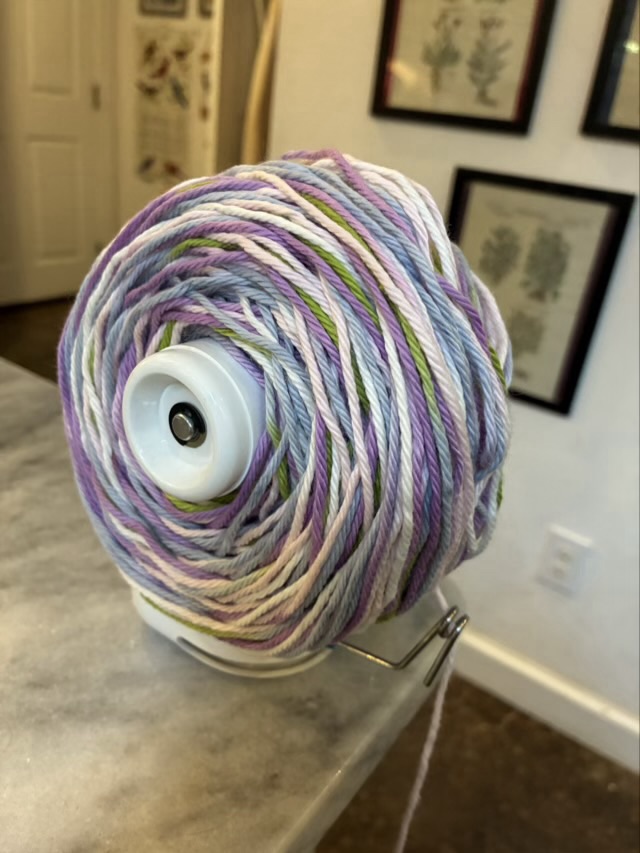
I saw a different kind of yarn winder scrolling the marketplace, and ordered one. I was intrigued because instead of using a tilted core that spins off-axis, it uses a stationary core and an arm that oscillates. Unfortunately it makes very messy yarn cakes. Functional, but messy.
Photo description: messy yarn cake on a horizontal style ball winder
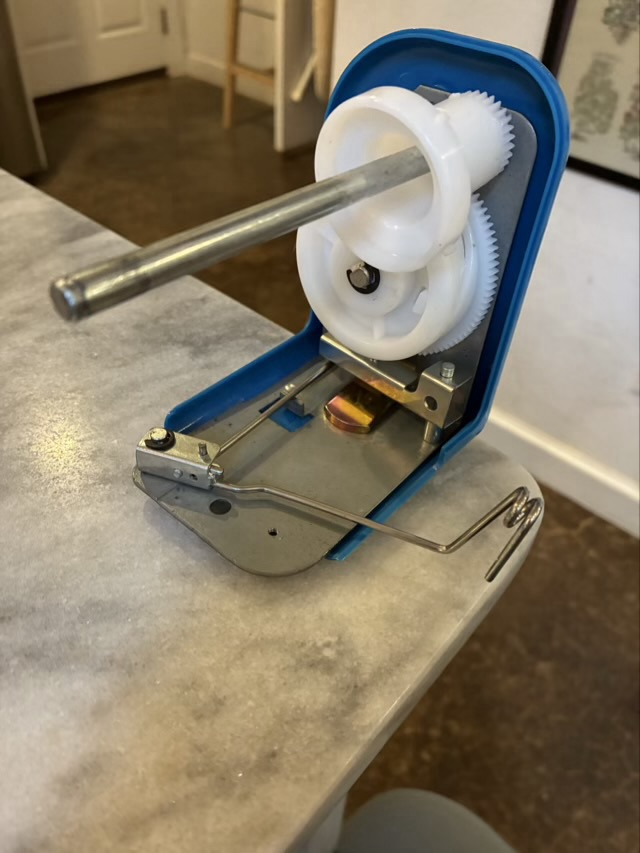
I tried several different ways of winding: forward, backward, without tension, with tension in different directions, but all the cakes were messy. Even the picture on the box had a messy yarn cake, so I don’t think I’ll be able to achieve a beautiful wrap with this device. But it could serve another purpose. I took it apart to see how it worked.
Photo description: same yarn winder with the cover removed showing the gears and cogs that make it tick (literally)
When I had it apart I played a little with the arm length and spent quite a bit of time turning the handle to watch how the parts worked together. The seed of an idea is in the back of my head to make my own yarn winder that I can use with a treadle instead of a handle.
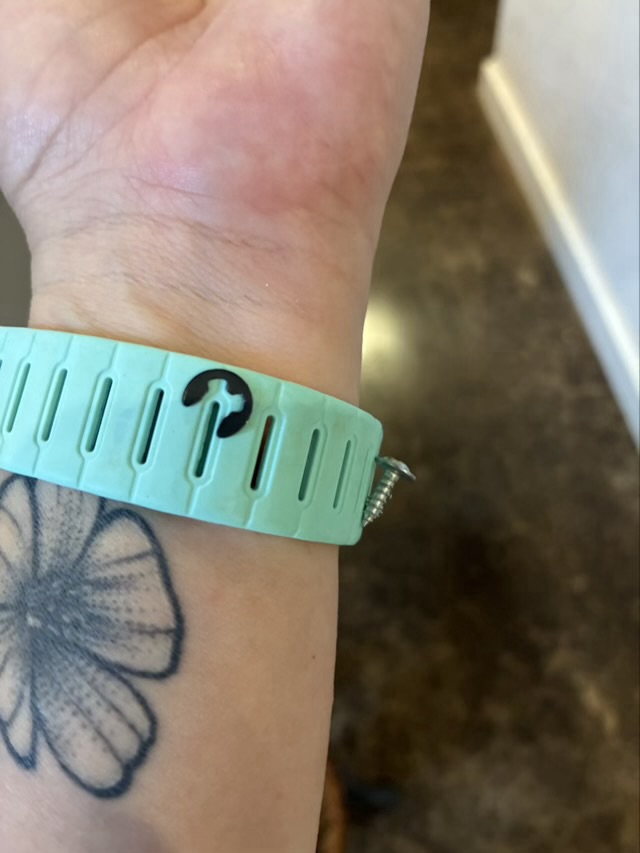
When working with small metal parts, a magnetic watch band can be a useful accessory, if you remember that it is magnetic and will pick up tiny parts. I spent five minutes looking for the small black clip on the floor before I looked at my watch.
Photo description: small black clip and a small screw magnetically attached to my watch band
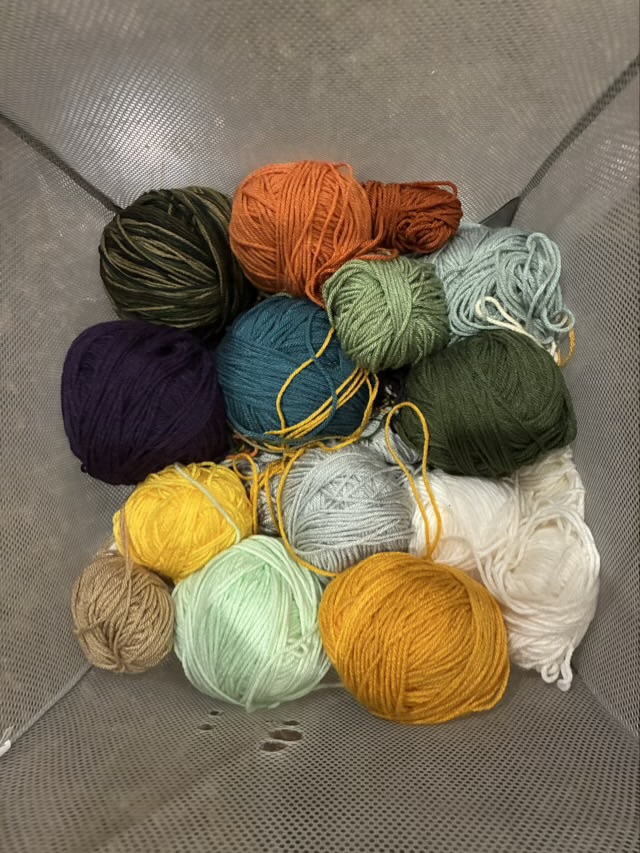
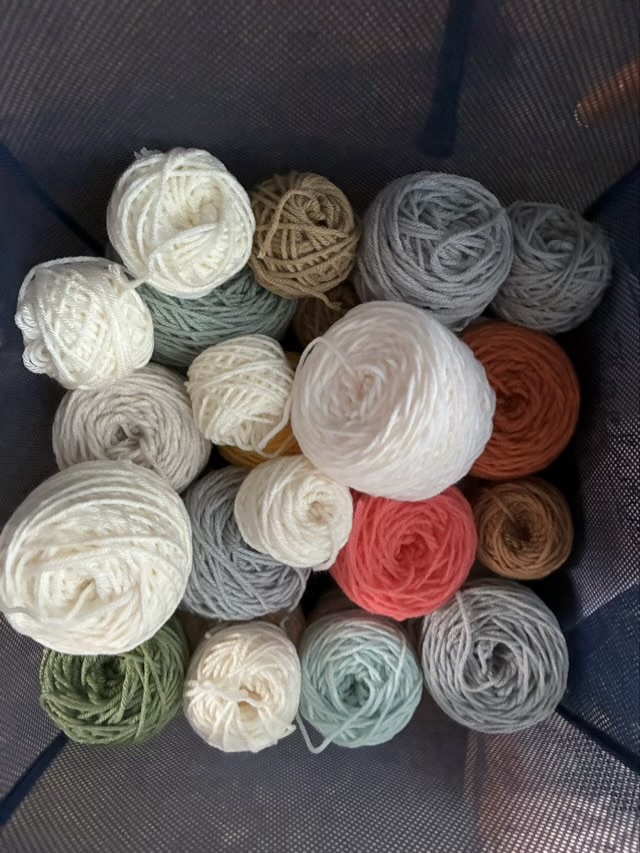
Photo description: mesh basket full of hand wound balls of acrylic yarnPhoto description: mesh basket full of wound cakes of acrylic yarn
I finished rewinding all the yarn remnants into cakes. It might not make a long term difference in the neatness of the stash, but it soothes my soul to have them all center-pull. We’re all different.
Every knitter or crocheter has their own preference for the form of their yarn. My friend prefers to wind her yarn into balls before she gets started. With purchased yarn, I dig into the middle and pull the yarn from the inside, then wind the remains as cakes on a winder, or nostepinne style balls. I have a whole bag of remnants that are balled and I am rewinding them as cakes.
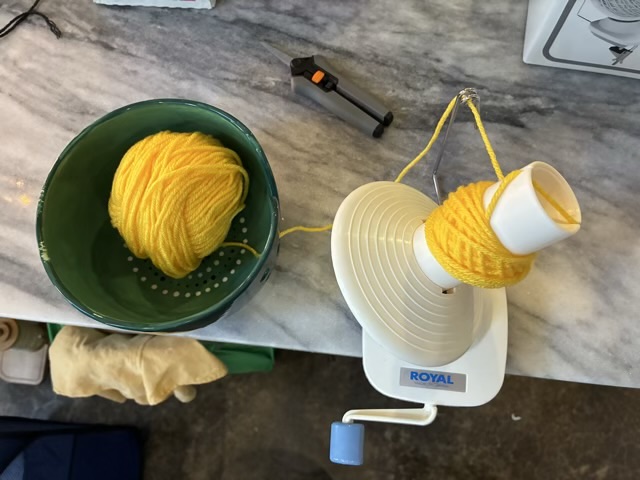
Photo description: yarn bowl with hand wrapped ball of yellow yarn going to a Royal ball winder clamped to the counter
I tried using my ceramic yarn bowl, but it isn’t up to the speed produced by the winder, so I dropped the ball into a basket so it didn’t roll around on the floor.
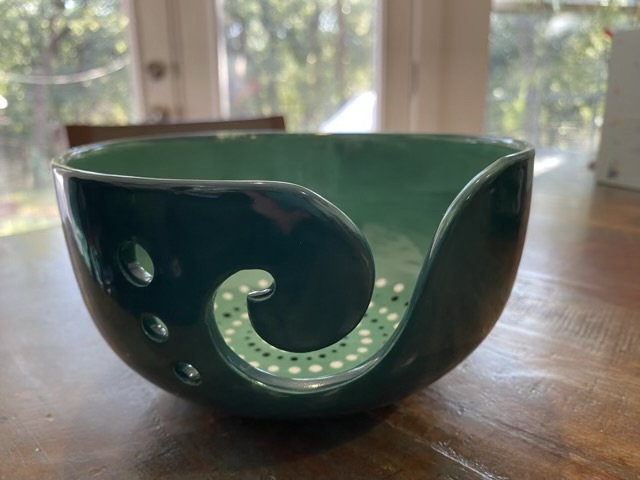
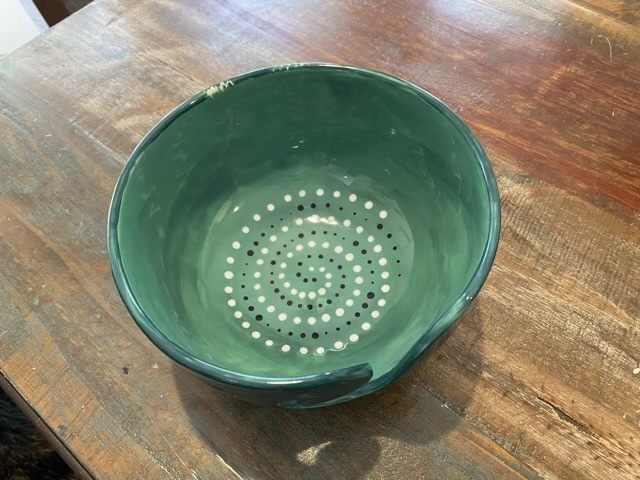
I have been wanting a yarn bowl, so when we went for another round of ceramic painting and there was an unpainted yarn bowl, I took the leap.
Photo description: green ceramic yarn bowl with holes for yarn or a hook carved in the side for yarnPhoto description: inside of the yarn bowl painted with a spiral of white and black dots
Yarn bowls are a solution to round wrapped balls of yarn. They keep the ball from rolling all over the floor. They work with other yarn preparations too.