Wool goblin

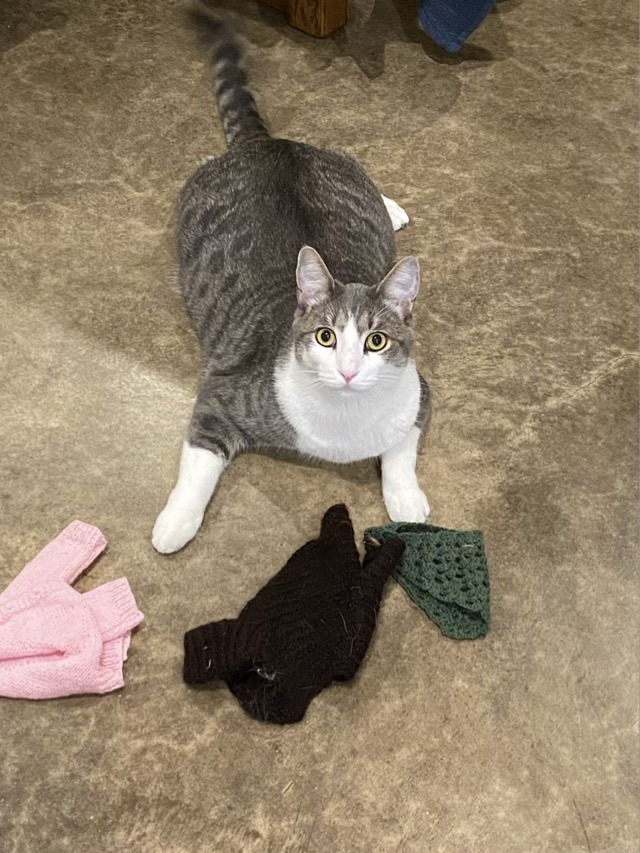
Photo description: Thor the cat with three articles of doll clothes in front of him, all made from wool

Thor the cat really likes wool. Awhile back we moved the gate keeping dogs out of the cat area and inadvertently removed the gap on the side that Thor used as a pass through. The gate was no problem for our two leaping female cats, but Thor is not a leaper. He can jump up, but for some reason doesn’t get that he can jump over. So he was blocked from the upstairs and our youngest’s room, which is full of wooly goodness. My eldest fixed his access by putting a stool on one side and a box on the other, giving him treats to entice him over. He learned, using supports, to get over and regained access to the treasure trove of doll clothes. He goes up, selects a wool item (always wool, never acrylic) and brings it downstairs. In the picture, the brown doll jacket in the middle was his latest prize, I threw the green doll shawl and pink doll sweater that he had previously brought down next to him for the picture. I could probably use him as a wool finder for fabric with unknown animal hair content.

P.S. he looks like a chonk, but the vet says Thor the cat’s weight is in the normal range.

Small sprang bag

I warped my small sprang loom again using dyed wool yarn, once again determined to make this one a little better than the last. I warped on a few more times to make it wider to help combat the natural inclination to twist.

Photo description: small bent cane sprang loom with orange and yellow dyed wool yarn interlinked in a single direction (all S twist on the top, all Z twist on the bottom)

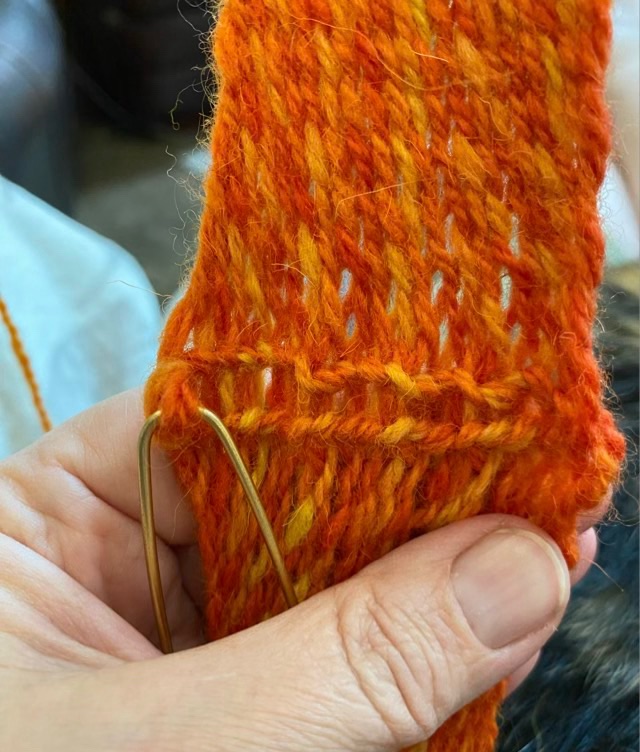
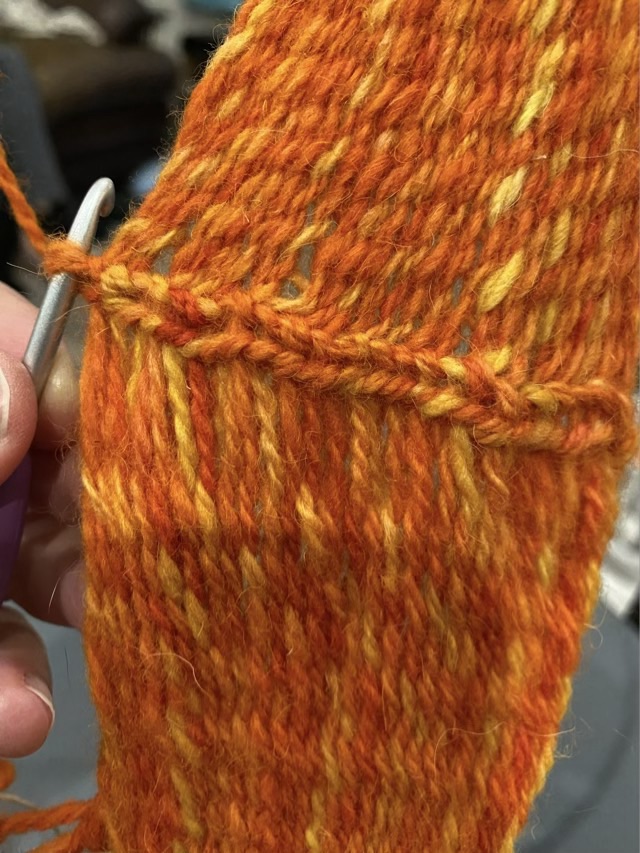
This attempt was an improvement on the previous tries. I achieved an even fabric, even though finishing the middle is still vexing me, it was less wonky than the last times. I tried a different method too: chaining each side separately, rather than both together. It still needs work.

Photo description: chain looped center of the sprang fabric, with a stitch holder in the last loop

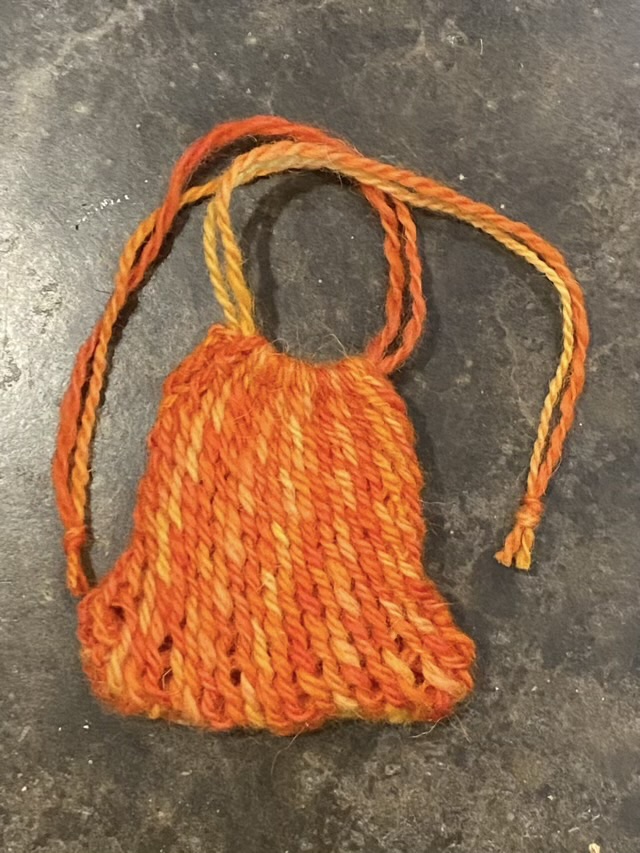
I used the extra yarn from warping to sew up the sides, and strung yarn through the top to make a drawstring bag.

Photo description: small wool sprang bag shown empty and closed
Photo description: same bag shown slightly stretched because it is holding a mandarin orange

The sideways stretch of the bag is easily double the height. There is no stretch vertically, which I need to take into account when designing a piece. This tiny bag would do well to hold dice. I’ve seen some larger bags made with wood handles that would outperform a similar bag in crochet because crochet stretches in all directions and tends to droop over time.

Sprang attempt 2

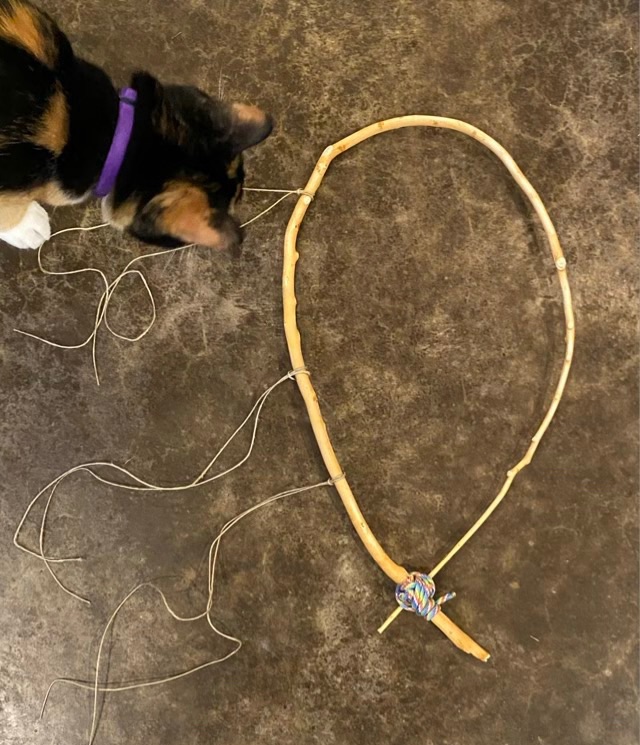
I’m determined to add Sprang to my crafting repertoire. This round, I secured the bottom of my small bent cane loom with some paracord so it was less loosey-goosey. I added life lines using hemp string, and used hemp for the header and footer ties. (Why hemp and paracord? That was what was next to me. The paracord is too thick for the lifelines (to me), so I replaced them with thinner hemp.)

Photo description: restructured small sprang loom with Izzy the cat investigating the string

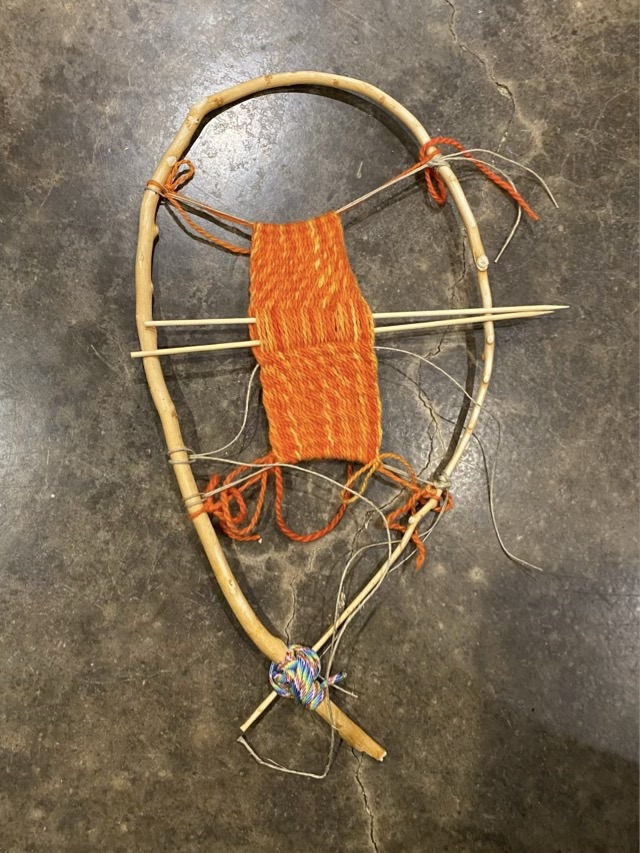
Using wool yarn and making a wider sample did help with the bias twist a little while I was working. I did some interlinked rows, and tried some intertwined rows to the middle.

Photo description: orange wool yarn woven on a small sprang loom using lifelines and bamboo skewers

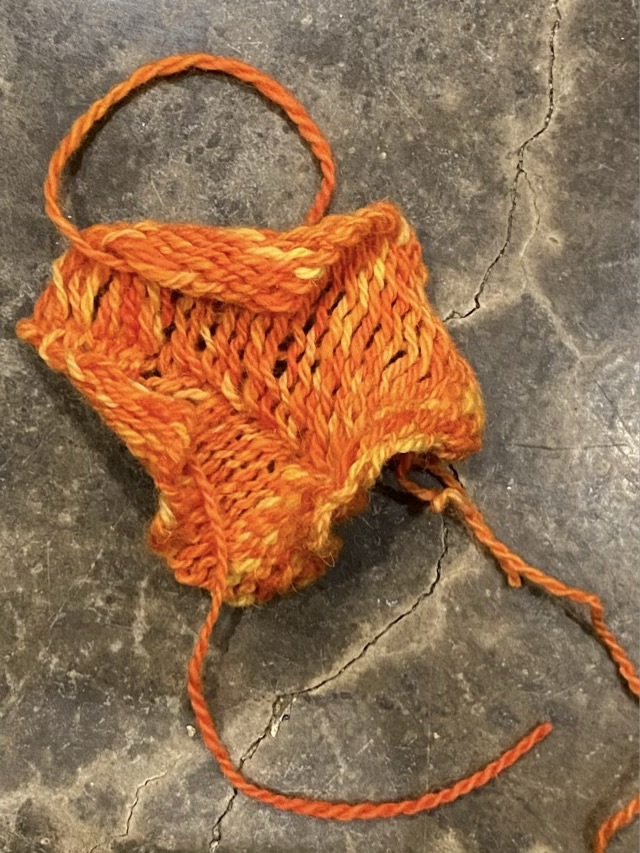
I went to finish the center with a crochet chain and everything went wonky. The chain crawled upward on the yarn, making the two uneven halves even more uneven.

Photo description: botched attempt at finishing the middle of the sprang with a crochet chain stitch

When I took the sample off the loom it curled unevenly, wonky and crumpled.

Photo description: sprang sample off the loom, twisted

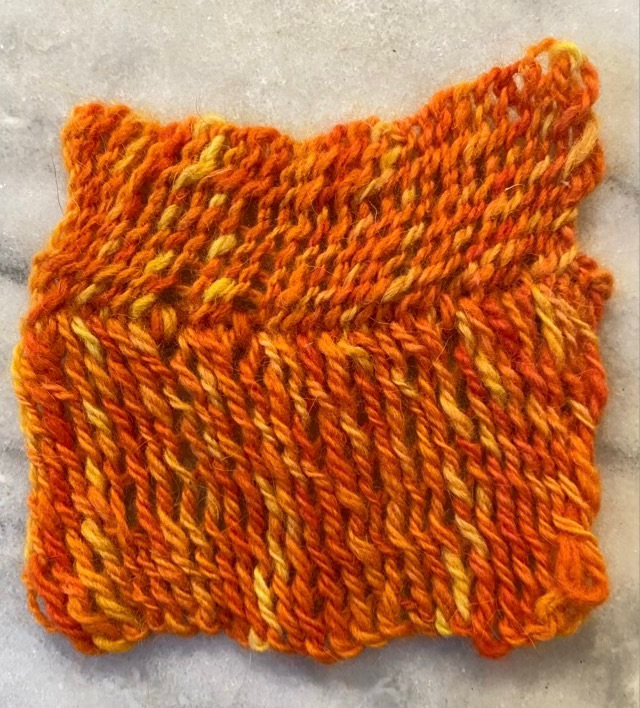
I wove in the ends, catching the live loop of the crochet chain when I went up the side, and blocked the piece by wetting and pinning it to dry.

Photo description: blocked and slightly less wonky bit of sprang work in orange yarn
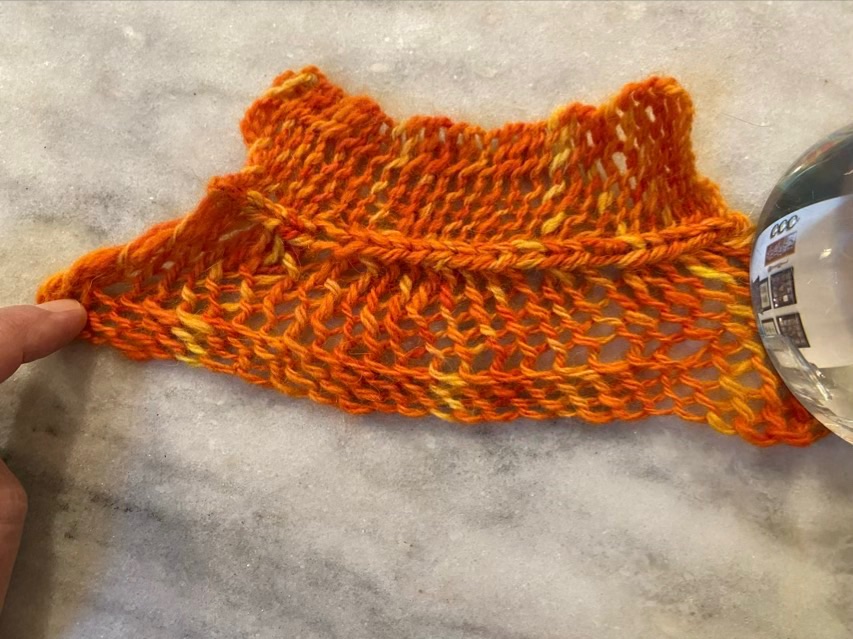
Photo description: same bit of sprang, opposite side, shown stretched, it really has a very pleasing sideways stretch

Undeterred, I made a third attempt. Rather than the chain finish, I tried warp and weft plain weaving the center part. Abysmal. The plain weave has no stretch and completely threw off the stretch of the sprang. I mention it only so I remember that I tried, and rejected, the method. It doesn’t even deserve its own post. I’m not giving up, though.

Fiber page: Shetland lace

The Baize Shetland wool was the first Livestock Conservancy Shave ‘Em to Save ‘Em fiber I purchased. I bought a 13 oz batt, and have been spinning it at demonstrations and fair booths. I’ve been quite remiss in actually making a fiber page! That is now rectified, and this wonderful fiber has a page in my sampler book.

Photo description: Post card from the breeder (top left), single spun and two ply yarn (top right), unspun wool as purchased scoured and carded (middle left), crochet round (middle right), two Shetland lace knit samples (bottom left), nålbinding (bottom middle), and a woven swatch with combed fringe.
Photo description: same page, but with the samples folded up to show the descriptions

Shetland wool is a joy to spin, and is definitely on my “will purchase again” list.

Shetland wool

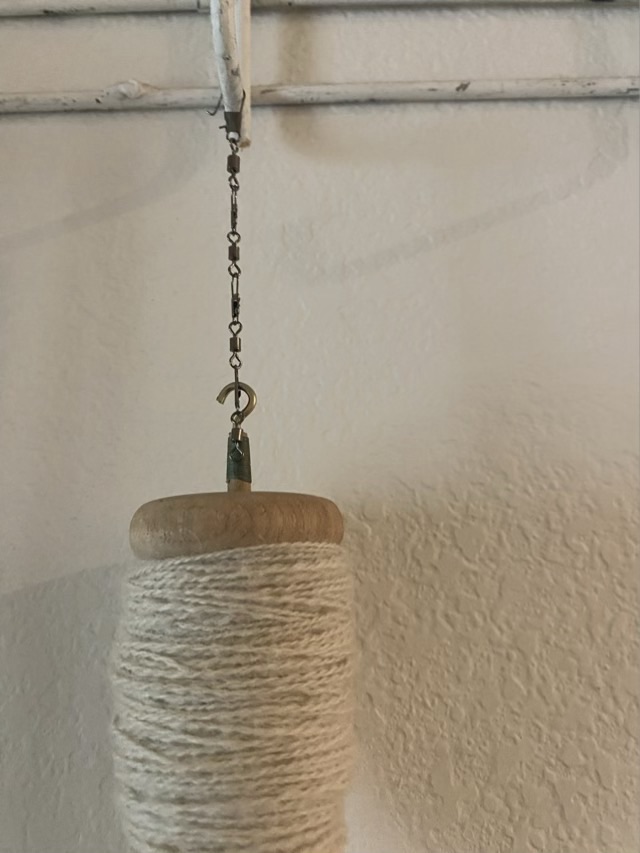
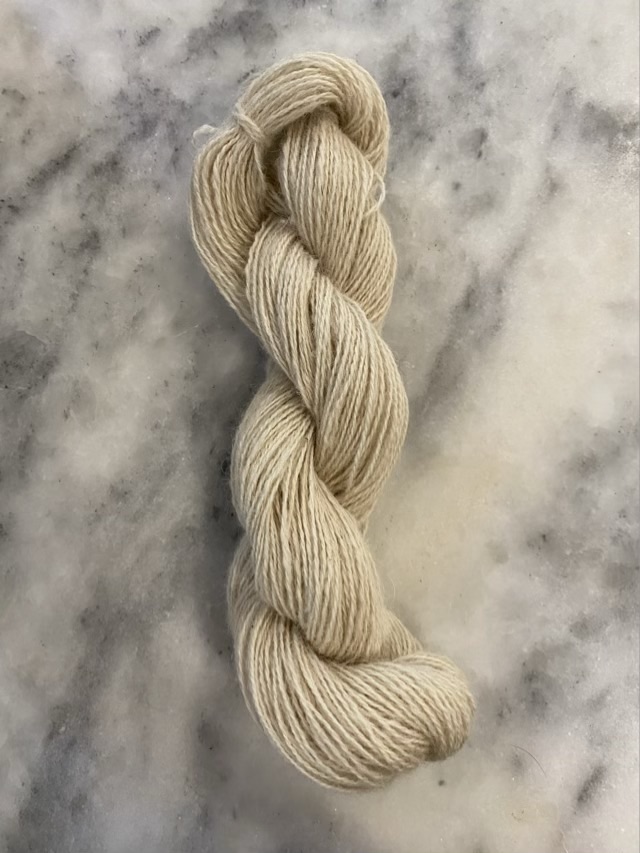
A couple weekends ago I spent about five hours doing spinning demonstrations at a local Earth Day market. I was spinning Shetland wool on a spindle that I have demonstrated on before, so only about half the yarn cop was spun that day, but it was enough to fill the spindle. I found that hanging the spindle from my canopy made it easier to off load the yarn. So at home I tried the same thing, but used fishing swivels instead of a loop of yarn, which works much better. Did I take pictures of the full spindle with single spun yarn? Or the nice nostepinne style center pull ball of yarn? No, much to my later self’s dismay. I did the photo record of the two ply yarn, and the resulting skein after blocking.

Photo description: using fishing swivels to hang a drop spindle from a broom rack for ease of off loading the yarn. Two ply Shetland wool on the spindle.
Photo description: two ply Shetland wool skein weighing 28g

I still have Shetland wool ready to spin, but a factor in off loading and plying this yarn now is that I don’t have a Shetland wool page in my fiber book. Oops. I demonstrating spinning it, but don’t have examples of the finished product. I’ll use this finished portion of yarn to make my swatches and complete a page in my book, then spin up the rest later.