Tapestry weaving bobbins

I have been weaving with my yarn tied into butterflies (not onto butterflies, which would be cruel and flappy, but the practice of looping yarn over two fingers and tying in the middle resembles a butterfly). They are easy to tie and require no additional equipment. For the most part the yarn management is easy, until near the end when you either have to retie the butterfly or deal with a long end. After looking through my book and magazine, I decided to make some tapestry weaving bobbins.

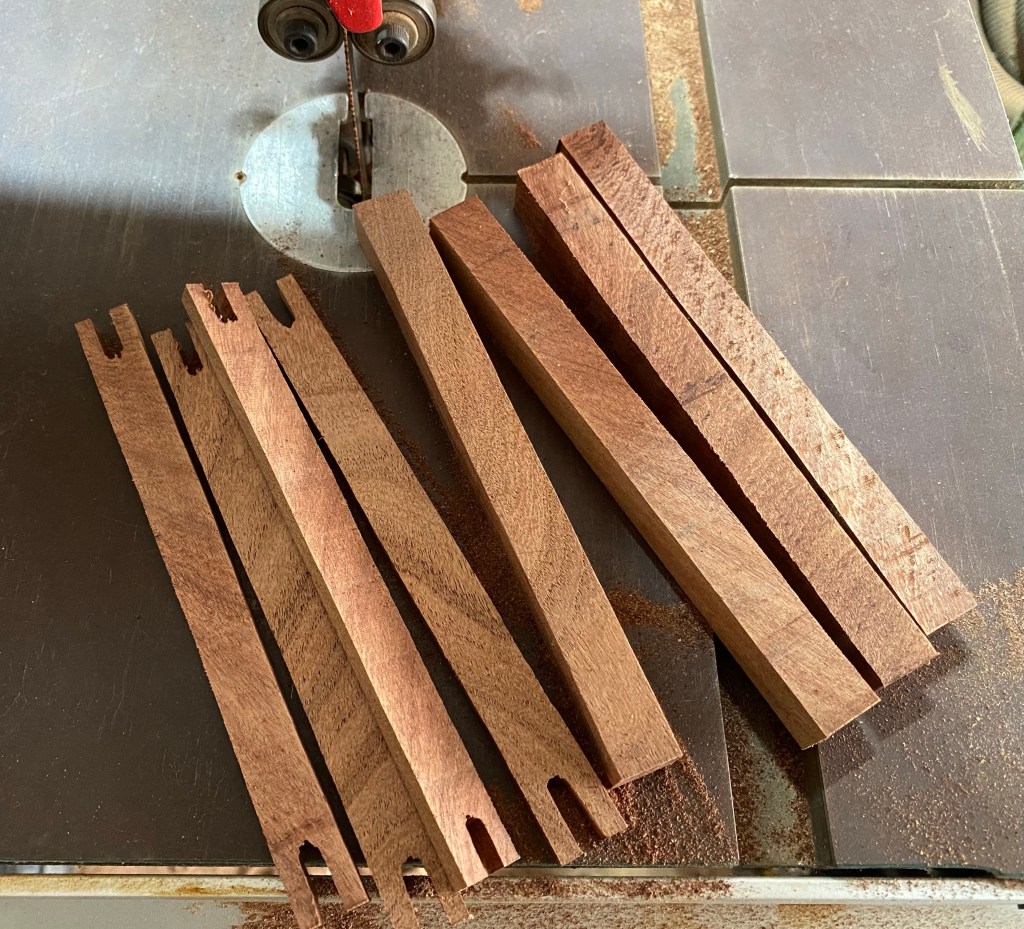
I chose mesquite because I had some scrap laying on my bench. I used the band saw to cut square dowels about 6 inches long and about 1/2 inch in diameter. The scrap from this looked useful, so I also made some small yarn shuttles.

Mesquite cut into blanks on a band saw

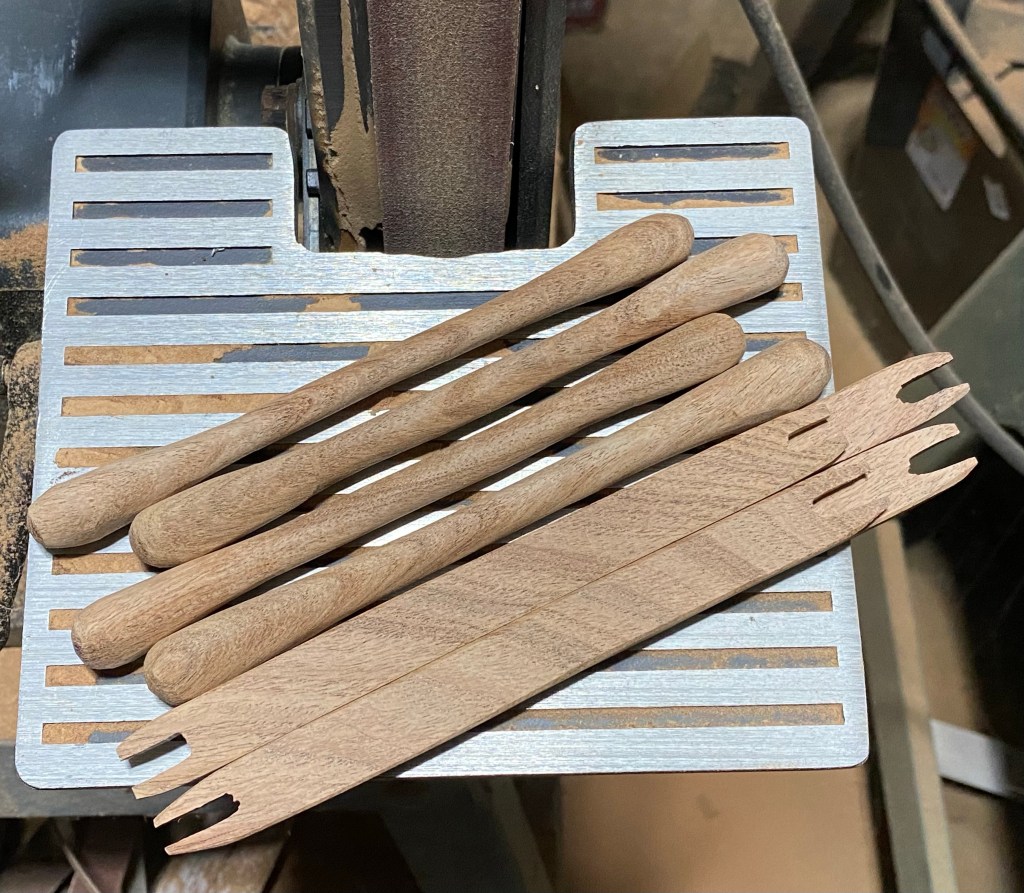
Then I moved on to my band sander to shape the bobbins, and smooth the shuttles.

Bobbins and shuttles shaped with a band sander

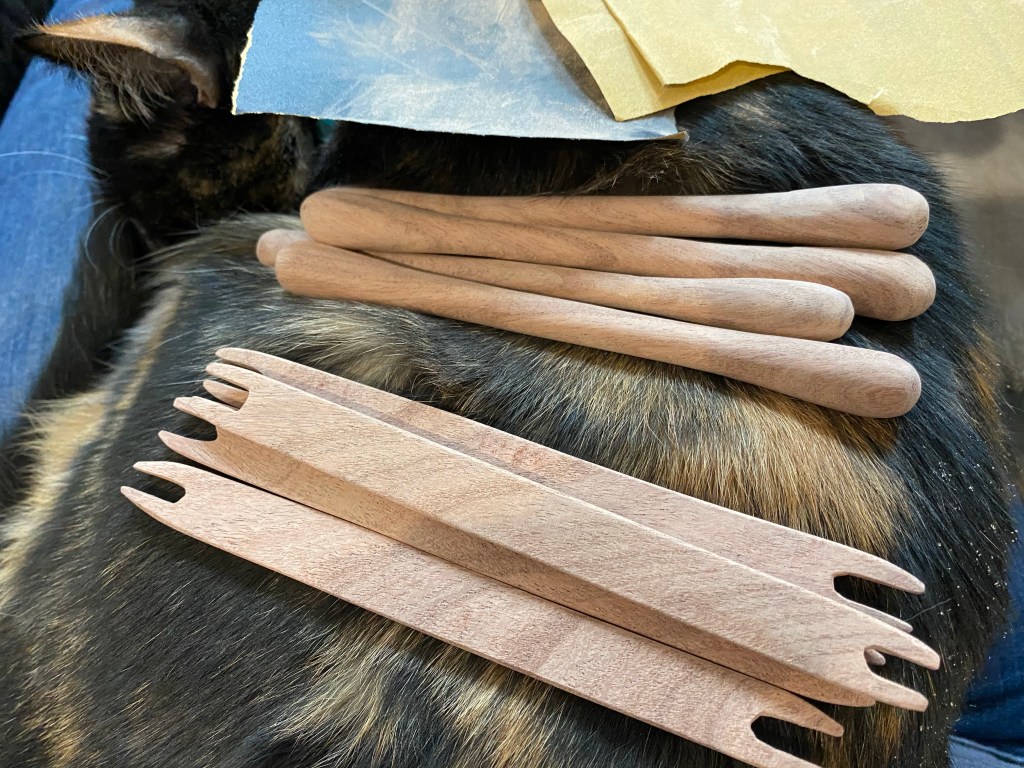
After roughing in the shape, I hand sanded all the pieces down to 400 grit. I have not finished them yet, as I am not sure they are at their final size (and I really wanted to start using them, and not wait for tung oil to dry!)

Hand sanded bobbins and shuttles and a cat who insisted in lap time even though I was sanding

I am pleased with the shape and feel of my bobbins. They could have been more regular if I turned them on a lathe, but I still haven’t secured my lathe in the rearranged garage, so this will do. Hand shaping has given them an organic feel, which is nice as well.

Interesting to note, I will have to be more careful when working with mesquite in the future. Like wearing a mask when I’m sanding, even if I only think it will take a few minutes (wear your dust mask kids!) After sanding I felt light headed, and the next day I had a headache. This is not my first wood sensitivity; I’m outright allergic to walnut and can’t work the wood at all. I did find a nifty chart with wood allergies and toxicity here (https://www.wood-database.com/wood-articles/wood-allergies-and-toxicity/), which lists Mesquite as sensitizing. So there you go.

Wooden ergonomic crochet hook

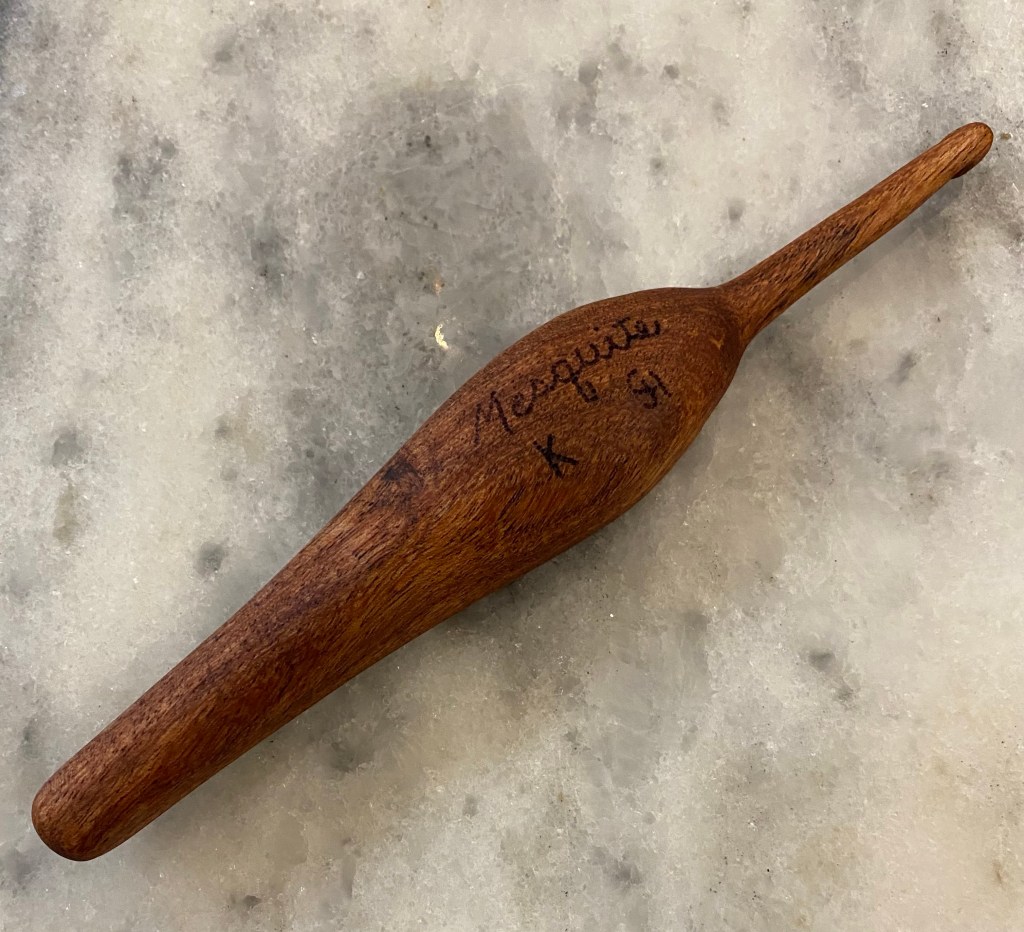
Well this was fun! I made a crochet hook out of a chunk of mesquite. Rather than a straight dowel (which are harder to hold and manipulate), I made a handle shaped to my hand, then chiseled out an indentation for my thumb. Then I shaped the actual shaft and hook. It took me a couple tries to get the length right (I used some scrap cotton to test), but found a good length and refined the head. I sanded down to 400 grit and sealed with tung oil. The shaft is a size K hook. I could probably have gone smaller, but we’ll see how this one performs. I sent it off to my Mom for the holidays!

Finished mesquite crochet hook
Back of crochet hook with wood burned lettering
Side of crochet hook

Wooden tongs

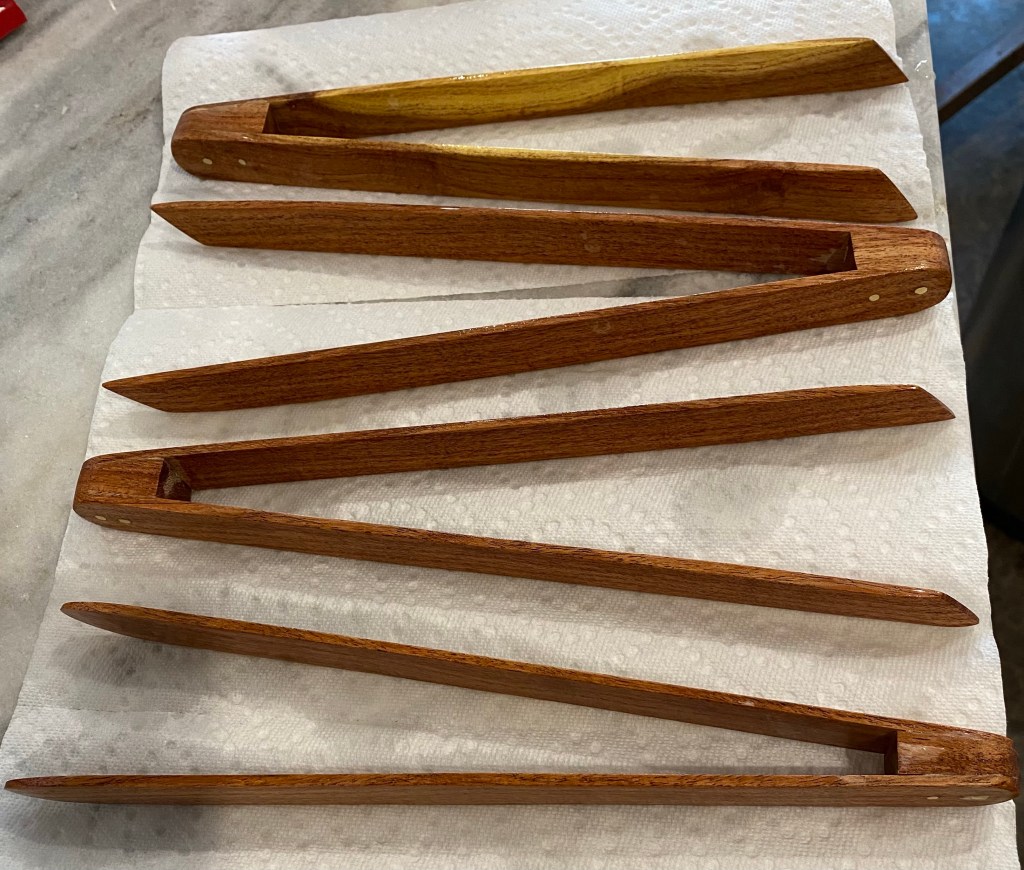
And the reveal… wooden tongs! I made wooden tongs as gifts this year. I used mesquite wood for the blades and wedge, but wasn’t confident with glue joints so learned to set brass pins. I posted on that previously, but didn’t show what I was actually making (spoilers).

Mesquite wood tongs shaped and sanded to 400 grit

After shaping and sanding, I did my usual water rinse to raise the grain, and was quite surprised that the mesquite was still quite smooth. I ran over everything with 400 grit again, just to be thorough. I added some embellishments with wood burning, then sealed with butcher block conditioner (which is a food safe mix of oils and wax).

Finished pair of tongs

Setting pins

I have learned a new skill! Hurray! I have probably been watching too much Forged in Fire; I had a desire to learn to set a pin in wood, which they don’t actually show how on the screen. Turns out, it is not that difficult. Getting the holes set evenly is another matter!

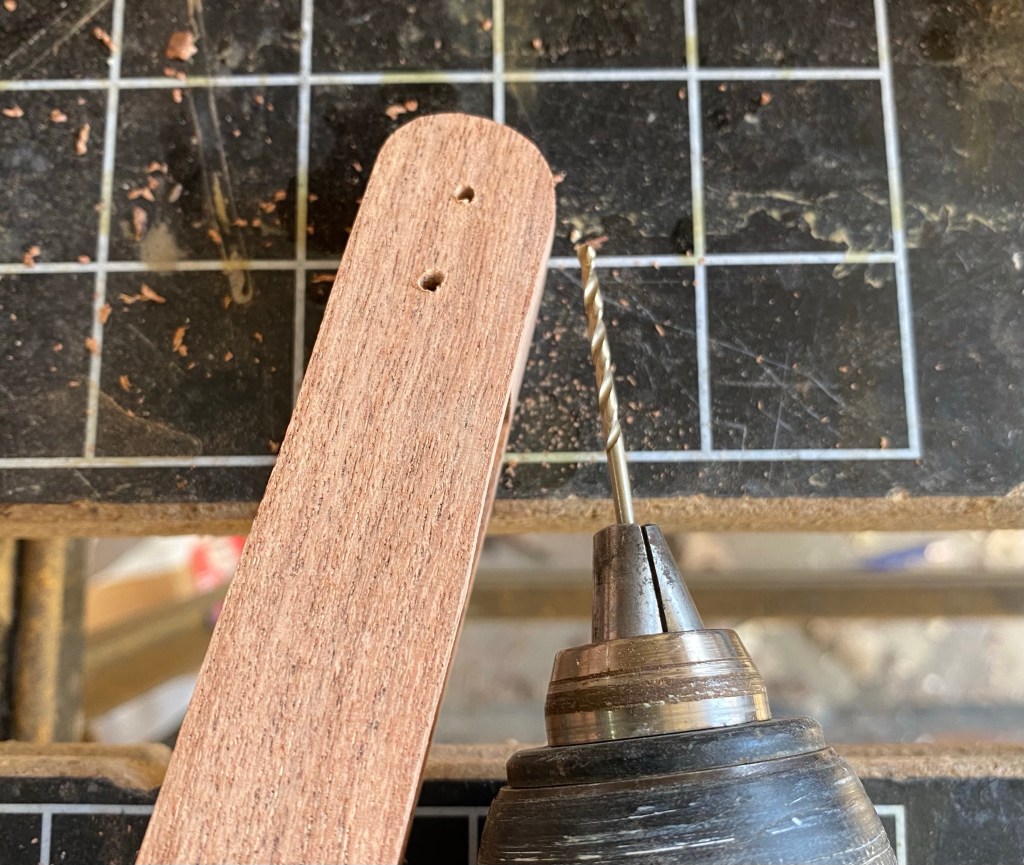
Drilling holes

First, I drilled holes the size of my brass wire. My drill bit was the exact size, so I had to ream it out some to get the wire through. When drilling, support the back of the piece with scrap wood. By drilling into the scrap wood, you reduce the chance of blowing out the back of the hole (that is experience talking!)

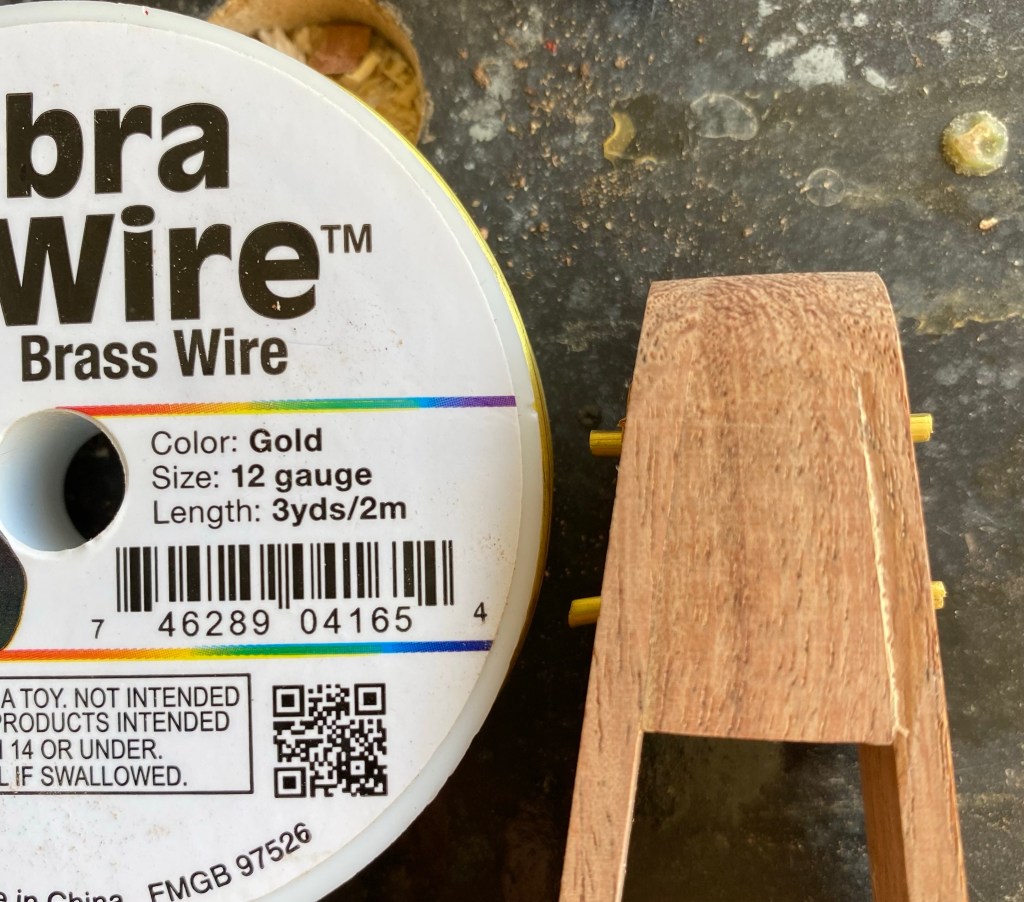
Wire inserted through the holes and trimmed 1/8” inch on each side

I cut my wire flush and to about 1/4” longer than the width, so that when fully inserted, the wire sticks 1/8” out each side. The fit of the wire should be snug; I used a hammer to drive it through.

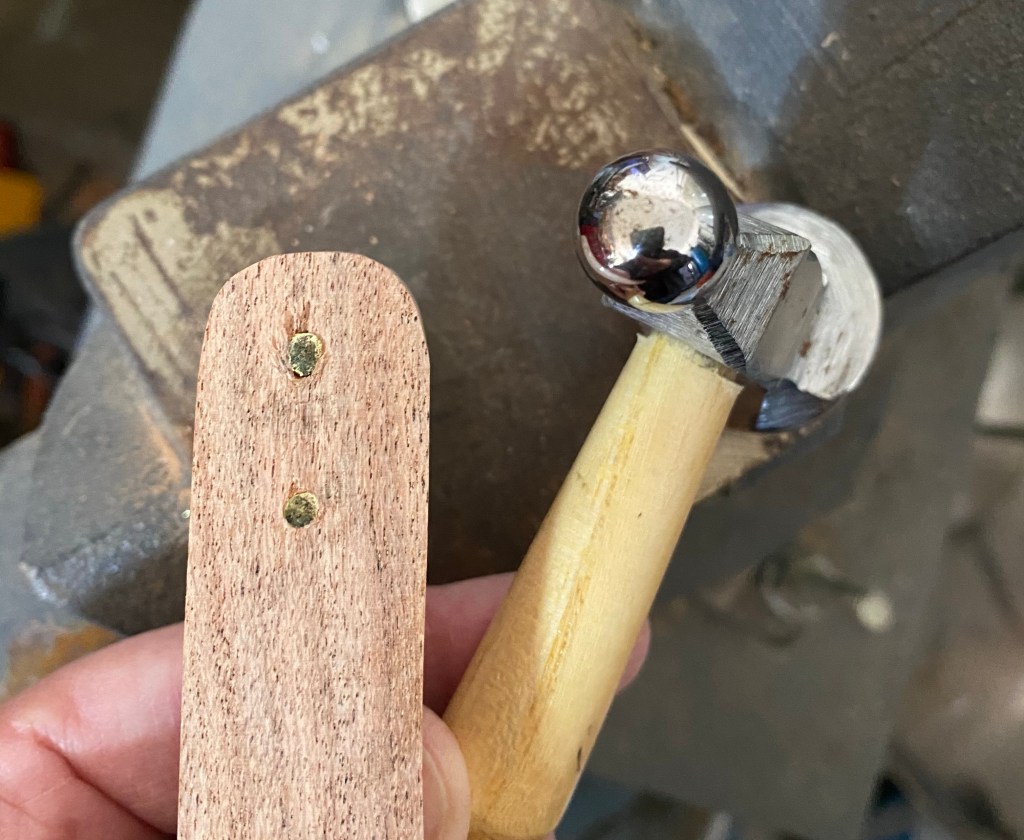
Flattening out the ends of the wire with a ball peen hammer

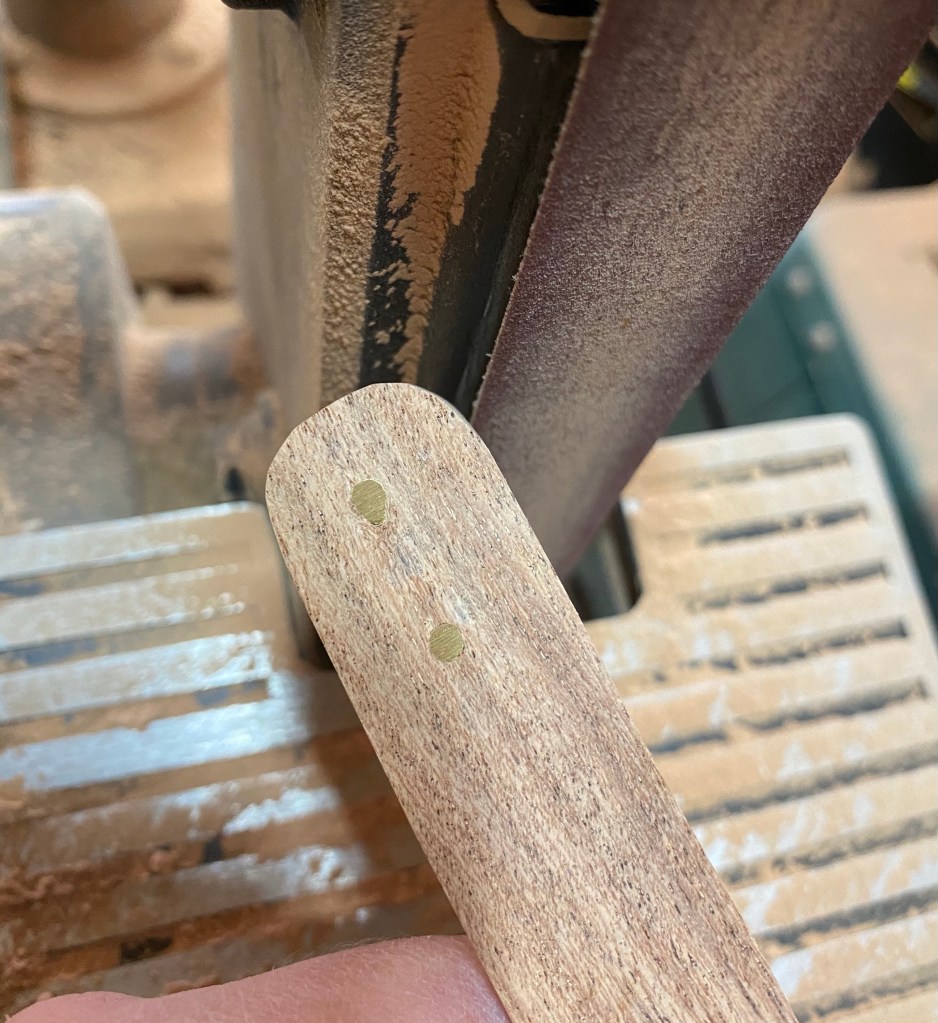
I took the work over to the vice, because it has a small anvil area. I used a ball peen hammer to mushroom over the ends of the wire. By hammering a few times, then flipping it over, I was able to flatten out both ends of the wire. I hammered around the edge of the wire (mostly, still practicing), rather than straight in the middle. This pushes the metal outward to round the end and wedge it into the wood.

Sanding the pins smooth with a band sander

To finish, I sanded off the top of the pin so the top was smooth. The resulting brass circle is larger the than the initial hole, and fills the hole completely, so I’m fairly confident it will hold. Fun! Now what else can I pin…

Lucets

Laying out two styles of lucets

Here is another ancient craft I haven’t tried: lucet cords! It has been on my bucket list, but it wasn’t until my Mom was working on making elastic lucet cords for masks and hinted that a smooth wooden lucet would be nice, that I decided to finally make a lucet. Honestly, a lucet isn’t necessary to make a lucet cord; a forked stick would work, or even two fingers, but having nice tools is such a pleasure! I made up some designs in Illustrator, printed them out, and transferred the design to some scrap flame maple and padauk. I used almost every standing tool in the garage! Joy! I used a scroll saw to cut the shapes, a band saw to split the flame maple lengthwise, a band sander to rough out the shaping, an oscillating spindle sander to refine the shape some more, and the drill press to drill the holes. I hand sanded after all that, because nothing mechanical comes close to a hand sanded finish.

Sanded, unfinished lucets

I sanded the lucets down to 400 grit, did two rounds of water treatment, then before finishing, I just had to test them to make sure there were no final tweaks to the shape. They worked well! I like the handleless lucet best. I’m going to send the handled lucet and the owlish lucet to my Mom for testing. (Mom likes owls, and the handleless lucet is reminiscent of a great horned owl, so I drilled “eyes” instead of a single hole.)

Testing the owl lucet

I finished the lucets with four coats of tung oil. Oh how the flame maple shines! The padauk has a nice color too.

Finished lucets