Spurtle

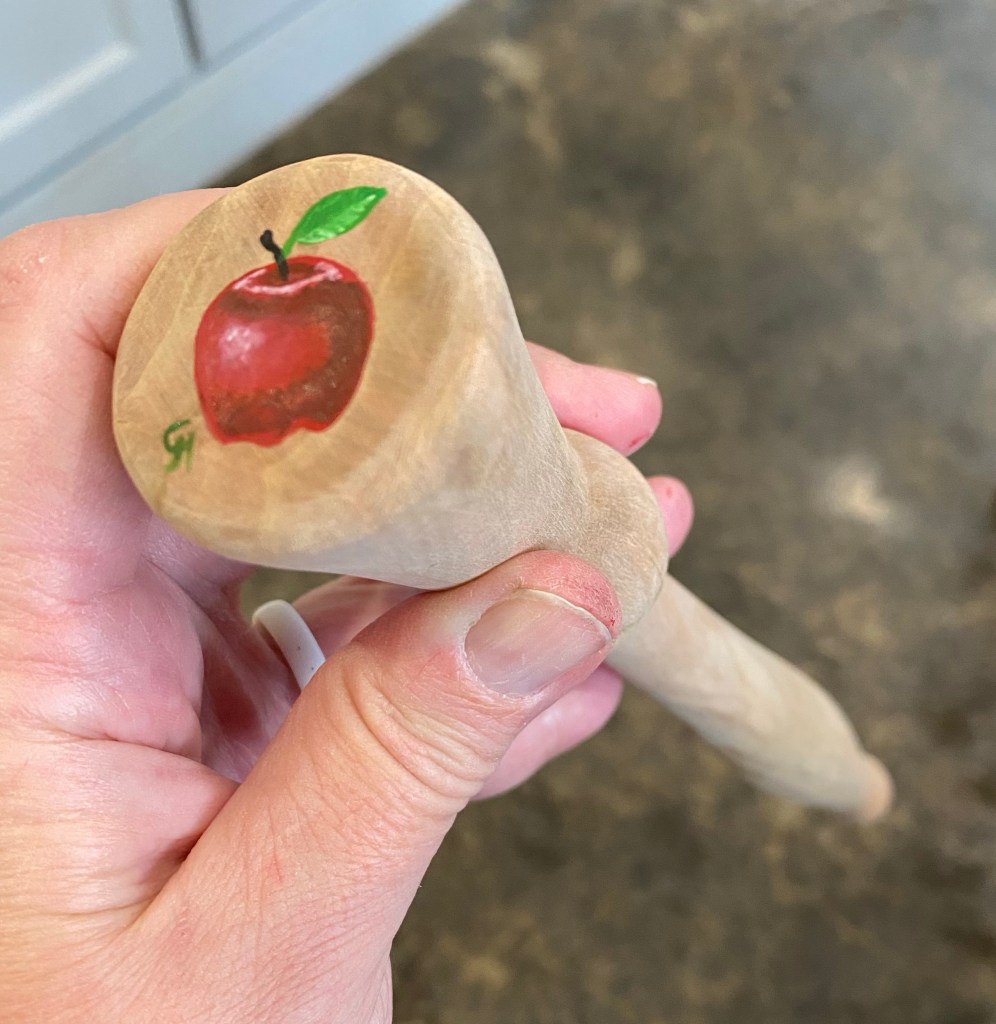
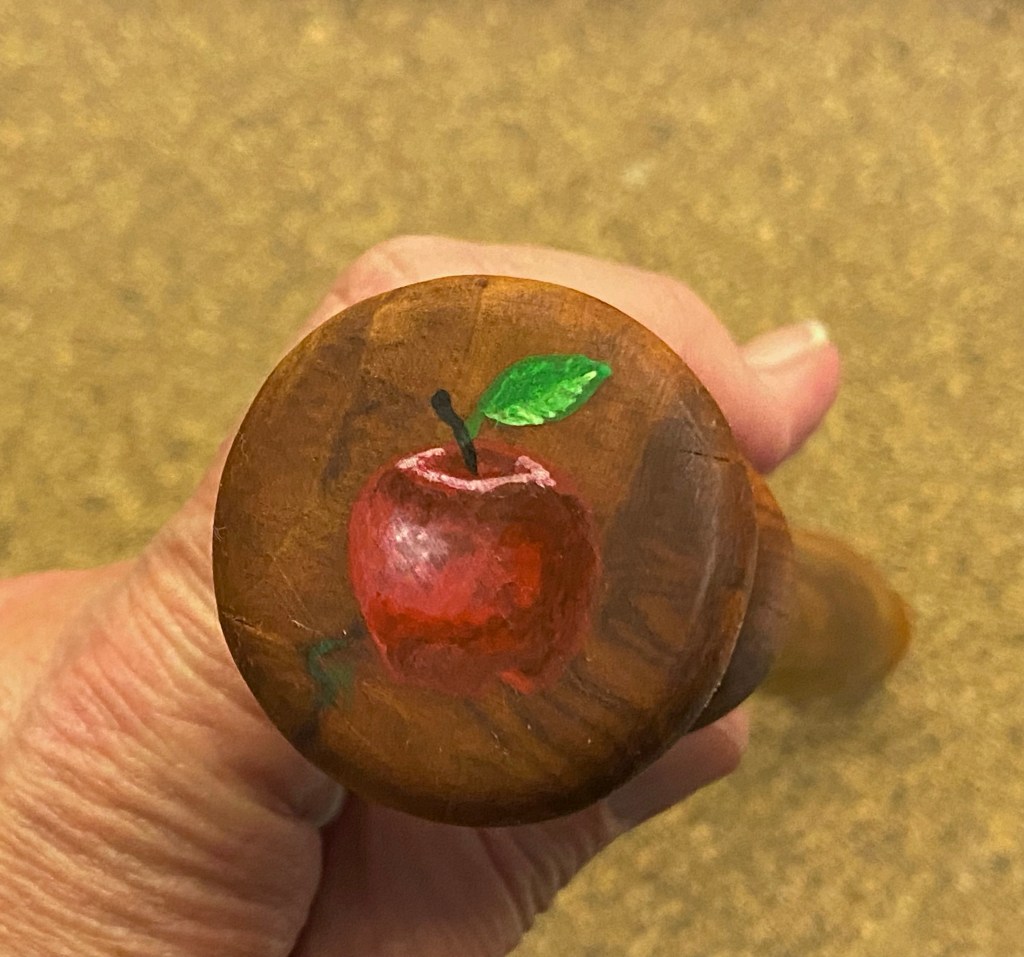
I’ve been combing Pinterest for ideas on things to turn on my lathe, and I came across the Scottish Spurtle. A turned rod used for stirring porridge and stews, a spurtle is special because it doesn’t gather a wad of foodstuff like the bowl of a spoon. I really liked that some of the designs mimicked the Scottish Thistle for the handle. I made this spurtle from apple wood from my Dad’s wood pile, sanded it down to 400 grit, then painted a small apple on the end of the handle (not only to mark the handle end, but to identify the wood). I finished it with many coats of tung oil, since it is a food safe finish.

Spurtle with apple painting before the finish was applied
Finished spurtle, side view
Finished spurtle, end view

I love the beautiful grain on this spurtle. I have to disclose that this is aged apple wood. It has sat in my garage for years, and sat in my Dad’s wood shed for years before that.

Early present

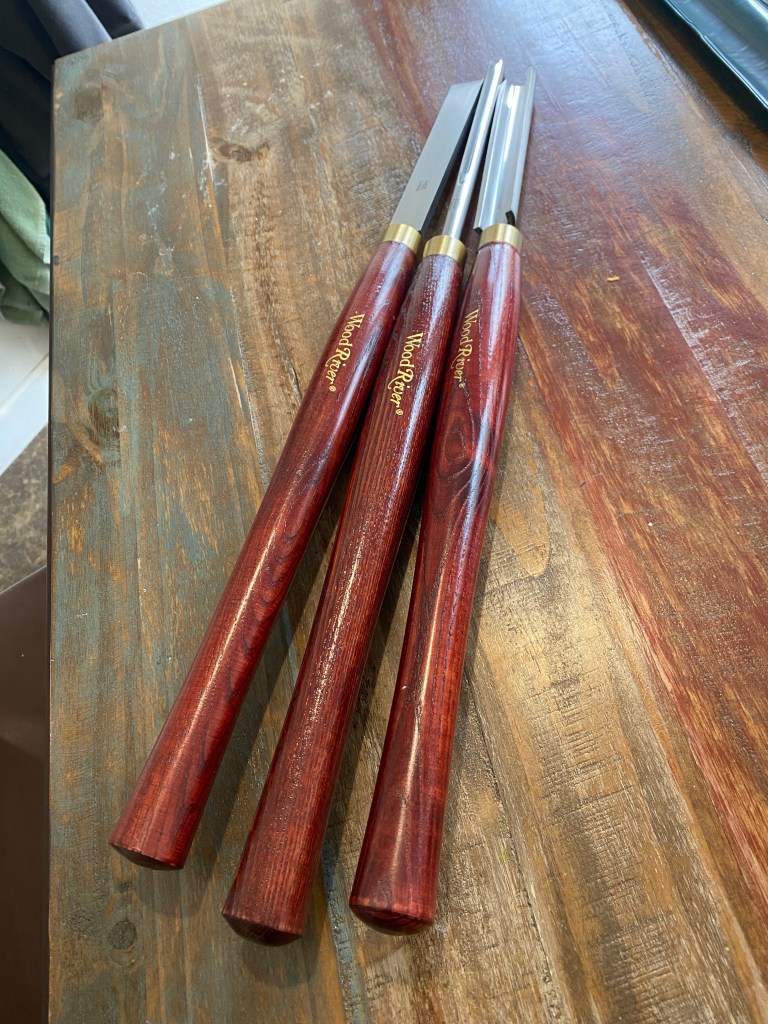
I picked up an early present from my husband, as he ordered his early present for delivery. We’ve been married awhile. The wood turning book I’m reading recommends getting high quality hardened stainless steel tools, so I figure I will start collecting. Pictured below are a roughing gouge, a square edge scraper, and a bowl gouge. Let the wood chips fly!

Long handled tools for wood turning

Happy

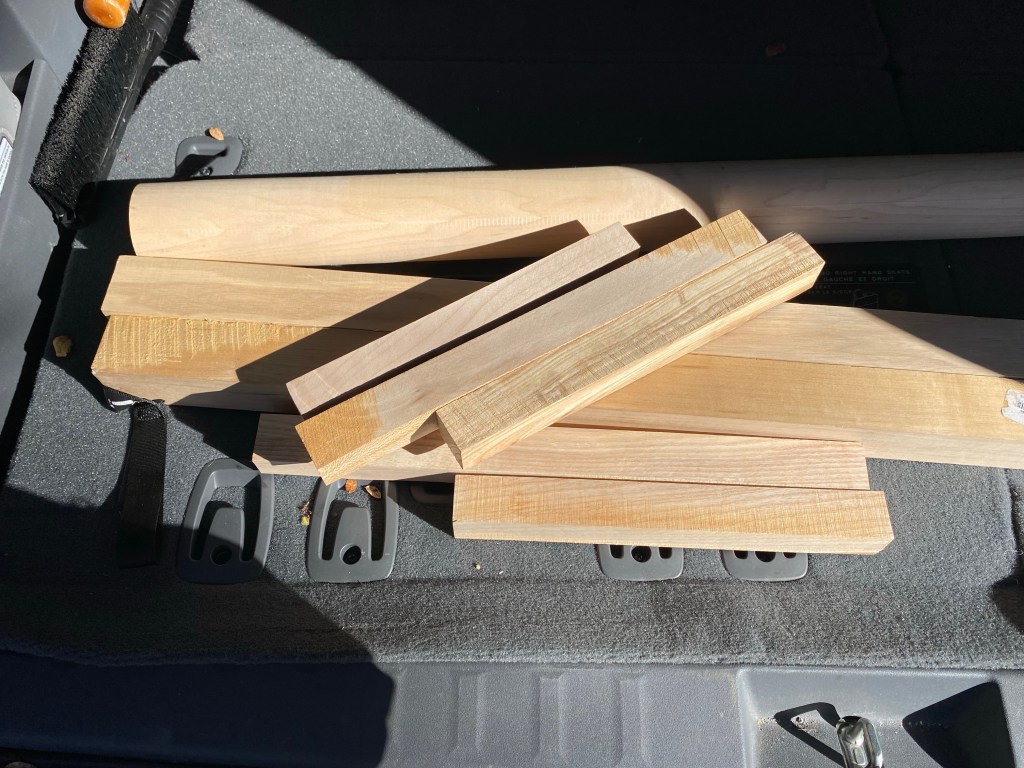
I ventured out to Woodcraft and picked up a few turning blanks to get some more practice on my lathe. This pile of potential makes me happy.

Turning blanks loaded in the back of the vehicle

I have some maple, sycamore, and ash. I didn’t intentionally pick for color, rather I was looking at sizes and density. I had to back order the hickory, which should add a bit of hue variation to my hoard.

Lathe

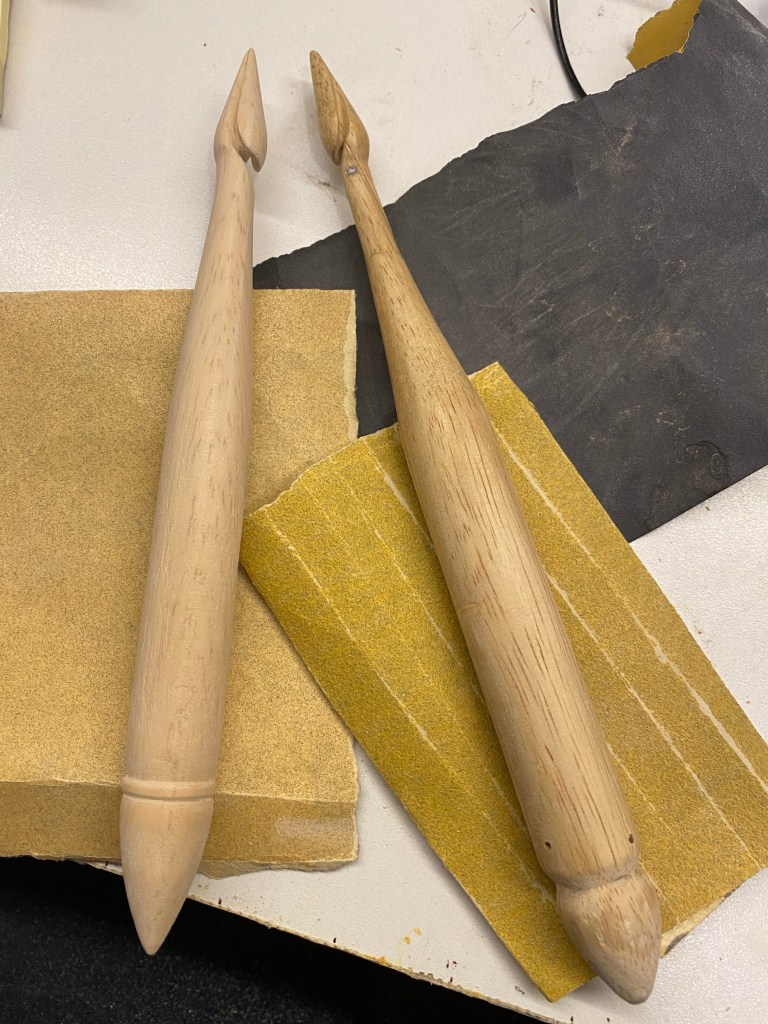
My lathe is up and running! My husband got a new hammer drill to make the drop-in anchor holes in the concrete slab, and bolted down the lathe in the garage so it can be used. Joy! Now I have to relearn how to use it. The first two attempts were very frustrating, and resulted in two broken spindles. After consulting the schematics, it turns out my tool rest support was upside down (cue forehead slap), which meant the tool rest couldn’t get close to the surface, which increased the chatter and force applied to the wood as it spun. That fixed, I was able to turn an OK spindle, but the proportions were not to my liking. I had made the neck thicker to help avoid breakage there, but made the head wider as well, which made it hard to flick into motion. Attempt four proved again disastrous and the spindle broke on the lathe. Well, I had the tension too tight with the center supports and put undue pressure on the wood. Attempt five went better. My chisels could rest close to the work, the wood was balanced better in the supports, and I switched to sand paper when I started getting nervous about the diameter of the neck. I am not comfortable parting the work on the lathe, so cut the support ends off with the spindle off the machine and finished the tips on my band sander. I used my favorite spindle as a guide, but need to work on my precision as my finished dimensions were not the same (honestly I eye-balled it, I do have rulers and gauges to make the process of reproduction consistent).

Newly turned spindle (left) and my Frankenstein spindle (right)

I’m very excited to be back to wood work!

Frankenstein spindle

Well it happened. I dropped my favorite spindle (again) and the head cracked and came completely off this time. All this near the beginning of a walk. I tried spinning from the other end, but the yarn wasn’t aligned right. I tried just turning the spindle with my fingers, but the yarn produced was much, much thinner. So I tucked it all in my bag and went home.

Head came completely off the spindle this time

I glued then clamped the head back onto the spindle, but since that didn’t hold the last two times, this time I drilled a small hole and hand riveted the two pieces together as well. It took some experiment; the brass wire was too hard, but aluminum filled the hole nicely with some hammering. I sanded the rivet smooth so the edges wouldn’t catch on my yarn.

Rivet made from aluminum wire to provide mechanical strength to the broken spindle head

It looks like a Frankenstein spindle now, with its metal rivets on the neck, but it is holding. I’ve dropped it three times since repairing (not on purpose) and the head has held. I do now carry a spare spindle in the bottom of my bag, just in case.