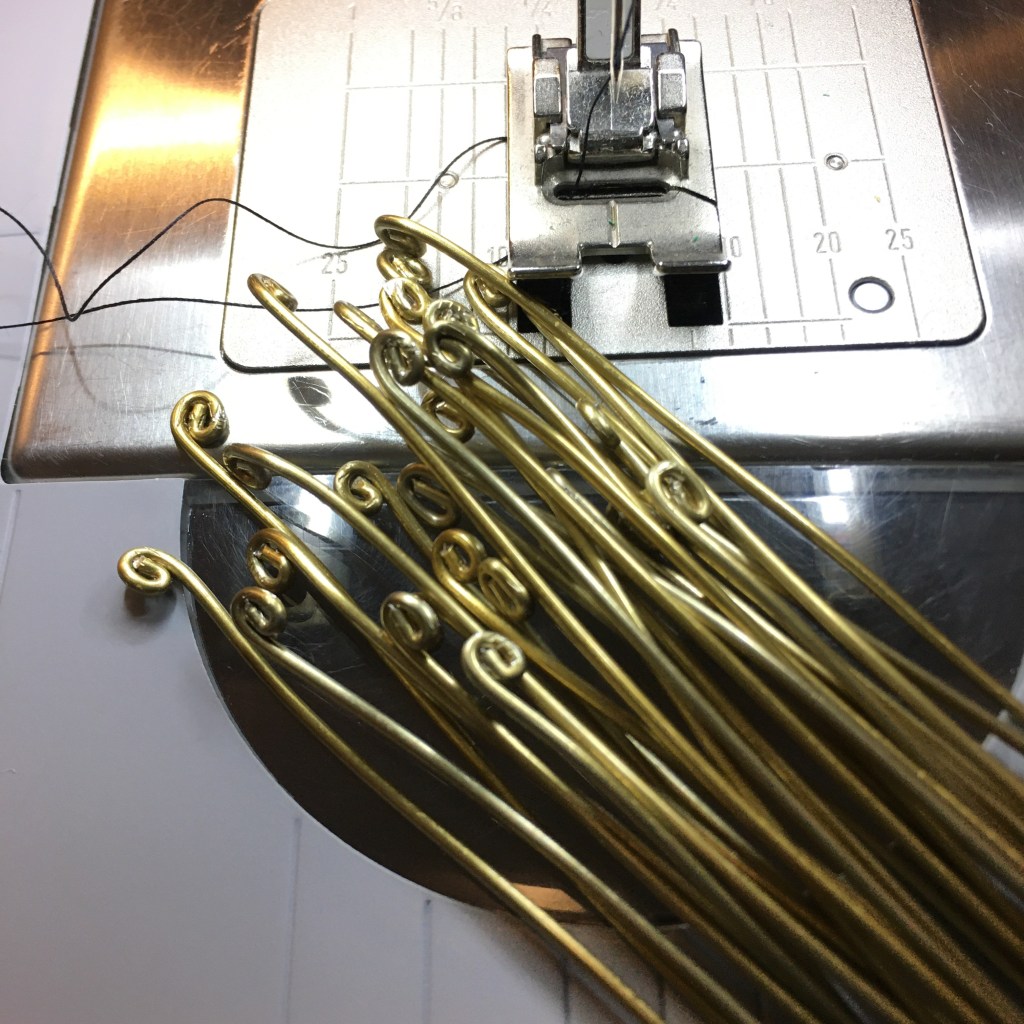
Nose wires and ear ties

Aluminum wire prepped for masks

The pattern for the cotton masks I’m making calls for using twist ties. Probably because they are readily available, except in my house. But, as wire is one of my favorite media for crafting, I have a large supply of spooled wire and can “shop” in my craft room. I chose aluminum wire because it is light and bends easily, which makes it easier to conform around the bridge of the nose. I made them about 6”, then curled the ends in twice so it can’t poke through the fabric. The wire pictured above is about 18 gauge (that describes the thickness of the wire), and dead soft (that describes how easily it bends or the “hardness”). I won’t soon run out of wire; I even have a spool of electric fence wire that is aluminum and 17 gauge, and although it is a little harder, may still work. I might have to anneal it though. Hmm.

Making easy semi-elastic ties

Elastic is again running low, even after I cut up all my 1” elastic. For our own masks, I’m making ties from old t-shirts. I cut 2” off of the shirt and pull it to make it curl in on itself. No sew, and more comfy than ribbon. I’ll save the elastic for the donated masks, though, since the hospitals don’t want things made of used (even if clean) clothing!

And yes, the title of this article particularly amuses me. Six months ago it would have had very different connotations and would have fit better in a piercing blog than a craft blog!
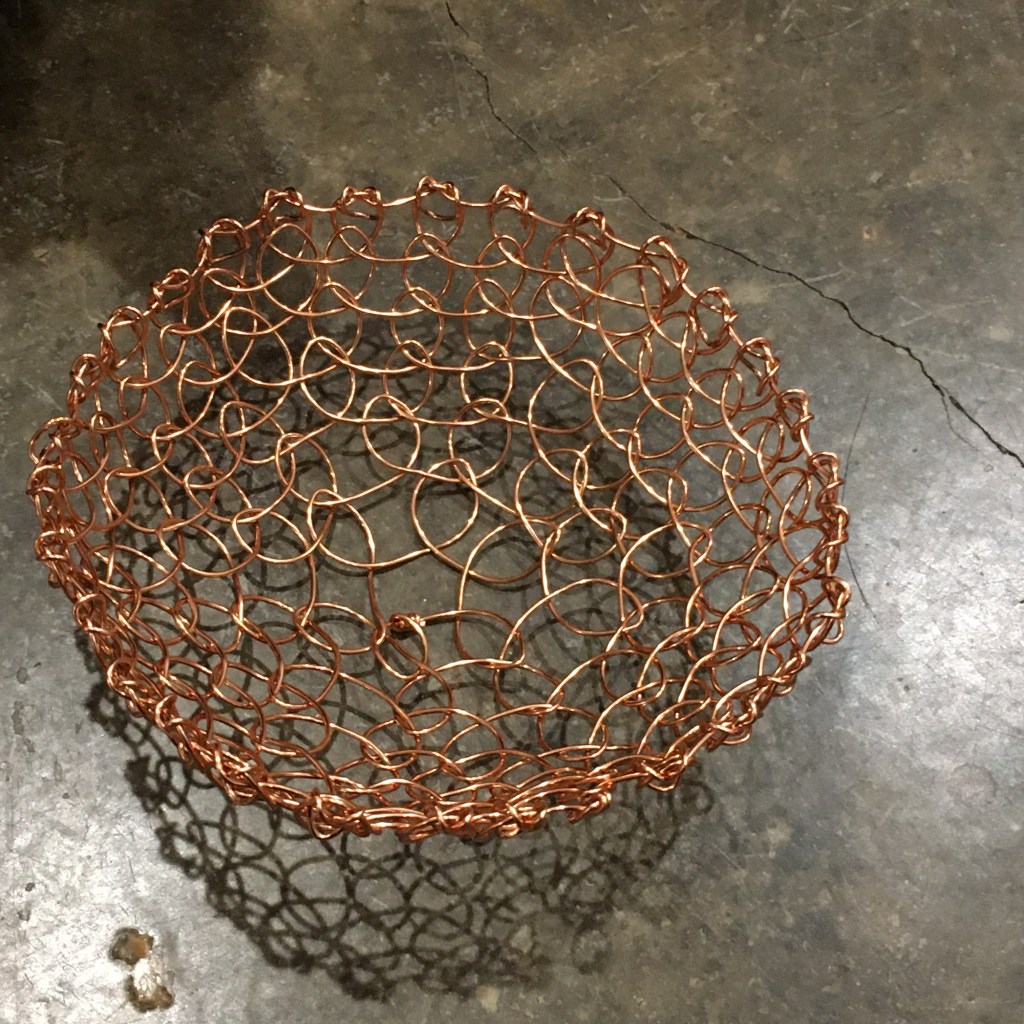
Looped wire basket

I’ve been exploring other looping methods, since nälbinding has caught my attention. I found reference to sculpture artist Ruth Asawa who did amazing installations with wire. I love working with wire, so decided to try to make a basket using a similar technique. What attracted me to the method is there is no welding, it uses only wire, and it makes a very attractive, and surprisingly sturdy vessel. Ruth Asawa suspended her sculptures from the ceiling (it really is worth doing an image search, the amount of work that went into her sculptures is amazing), but I wanted a free standing basket.

First basket experiment, with the final loops folded over

I started with a coil of round cooper wire that I found in my stash. I was able to verify that the technique would work by making a small curved form. I was a little stymied about how to finish the edge so just folded over the last loops. This technique works from the bottom up.

Square copper wire worked from the spool

I then moved on to my intended basket. Using a roll of square copper wire and a dowel, I built up the basket in rounds, similar to how crocheted hats are made.

Finished basket

When the basket was the size I wished, I changed my finish method so the final loops angled out to be a decorative element. I held these last loops in place by weaving wire through above and below the last row. Overall I am very pleased with the outcome! I sent this to my Mom for her birthday since Dad just installed a copper backsplash in their kitchen.