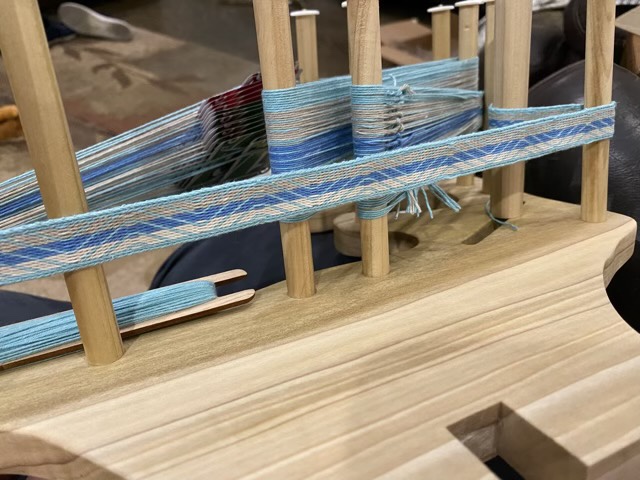
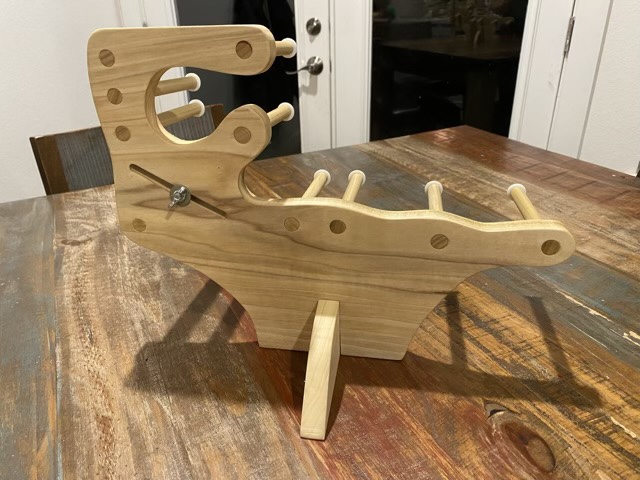
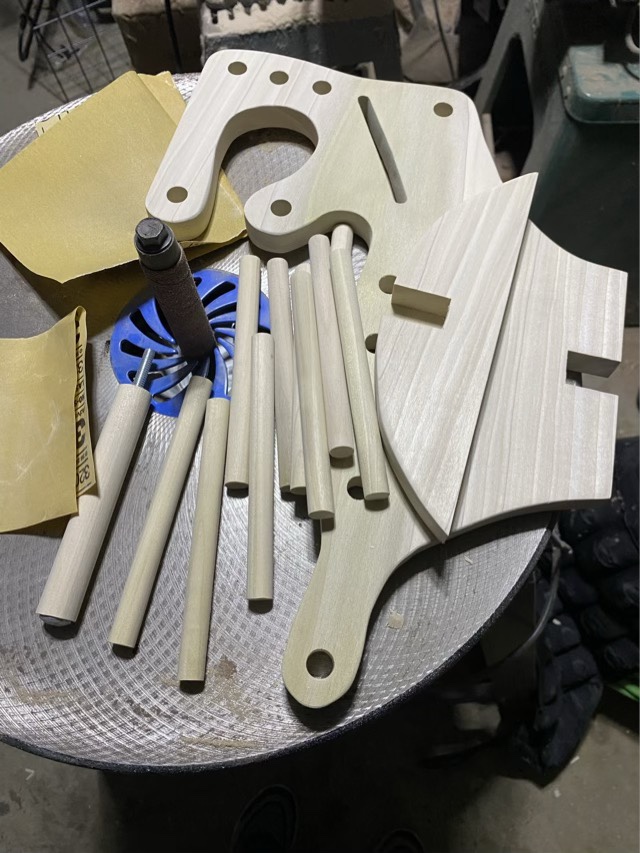
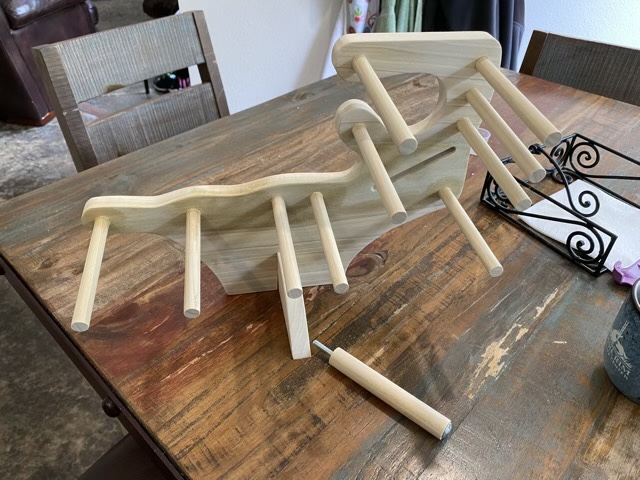
Inkle loom with string heddles

My inkle loom cried out for a new project as soon as I released the first project from tension. I complied, this time using it as designed by making string heddles and doing a plain weave.

Warp setup with string heddles

String heddles are loops of thread that hold a single warp yarn. Applied to every other warp, it makes it easier to change the shed (which set of alternate warp yarns are on top). This makes weaving to faster, since the alternative is to pick up every other strand on every pass. Here is a video showing the changing of the shed on this loom setup.
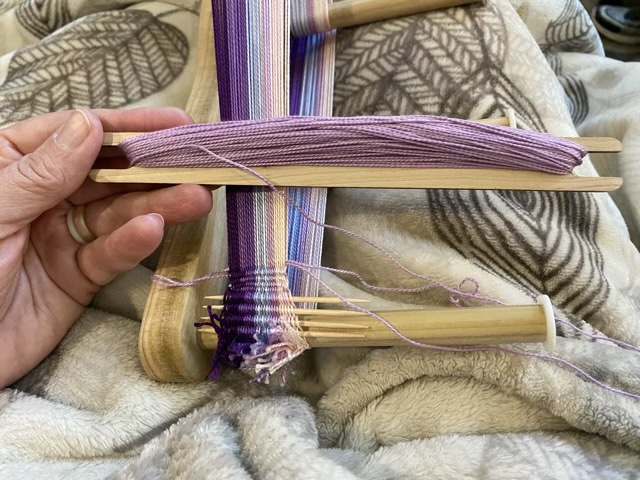
Getting started weaving with toothpicks

I started this weaving by laying toothpicks in the shed. I wanted to maximize the woven length, but still get an even start. The tooth picks were brittle, so I may look for a different thin starting material next time. I also wrapped the weft thread in a different manner, crisscrossing around one long edge, rather than wrapping in the middle. I see why people choose this: the profile of the wrapped yarn is thinner, and it frees up one edge to more effectively beat down the warp.
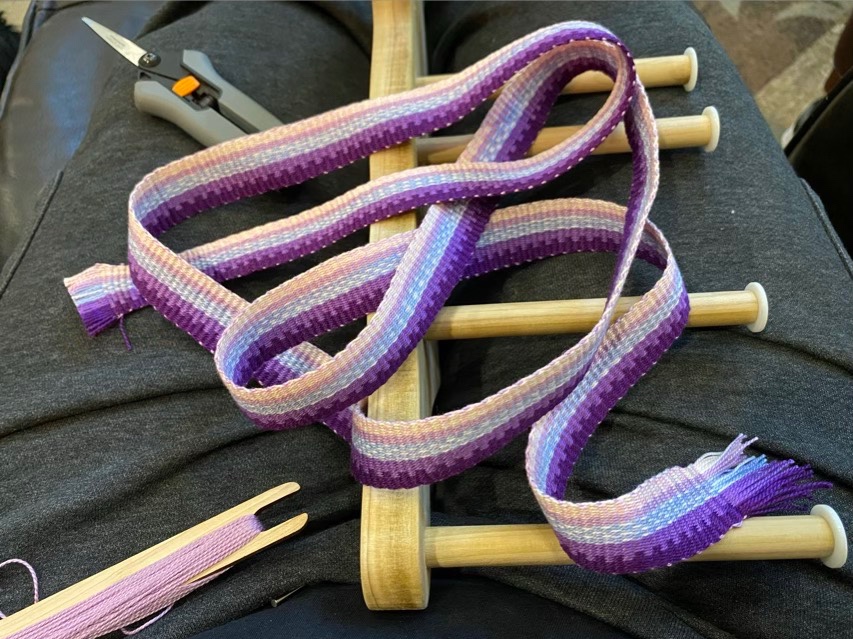
Finished weaving

I used pearlized cotton for this weaving and it didn’t need to be pressed after it came off the loom. Weaving went much faster than my tablet weaving, but the band is thinner. It is still sturdy, and quite attractive both visually and in texture.

Start (left) and finished (right) ends

I’m still working on my tension. This time my tension was tighter at the beginning than the end. Oh dear, I’ll have to start another project and keep weaving to practice. Twist my arm.

Tablet woven band

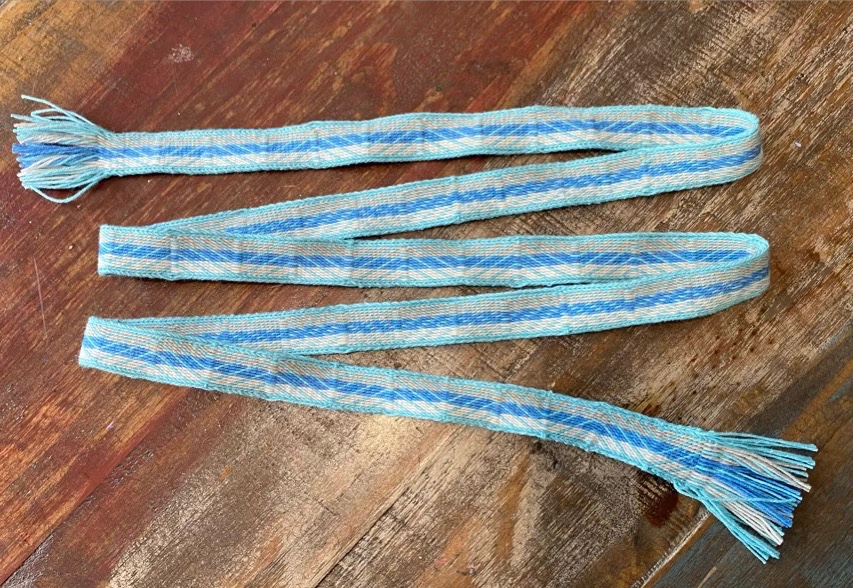
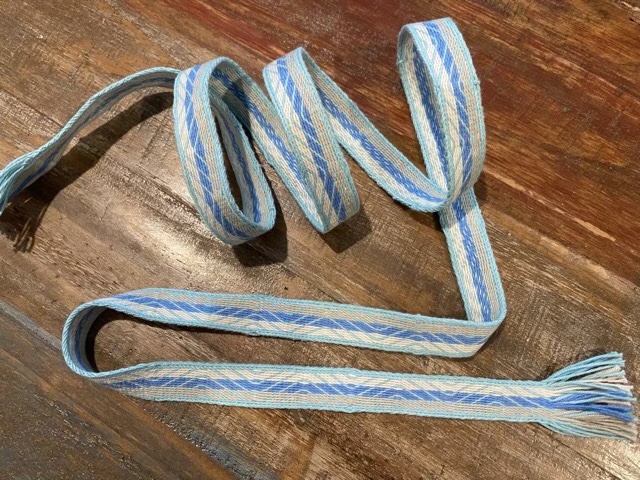
I finished my second tablet woven band, and the first one where I used an inkle loom as a support. The finished weaving is 51” without fringe, and 3/4” wide. It was made with 56 warp threads. I locked in the end by running the weft back through the weaving utilizing loops of thread (I found this advice on several blog sites).

Loops of scrap thread laid in the shed

This second band is an improvement from the first, but still shows a change in skill from the beginning to the end.

Start of weave (left) and end of weave (right)

When I took the band off the loom it had a definite ripple, so I ironed it. I don’t care for the double wide area that happens at the change of direction in the pattern. More study is needed regarding this phenomenon.

Woven band fresh off the loom
Woven band after ironing

This is still weaving that I enjoy, so continuing to build my skills will not be a chore!

Inkle Loom part 4

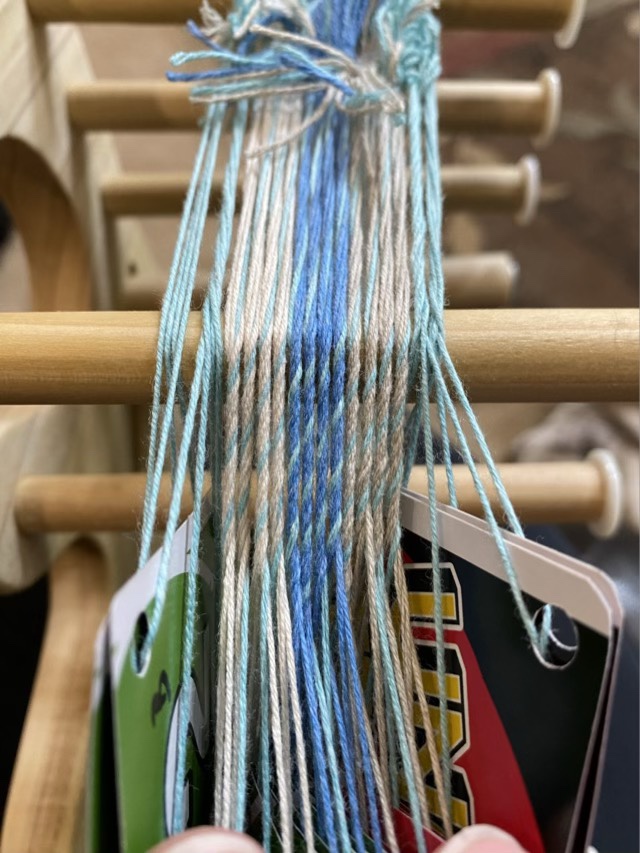
Time to test my inkle loom! I picked a tablet weaving pattern that had an easy 12 turns forward, 12 turns back progression for my test. I warped the loom with a cotton blend yarn in four colors. There are several ways to warp an inkle loom. For this first test, I did four strands at a time (one for each corner of the card), and used a square knot to tie the ends together.

Inkle loom warped for tablet weaving

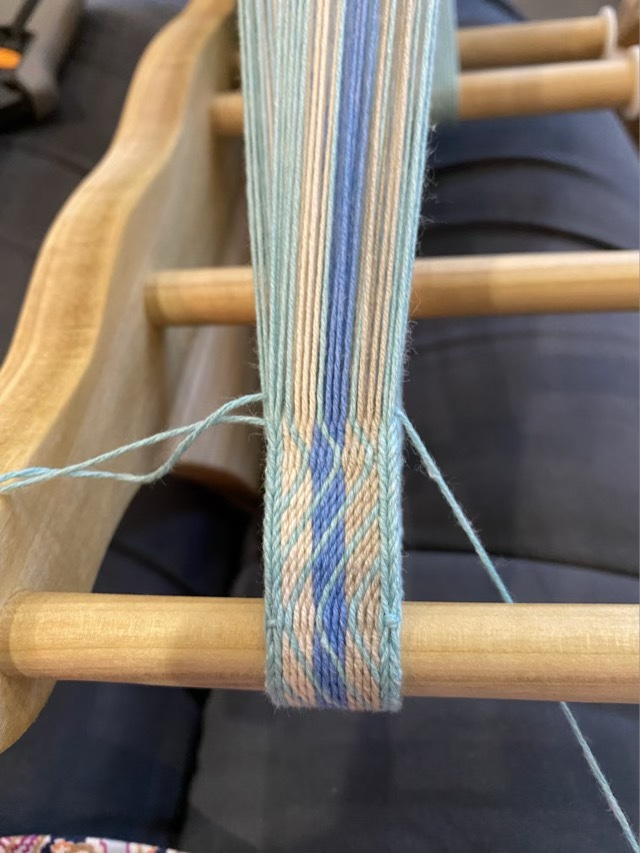
I started the weave with four slips of card stock, as recommended by several weavers, both to get an even start and to leave room for fringe. I wove the tail back into the first few passes to lock it in.

Starting to weave

One of the big issues when tablet weaving on an inkle loom is the buildup of twist.

Twisted warp threads

Traditional tablet weaving with a backstrap allows the weaver to comb out the twist (which I would still find an irritating process). Modern weavers will make use of swivel hooks and chase the twist out to the swivel, or use a balanced pattern the has the same number of forward twists as backward twists. I also found a card flipping method that allows turning to continue in the same motion, but flips the twist. However, it flips the diagonals on the weave as well. With a solid color border this change in direction is harder to detect, but I can still see it. Hm.

Borders of the tablet weaving showing a change of diagonals (at the wooden post)

Aside from the twist issue, the weaving is going well. The tension post works, the pegs are solid (I have one peg that didn’t come out perfectly straight, but it doesn’t seem to harm the weaving at this width). Now to weave for awhile (but not too long because it goes fast).

Tablet weaving shown from below

Inkle Loom part 3

I’ve made the body of the loom, secured the rods, and finished the loom with tung oil, so it is done, right? Well… I saw another loom with knobs turned onto the end of each rod. While I didn’t want to turn each rod on the lathe with this project, I did like the idea of stops on the ends of the dowels.

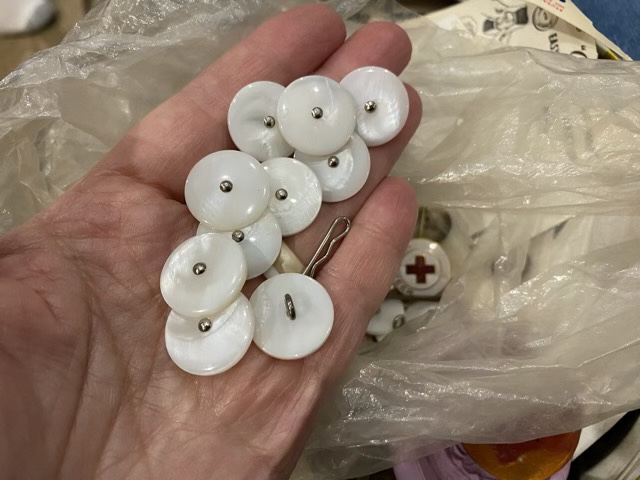
Clip on buttons

In my stash of buttons (hm, apparently I have four containers full of buttons now), I found my grandmother’s old clip on buttons in a bag with her red cross volunteer name badge and pin. These clip on buttons have a single central hole with a pin through and a loop behind. They clip onto garments with a small steel pin. The buttons are made with a pearlescent material that is quite lovely and they are just over a 1/2” in diameter.

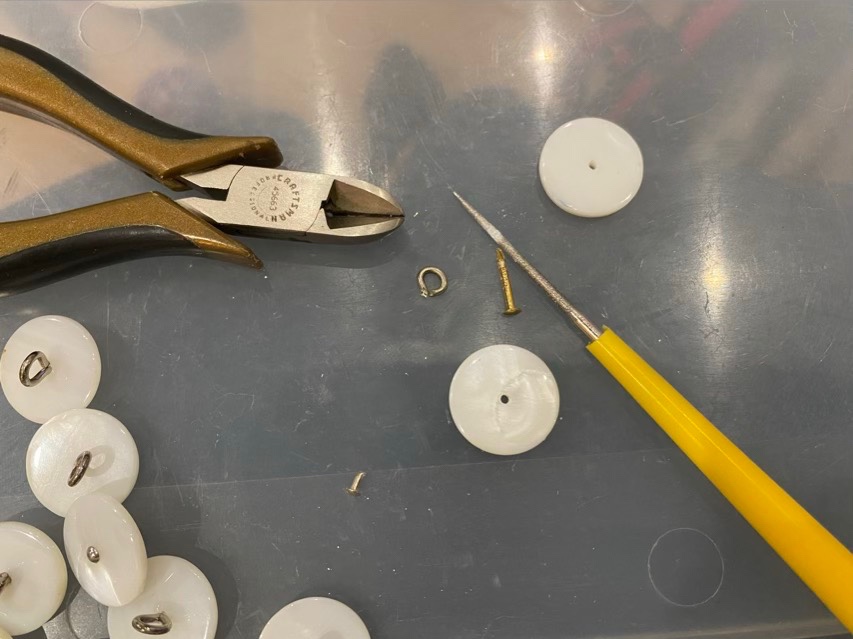
Button to tack conversion

I cut the looped pin off the buttons, and reamed out a few holes that were slightly too small for the small brass nails I had. I drilled tiny starter holes in the end of each dowel and used a tack hammer to attach each button.

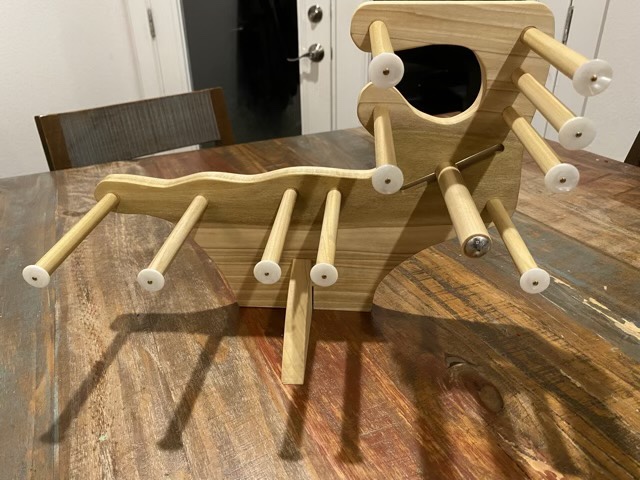
Inkle loom with button stops and tension rod installed
Back of finished loom

So now I’m ready to test the loom!

Inkle Loom part 2

I’ve broken this post into several sections because of the length of the explanations. Yesterday was part one, laying out and cutting of the body of the loom.

Body of the loom
Parts assembled and sanded

For the posts, my limiting factor was the length of the carriage bolt. I could make the 1/2” posts 6” long, but the 3/4” tension rod needed the carriage bolt to be accessible on the back of the loom. So the rods had to be 5 3/4”. I drilled a quarter inch hole through the 3/4” dowel, and threaded in the carriage bolt, pounding in the last bit to lock it in. All the parts were sanded down successively to 320 grit.

Assembled loom with rods

To secure the rods into the loom body, I applied a thin layer of wood glue at the bottom, and used a rubber mallet to pound the dowels into the holes until they were flush with the back. Before the glue dried, I wiped the whole loom down with a wet cloth to both remove the excess glue, and raise the wood grain. When the water dried, I sanded everything down again with 320 grit.

Finishing with tung oil

To give the loom a light stain-resistant finish, I rubbed in a 50/50 mixture of tung oil and mineral spirits to soak into the wood, then when that was dry, rubbed a light coat of pure tung oil over the surface.

To be continued.