Woven bracelet

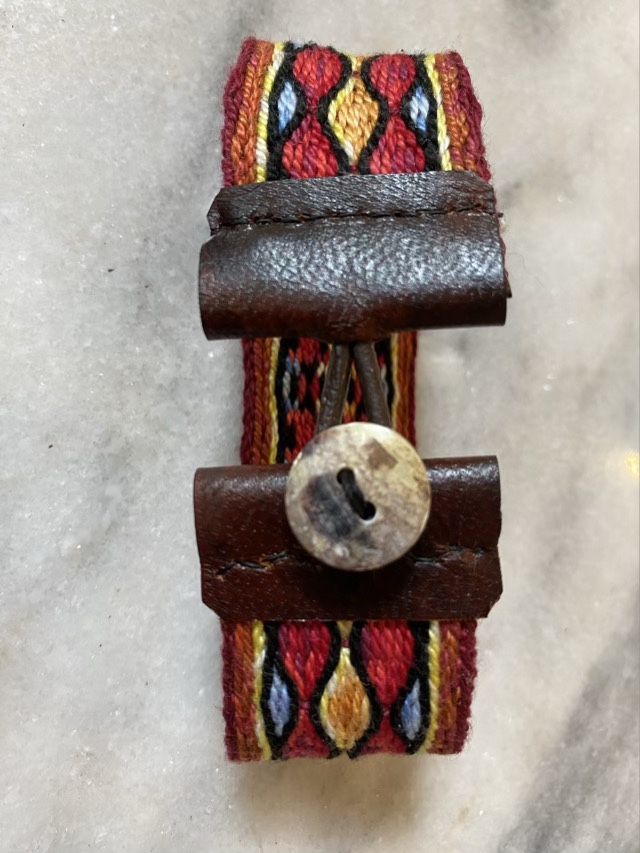
I found another thing to do with my woven bands: bracelets! I chose to sew leather ends on to reduce bulk, and I had the materials.
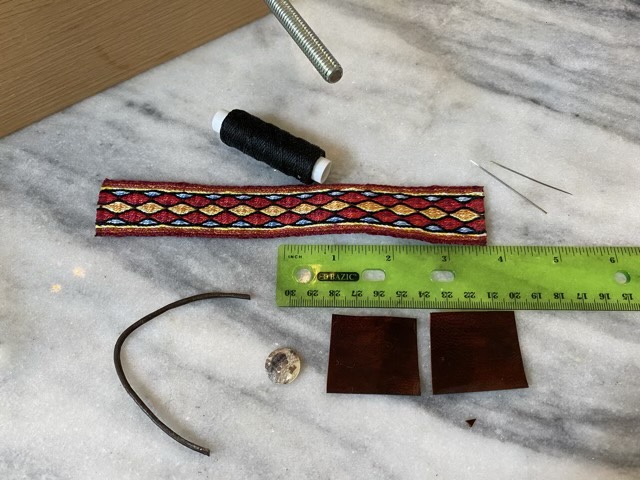
Materials to make the bracelet

I cut a strip of goat leather and stained it dark brown, then sealed it with an acrylic clear coat. I cut two smaller rectangles from the finished leather, cut a length of leather cord, sealed the ends of the woven strip with clear glue, selected a shell button, and sewed using waxed nylon cord.
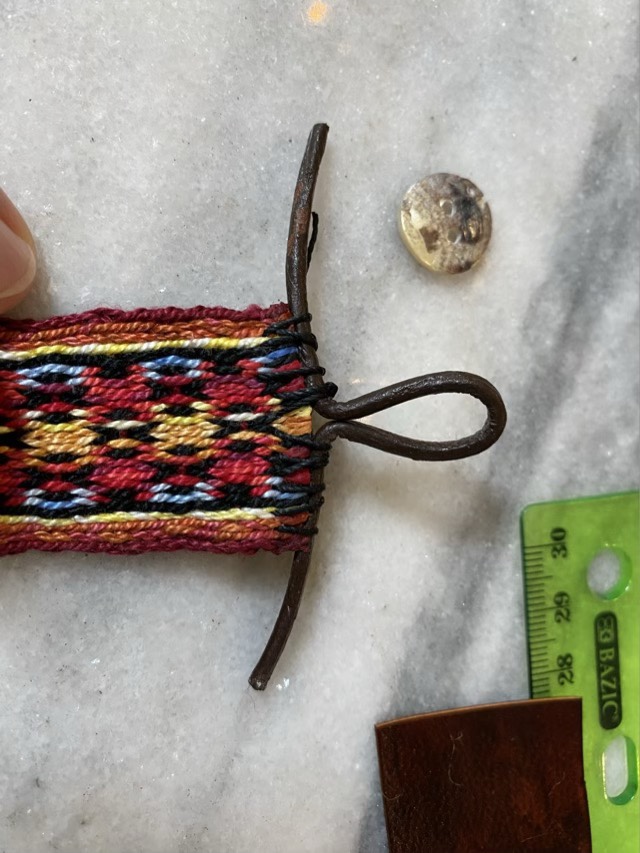
Attaching the eyelet

To form the eyelet for the button hole, I folded the leather cord in half, then bent the ends outward at a 90 degree angle. I secured it to the end of the woven band with waxed cord, then cut off the excess. To cover the end, I cut a slit in one leather rectangle to slide over the eyelet, then sewed the leather to the band. The nylon thread was thicker than I wanted visible, so I separated the three strands and just sewed with one.

Sewing the leather using a clamp

My wooden book clamp serves well as a leather stitching aid. I used wax paper to keep the newly finished leather from sticking to the wood. (I recommend waiting 24 hours before sewing, but I was impatient.)

Finished button hole end

For the button end, I sewed the button offset on the other leather rectangle, using cord scraps to space the button off the leather. If the button is sewn tight to the surface, there isn’t enough room for the eyelet.
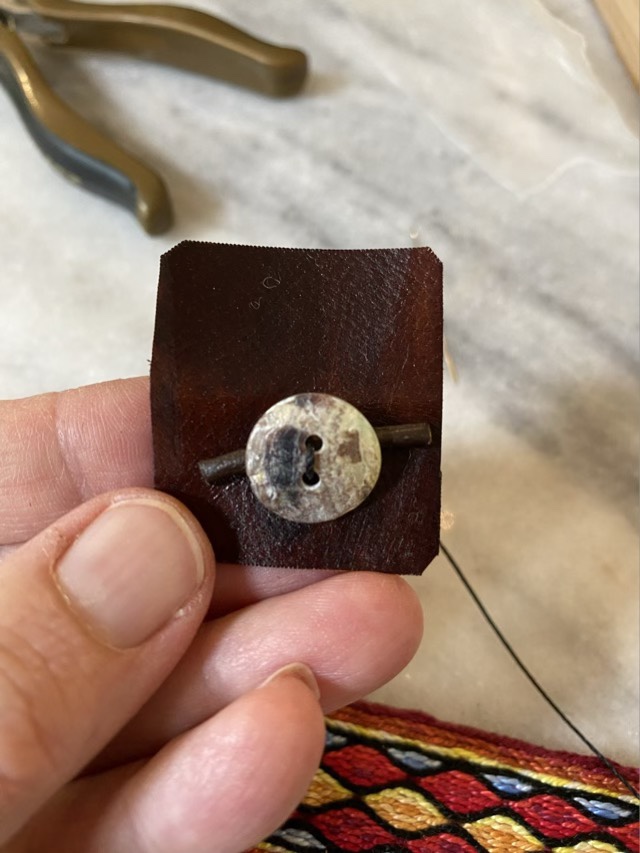
Button sewn using a cord for a spacer
Button end sewn using a wooden clamp
Finished hand sewn leather button clasp

I’m pleased with the finished bracelet. Although I would have preferred the leather ends to butt together, the gap actually makes the bracelet more comfortable to wear by giving more flex. The bracelet is easy to button one handed, and is light.
Wrist strap

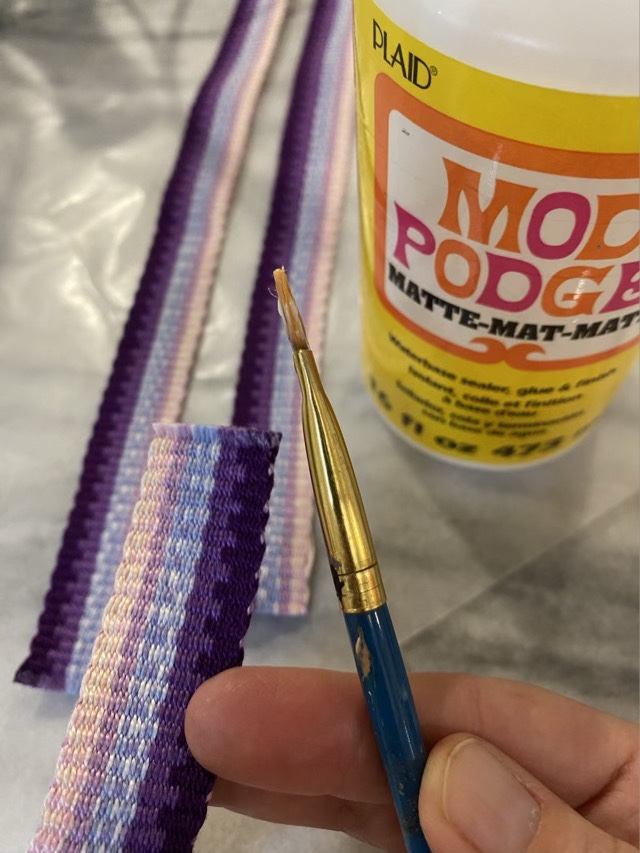
I’ve been pinning many pictures of things I can do with my Inkle loom woven straps. So many things, but what caught my attention this time were wrist straps. Most of the articles talk about attaching keys, but I also saw wrist straps used for walking canes, cameras, and small bags. I also saw a method for securing the end of the cut woven strap with clear flexible glue. I used Modge Podge, which worked well painted on the ends and allowed to dry.

Securing cut ends by painting on clear glue

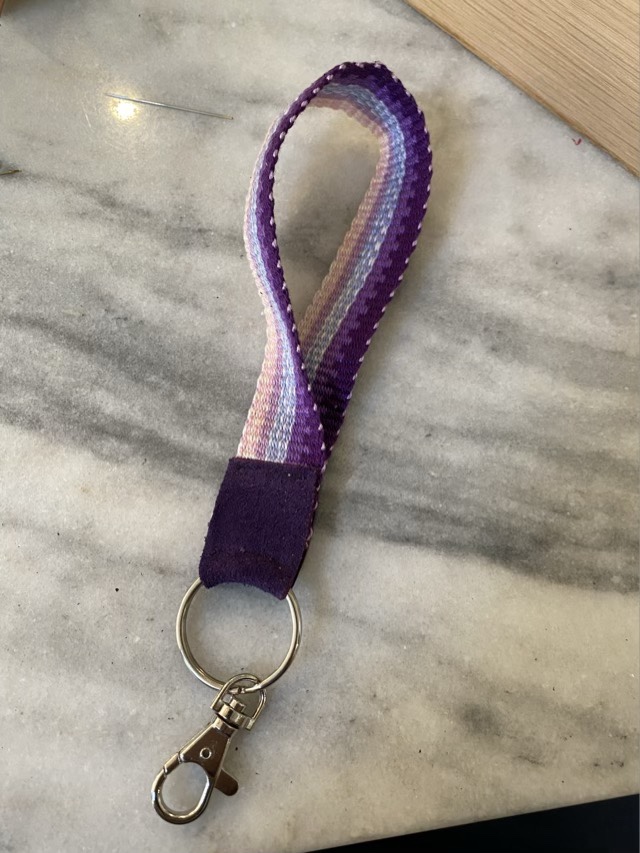
There is metal clamp hardware that make the creation of a wrist strap quicker, but I preferred the sewn leather direction. I noticed that leather makers use a wooden clamp that is similar to my bookbinding clamps. My clamp is larger, but it worked well to hold the pieces together while I stitched. I used a single ply of waxed nylon thread to sew a loop of leather to the ends of the strap.

Stitching leather using a book clamp

Rather than a D ring, I used a split ring and a toggle clasp because these can be removed if the strap needs to be modified with different attachments.

Wrist strap made from an Inkle loom woven strap and leather

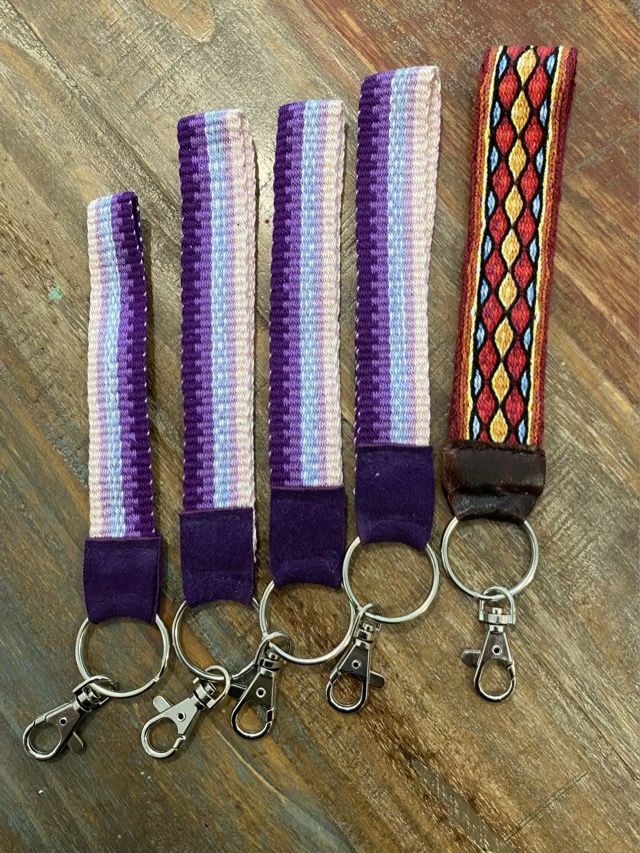
I liked how this one came out, so I made more.

Hand woven, hand sewn, cotton and leather wrist straps

Nod to fiber arts

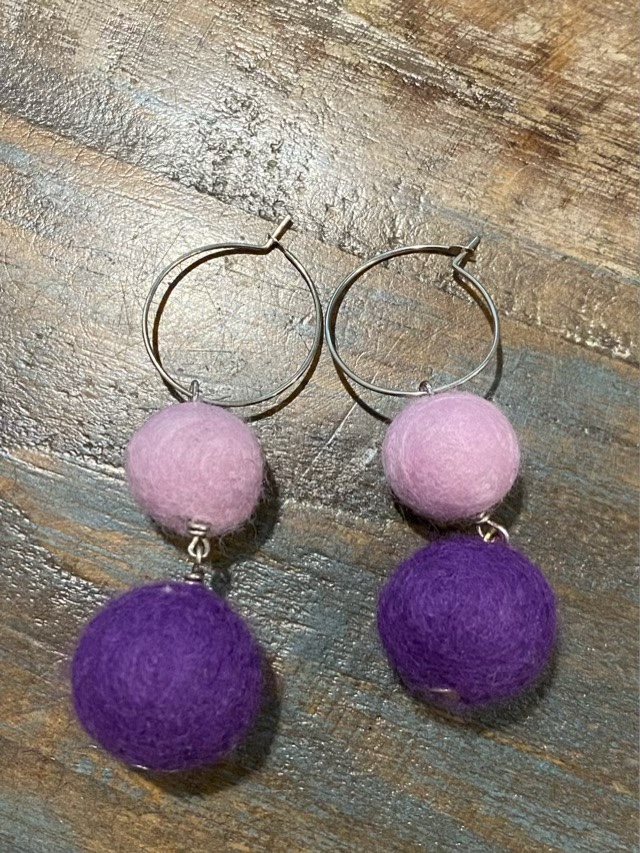
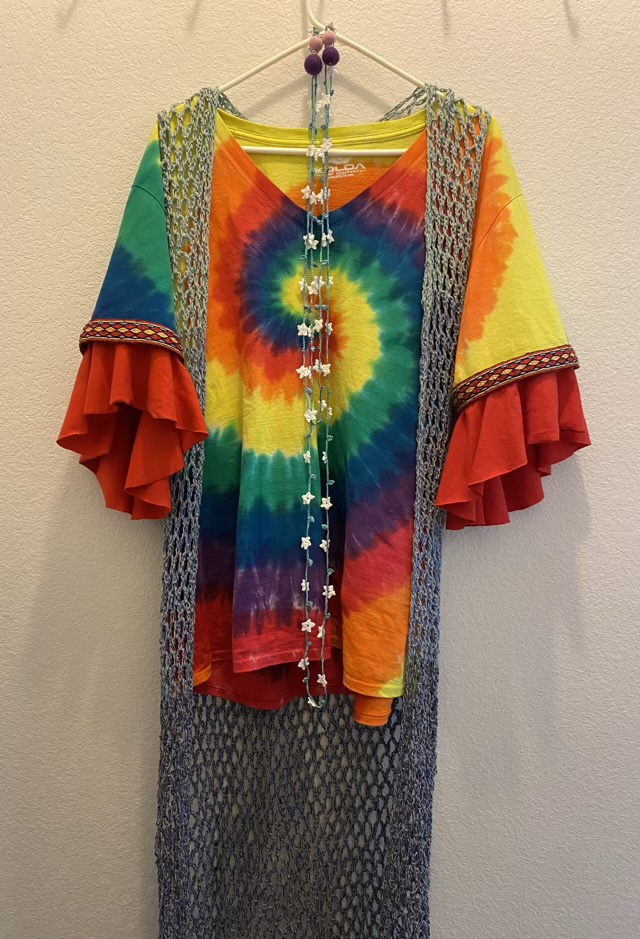
I put together a 60s themed outfit with a nod to the fiber arts. I crocheted a duster vest and flower garland, wove a band and added bell sleeves to a tie-dyed t-shirt (I did not dye the shirt, dye and I are still not on speaking terms), and assembled some felted wool ball earrings! (My mom made and gave me the felted beads.)

Bell sleeves made from t-shirt material
Felted ball earrings
60s Outfit (minus bell-bottom jeans)

When I do bell sleeves next, I will make them longer and without the off-set center hole. These look great on the hanger, but were awkward when worn, except when doing jazz hands, then they worked. Since I can’t do jazz hands all the time (although that would be quite the arm workout), I picked out the seams for the added sleeves after the debut. I can see peasant blouses with woven trim and bell sleeves on my crafting horizon.

Shuttle

I still haven’t found my weaving shuttle. Hm. So I made one. I’d seen some trapezoidal shuttles on Pinterest, so grabbed a small thin wood sheet and cut a shape using a coping saw. The shape isn’t sellable perfect, but it works quite well, once I sanded it down.

Handmade yarn shuttle

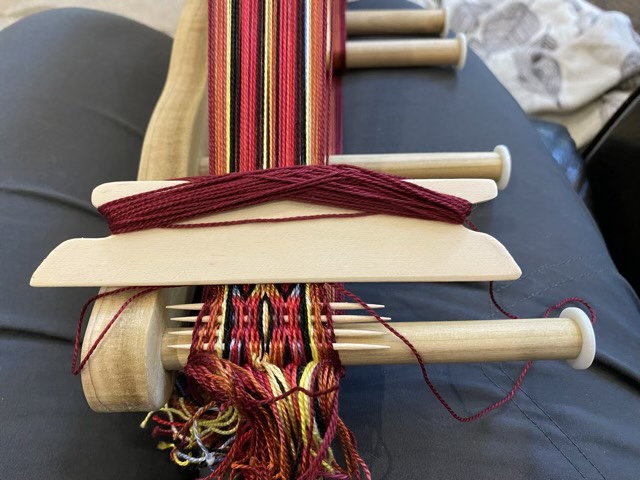
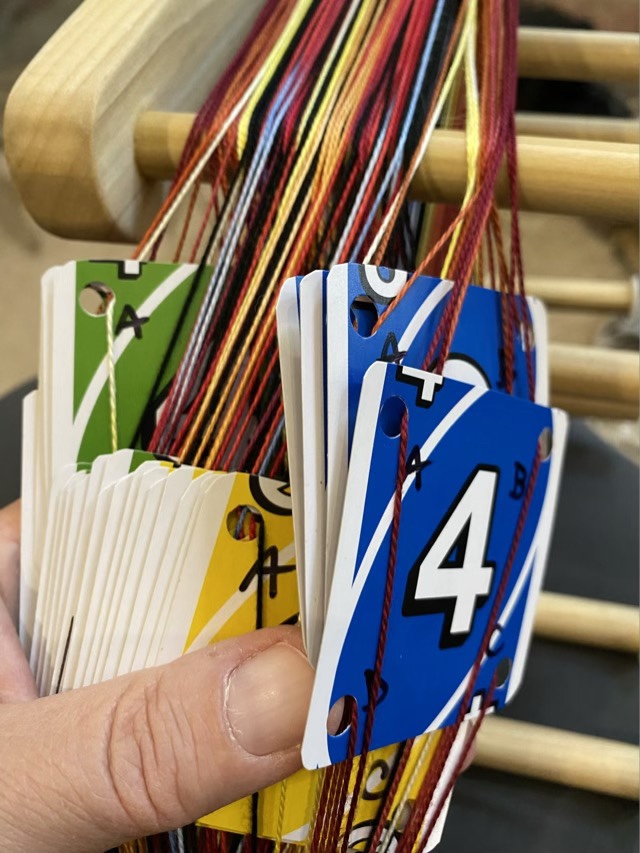
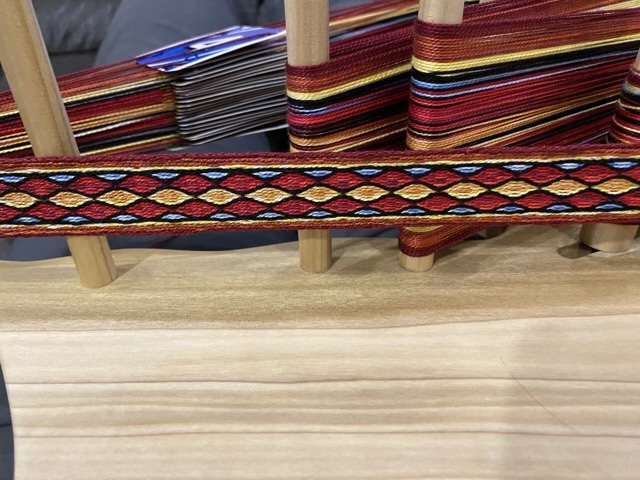
I was then able to weave my new band pattern. It was quite cool to see the muddy mess of warp threads focus into a distinct pattern as I wove. The main experiment in this round was to see if staggering the turnarounds on the edges made the transitions smoother. They do, but it still isn’t as nice as having the edges a consistent direction, but I didn’t have to deal with warp twist. I did discover that I could tell where I was in my pattern by when the “A”s lined up. Every fourth turn, the cards line up, and since the pattern is based in 4, it meant I only had to move my pattern marker every fourth line. I need multiple cues to remember where I am in a pattern; sometimes I forget to move my marker.

“A”s lined up at the end of a set of turns (note there is also no twist in the warp)
Pattern emerging from the warp threads
Finished band
Corrected pattern

I did discover my original pattern had errors, which I fixed as I wove. I went back to the pattern editor and updated it as shown above. I also really like weaving with variegated yarn, it gives added depth to the pattern.

Designing a tablet weave

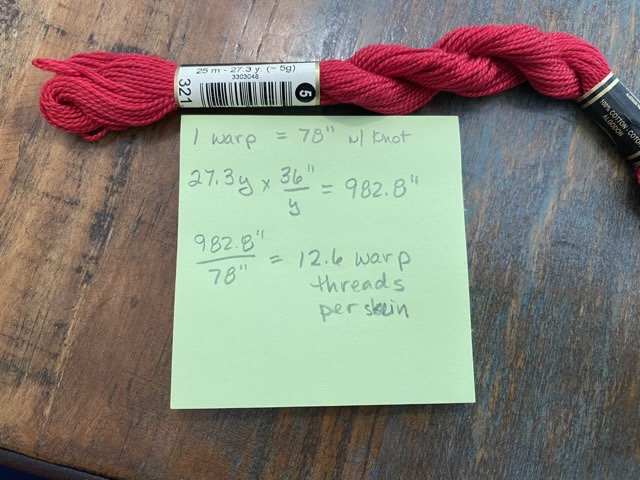
My inkle loom calls out again, and I have a stash of pearlized cotton that needs to be used. My craft supplies are very demanding. I measured the warp space on my loom and did some calculations to see how many warps I could make with one skein.

Length calculations

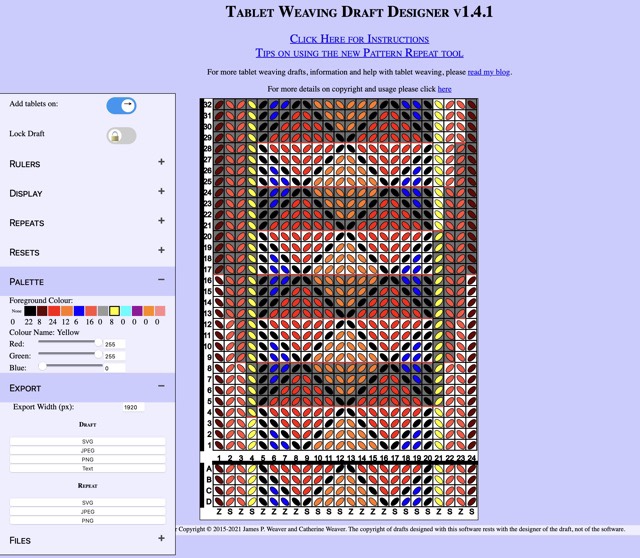
It turns out there are several websites that have apps for designing tablet weave patterns. Neat. I tried the first one on the list, found it intuitive, and designed a pattern that I could make using what was in my stash.

Screen shot of “Tablet Weaving Draft Designer” app
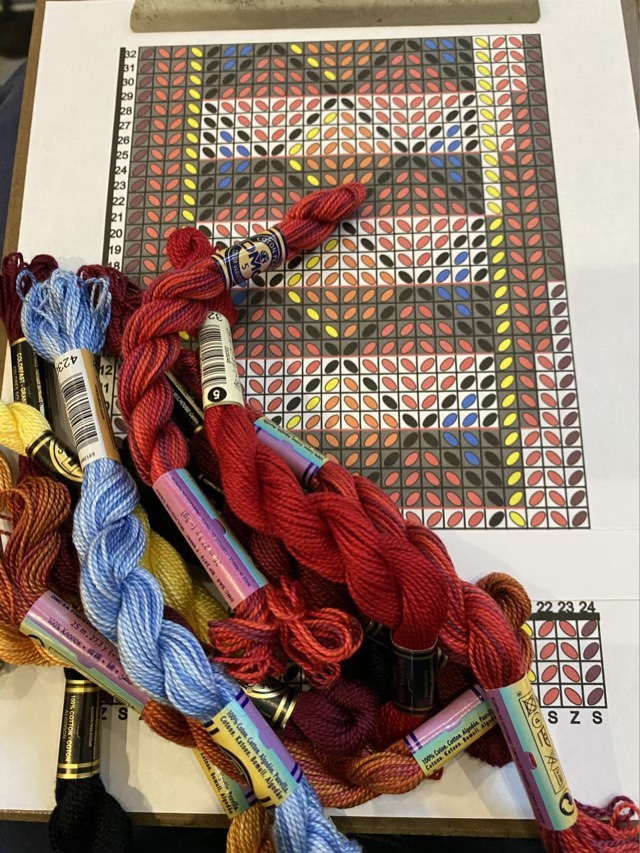
Printed pattern with skein colors

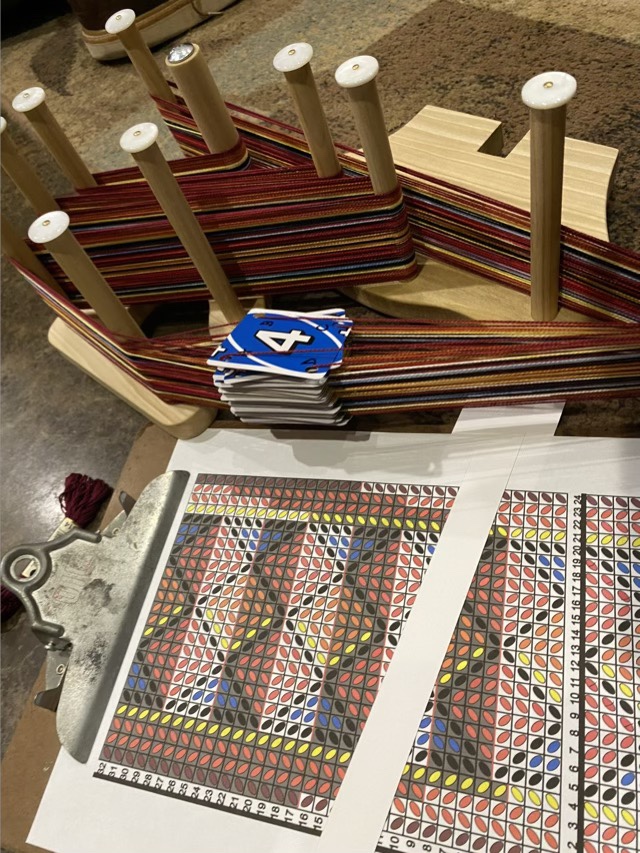
Warping the loom takes a couple hours, but taking time in this step is well worth the effort. The diagram I printed was easy to follow to set up my cards.

Warp completed

I cut a strip of card stock with two long slits that fit over my pattern so I could keep track of my rows. I’m all ready to start weaving! Except, where is my shuttle? No seriously, I can’t find it. I probably put it somewhere safe again. Hm.