I finished single spinning the rest of my Teeswater wool roving from Pitchfork Ranch. I’ve been spinning with this fiber for a year, on and off, and it feels strange to reach the end of the bag.
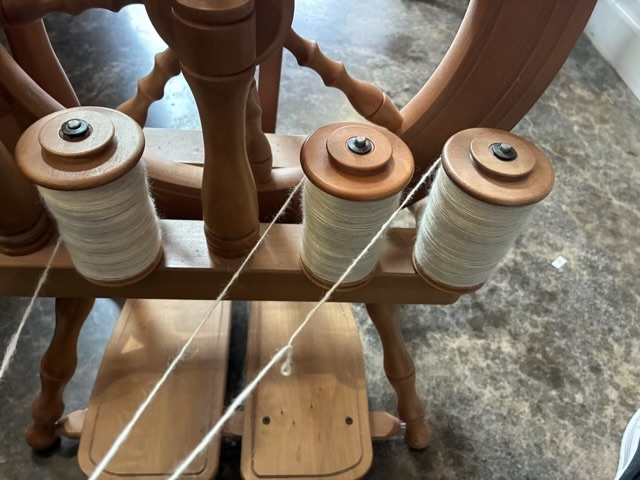
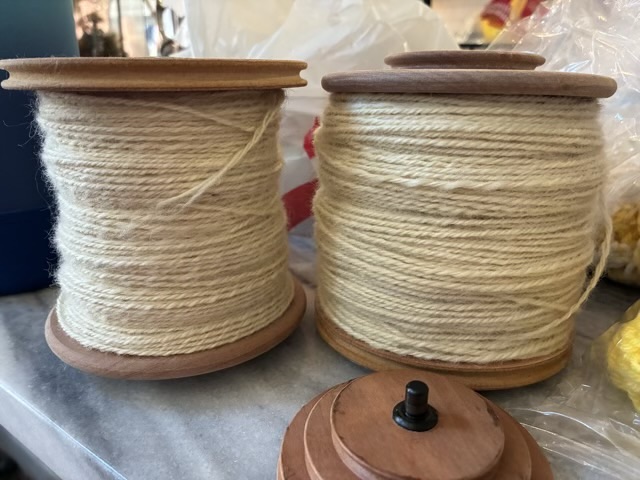
Photo description: small bobbin on an Ashford Traveller wheel filled with single spun Teeswater woolPhoto description: three bobbins of single spun Teeswater wool on the Lazy Kate built into the Ashford Traveller spinning wheelPhoto description: jumbo bobbin filled with three ply Teeswater wool yarnPhoto description: the three initial bobbins with the left empty, middle with a small amount of single spun yarn, and the right with more
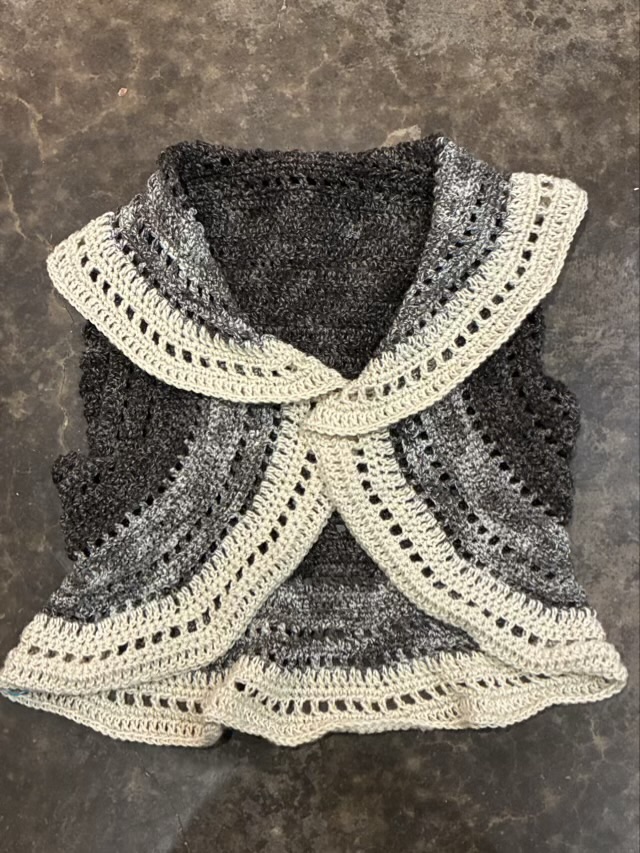
My first two jumbo bobbins of wool were crocheted into a circle vest. This last bobbin I’ll use to make a page for my spinning journal. With that idea, I two plied the yarn on the middle bobbin, and chain plied the yarn on bobbin on the right to get some more examples to put in my book.
There are so many applications for the word “twining” in crafting. I was going to start this blog post talking about twining wool, but I think I have to specify that I was making twine from wool. Typically twine is made from plant bast fibers: cotton twine, jute twine, hemp twine, for example, and forms a dense strong string. I took a long staple wool, Teeswater, and twined it in a similar manner. Twining wool could also refer to construction techniques in weaving or knitting, but not in this case. Here I am making yarn, nålbinding a few stitches, then making more yarn (I’m going to call it yarn because it is softer than typical twine, yes, I’m splitting hairs (haha)).
The problem I encountered was a strong twist in the small pouch I was constructing. I experienced this with a different project, so decided to try twining the opposite direction, by switching hands, but the twist still happened. I think it is in my nålbinding stitch. I do not enjoy twining with my left hand as much, so I halted the project.
Photo description: start of a nålbinding project that has a Z twist bias making it spiral
Then I had the problem of what to do with the abandoned project. Undoing nålbinding is a difficult, sometimes impossible task, which is what makes it good for items that need to be sturdy. So what could I make from a small bit of wool? Well, a cat toy, of course. Thor the cat loves wool, and steals socks and doll clothes that are made from wool. So I sewed up the seam, stuffing it with un-spun wool as I went, and ended up with a little roll.
Photo description: stuffed tube made from wool
The new cat toy was a big hit with Thor the cat. He loved it and it was very difficult to get a photo of him as he carried it around the house, flipping it and chasing it at speed.
Photo description: large gray tabby going in for the grab of the wool roll
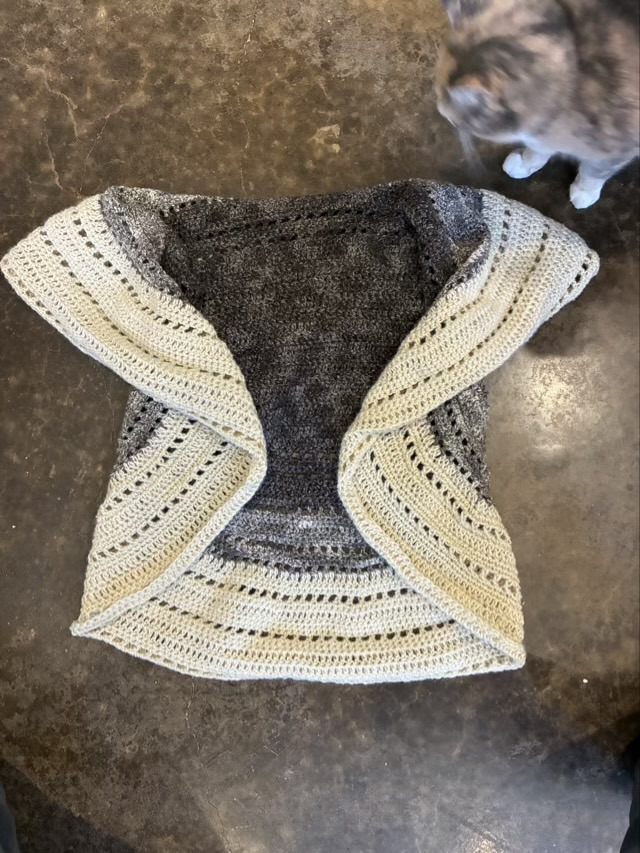
I crocheted several more rows onto LazyTCrochet’s circle vest pattern, past the “plus size” listed in the instructions. I followed the general feel of the pattern up to that point, and crocheted until I ran out of my hand-spun Teeswater yarn. It was still feeling small and tight.
Photo description: Circle vest crocheted from hand-spun Jacob and Teeswater wool showing three color variations, dilute calico cat photo bomb
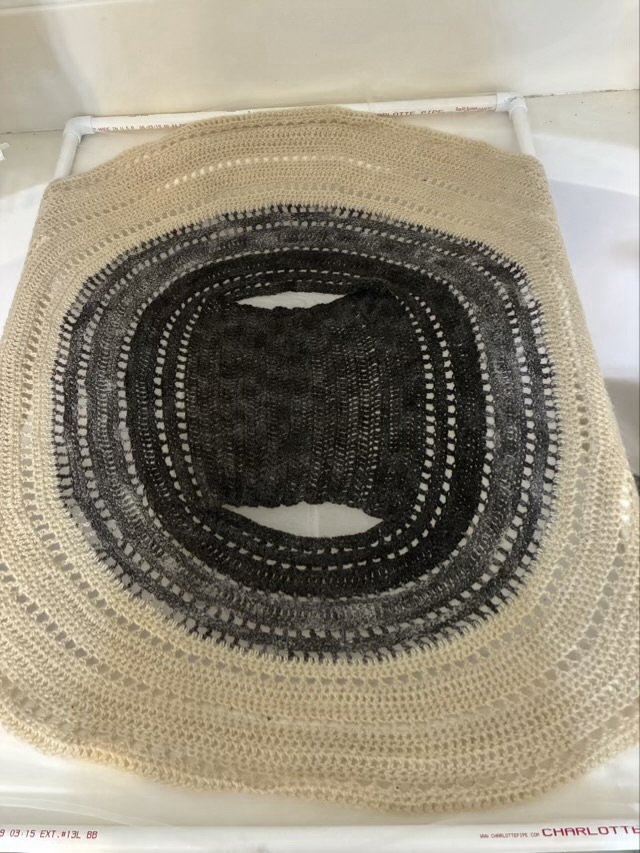
I do have more Teeswater roving, but need to spin it up. I decided to tie off the row and weave in the ends, then give the vest a good soak with some gentle fabric wash. I laid it out to dry on a homemade PVC and nylon mesh drying rack.
Photo description: same vest laid out to dry
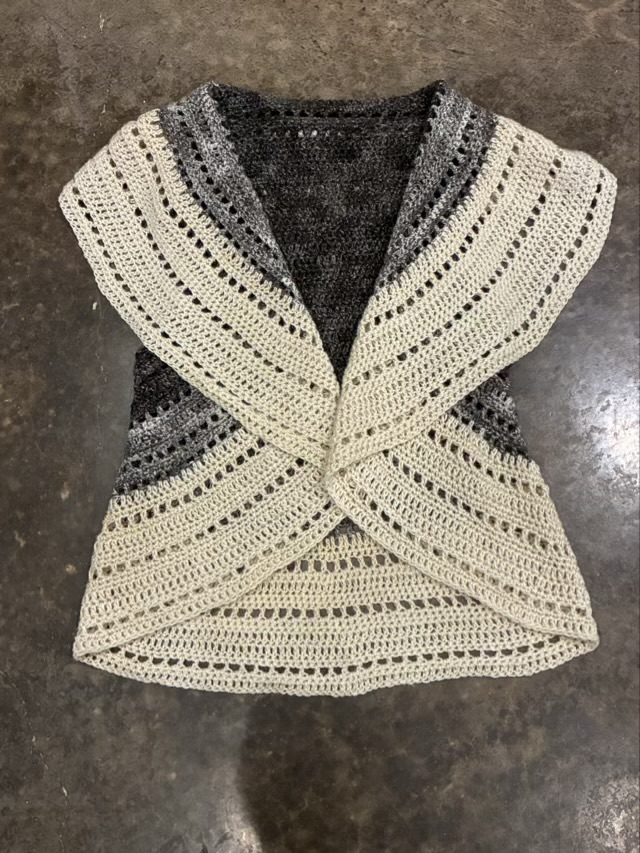
The stitches relaxed and the vest increased in size.
Photo description: same vest after blocking
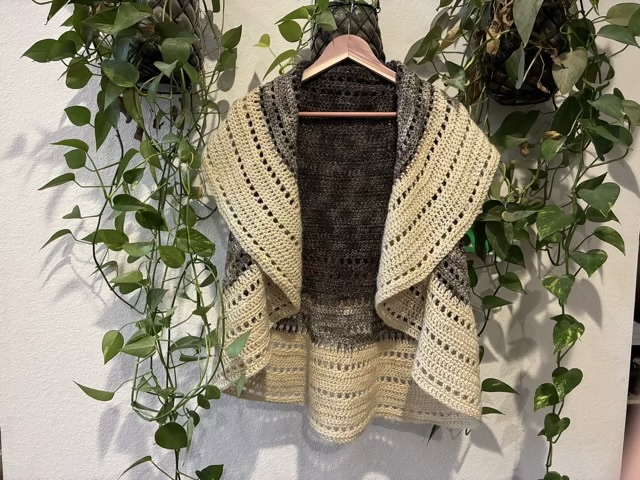
It is now a wearable garment. The wool feels softer after blocking and has a beautiful drape. I call this my “Shave ‘Em Two Save ‘Em” vest because both Jacob and Teeswater sheep are on the Livestock Conservancy list of Heritage Sheep. Jacob is Threatened and Teeswater is considered Critical.
Photo description: same vest hanging on a cedar hanger to show the drape
I’m rather excited that I have created something I will actually wear and supports farmers raising endangered heritage breeds.
I find knitting and crochet patterns for clothing items very frustrating. There is the whole sizing issue – just making more rows or making the pattern “bigger” does not mean it will fit right when you’re done. Putting hours and hours into a project and then have it not be a useful item is defeating. I’m working on a circle vest, because I like vests, and they are generally easier to fit than items with sleeves. Up until this point I have followed the pattern by LazyTCrochet, checking fit as I went. I used the largest version XL, and added the “Plus size” extensions, which are a joke.
Photo description: circle vest crocheted with hand spun Jacob’s and Teeswater wool with color variation, NOT my pattern
Fitting for multiple body sizes is hard. Most designers add rows and call it “good.” Frankly, there are more body types than XS-5XL (this particular pattern went from S-XL). Arm circumference, bust size, height, arm length, waist size, shoulder to hip, are all so individual. I could flail and complain about pattern designers, but I think it is the crafter’s duty to know their body and learn how to make adjustments to fit. For me, patterns are starting places, they just have to be. For this vest, I’m going to add more rows in the same style as the rest of the vest, not only to balance colors, but to get more coverage. I did purchase this pattern, but it wasn’t expensive (warning sign), but I won’t be purchasing from the designer again.
I spun up three more bobbins of single spun Teeswater wool and plied them into a three ply yarn.
Photo description: three full bobbins on the bobbin storage shafts built into the Ashford Traveller wheelPhoto description: small bobbins depleted, one empty, two partially depleted Photo description: three ply yarn on two jumbo bobbins, the left was done previously, the right recently plied
I think I have enough Teeswater roving to do one more jumbo bobbin of three-ply yarn, which means I will have to transfer yarn off a jumbo bobbin as I only have two. It will take me a while to spin though, so I don’t have to transfer yet.