Rainbow cloche

I crocheted up the rainbow yarn! Rinsing the single ply on the niddy noddy worked great to set the yarn. At just over 50 grams, there was not enough to make an adult sized hat, so… I spiral striped it with black. It came out well!

Crocheted rainbow cloche style hat

Even though my spinning still has thick and thin places, the crochet looks nice. I did remove some of the thinnest spots, especially along the edge.

Commercial spun yarn on left, my spindle spun on right

Though honestly, the practice is helping. I found a left-over bit of merino wool I had purchased years ago, and the yarn I made is comparable. Neat.

Spinning Rainbows

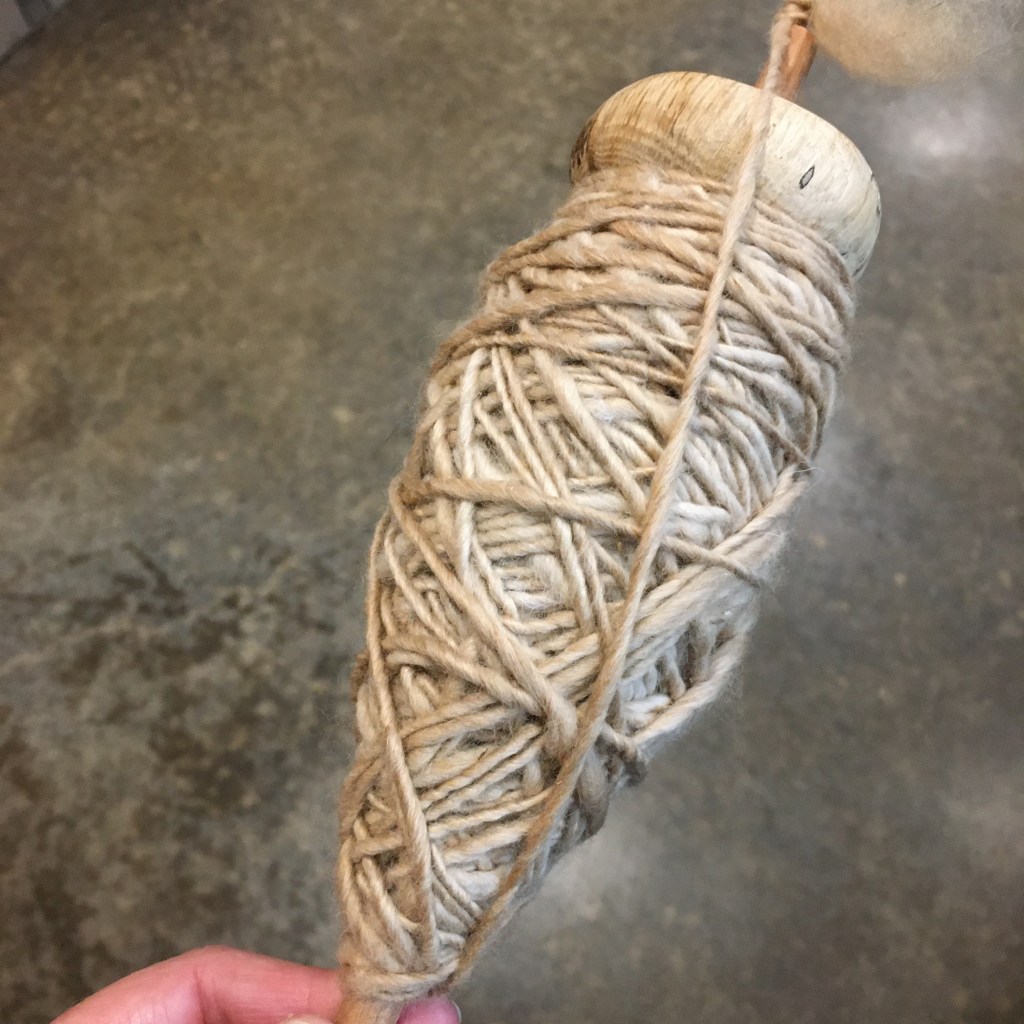
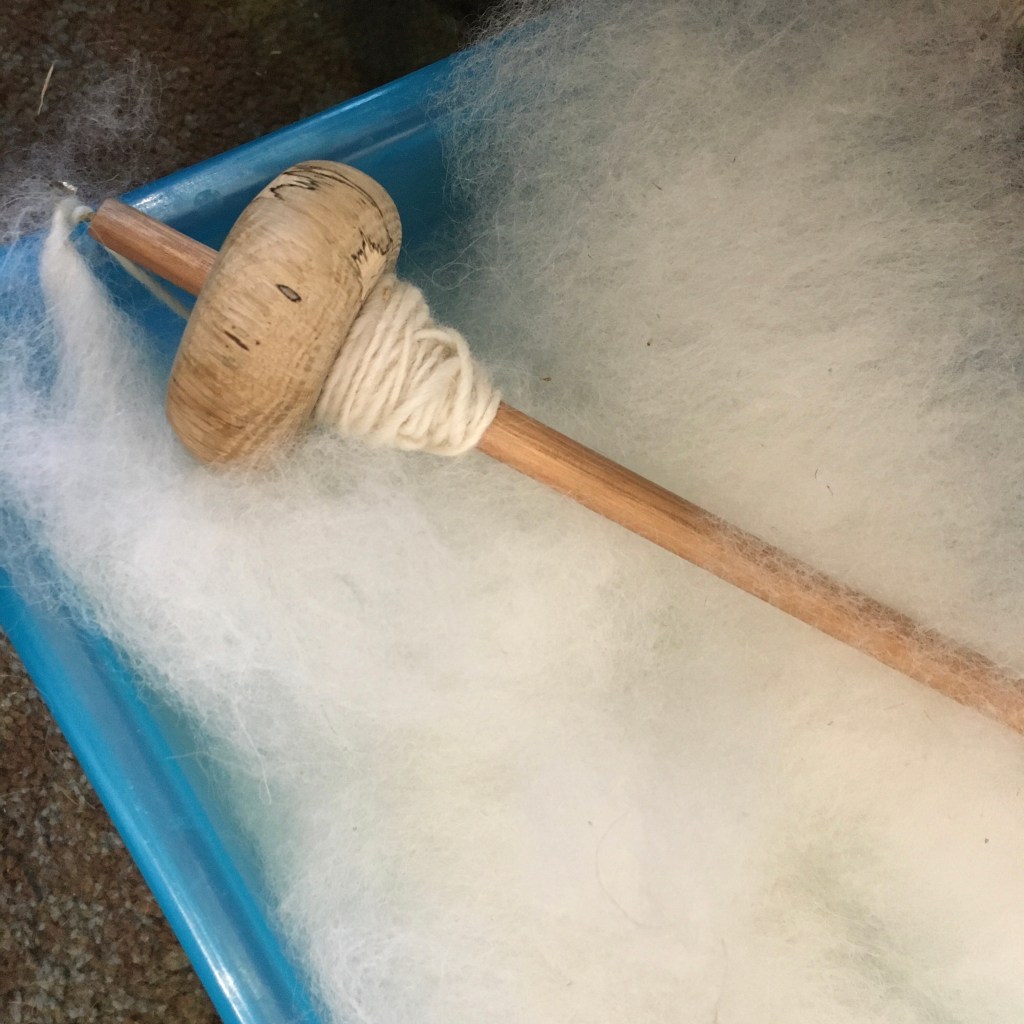
I spun up my rainbow rolags! The big fluffy rolags were nice to spin; the fibers pulled out smoothly and the color variation came out well. (And it was very pretty on the spindle!)

Spindle spun rainbow yarn

I strung the finished single on the PVC niddy noddy, rinsed it in cold water, and let it dry. The yarn seems to have set well.

Rainbow hank

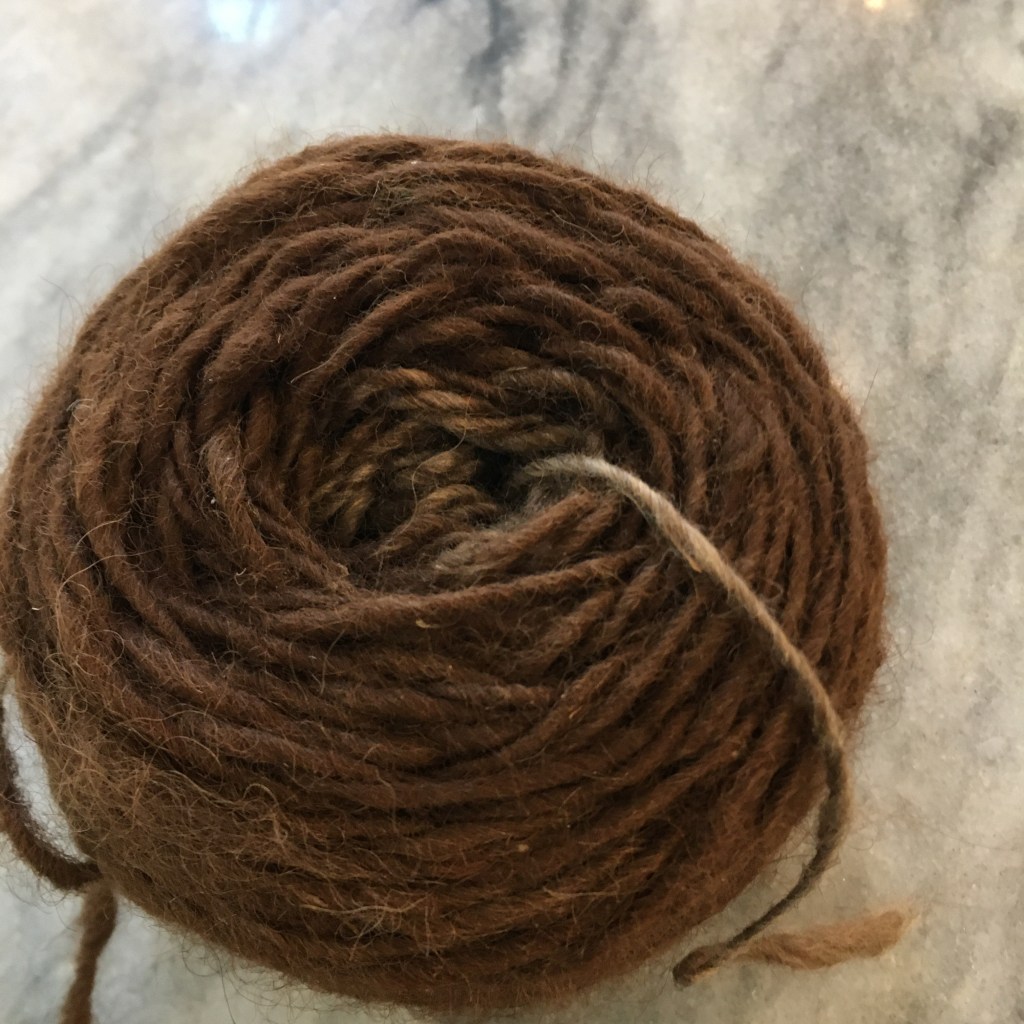
I took the rainbow hank off the niddy noddy and used my swift and wool winder to make a rainbow cake.

The resulting yarn cake is 53g and about 78 yards. Not enough to make a hat. Hmm. But I have some ideas…

Hank to cake

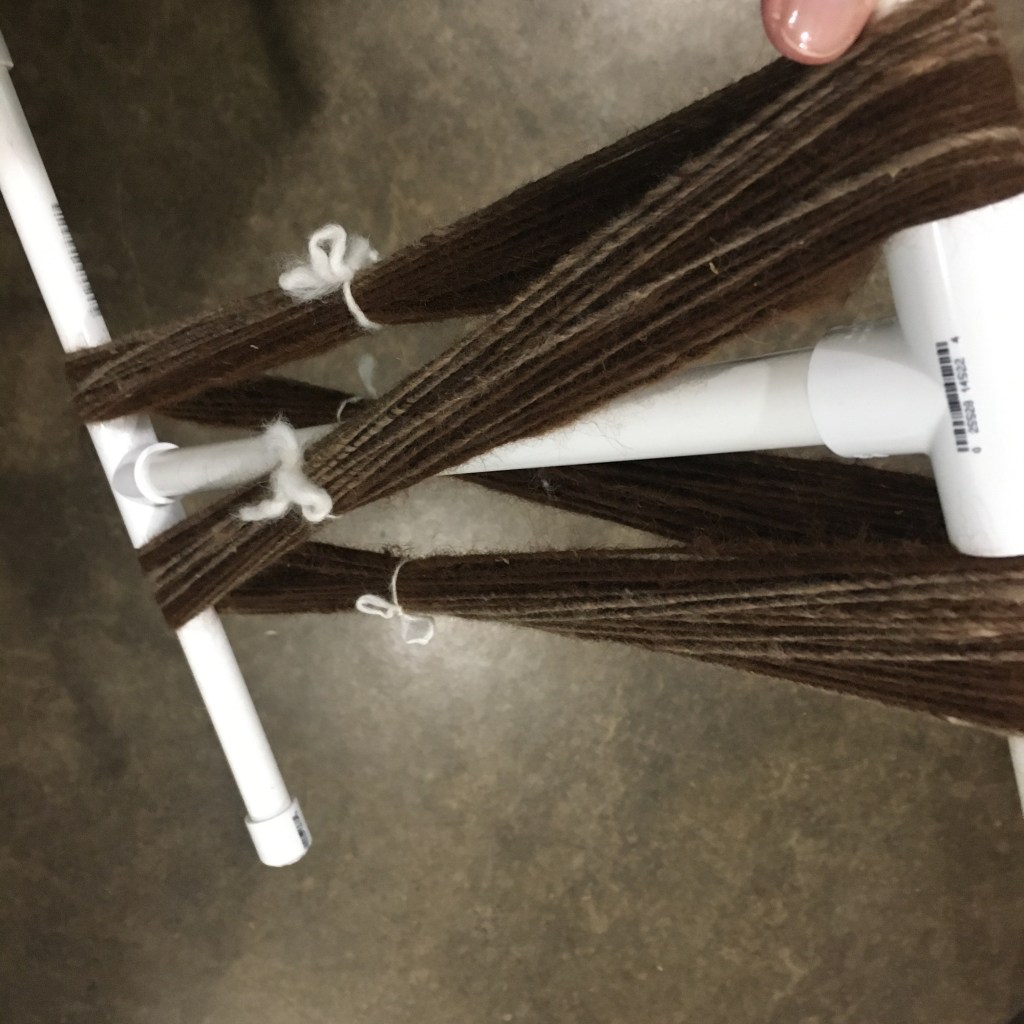
Hank of black merino wool single ply yarn

Last we left it, my single ply black wool merino yarn was drying on the niddy noddy. Oh that works!! It took less time to dry, and it came off the niddy noddy easily (the caps were too tight, but I could get one arm off the niddy noddy easily). The yarn is balanced (which means it doesn’t get twisty), and seems strong (although I really do need to work getting an even thickness, but that should come with practice).

Yarn on wool winder

It is a little bitty cake (just 53 grams), but since it was a proof of concept experiment, that is fine.

Rainbow rolags

I’m practicing with my wool carders! Carders are wooden paddles with wire bristles, like a large brush. You use them in pairs to prepare fiber for spinning. I have a beautiful bundle of rainbow colored merino wool roving my Mom gave to me, dyed in a repeat pattern. I decided to pull the colors apart and make a continuous rainbow yarn. This gives me a chance to not only use the carders, but to practice blending colors as well.

Pulled apart sections of roving, sorted by color

To blend the colors, I loaded the carder and tried to spread out the color to reduce streaks. Since the staple length (the length of the hair) is longer than the sections of color, most individual fibers have more than one color so it was impossible to completely separate colors and maintain the integrity of the fiber. It worked out well, though, because after carding I ended up with nice blended colors! I carded each section three or four times before rolling the fiber up to make a rolag.

Wool loaded on one carder

There is an art to carding fiber. Most of the instructions I’ve read stress not letting the wire bristles touch. I didn’t understand that at first. Then as I worked with the carders I saw that as you draw one brush across the other, the fibers pull out. It is possible to brush the fibers to pull them out and lift them from the other carder without touching bristles and without burying the fiber into the bristles. I’m still working on the technique!

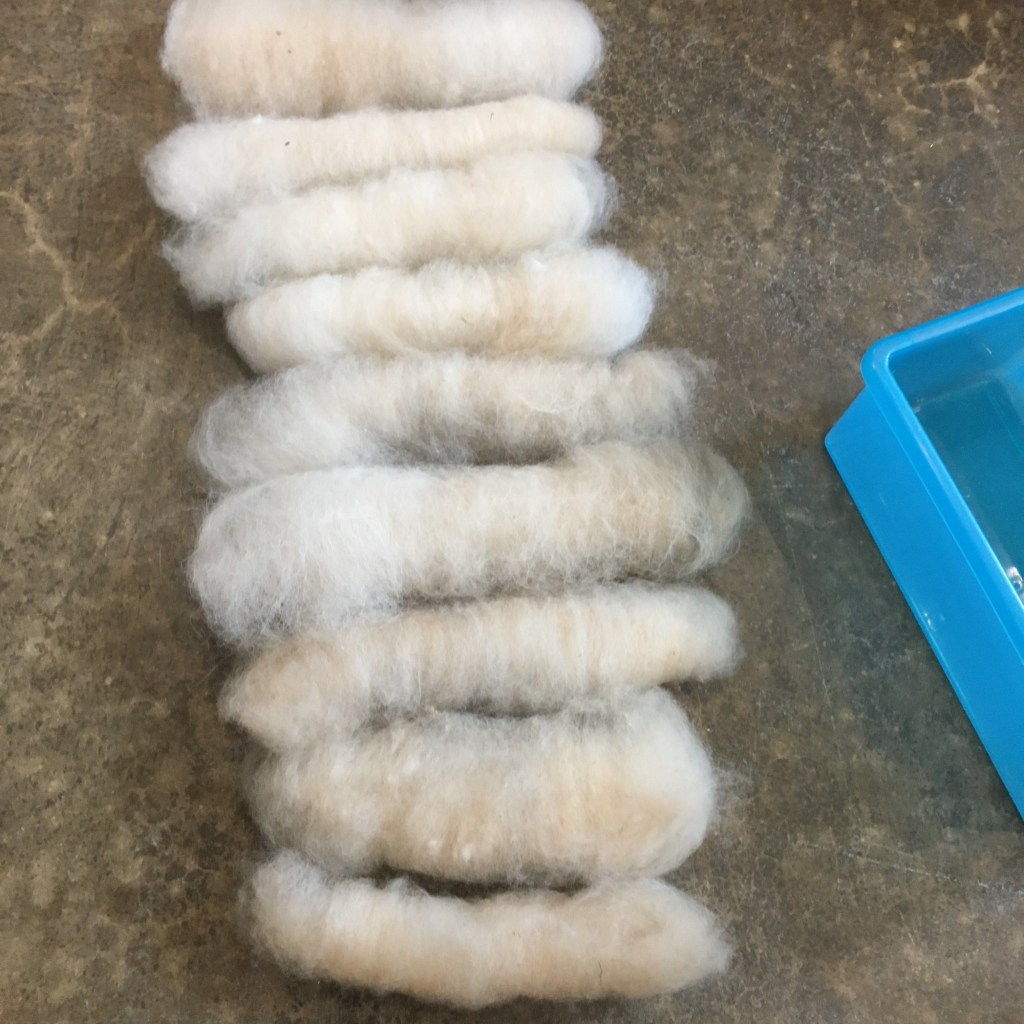
Carded rainbow wool

Once I had the colors blended sufficiently, I rolled the bat of fiber up, making a rolag.

Rainbow rolags

I’m really pleased with the color blending. Now it is time to spin!

PVC Niddy Noddy

A what? A niddy noddy is a simple device to make hanks (yarn wrapped in a large circle) of yarn, usually used after spinning onto a spindle. I thought that maybe my swift (was which is used to hold hanks while winding yarn into a ball or cake) would work and I wouldn’t need a niddy noddy (say that 10 times fast), but the swift doesn’t keep it under enough tension and my single ply yarn was kinky.

PVC parts for a niddy noddy

I already had 1/2” PVC pipe, so I went to the hardware store for two tee fittings and four caps. I cut the pipe into lengths of one 16” and four 7” pieces with my band saw. Assembling was easy, and I gave the finished H shape a half twist.

Assembled niddy noddy

Winding the yarn took a little thought, but once I had it down it was a nodding kind of action, so I can see why someone called it a niddy noddy (although I still think the name is akin to thing-a-ma-jig).

Yarn wound onto a niddy noddy

I made the central post 16” so that the resulting height with tee fittings would be 18”, which should make each loop of yarn around 2 yards. So I think I made about 84 yards of yarn. I used some contrasting bits of wool yarn to tie the centers so that when I do take it off the niddy noddy it shouldn’t become a tangled mess. The nice thing about using PVC is that I can rinse the yarn to set the twist with the yarn still under tension on the niddy noddy. We’ll see how the yarn comes out when it is dry!