
I am doing a spinning experiment (the results of which will be posted later, but this was funny, so I thought I would share.) The gist is that I am spinning bits of fluff as I am walking, which gets a bit problematic when there is some wind and a loose tuff of fiber. It must have been quite the scene with my bit of alpaca fleece rolling merrily down the street with me chasing after it.
Tag: spinning
How cool is this?!
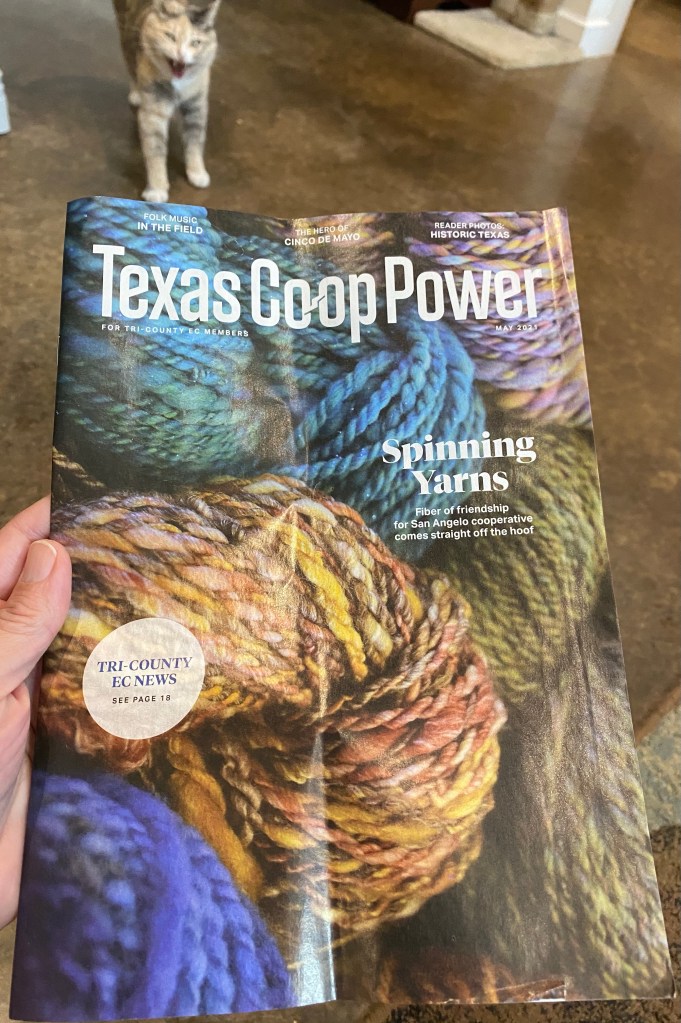
How awesome to open up my mailbox and be greeted by a picture of a kaleidoscope of lovely hand spun yarn?!? And it isn’t even my spinning magazine, but from the monthly electric co-op publication! (My sister gifted me with a subscription of Spin-off magazine that I LOVE, and selfishly stretch out by only reading an article or two at a time.) Bonus spinning info, hurray! Here is the link to the digital version, if you are interested. It talks about a enterprising group of spinners that co-op their own herd of sheep, goats, and alpacas. A little too far away for me, which is a bummer, but I have local sources for alpaca, buffalo down, and mohair, so I feel pretty darn lucky.
Oh, and that is Sophie doing a photobomb and looking scary. I caught her in the middle of a yawn and stretch.
Marled ripple lace scarf
The lace scarf is done! It isn’t very long, but I used up all my fiber, with only a short segment remaining.

The total weight of the scarf is 103 grams (3.6 oz). I used two colors of pink merino roving, pre-drafted the colors together without blending, spun with a hand carved drop spindle, then made a two-ply yarn. Lace stitch was done with size 8 Prym needles (which may have just changed my feelings about knitting and especially lace knitting). I blocked and dried the scarf.
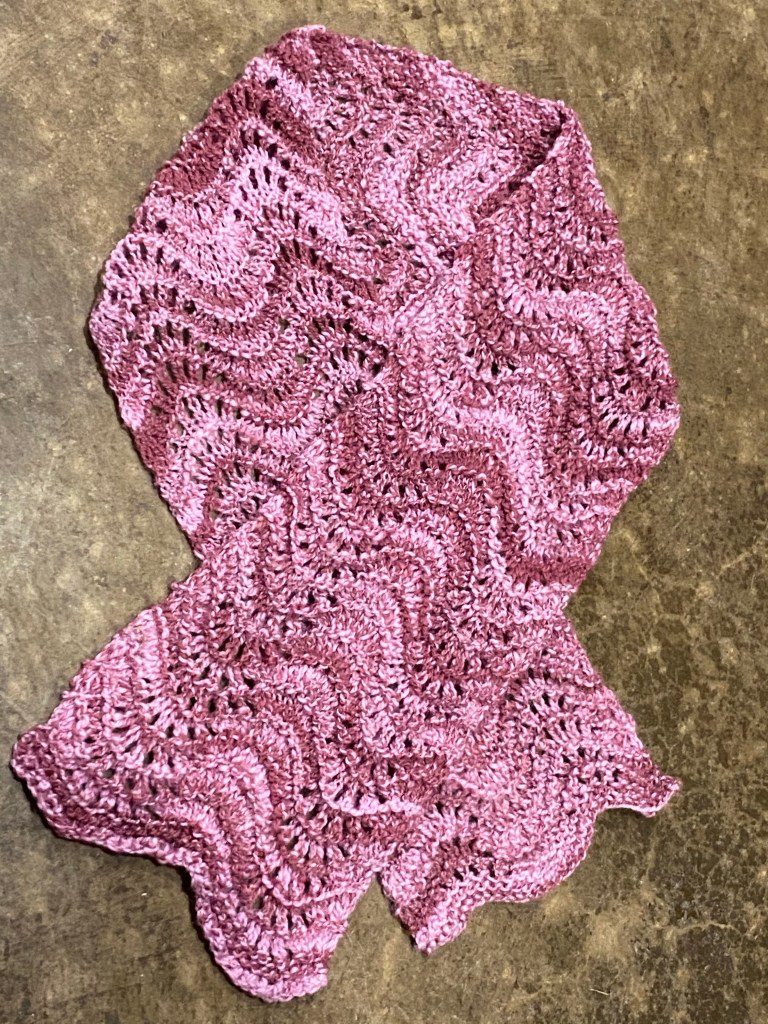
Interestingly, the pictures of the scarf are much more striped than it appears in person.
Fiber on the brain
I may be a bit obsessed with spinning. My husband sent me an amazing sky picture, and my first thought is that it looked like fiber ready to spin!

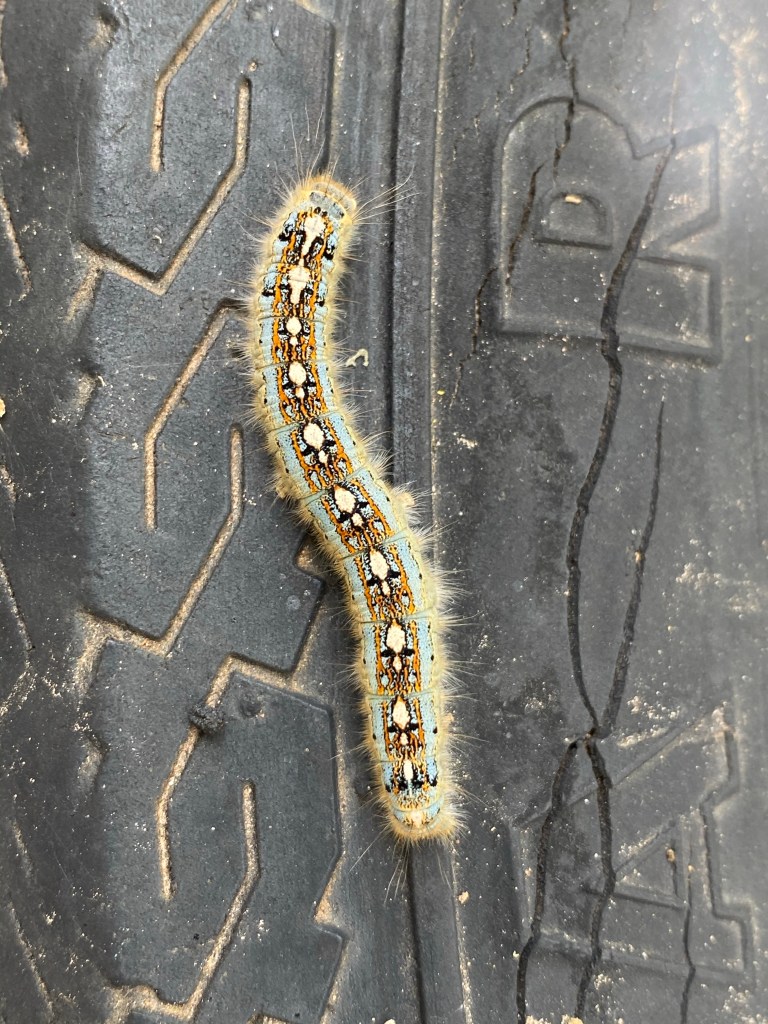
Then I found an forest tent caterpillar on my planter (yes, it is a tire), and it looks like it has sheep marching down its back!
Perhaps I should go have a lay down, but first I’ll spin a bit.
Knitting lace pattern
For someone who does not count knitting in my favorite crafts, I certainly seem to be knitting often. I finished spinning the two-color pink merino wool and am quite pleased with the color distribution. It isn’t nearly as patchy as I thought it would be when I was spinning the singles! I then needed to decide what to do with the two ply yarn. Since I want to get back to spinning, I chose knitting because it is faster than nålbinding and I like the texture better than crochet. It is all well and good to only spin, but how can I improve my spinning if I don’t know how the finished yarn performs?
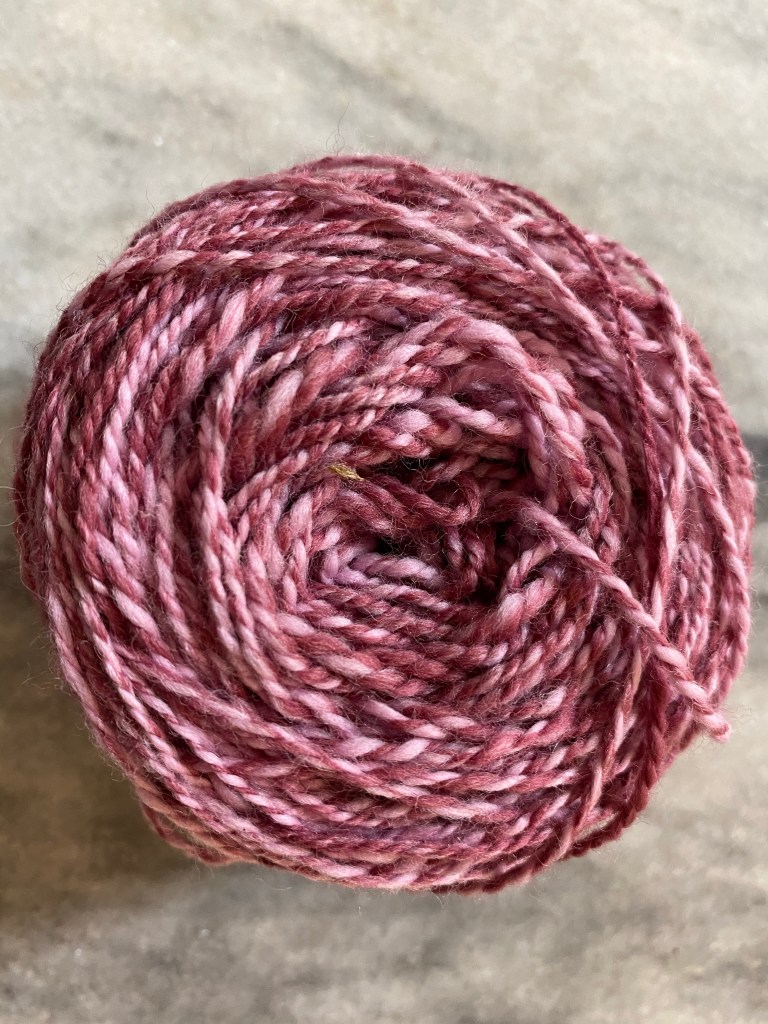
I found a simple knit lace pattern, since I read two ply is often used for lace. I also learned about a different kind of needle from Prym. These are ergonomically designed with tips that hook the yarn better, triangle shafts so the loops slide better, and they clip together to keep the stitches on the needle between sessions! I do appreciate well designed things!
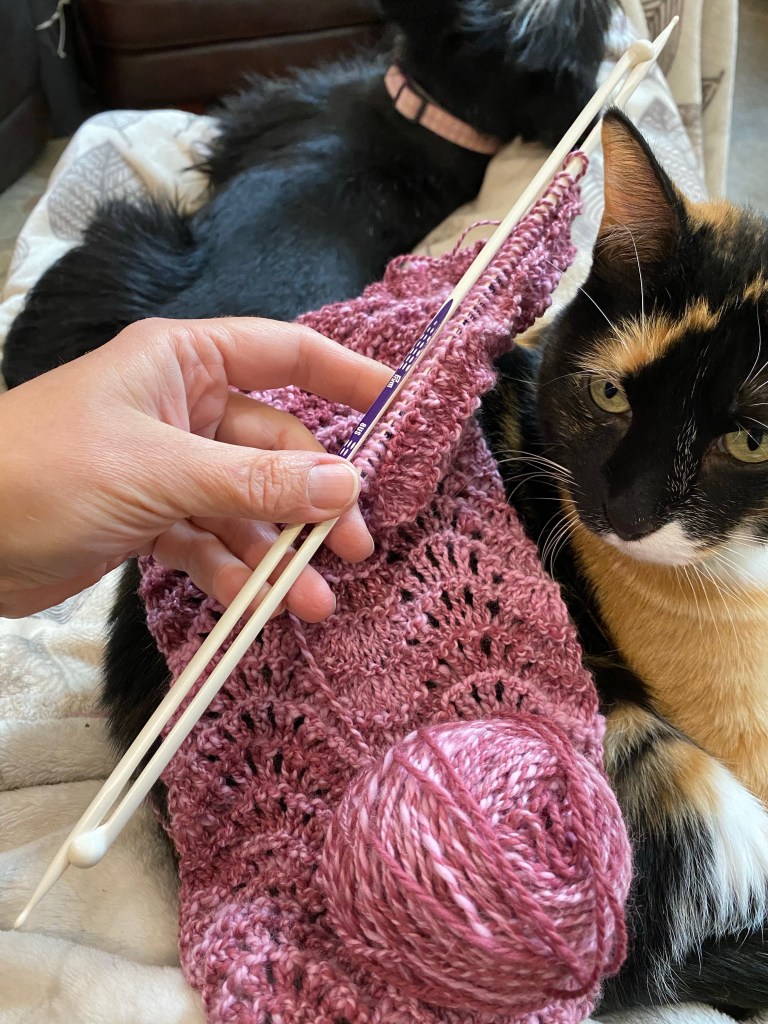
This pattern is my kind of lace! It repeats every four rows, and there is only one row with increases and decreases, otherwise it is knit or purled all the way across. I had the pattern memorized after three sets, and could recognize where I was in the pattern after three more. And such a lovely dynamic result! I realized that I have seen this ripple pattern somewhere else. My daughter’s dolls were tucked in with a rainbow blanket that my grandmother made that used the same stitch! I’ve always admired the ripple and wondered how it was done. Now I know!
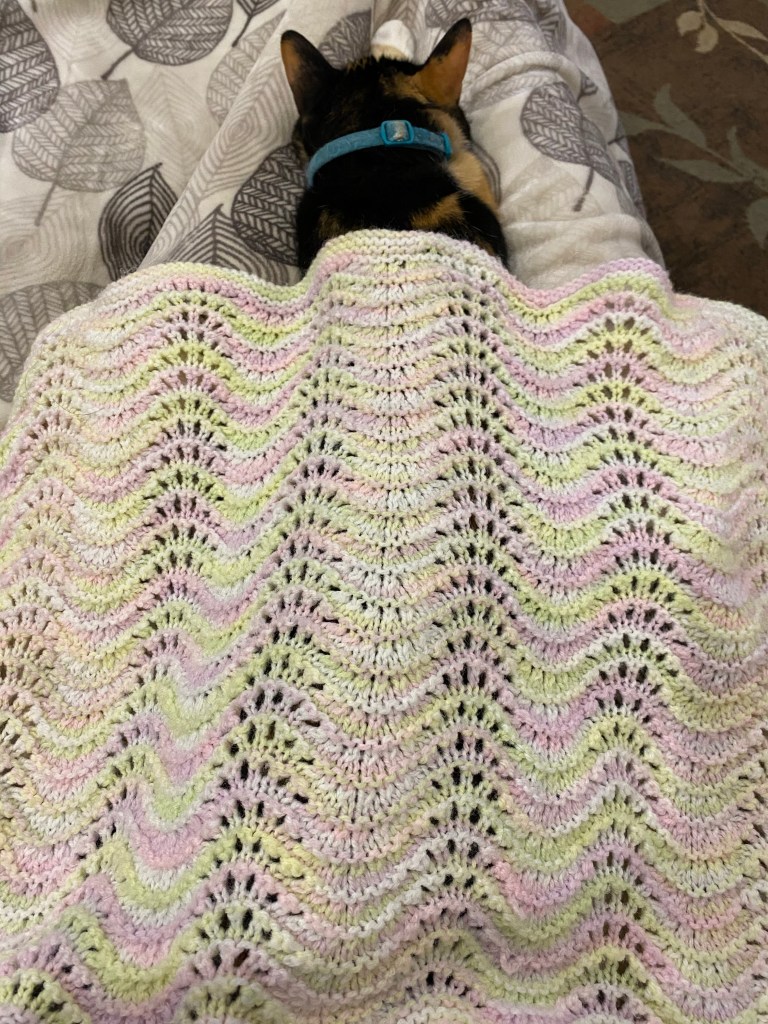
My knitting still can’t be considered speedy, but it will do for a sitting project. I have two other skeins queued up for the next knitting project, and have started a new walking spinning project. We’ll see if I can finish the knit projects before I have more finished yarn!

