Spinning cinnamon rolls

Spinning and cinnamon rolls are two of my favorite things. When I saw a yarn preparation at my local spinning store (we have one now! Squee!) called “Cinnamon Rolags” by The Fiber Bakery by Anniewhere, I had to buy some. This particular preparation has a blend of Merino Wool, Bluefaced Leicester (BFL), Alpaca, Tussah Silk, and Finn Wool. I haven’t spun Finn wool before, so am totally going to count this spin for ticking that box.
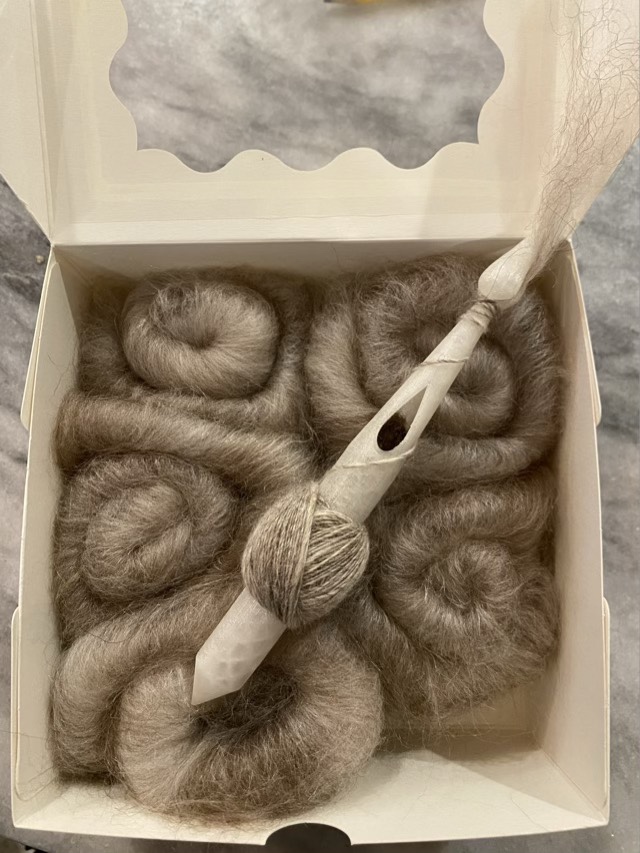
Drop spindle with spun and unspun Cinnamon Rolags

The spindle is one I designed and had 3D printed locally by X of All Trades. I’m getting larger ones made, but I wanted to start spinning. I like the rolled rolag prep. The roll fits comfortably in my hand so I don’t need a distaff or other fiber management device. The blend spins up well too; it drafts evenly, has no nebbs or tangled bits, and the spun single has a nice halo on it.

Taming static

I’m getting back to my alpaca combing and spinning project, but last time I delved in it was summer and relatively humid. In the depths of winter there is far less moisture in the air and the static build up during combing was driving me up a wall. Luckily, Spin Off magazine has an article on this very problem, with first hand recommendations from many long-time spinners. The majority just use a spritz of water to calm with electrical surge. Hm. I dug out another glasses cleaning spray bottle (I do seem to have an unending supply of these), and filled it with water. It works wonders. The mist is very fine, so it doesn’t take much, and the fibers are happy and free rather than a staticky mess.

Taming combing static with a mist of water

Divide and conquer

Flax roving unspun and spun

Pictured is 24 grams of flax roving on the left and 22 grams of flax single yarn and 2 grams of flax roving dressed on a distaff on the right. I would like to make a two-ply yarn so have divided my roving by weight in an attempt to get similar yardage. I can spin about 2 grams on a 30 minute walk, so it will be awhile until I ply.

Flax roving is an unusual preparation. Usually flax fibers can be measured in feet, but the staple length of this preparation is 1-5 inches. That is what I get for buying through a generic sales site rather than a fiber specific store, and not knowing anything about flax spinning prior to the purchase. It is a good learning experience on many fronts, however.

Sponge bracelet

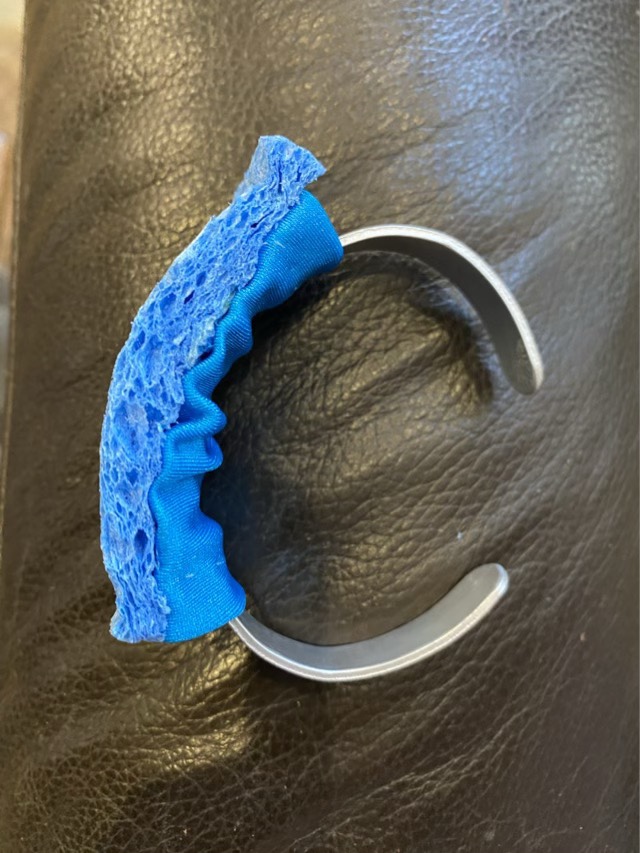
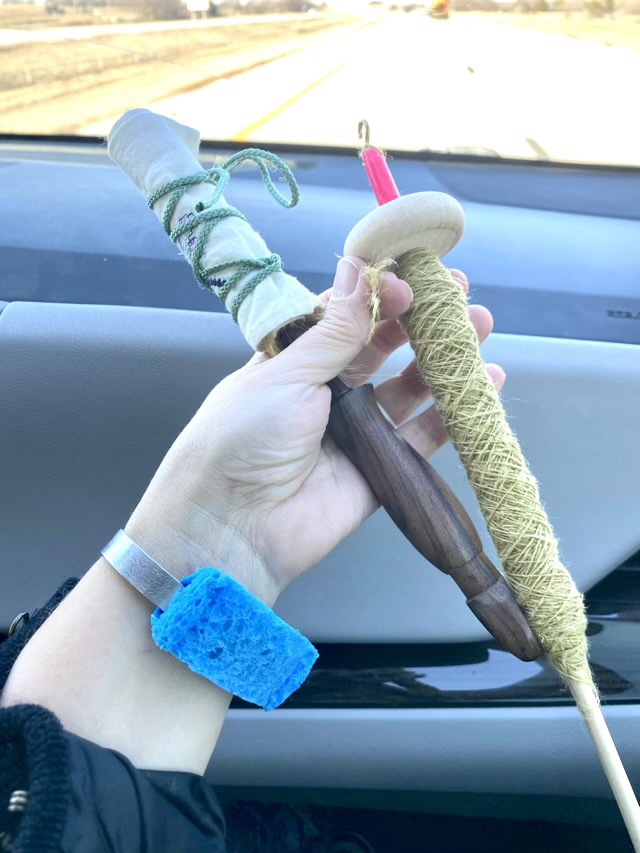
For spinning flax, author Stephenie Gaustad recommends wetting the point of contact between the leader and fibers to be drafted with moistened fingers. To facilitate this, I made a sponge bracelet. I cut a rectangle of sponge, sewed on some swim suit material, and slipped it over a metal cuff-style bracelet.

Bracelet mounted sponge

Before I start spinning, I wet the sponge. My favorite spit substitute is alcohol-free lens cleaner. I usually have a spray bottle for cleaning my glasses, so it is readily available for spinning use as well. And yes, I did try actual saliva, but since this is flax roving it has many short fibers that get caught on fingers and tongue. Yuck.

Spinning flax in the car with a drop spindle, distaff, and sponge bracelet

Rambouillet page

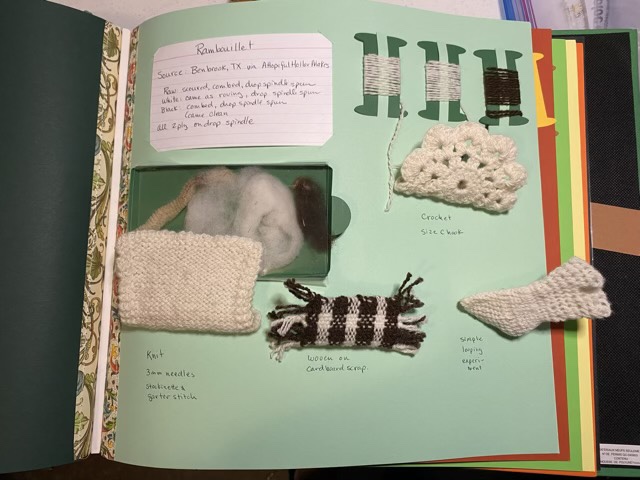
I finished my Rambouillet wool fiber page. I had samples of three preparations of wool given to me: raw fleece, scoured (but not combed), and roving. I love this wool. I enjoyed scouring and combing it, and I love how the finished pieces feel. When I’m ready to buy a new raw fleece this is the kind I’m going to get. It cleans well, and spins beautifully. I love the woven sample with my first plaid pattern. I understand why this sheep is so popular.

Rambouillet fiber page
Page with swatch descriptions showing