Happy Surprise

I will be doing a spinning demonstration soon for a local founder’s day, and I thought I should really dress for the part this time. Fabric is crazy expensive, and as much as it saddens me to purchase costumes made from synthetics made in a foreign land, I did not have the time or resources to make all the pieces myself this time. I did not have high hopes for the online order, I have been thoroughly disappointed before, and it was in the plan to make modifications, but I was quite surprised when the garment arrived. Yes, it is made with synthetic fibers, but nicely, and well sewn. There were decorative pleats in the skirt that could actually be let down to give more length. And there were pockets. Yes, you heard me right, pockets. Proper, can-actually-hold-my-phone-without-falling-out, pockets. Color me impressed. I did take out the elastic on the arms, and let out one pleat to so the dress come closer to the floor (but not more since I don’t want to trip over it, but that’s it. No it isn’t authentic, yes, the re-enactors will have things to say, but it is much better than capris and a t-shirt, and I like the color.

Photo description: Green fabric with a pocket and decorative pleats that can give skirt more length.

Two to one

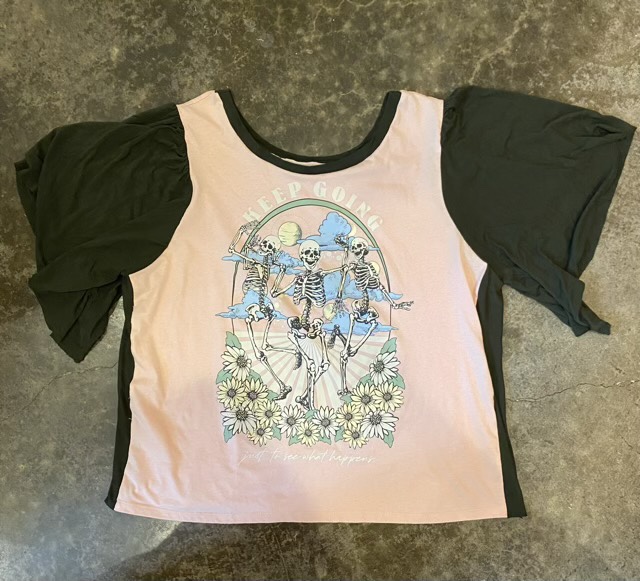
I have Frankenstein’d my shirts before, where I have two shirts with opposite positive attributes, so I combine them. Mostly it involves ripping seams, cutting, and sewing back together. I’m at it again. I found a printed tee that I liked the print and the message: “Keep going, just to see what happens” with singing dancing skeletons. But it is a “women’s” shirt, so has cap sleeves and a snug fit. Bah. I have an old shirt with lovely full sleeves, but a high neck and short body. Also Bah.

Photo description: Peach t-shirt with skeleton print and an olive green shirt with butterfly sleeves.

I like peach and olive green together, so I selected these shirts for tailor surgery. I ripped out the seams on the peach shirt, except for the shoulders, and cut a larger neck hole. I cut the sleeves and the hem off the olive shirt, and a two inch section of the body. I sewed the olive green strips into the side seams of the peach shirt to give it more ease, sewed the butterfly sleeves in, then used the olive green hem to edge the neckline.

Photo description: Printed peach tee with olive green butterfly sleeves, side gussets, and new scoop neckline.

I like how it came out. Before I had two shirts I would not wear, now I have one shirt I will.

Cleaning

I’m still picking away at the model 27 sewing machine, removing small bits of dried on oil and dirt.

Photo description: Singer Manufacturing Company trademark in bronze, covered with a thick patina of oil
Photo description: Same seal after cleaning with a bamboo stick and sewing machine oil, with only a slight patina left in the crevices. Photo also shows a shiny stitch regulator knob.

My friends and family are probably getting tired of hearing a “scritch, scritch” noise when I’m on the phone. But it helps me focus. I’m not cleaning all the patina off; getting it back on in artful amounts can take years. I did figure out that I can clean the parts that are stuck in place, and continue to soak them in oil until the threads release. A thin strip of nylon netting is great for getting into the screw threads.

Photo description: Top of the machine, one hand is holding a dirty length of nylon netting along the threads of the pressure foot tension knob.

I’m not sure what I am going to do about the gold decals. They are quite delicate and are already flaked off to the silver base, or rubbed off entirely in areas. I do feel I need to remove all the loose paint, because I don’t want it flaking off onto my fabric. Experiments continue.

Side gusset

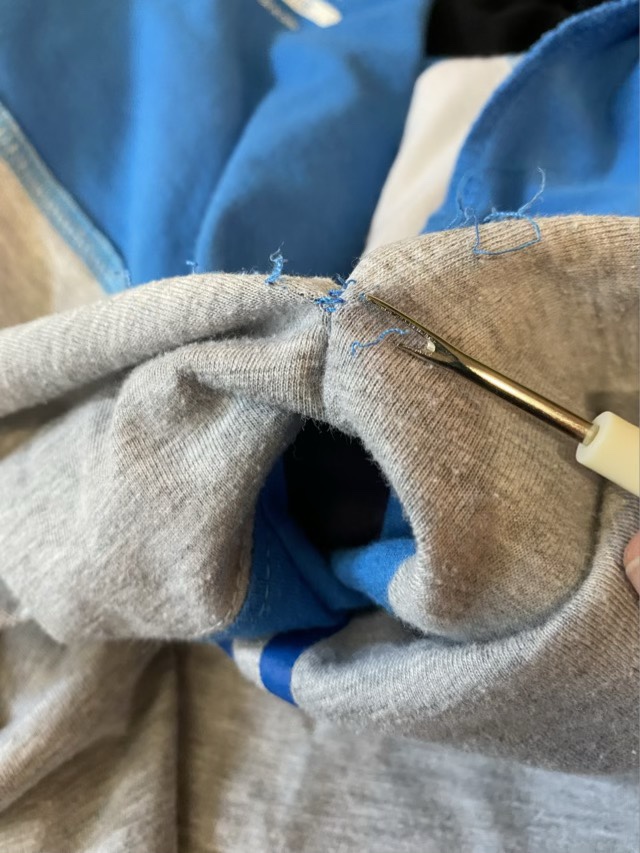
My youngest has a favorite shirt that was getting snug. To prolong the life of the shirt and make her happy, I added a gusset to the sides and up through the arm. First I picked out the side seams about to the elbow.

Photo description: Gray knit material with blue thread and a seam ripper, showing a partially picked seam.

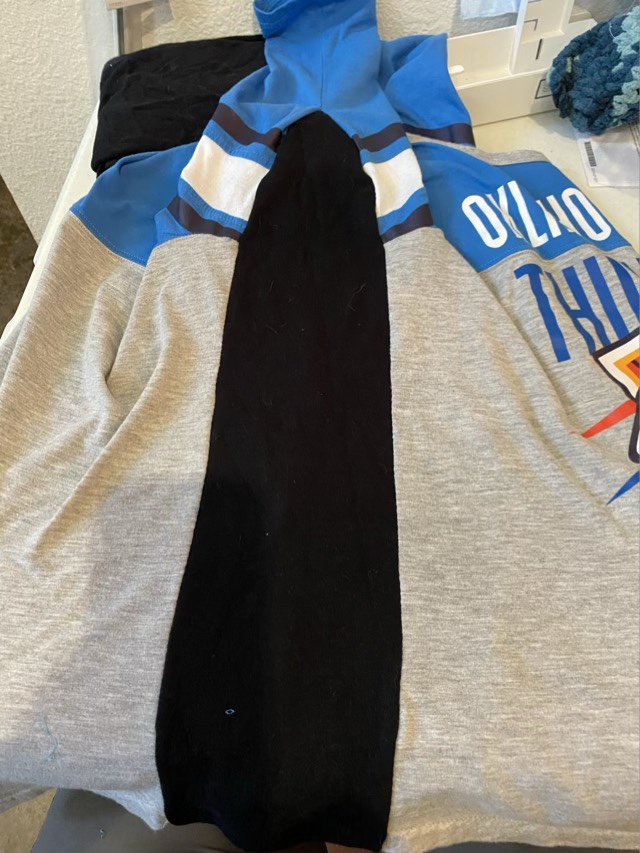
I had her try on the shirt at this stage to see how wide the gusset needed to be cut. Then I cut long rectangles of a similar weight black knit fabric and tapered the end by the elbow.

Photo description: Gray t-shirt on a white table with a black rectangle of fabric laid on top. The top of the rectangle has been cut to a point.

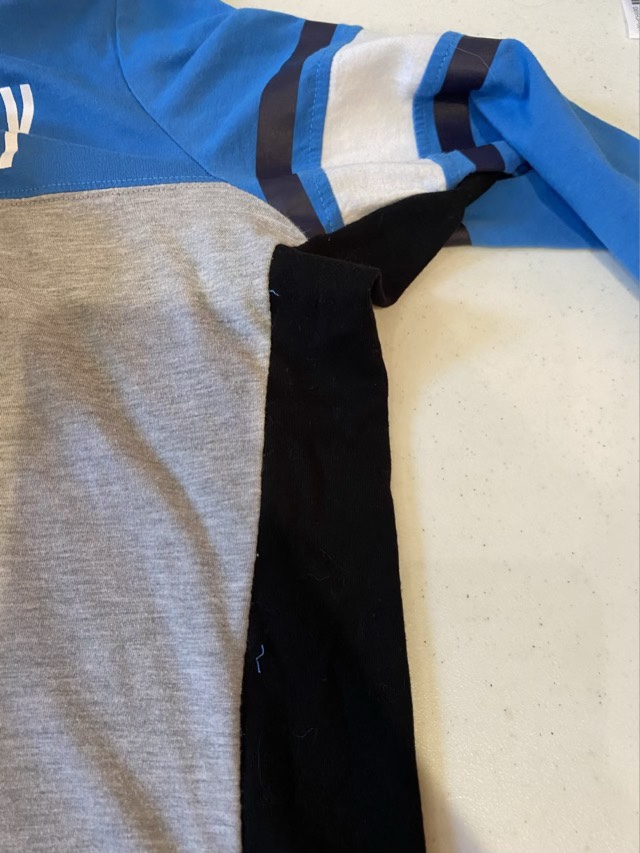
I put the right sides together, and starting at the arm, sewed in the gusset with a stretch stitch on the machine. To finish the bottom edge, I folded up a hem to match the sides and stitched across with black thread.

Photo description: Gray Oklahoma Thunder shirt with sewn in black gusset, side view.
Photo description: same shirt but laid in the table flat showing the front view of the gusset up to the elbow.

I was quite pleased with how the modification came out. The shirt fits better and looks like it was originally designed that way. My youngest is happy because the shirt is now much more comfy.

Testing for lead

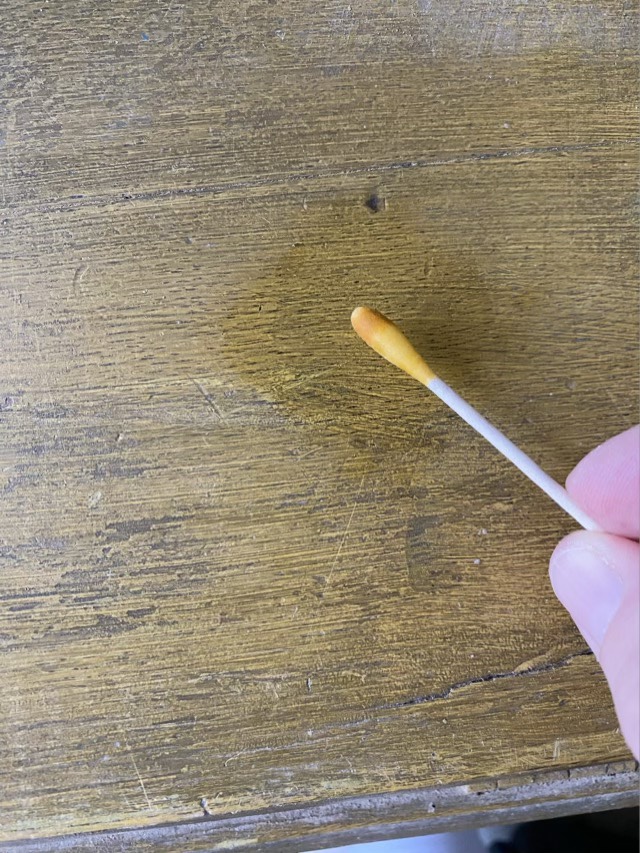
The cabinet of my 1907 model 27 Singer Sewing Machine is yellow. Hm. Pinging online groups, there is a general consensus that they didn’t come in yellow. Prompted, I looked at the hinges, and yes, the hinges and screws also had yellow paint, so someone, during the life of the machine, had thinly painted it yellow. Sigh. The next question, how long ago? Was there lead in the paint? I purchased a lead test kit, followed the directions, and happily, no pink. If the swab or surface turns pink or magenta, it indicates the presence of lead. Since it isn’t lead paint, and it is not original, when the weather cools off here I’ll strip the paint and refinish.

Photo description: Antiqued yellow wood surface showing a wet round area and a yellow swab.