Tension ring

My youngest was wearing her yarn tension ring in such a way that her finger couldn’t bend, which caused pain issues after three hours of crocheting. So we modified the ring to make it smaller and I am encouraging her to wear it so the yarn runs along the back of her finger, and the ring doesn’t interfere with her knuckles. I have also been teaching her hand and wrist stretches to do periodically while she is crafting.
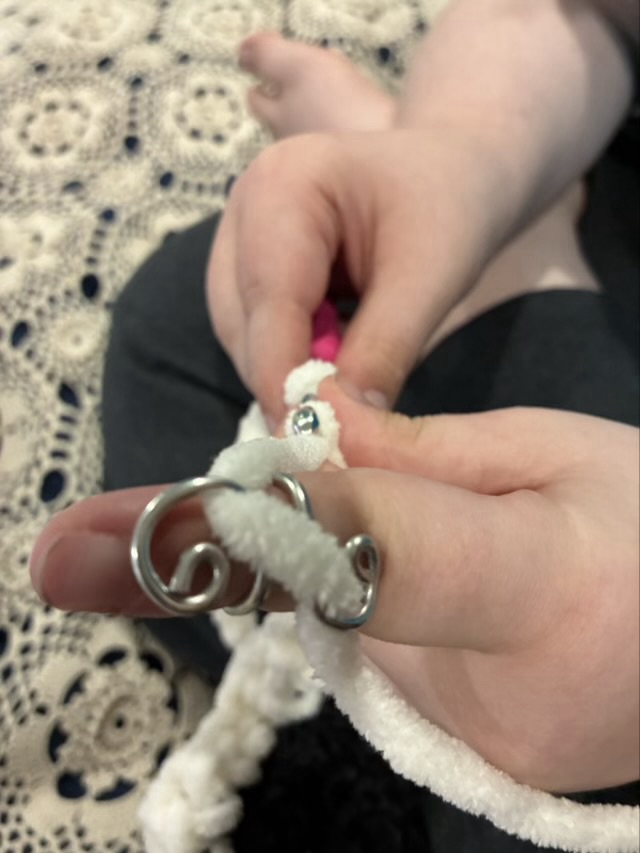
Photo description: yarn tension ring made of 14 gauge aluminum wire with two spirals worn on the index finger with chenille yarn running through the spirals to provide friction

It is a good idea to look at your ergonomics as you craft, especially if you have something you enjoy doing for long stretches of time. As with computer work, there should be scheduled breaks and stretching activities. This will help you enjoy your craft longer both each day and over the years.
Multi-use

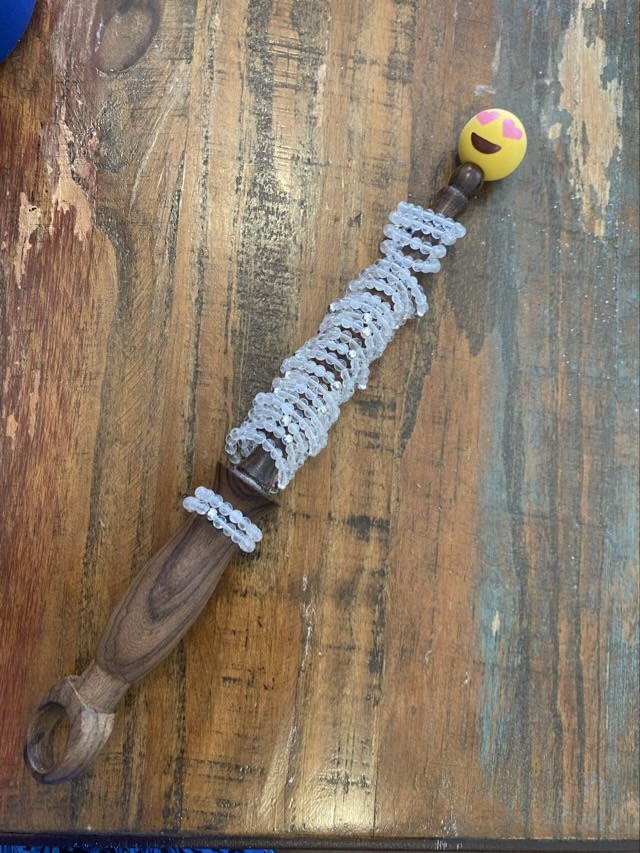
My turned rosewood distaff made by Enid Ashcroft is a beautiful piece of work. I appreciate that the top end is just the right size for a pencil topper, and not only does it function well for its intended purpose of holding fiber for spinning, it can also function as a ring holder. Pictured below it is holding many sizes of quartz bead rings.

Photo description: ring distaff holding rings with a heart eyed emoji topper

The thought process that lead up to this discovery was “I need something that will keep these rings in size order during transport.”

Tension ring

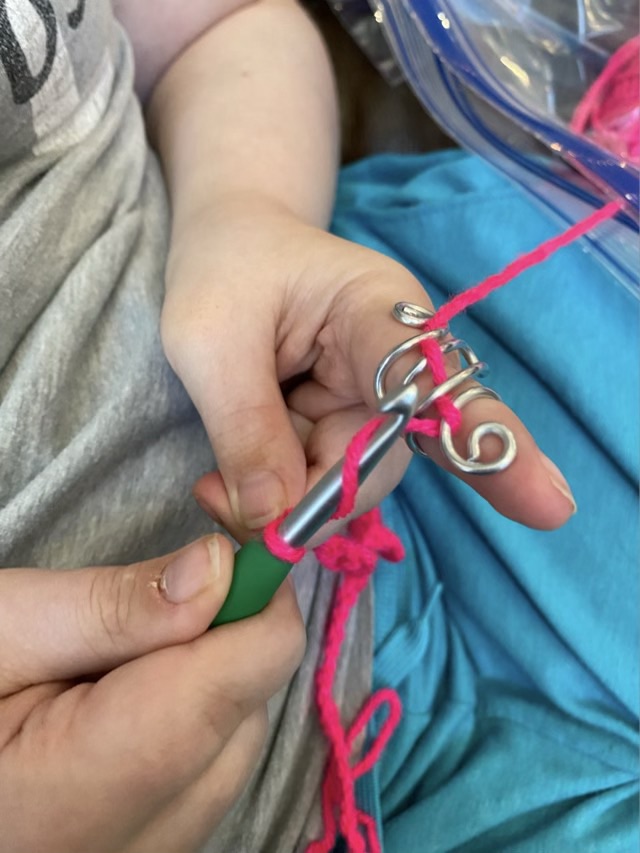
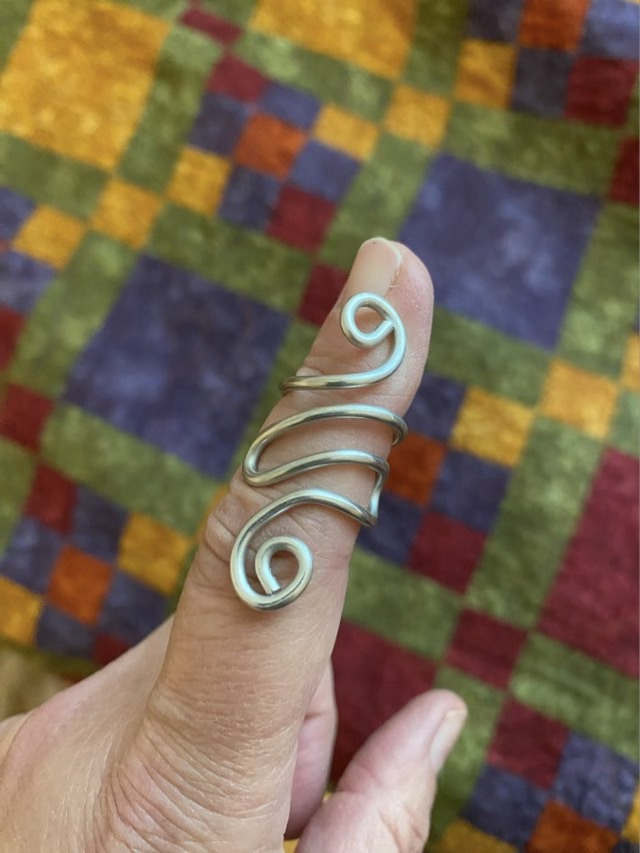
My youngest is showing interest in crochet. One of the hardest parts of crochet (and knitting) is keeping an even tension. To assist, I made a tension ring. Yes, I did model it off of one I saw for sale, but I used 14 gauge aluminum wire from my stash to make it. Aluminum wire is very malleable, so a larger gauge (smaller number) is needed to hold the shape under use, but it is still easy to form toa finger in order to get good skin contact.

Photo description: aluminum ring made of 14 gauge wire with two spirals and two loops

The shape of this ring makes it easy to slide the yarn under either a loop or a spiral, or have multiple points of contact. The more contact, the more drag, the more tension. It was a game changer for my daughter, who went from only being successful with assistance to chaining on her own.

Photo description: my daughter’s hands making her own chain using the ring tensioner and bulky weight pink yarn

I then made the mistake of introducing the double crochet. Too many steps. When she shows interest again, we’ll try a slip stitch, which only has one more step than a chain (inserting the hook into the work). There are historically created items that are made with only a slip stitch, so she can still feel accomplished. Sometimes baby steps are what works, and breaking tasks down to parts, finding what parts can be delegated or assisted to order to be successful.