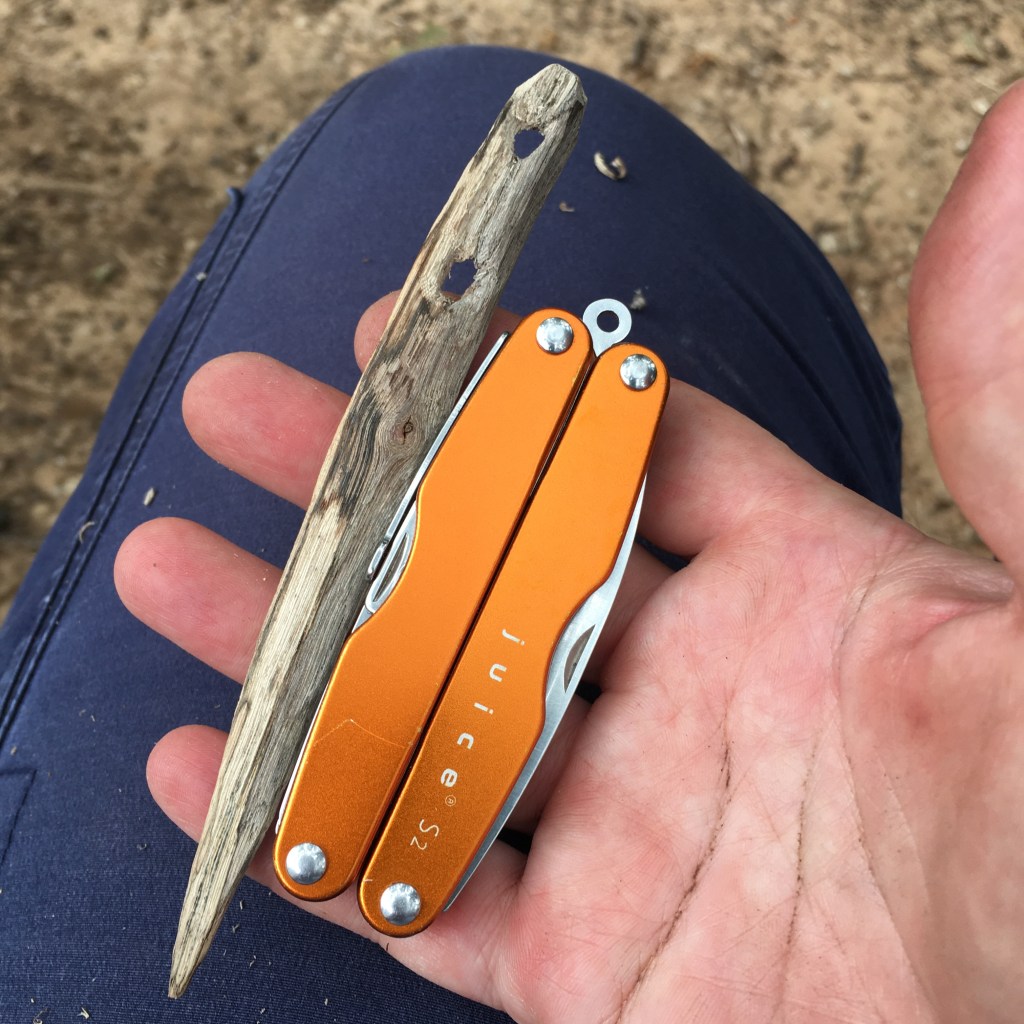
Nälbinding

I made that pretty red wool that I spun into a cloche style hat using the York stitch!

Merino wool cloche, York stitch, before blocking

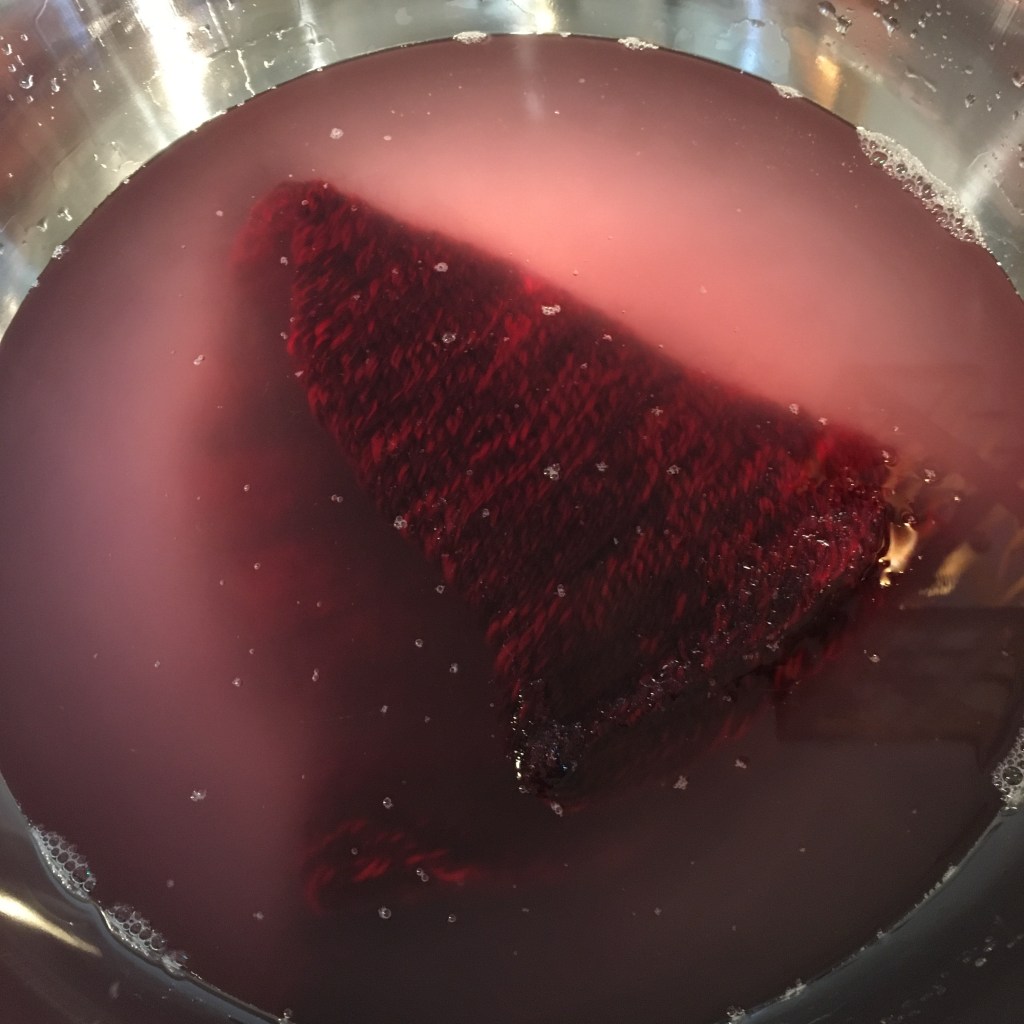
Because of the intensity of color in this wool, and because I wanted to block this hat (blocking is the process of getting a piece wet and laying it out nicely to dry), I gave this hat a gentle wash with Euclan no rinse soap.

Red hat soaking in the wash bowl

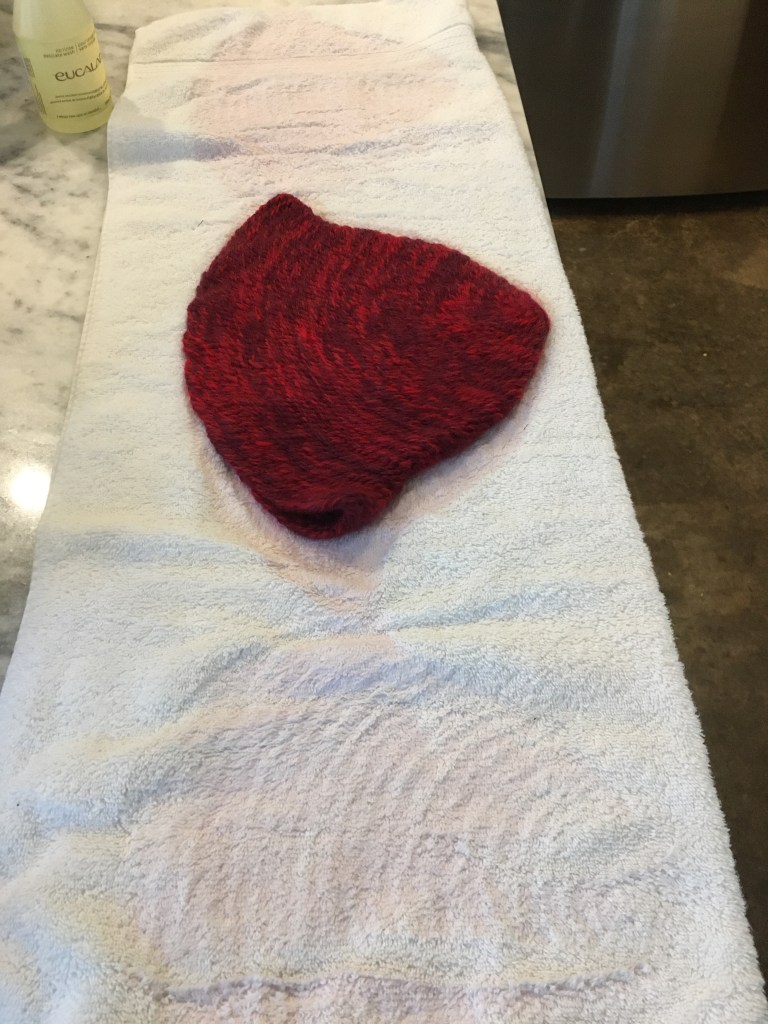
I let the hat soak for 15 minutes in tepid water (I didn’t want to felt it), then gently squeezed out the pink water and rolled it up in a towel to squeeze out more water before laying it out to dry.

The white towel turned ever so slightly pink

I’m glad I decided to give it a wash, not only to remove some of the extra dye, but laying it out to dry evened out the stitching making it look even nicer.

Blocked hat

I really do like the way the York stitch goes with a Z plied yarn (S and Z indicate direction of spin). I also really like spinning and nålbinding an entire piece. There is peace in taking time to enjoy the process. But it is not a fast craft. This hat took me a month to finish, working on it about an hour a day.

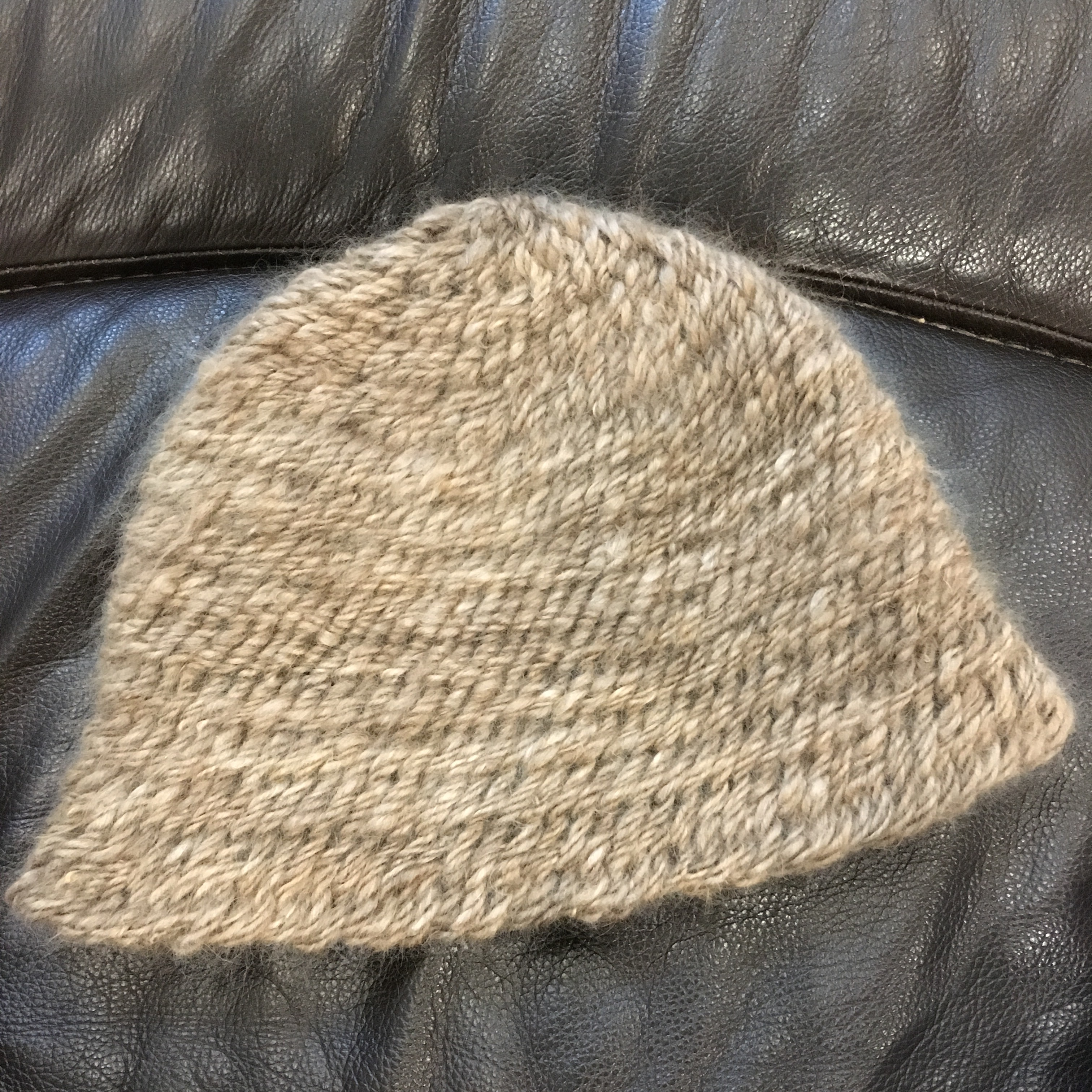
Mohair hat

100% mohair, natural color (no dye), hand spun, 3 ply, nålbound with York stitch, cloche style hat.

York stitch hat

I love how the Z twist of the plied yarn goes perfectly with the York stitch so it looks like the twist goes from the crown to the brim. The mohair also has a lovely shine and an epic halo.

My youngest modeling the hat

My youngest wanted to be my hat model this time. The hat is a bit on the big side for her, but it is easier to see the mohair halo when the hat is being worn!

More nålbinding practice

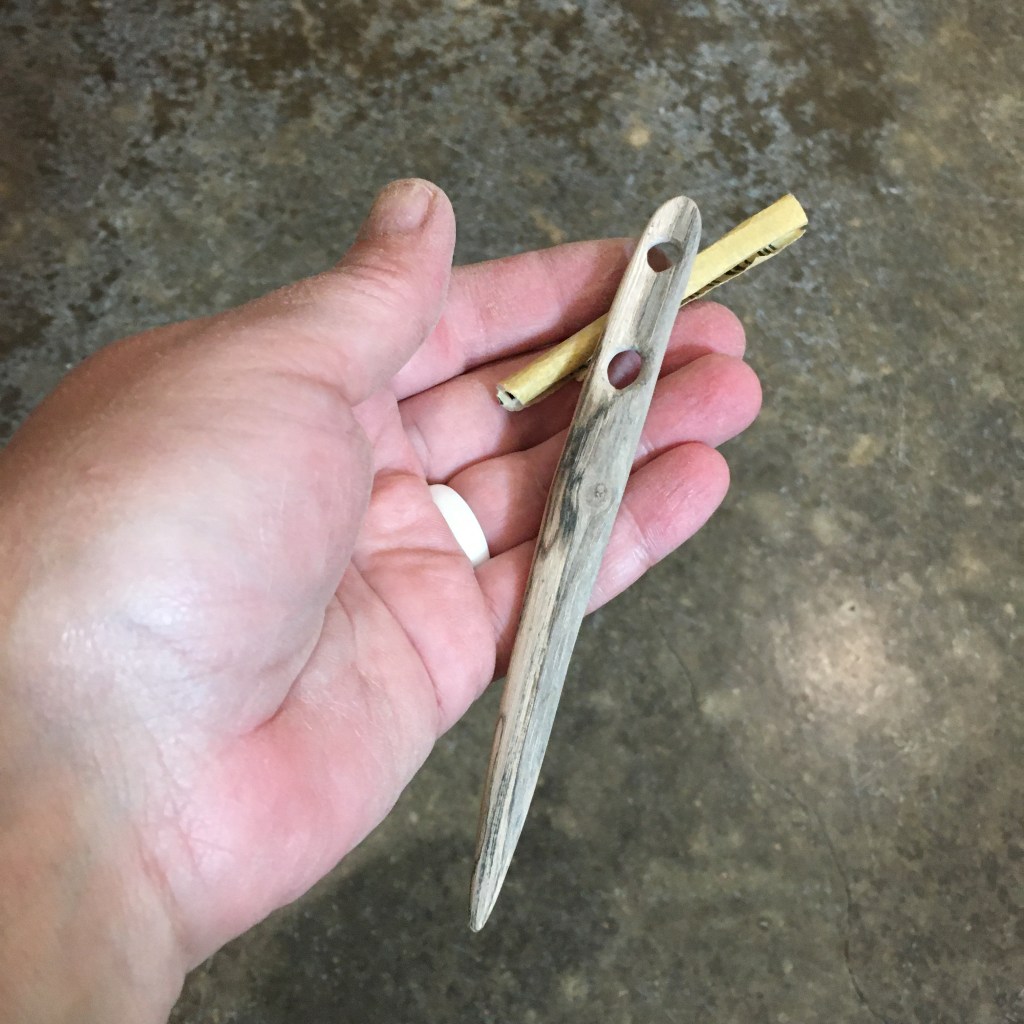
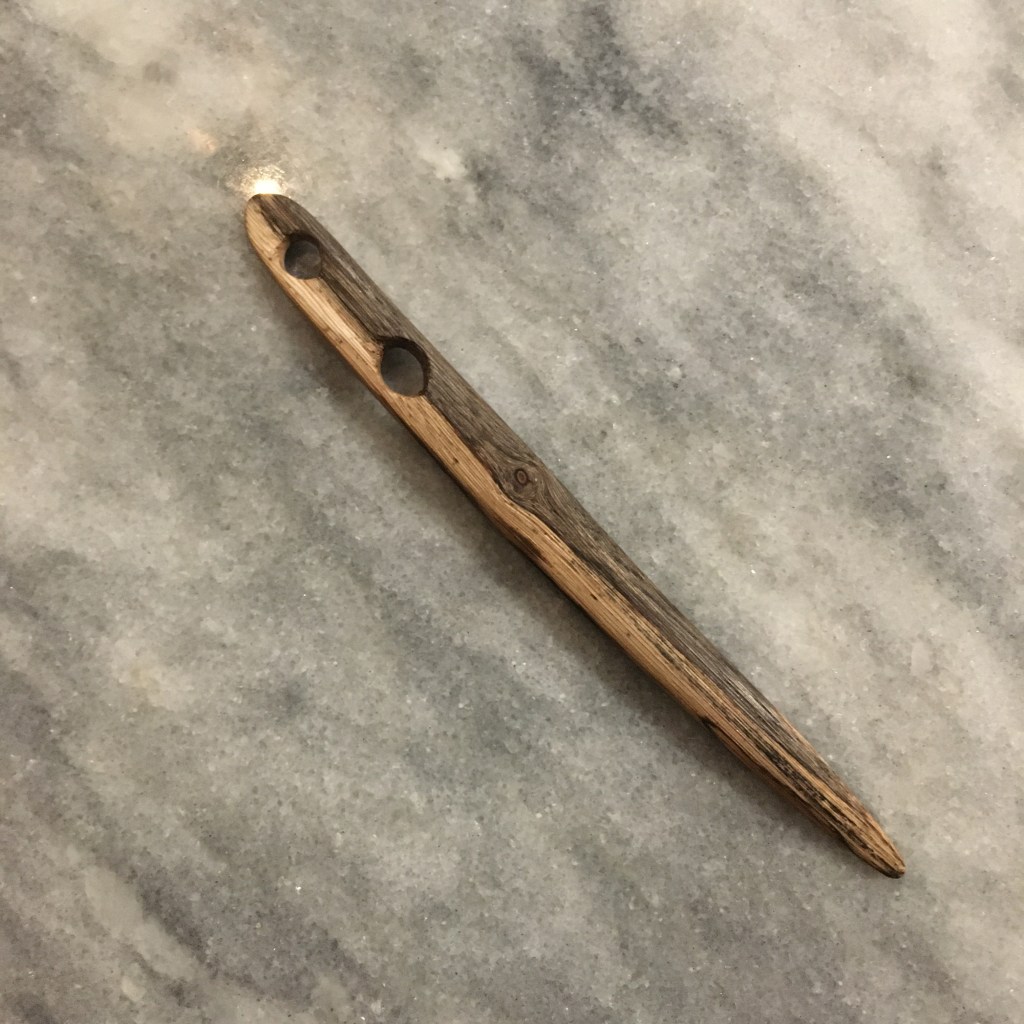
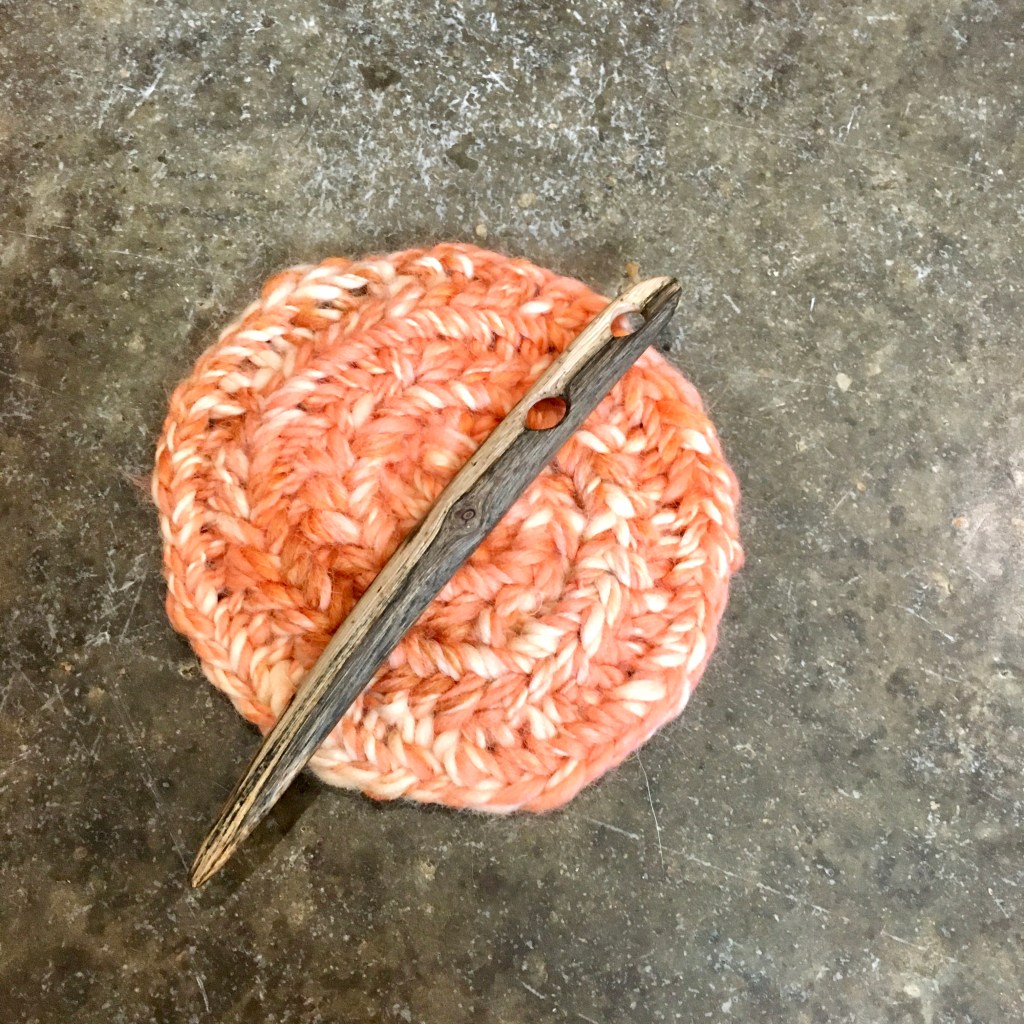
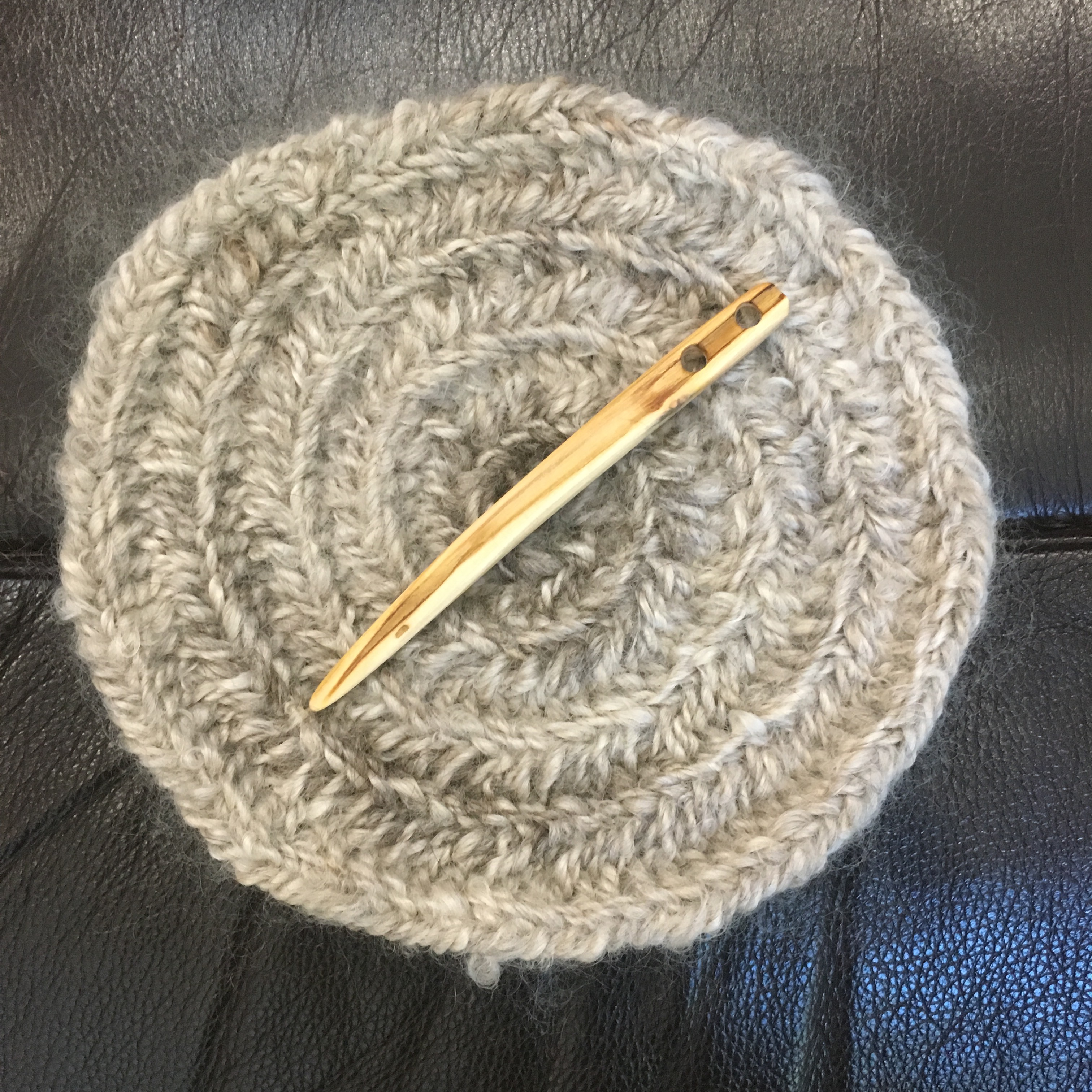
Mohair circle with nal made from Osage Orange wood

I finished spinning the one ounce of Dottie the goat’s mohair, and made a practice circle with the resulting yarn. I used the Finnish 1+2 or Mammen stitch, and am practicing circles because I like making hats. And circles are useful as dish separators, so all my practice still turns out something useful.

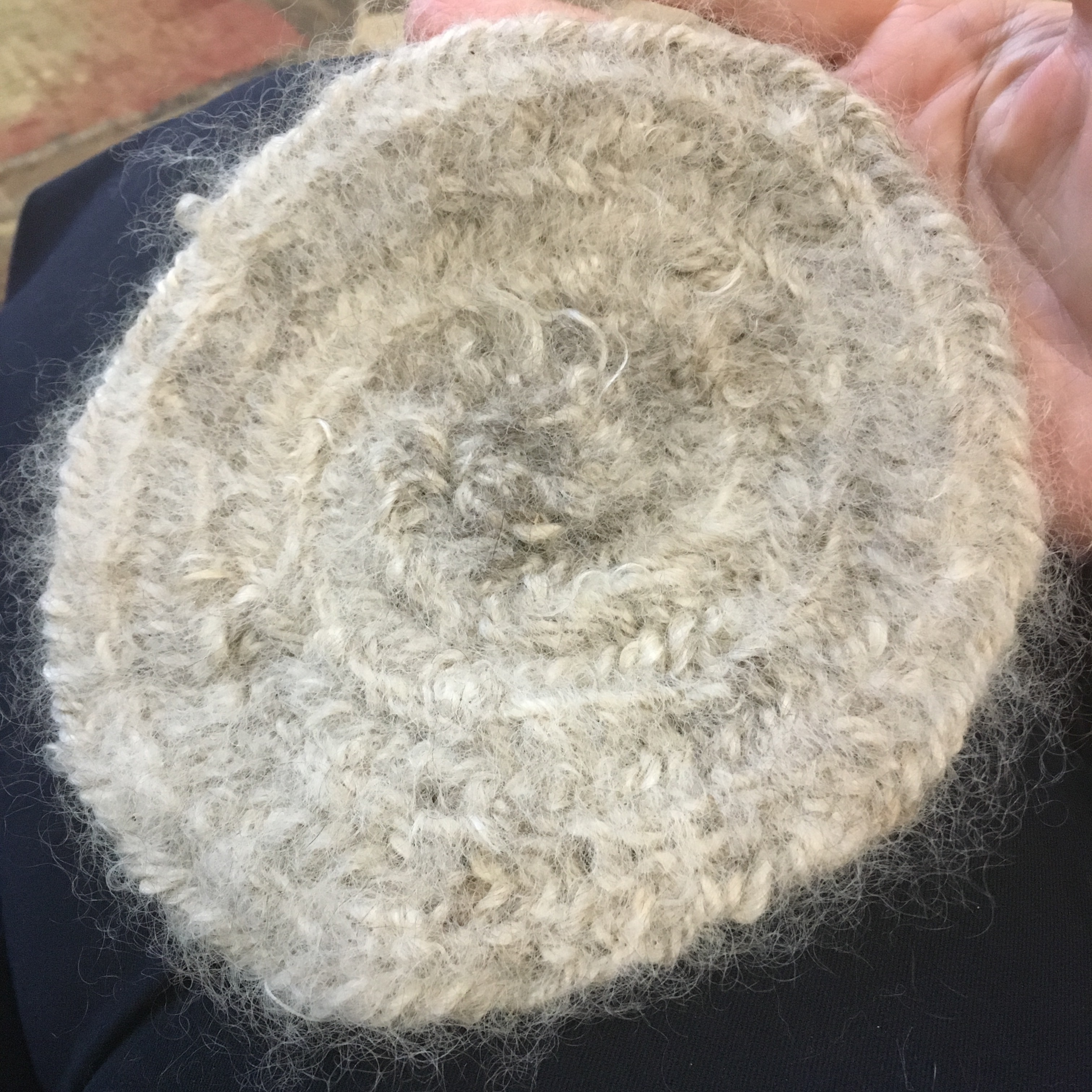
Brushed back

I brushed the back of the circle lightly just to see what happens. The result was soft and fuzzy!

At least it was a learning experience

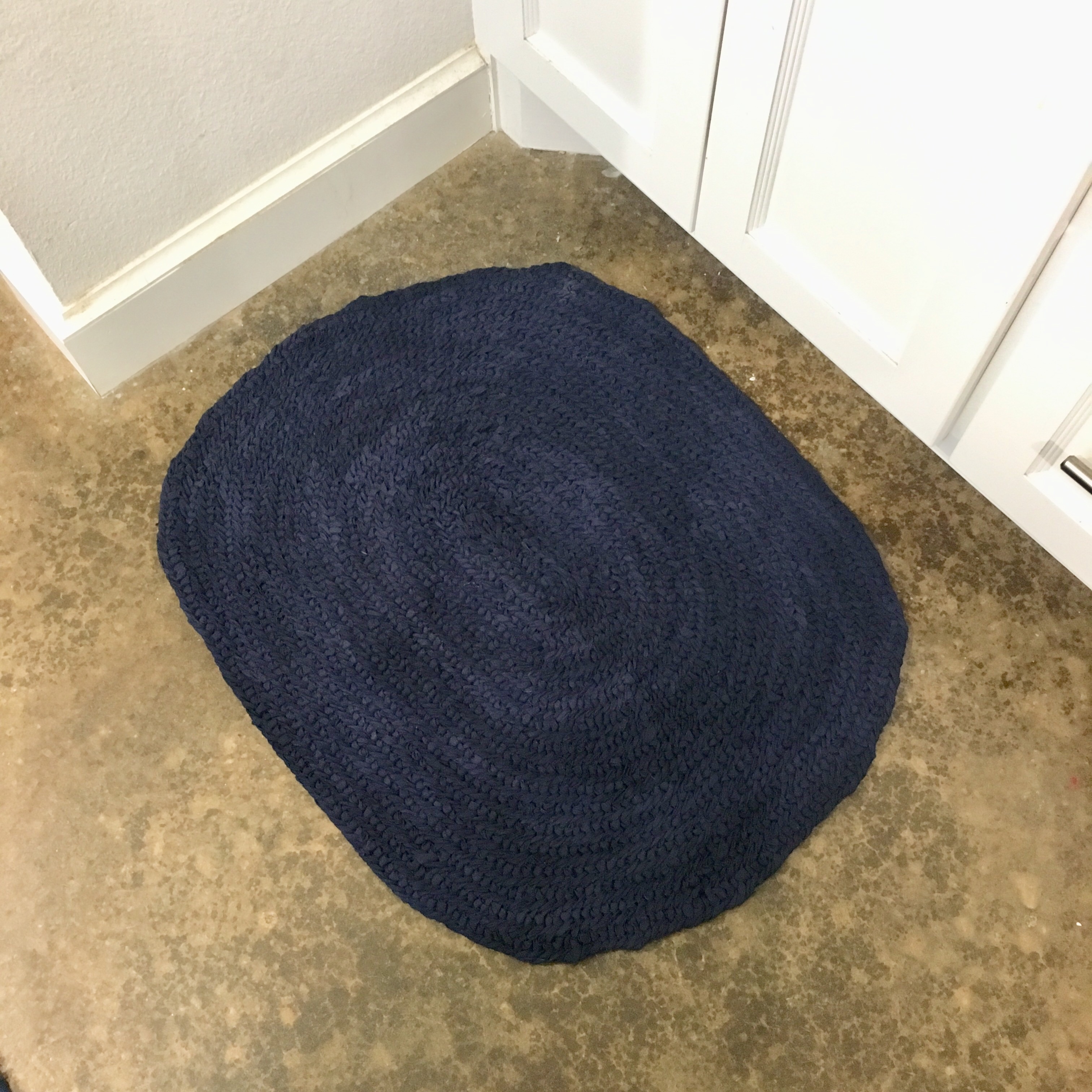
Rag rug made from a king sized fitted sheet

Good thing it is useful, because it is rather lopsided.

I decided to practice my nålbinding by making a rag rug from a fitted sheet that had worn out. I cut off the elastic, then tore the sheet into 1” strips. I wound each strip into individual loose bundles so they didn’t tangle together. Using the Finish 1+1 aka Oslo stitch, I worked the strips into an oval rug form. I was eyeballing where increases needed to go, so the end result is kinda funky. I had to block it (get it wet and lay it flat to dry) to get it mostly flat. Although it took me a month to make, I admit that I only did about three strips in a sitting. If I make another one with the top sheet, I’ll twist each strip, and evenly space the increases. I did find that I like to chain the increases, rather than stitch into the same stitch. I like the texture better. So lessons learned. And it will still keep feet from getting cold while someone is brushing their teeth.

On the chicken side, the weather is cooling down. It is still hot, with highs still in the 90s, but the chickens spent all day outside today. How do I know? The foot bath inside the coop was clean, and the one outside was filthy.

In progress

Nålbinding rag rug

I have a new car rider line activity. We had a king sized sheet wear out, and I decided that I wanted to try my new nålbinding techniques to make a rag rug. There are many different ways to construct a rag rug, such as sewing braided lengths together, crocheting, or using half hitches.

For this one I’m using a Finnish 1+1 stitch. I tore the sheet into 1” strips, and made each strip into a small bundle so they wouldn’t get tangled in the bag. To join strips, I sew the ends together with a few straight stitches. I am doing something a little different than traditional increases on the curves; Instead of making two stitches into one previous stitch, I’m making the increase stitch stand alone (like a chain stitch in crochet). I like the texture of the fabric better with this method.

I’m about half-way through my bag of torn strips. This one is going to take awhile, but it will be interesting to see how it comes out!