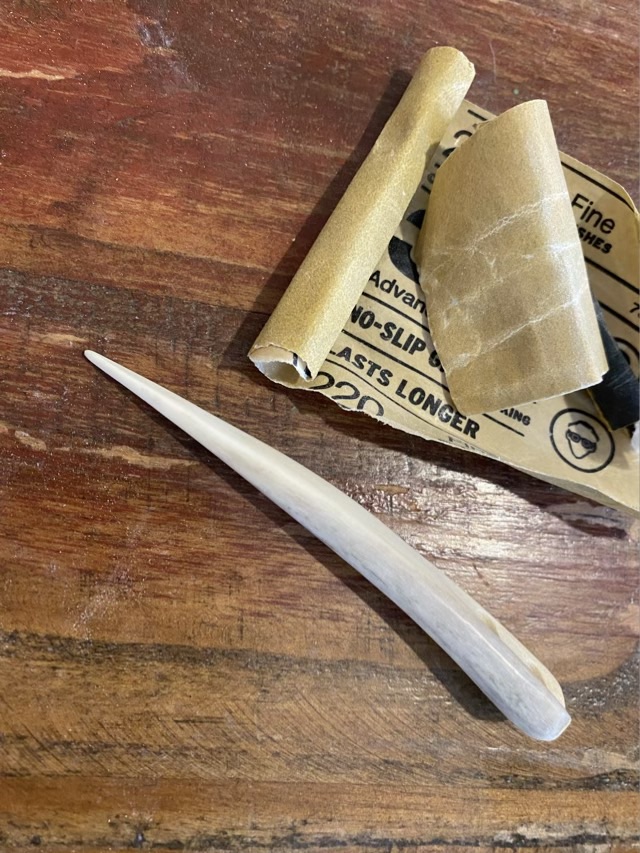
I have made my first nål for nålbinding out of antler bone! I have made several out of wood, and was hesitant about bone, but it turns out it is easy to work. I do wear a dust mask at all times because I don’t want that bone dust in my lungs. I like how well it buffs to a shine without applying a finish coat.
Photo description: thick bone needle with two holes on a table with scraps of sandpaper.Photo description: side view of the same nål, showing the natural curve from the antler tip.
This nål came out a little thicker than I care for, so I’m going to experiment with some other methods of construction. I just sanded this one down to shape; for the next one I’ll try cutting it lengthwise then sanding down, and I will try a different curve.
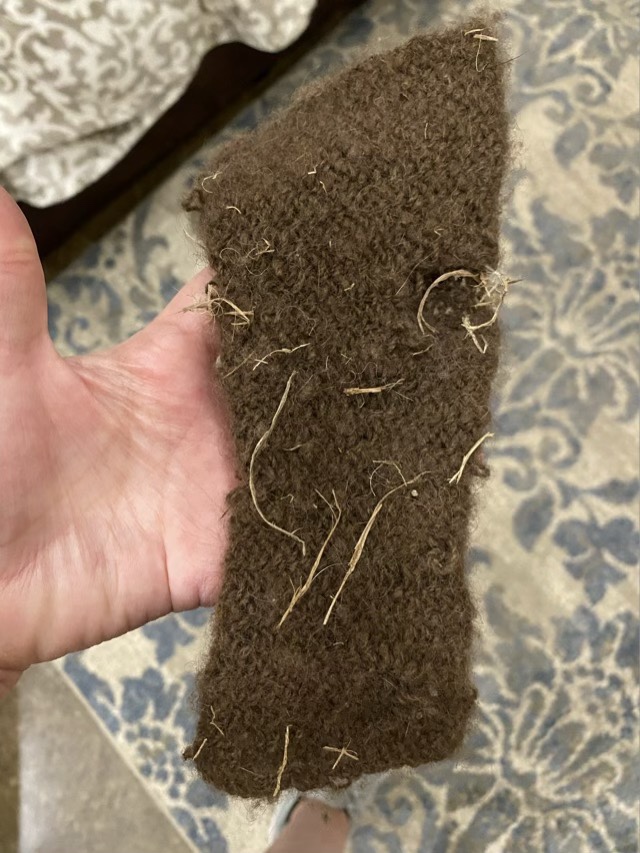
Thor the technical kitten (since he is still under a year old), likes to carry around his toys. One of his favorites is a wrist warmer that I nålbound from home spun bison down. Materials alone make it a pricey toy, but if time invested is considered, it vaults into precious territory. Apparently he took it on a field trip to the catio, then back inside, because I found it on the rug covered in dried grass.
Photo description: Brown wrist warmer made from American Bison fiber, covered with bits of dried grass. There is some felting, and a couple pulled loops in the fabric.
Allowing the wrist warmer to become a toy was a calculated event. The one donated to the cat was a tight fit and I wasn’t wearing the pair. Now it becomes a test of how durable I made the spinning and nålbinding. I’m actually quite amazed that it is holding up to kitten attentions as well as it is.
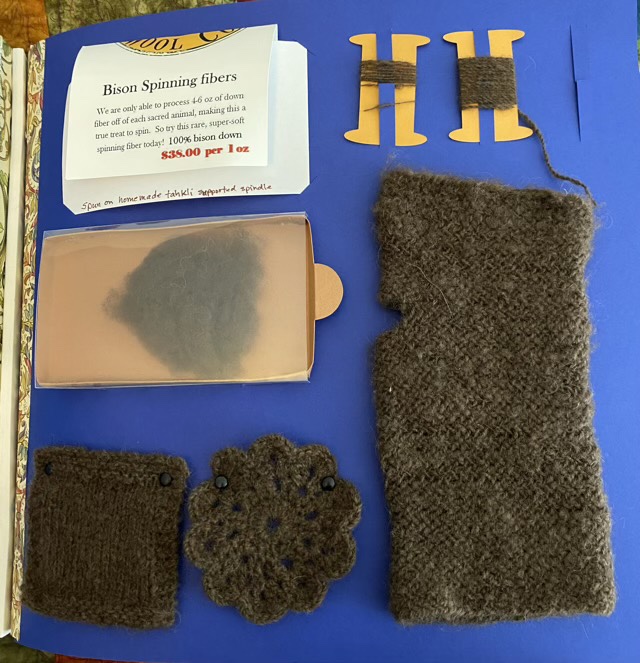
I actually spun this bison fiber before I started my fiber book. I used a tahkli spindle and spun fast and fine, then made a two ply yarn. I experimented with singles spun in both the S and Z directions, then nålbound wrist warmers (blog post here). The second, tighter wrist warmer continued to get tighter as the fibers felted together, until it was uncomfortable to wear. Then the kitten found it and had a hay day. So I dedicated the first piece to the book. I had some leftover yarn so did up a knit swatch and a crocheted lace round. I didn’t save any single spun yarn, so had to deconstruct some plied yarn for the page.
Photo description: Clockwise from top left: “Bison Spinning Fibers” card; single ply yarn; two ply yarn on a paper bobbin; one nålbound wrist warmer; crocheted lace round; knit square; loose bison fiber
Bison down fiber really is a luxury fiber. It feels like spinning clouds and the yarn is so soft and so very, very warm. It is definitely one of my favorite fibers. (And yes, this is an absolutely shameless plug for my neighbors, The Buffalo Wool Company. Fantastic people, even more fabulous dedication to the preservation of the American Bison.)
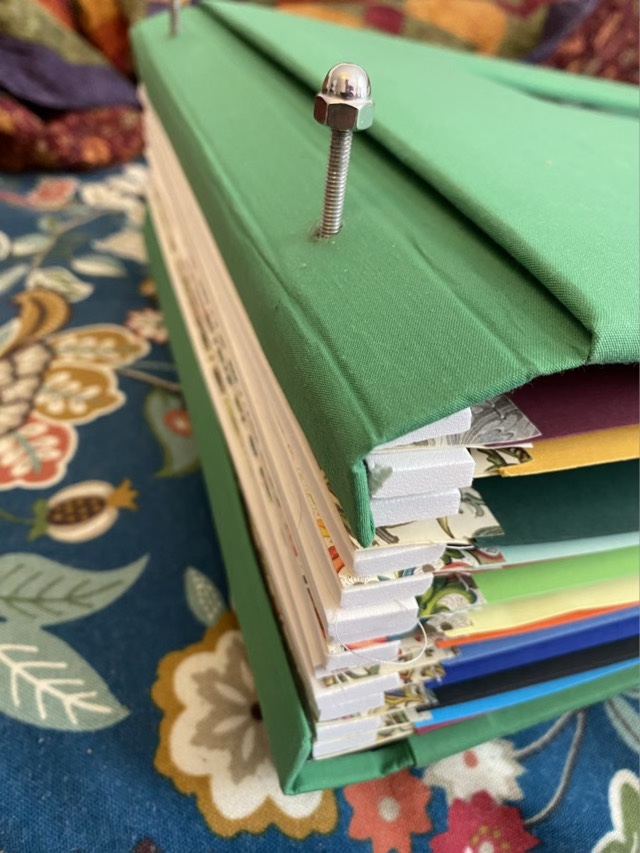
I’ve been quite frustrated with options for expanding my fiber book. The longest binding post screws I could find were not long enough, and the “extenders” had multiple reviews that that the threads didn’t fit, and I couldn’t find extenders that came with the caps. Bah. Time for a trip to the hardware store, specialty fasteners to the rescue. I found 5 inch threaded rods and some acorn nuts. They aren’t as fancy as a binding post, but they get the job done and I can probably fit another 10 pages in my book. I did have to adjust the cover to accommodate the acorn nuts, but it worked just fine to unfold the edge. A photo book this size would be very heavy and unwieldy, but my fiber pages are light and have thick spacers, so it works. I suppose I could separate up the pages into different books (shocking, right?), but right now I’d rather spend my money on fiber than book covers.
Photo description: Acorn nut on a threaded rod going through the edge of a photo book, sticking up about one inch over the cover, colored pages are spaced with white foam.
It is in my plan to eventually have an elegant external presentation, but I’m still cogitating on how I want that to look. This does the job for now.



 Critters and Craft