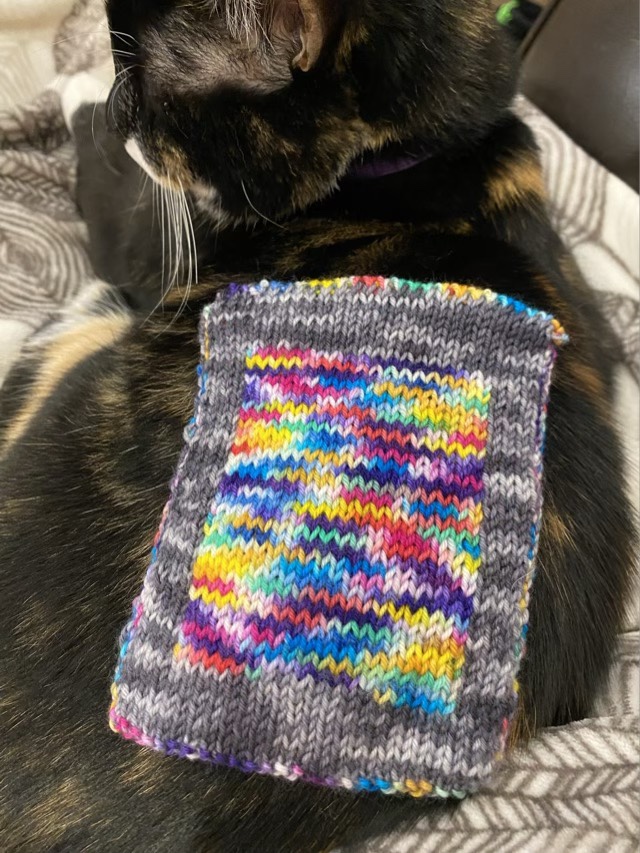
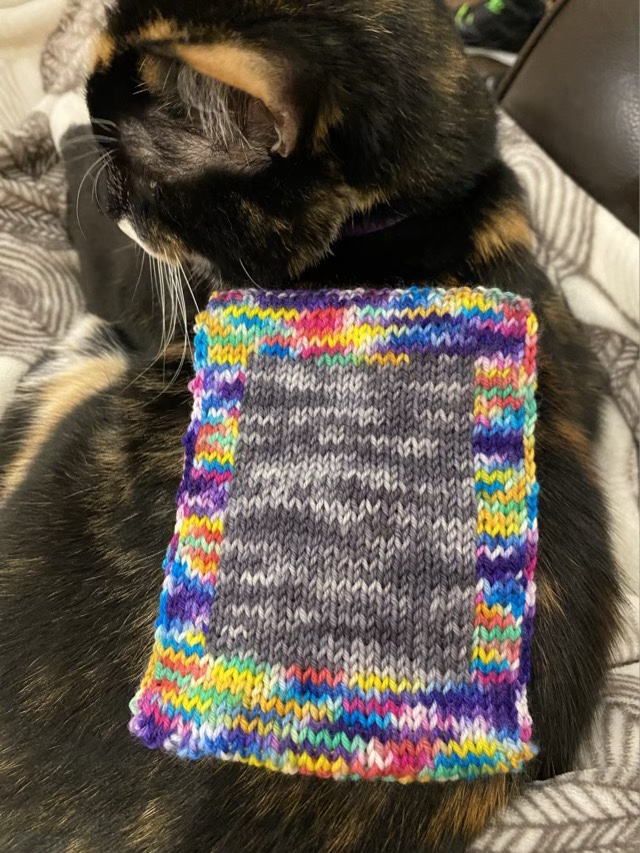
Steeking is preparing and cutting a piece of knitting. Yes, with actual scissors. Yes, through hand-knit work. (I know, the horror, right?) I recently took a class with Alissa (The Knitting Fairy), who is a fantastic teacher. In her class she taught us three ways to steek. My knit tube is now in three pieces!
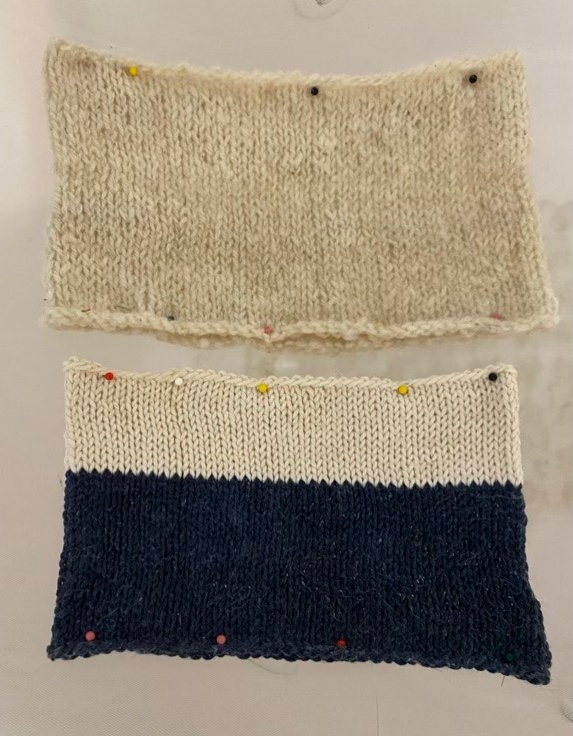
Hand spun, hand knit, steeked swatches, one with a partial knit band
Armed with the knowledge from class, I am no longer afraid of planning cuts to knitted items, and it opens up a whole new toolbox for altering knit clothing. Alissa is also teaching at the upcoming DFW Fiber Fest in September. I highly recommend her, she is a fountain of fascinating information. I hear her classes fill up fast (for good reason), so I hope to claim a spot. Choosing is going to be the hardest part.
Oh dear. I decided to see what my WIP (work in progress) count was up to. Hm. I’ll share them here as a kind of accountability, although I’m not counting the ball of napkin twine in the glove compartment of my car that is for emergency craft use (that project doesn’t need an end). Nor am I including the fiber survey that also ongoing.
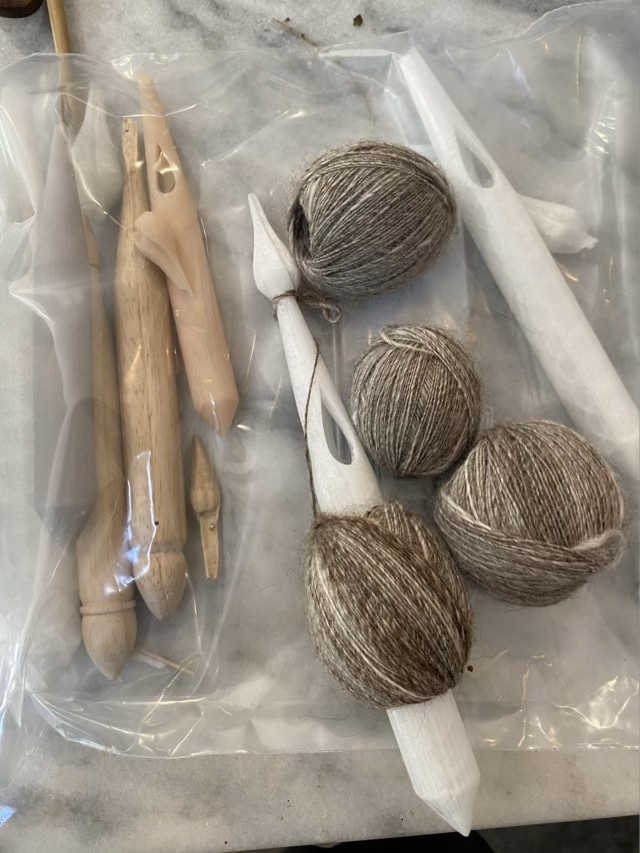
Spindle development
Developing a 3D printed spindle is my oldest WIP. I’m still working on the head breaking issue, but with the help of the printer, I feel we are nearer the end than to the beginning of this project.
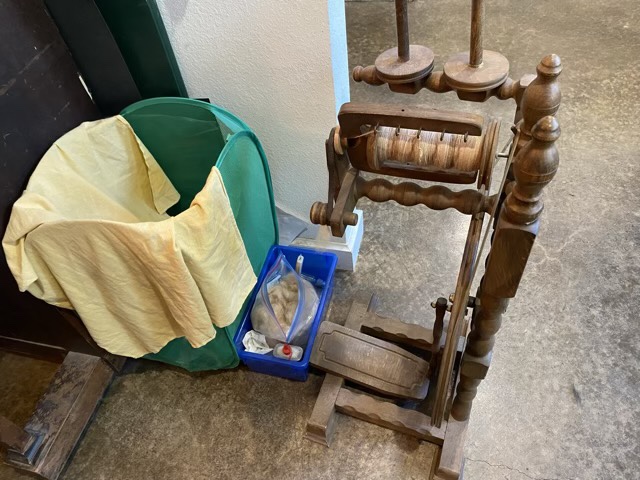
Spinning alpaca fleece on a Befra Wily spinning wheel
My sit and spin project on my vintage wheel is also nearing completion. I have a few hours worth of alpaca fiber left in the basket (the fiber in the blue bin is waste from combing). I have another portion of washed alpaca in queue.
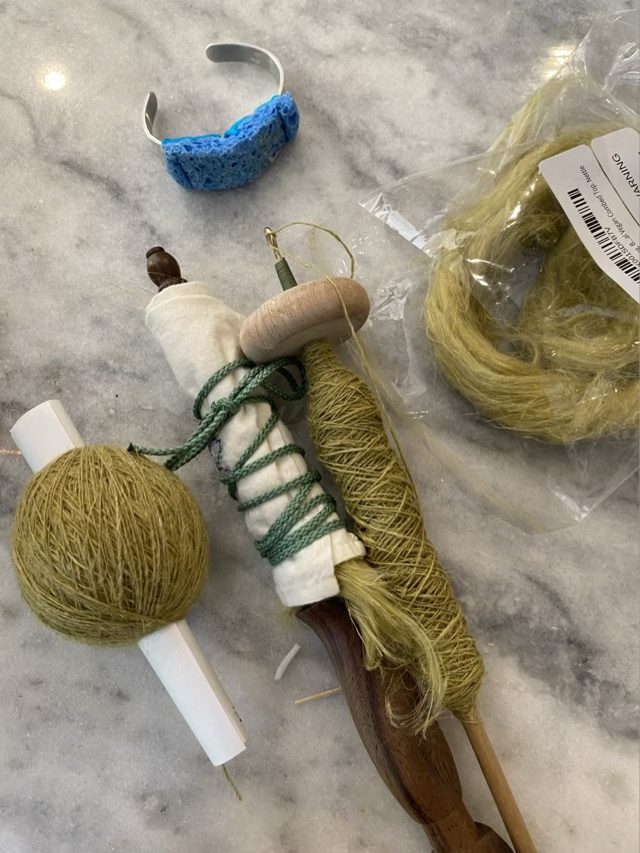
Spinning flax roving
My walking spinning project involves my first taste of flax spinning. The roving preparation is an odd one, but I’m finally getting the trick of it. I maybe have two or three walks left to finish the singles, then I still need to ply and finish the yarn.
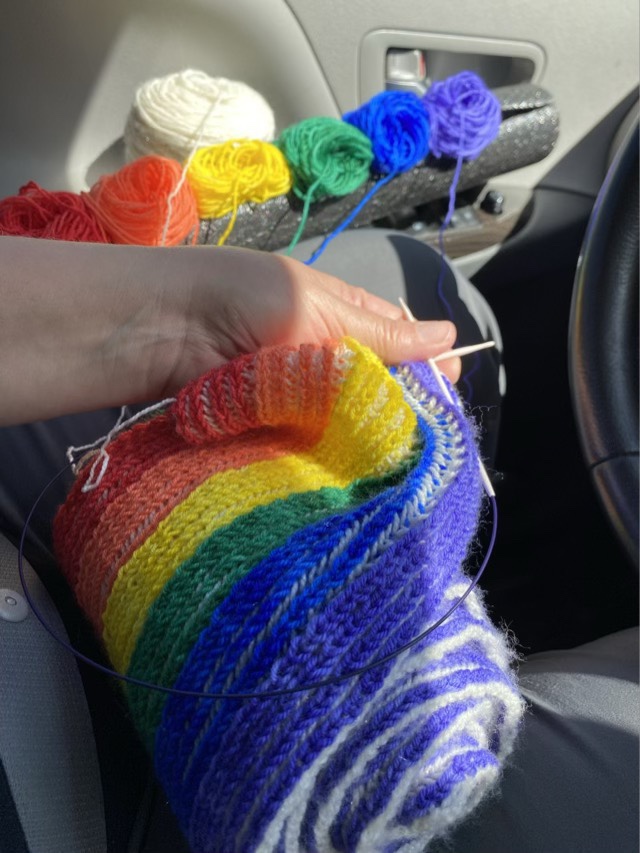
Brioche rainbow scarf
My rainbow scarf knitted with the Brioche method became a car project a while back. This was the best thing for this work, as I regularly knit for about an hour on it many times a week as I sit in the car rider line. I still have many hours left to go.
Newly cast on cardigan project
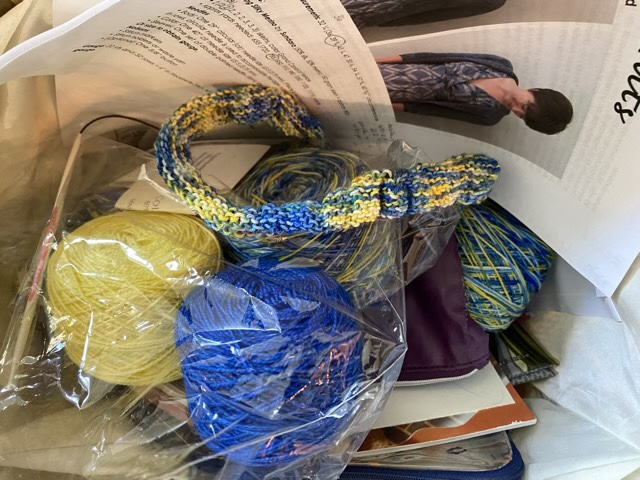
My newest WIP is a blue and yellow light-weight cardigan. This is a big step for me in knitting. I have made a couple of sleeved garments (as opposed to vests, scarves, hats, and gloves), but not many and they all have had sizing issues. I’m making the attempt again because I have grown as a knitter and am hoping the new skills will help. I have been planning this knit for months, but I hadn’t cast on yet, so it wasn’t an official WIP. It sits next to my chair at home.
I have signed up for a steeking class. Steeking is cutting knit material; the trick is to do it without having the whole mess unravel. The class instructor promises to show us several methods to accomplish this feat. Several methods. Color me eager. We have homework before class starts, make a knitted tube. I have used some hand spun Clun forest yarn because I over spun it and it is rough to the touch, so I have to no aversion to cutting into it.
Knit tube of hand spun Clun Forest wool yarn
And because I’m me, I also made a second tube out of scrap cotton yarn. I blocked both pieces and when they are dry I’ll be ready for class… in a month.
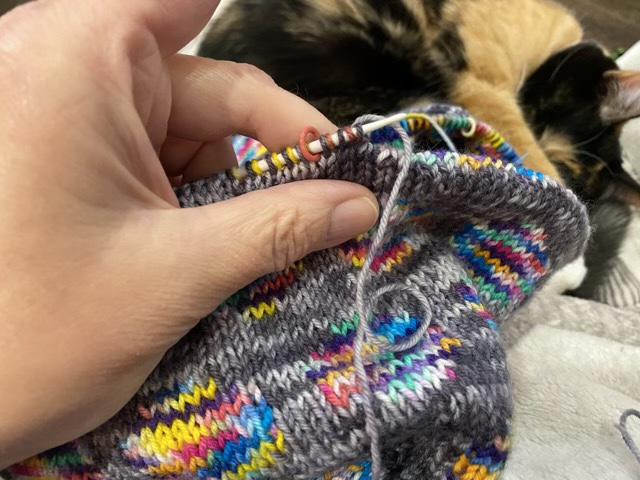
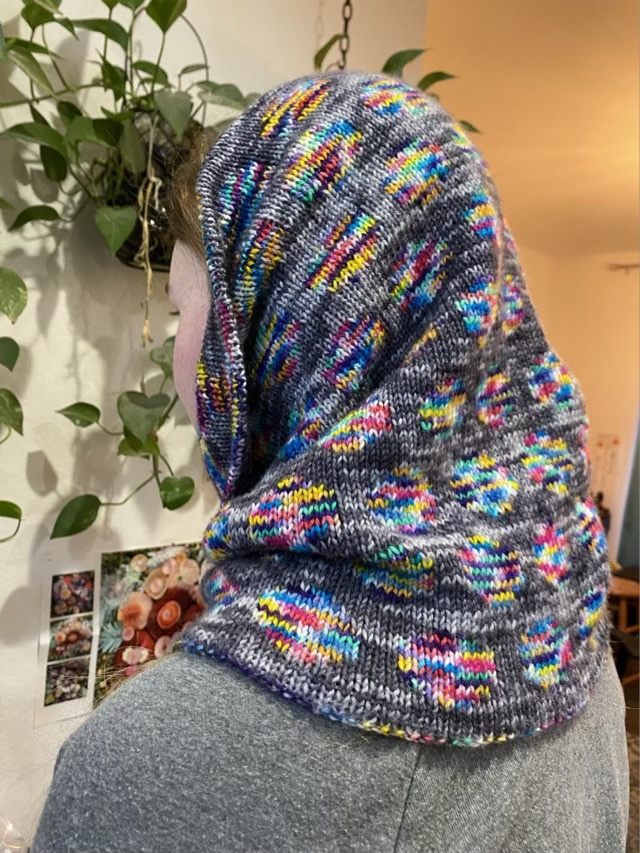
I am calling this finished project (yay finished!) the “Polka Dot Glitch”. It is double knit with “Fiesta!” and “Fade to Black” variegated hand-dyed fingering weight yarns by Bashful Armadillo.
Finishing a double knit with a modified Kitchner stitchFolded cowl showing both sidesCowl modeled
I used size 2 circular needles and graphed the polka dots before I started. I cast on 288 stitches (144 of each color) with markers every 24 stitches. I found this cast on easiest to deal with, and these Kitchner stitch instructions for casting off.
When I need to swatch my yarn work, I make the tiny sample of stitches the size of my youngest’s doll blankets. I get the data and she gets more throws for her doll house.
Doll blanket sized swatch (not cat sized)
I needed to practice the Kitchner stitch to finish off a double knit project, so made a swatch.
Reverse side of the double knit swatch
Making the doll blanket to practice the stitch was a good decision. I messed up the first couple passes, but by the end had the rhythm down and knew about how tight my stitches needed to be.
Kitchner bind off for double knit
Kitchner stitches are used to make a seamless graft between two pieces of knitting. It is usually done on two needles, but I found this video that shows the variations needed to work off one needle, for double knit items. Fabulous.