Throwback Thursday: mixed afghan

My grandmother had an unfinished afghan when she passed. It looked like she missed a pattern switch and the next step would be to rip out a whole section and she just decided not to and set it aside. I took the partial project and rather than rip out any stitches, turned it into a mixed method project, using different sections of knit and crochet to tie it all together.
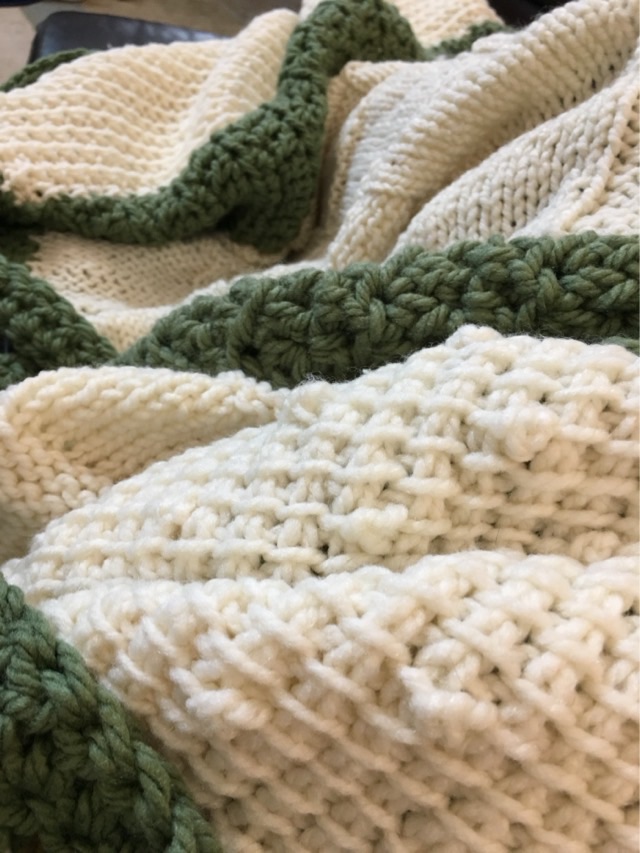
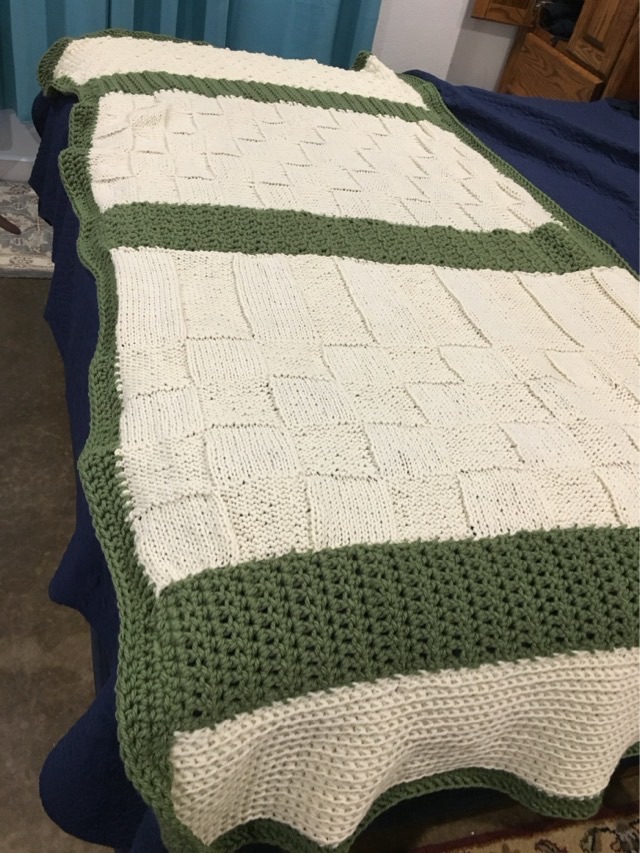
Photo description: artful photo of the folds of the afghan which show all the different panel textures using knit, crochet, and Tunisian crochet
Photo description: finished afghan spread out on a King-sized bed

I deliberately made the afghan long at my Mom’s request, because most blanket throws can’t be wrapped around our feet and shoulders at the same time (we are taller than average). I couldn’t find the exact same yarn and dye lot, so added in a complementary olive green yarn to make it obtain the extra length.

This was a personal family project, but there is an organization called Loose Ends that helps families with unfinished projects that their loved ones have left behind find skilled craftspeople to complete the projects so the family has a final memento. You can visit the website or follow them on social media. Grab your tissues.

Hem stitching: rib knit

The whip stitch is very useful for putting hems on finely knit items like t-shirts or soft pants. Because fine knits are difficult to unravel, you don’t need to fold over the edge twice, you can stitch over the cut edge, which also gives the hem a lower profile. If you are hemming a ribbed knit, lining up the ribs helps keep the fabric even and gives a nice gauge for stitch size!

Photo description: hemming fine ribbed knit pants with a hand-sewn whip stitch

I started at a seam, and hid the thread knot in the seam fold. Then I put the needle through the pearl side (indent) stripe on the inner layer, and just picked up a couple loops on the next rib of the outer layer. To keep the stitches at the right tension, after stitching a few I pulled open the ribbing to draw in the thread. This leaves the stitches loose so they won’t show and are less likely to snap when the fabric stretches. Pulling the stitches tight would result in a visible stitch line that would break the first time the fabric stretched.

Photo description: finished hem that is nearly invisible