
I’m a little chagrined. I have changed out the strings on nearly every musical instrument in the house, but haven’t on my husband’s Seagull acoustic guitar because I didn’t intuitively know how to deal with the bridge pins.
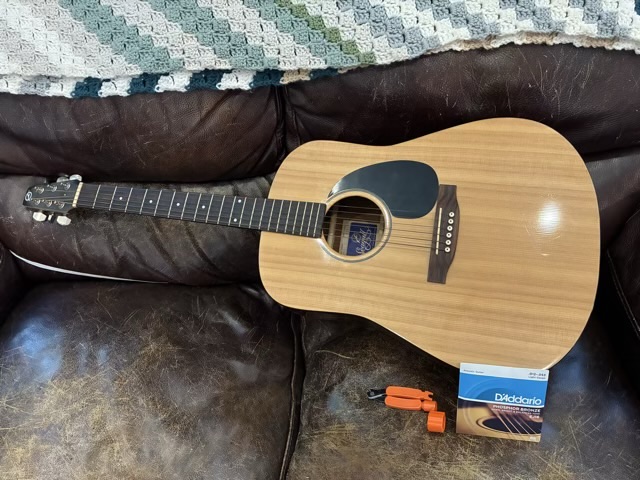
On classic guitars and ukuleles, I can see how the strings are twisted to attach, on my mandolin, the ends of the strings are handy loops, on a cello there are little colored cylinders (called balls?) that hook into a fork like apparatus, all very straight forward. Turns out the guitar is also straight forward, if you have the right tool (and YouTube).
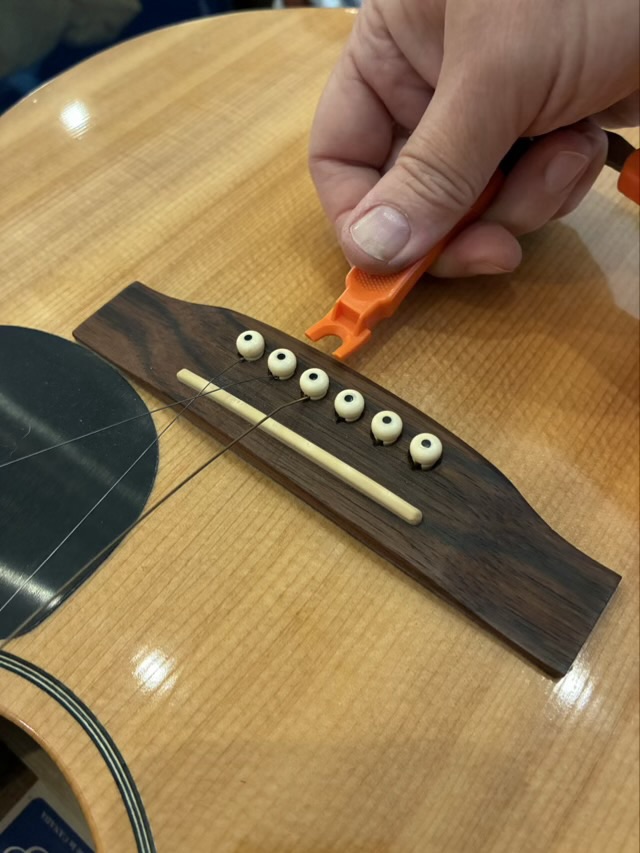
Once the tension is released from the strings, the bridge pins pull straight up, releasing the ball (still don’t know why the little donut is called a ball) on the end of the string. I put the pins back in place so I wouldn’t loose them or forget which was the matching hole (theoretically they should be the same, but the guitar is 31 years old, and things shift). Putting the new strings in was straightforward, although I appreciated the tip from one YouTuber about bending the string at the top of the pin hole, it helps keep the pin from popping up until tension is applied.
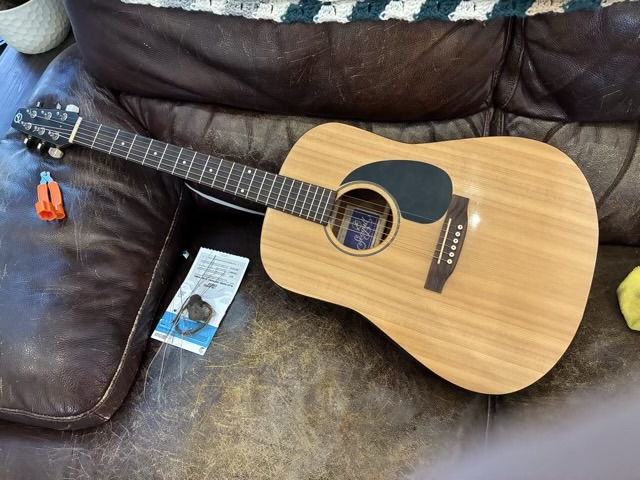
I tuned up the guitar, and all the the other hand-held string instruments because I like to, and played it a bit, but it hurts my left hand, not the fingertips, those are developing calluses nicely, just the position of my hand on the neck. Hm.
I did look it up, and the ends of the strings for instruments did used to be a small sphere or bead, it is just easier to manufacture and wind cylinders, but the “ball end” name stuck.

