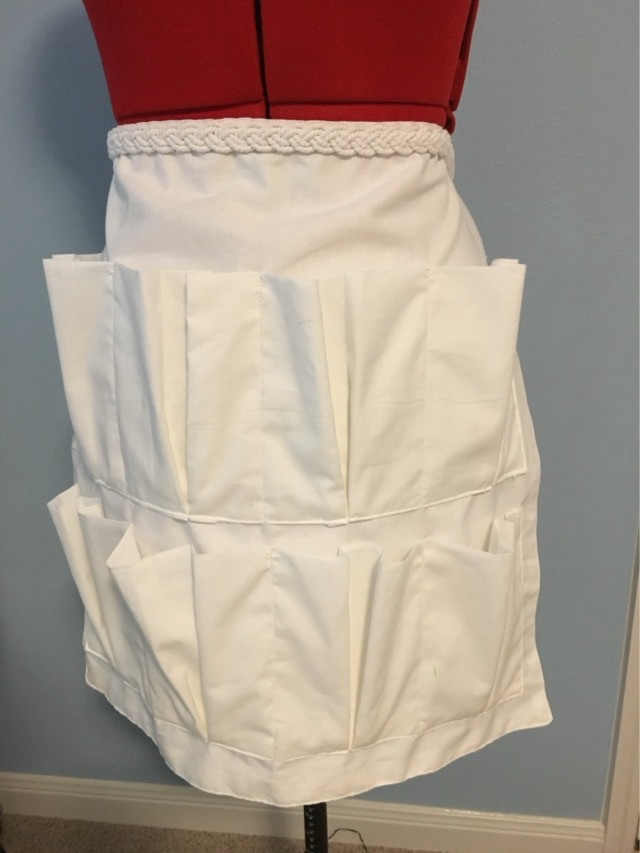
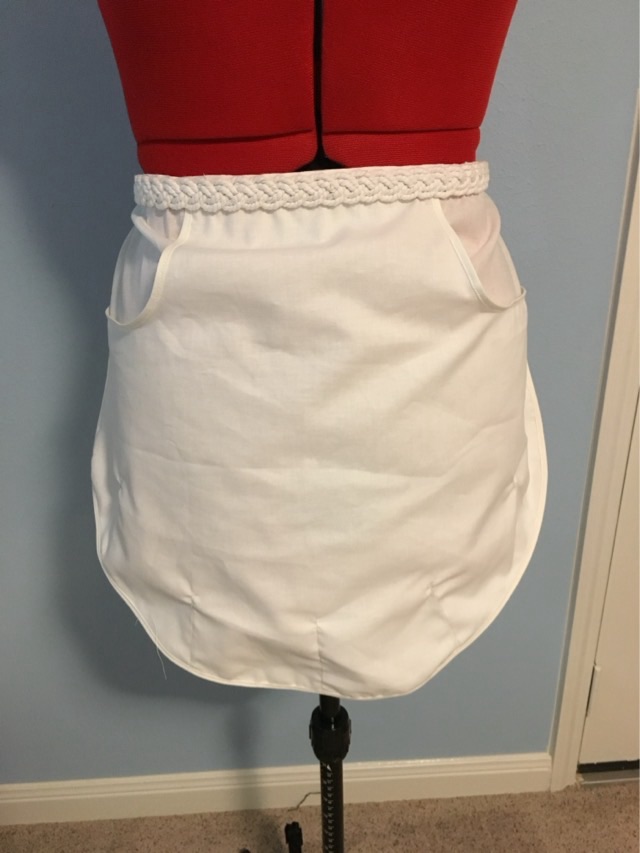
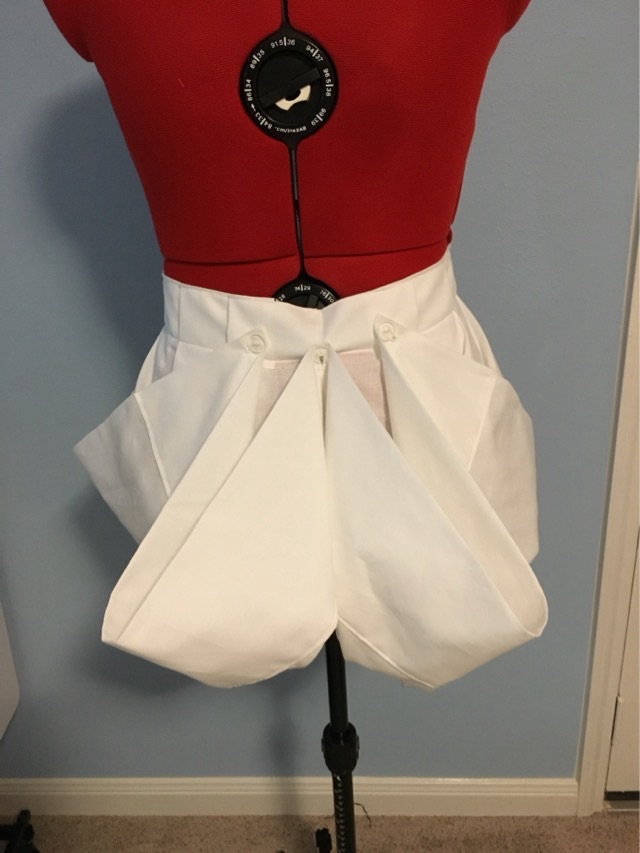
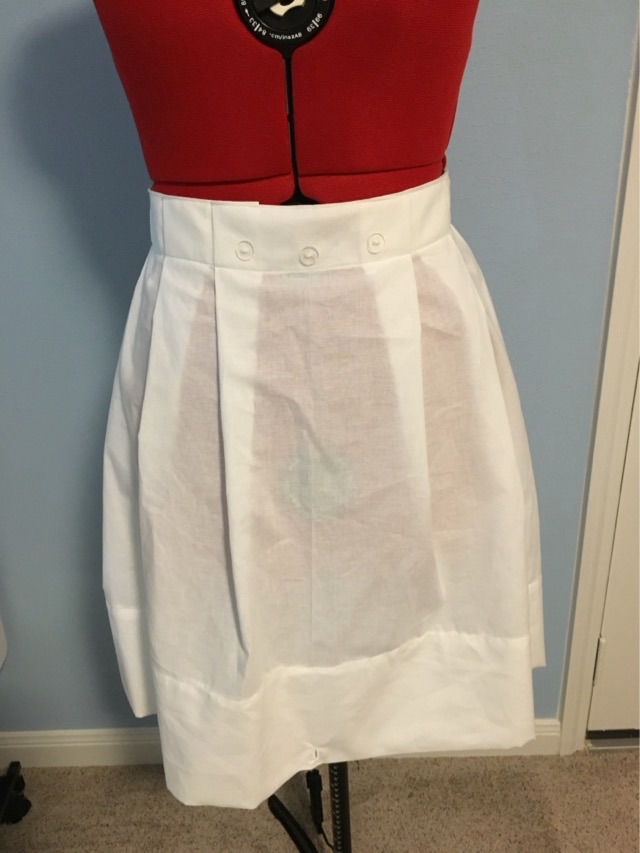
In February of 2017 I did an egg apron experiment for a friend with chickens. I made three kinds of egg apron from simple white cotton fabric that I had in my stash.
Photo description: white egg apron with woven rope tie and two rows of pleated pocketsPhoto description: round bottom apron with braided rope tie, large pocket with two hand access ports and division seams along the bottom edge to keep eggs from knocking togetherPhoto description: harvest style white apron with buttoned up large “pockets” to hold eggs or producePhoto description: same harvest style white apron unbuttoned
The experiment was interesting. The round bottom apron was hard to get the eggs out, the pleated pockets were nice, but if you leaned over too fast the eggs rolled out, and the harvest apron didn’t keep the eggs separated.
Now, with three of my own chickens and one or two eggs, I just use my pants pockets. Even when we had more chickens the aprons were more of a pain than helpful. Egg baskets are a more practical solution.
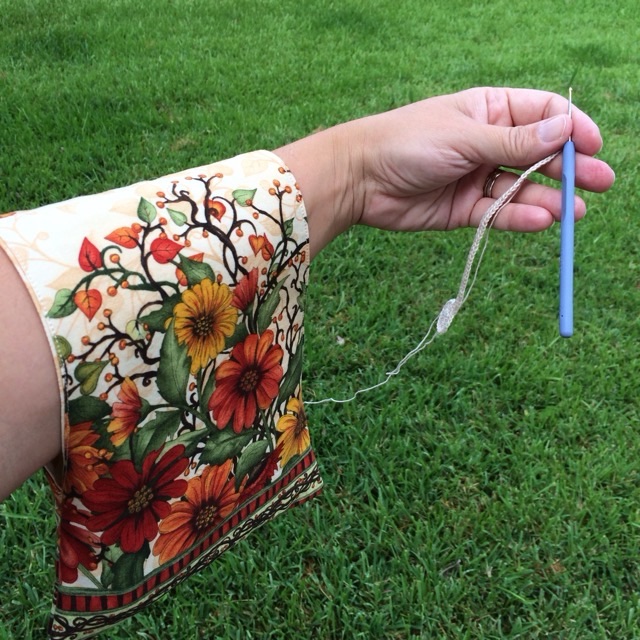
In July 2016 I made my first arm bag using my favorite fabric.
Photo description: vines and floral fabric bag with very wide “handle” that fits over the forearm and can hold a small skein of yarn
I have made many of these bags, and I love them. It is a way to keep my yarn close and still allow me to move around. I first needed it following kids around the house and playground, later I found it worked well for walks, and travel, and waiting rooms. I make mine reversible, and have added small pockets in later versions.
I don’t like the U shaped travel pillows. I’ve tried several, and the bulk pressing against the back of my neck (really anything around my neck) drives me nuts. So I made a different kind of pillow. It is ideal for reclining chairs because it has two side pillows so my neck doesn’t twist too far, and no stuffing behind my head. The best part is that I made it with one fat quarter, some thread, and poly fil stuffing.
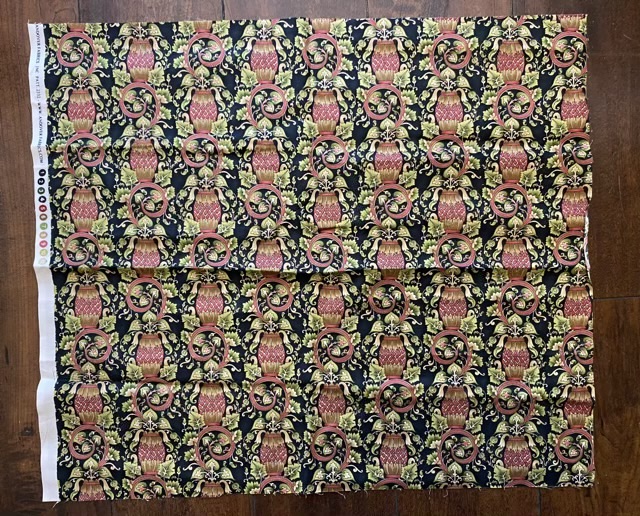
Photo description: fat quarter (18”x21”) of quilting fabric with a pineapple motif
To make the pillow, fold a fat quarter in half lengthwise, right sides together (9” x 21”, doubled). Sew along the edges, leaving two 4” gaps on the outside thirds of the long edge (for stuffing later).
Photo description: fat quarter folded in half and sewn with two gaps on the far edge, on a model 66 treadle sewing machine
Clip the corners and turn the pillow right side out. Fold the case in thirds, mark the line, then sew seams along the lines. This divides the pillow into three parts.
Photo description: pillow case divided into thirds and being sewn using the fold as a guide
Fill the outside sections with stuffing, then sew the gaps closed. I usually do this by hand, but the foot on my model 66 has such a nice tiny toe, I thought I would try on the treadle sewing machine. It worked well.
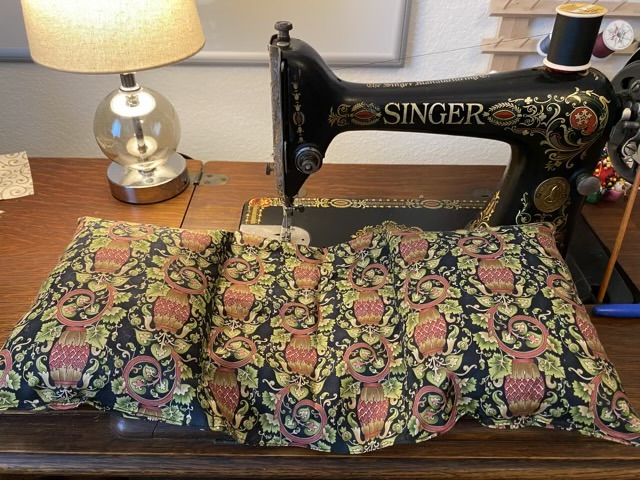
Photo description: sewing the pillow gap closed using a treadle machine fitted with a standard footPhoto description: finished travel pillow laying on the work surface of a 1916 Singer treadle sewing machine
It amuses me that the fabric coordinates with the “red eye” decals on the sewing machine. I can report that the pillow works great, especially for naps.
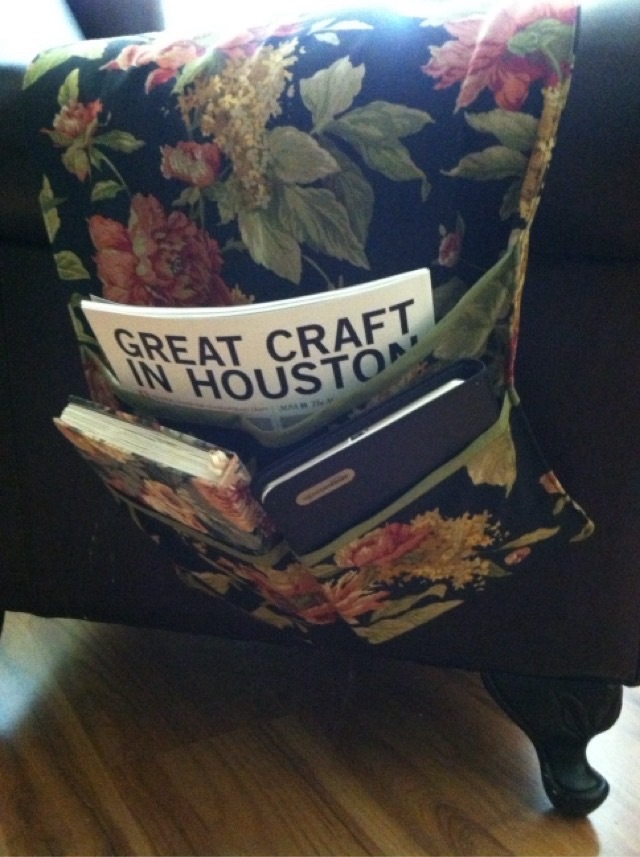
In May of 2013 I made this arm chair organizer that has pockets on the side for magazines and notebooks. I’m not sure why I didn’t sew on something to hold it down on the seat cushion, instead relying on butt power, but I am pleased how nicely I trimmed out the pockets using bias tape.
Photo description: floral fabric with a black background sewn with three overlapping pockets trimmed in green and filled with booksPhoto description: other side of the organizer with different sized pockets to hold different books, electronics, and magazinesPhoto description: over exposed photo of the chair from the front and the organizer stretched across the arms of the chair, no butt anchor
If I were to remake this project, I would add fabric to tuck down on the sides of the cushion, or maybe even go all the way around or under the cushion. Hm. Maybe I didn’t have enough fabric so had to rely on butt power. It would have made more sense to run the center section under the cushion.
For our monthly craft day, my neighbor and I reupholstered two dining room chairs.
Photo description: before picture of a claw foot chair with worn velvet seat cushion
The seat was only laid into the chair frame, so lifting it out was easy, then we removed the staples with flathead screwdrivers and serrated needle nose pliers.
Photo description: underside of the chair pad showing the jute webbing used as support
There were so many staples. The velvet had a set of staples, then there were three layers of thick cotton surrounding cotton filler and each layer had a host of staples.
Photo description: cotton cloth layer with more staplesPhoto description: padding made from raw cotton, which condensed and was no longer comfortable to sit onPhoto description: seat frame with jute webbing
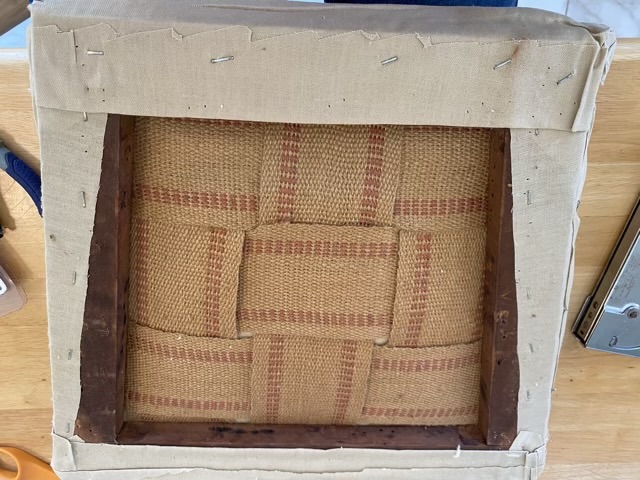
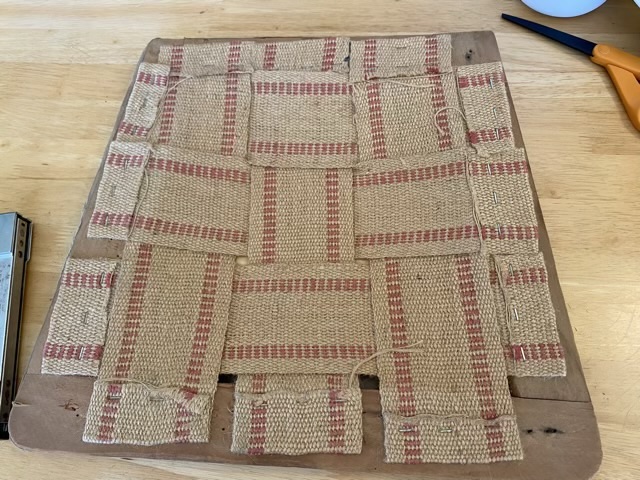
When we got down to just the frame, it was obvious that the seat had been reupholstered many times. The jute webbing was in good condition, so we left it in place. To rebuild the seat, we found a 3” dense foam chair cushion, some upholstery quality heavy cotton, and some beautiful red velvet. The cushion was the same depth and width as the chair seat, it just needed some trimming with an electric knife to match the profile. We secured the pad to the frame with the heavy cotton cloth and heavy duty staples.
Photo description: heavy cotton fabric securing the foam pad to the seat frame
Because we used a foam block, we didn’t need as many layers of cotton as was previously installed. The cotton layer did help to do the initial shaping of the pad and make applying the velvet easier.
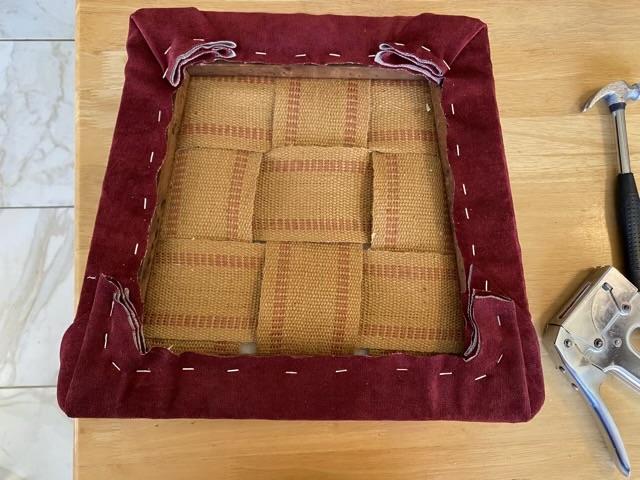
Photo description: underside of seat frame with velvet secured with staples
We did have to switch to longer staples, particularly in the corners, with the velvet. It was good that I brought along a selection.
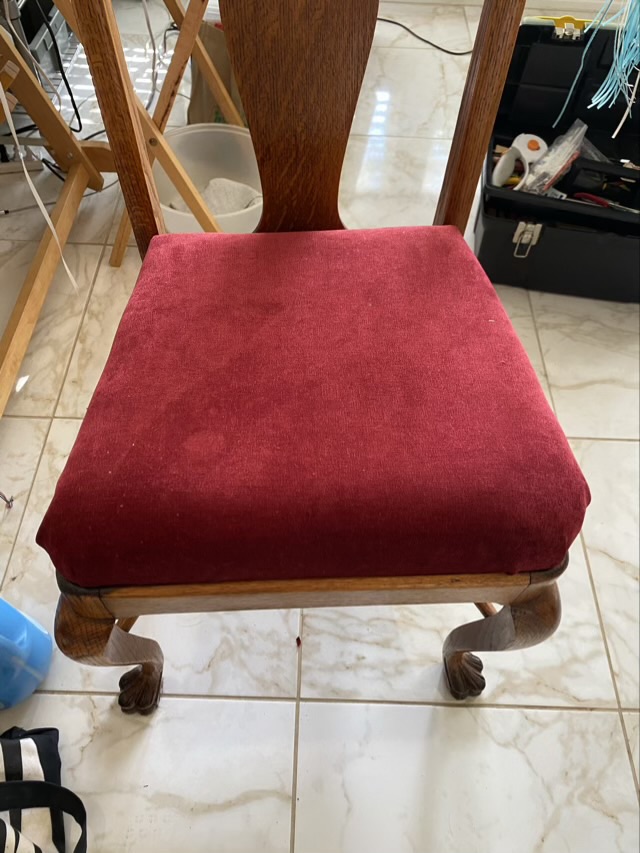
Photo description: after picture of the reupholstered seat of a claw foot chair
We were able to refinish both chairs, including shopping for fabric, in about three hours. Chair seat reupholstery is a very doable project with a good heavy staple gun, selection of staples, and a pair of pliers.








 Critters and Craft