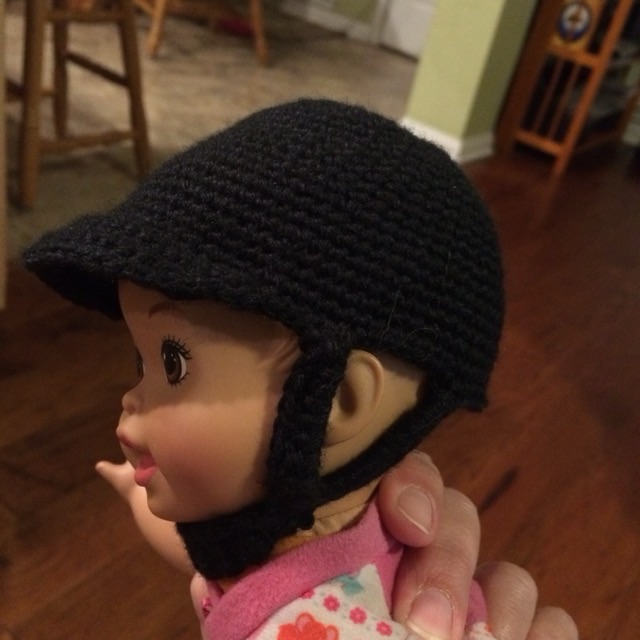
Back in October of 2016, my kids were taking horseback riding lessons. My youngest had trouble keeping her hands forward, and her instructor had the idea of having a stuffed toy sit in front of her on the saddle and she had to keep her hands in front of the toy. She chose one of her baby dolls, and of course baby had to have a helmet if she was riding horseback, so I crocheted a helmet with black yarn.
Photo description: crocheted riding helmet with straps and a button closure on a baby doll toy
I don’t have any pictures of my youngest riding with the doll, but her hands are forward with the reins in all the pictures after, so something clicked.
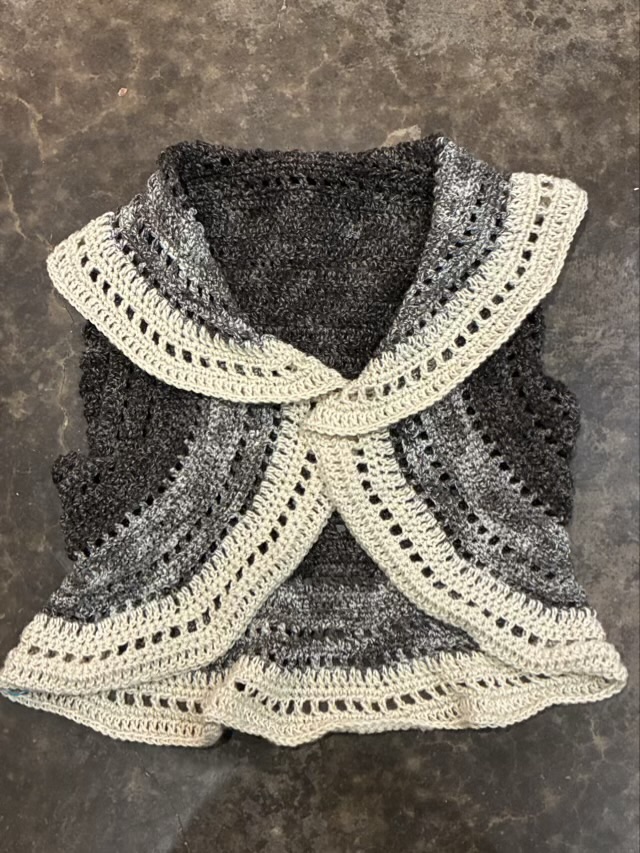
I find knitting and crochet patterns for clothing items very frustrating. There is the whole sizing issue – just making more rows or making the pattern “bigger” does not mean it will fit right when you’re done. Putting hours and hours into a project and then have it not be a useful item is defeating. I’m working on a circle vest, because I like vests, and they are generally easier to fit than items with sleeves. Up until this point I have followed the pattern by LazyTCrochet, checking fit as I went. I used the largest version XL, and added the “Plus size” extensions, which are a joke.
Photo description: circle vest crocheted with hand spun Jacob’s and Teeswater wool with color variation, NOT my pattern
Fitting for multiple body sizes is hard. Most designers add rows and call it “good.” Frankly, there are more body types than XS-5XL (this particular pattern went from S-XL). Arm circumference, bust size, height, arm length, waist size, shoulder to hip, are all so individual. I could flail and complain about pattern designers, but I think it is the crafter’s duty to know their body and learn how to make adjustments to fit. For me, patterns are starting places, they just have to be. For this vest, I’m going to add more rows in the same style as the rest of the vest, not only to balance colors, but to get more coverage. I did purchase this pattern, but it wasn’t expensive (warning sign), but I won’t be purchasing from the designer again.
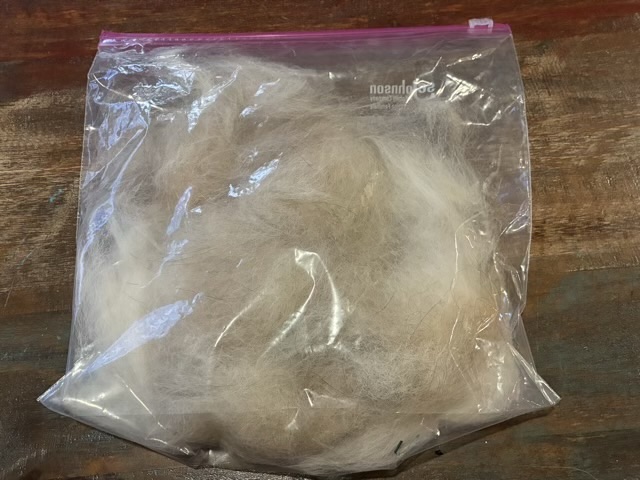
My friend brought me a bag of dog hair! For a spinner, this is an exciting thing, especially when the dog has an undercoat.
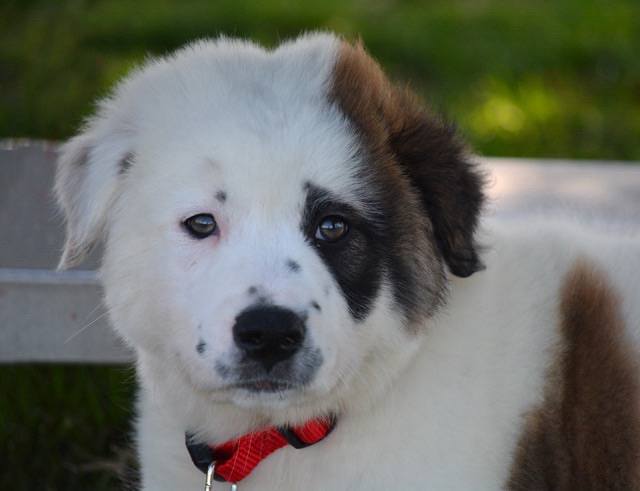
Photo description: white and fawn colored dog hair in a gallon plastic bagPhoto description: Baxter as a puppy. He is 30% Great Pyrenees, 30% Cattle Dog, 20% Boxer, and 20% Belgian Malinois according to a DNA test.
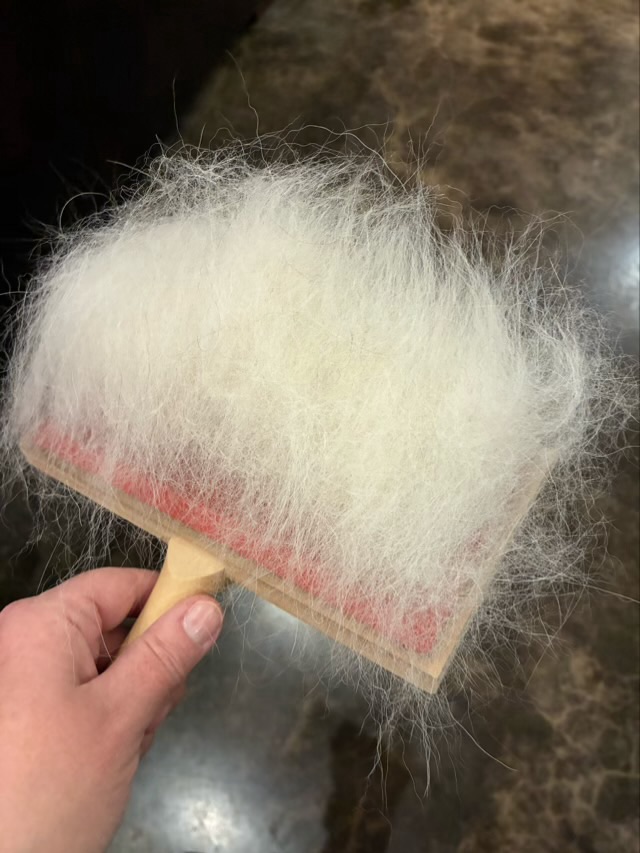
I chose to separate out the white and fawn colored hair, because it didn’t seem right to blend it when Baxter the dog is spotted. The hair was clean with only a slight doggy smell, so I did not wash it. I did card it with a fine toothed set of carders.
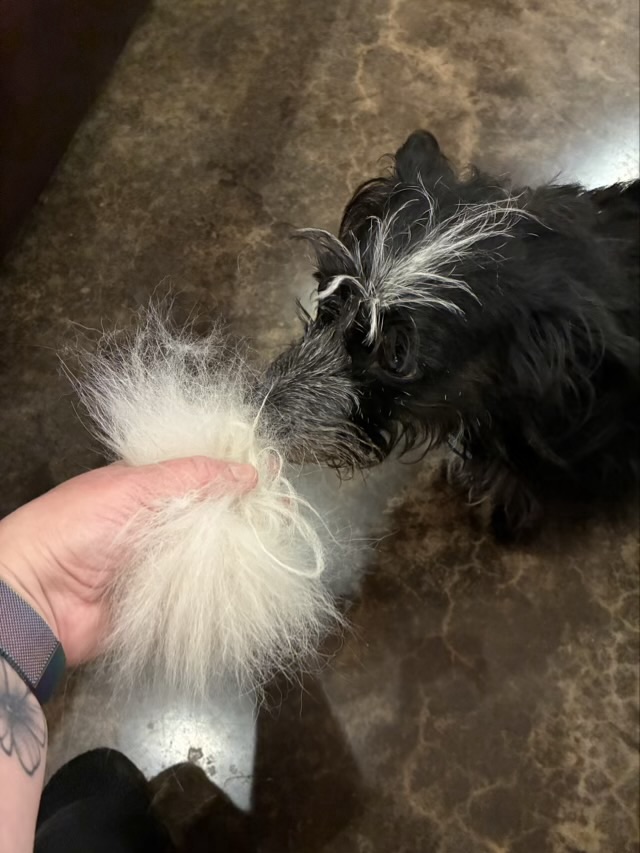
Photo description: the white portion of dog hair loaded on one carderPhoto description: Missy the dog is very interested in the smell of the carded fiber. (Her hair smooth and is very, very difficult to spin.)
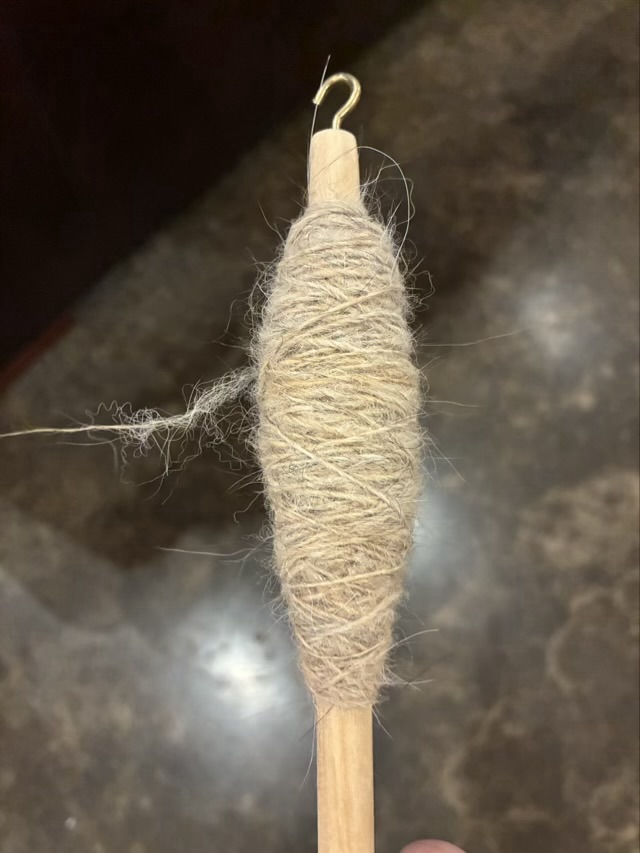
I chose to spin Baxter’s fur with a spindle shaft without a whorl, so I could have absolute control over the twist. It was a moderately difficult spin, not as easy as Samoyed, but still spin able.
Photo description: single spun dog hair on a shaft with cup hook
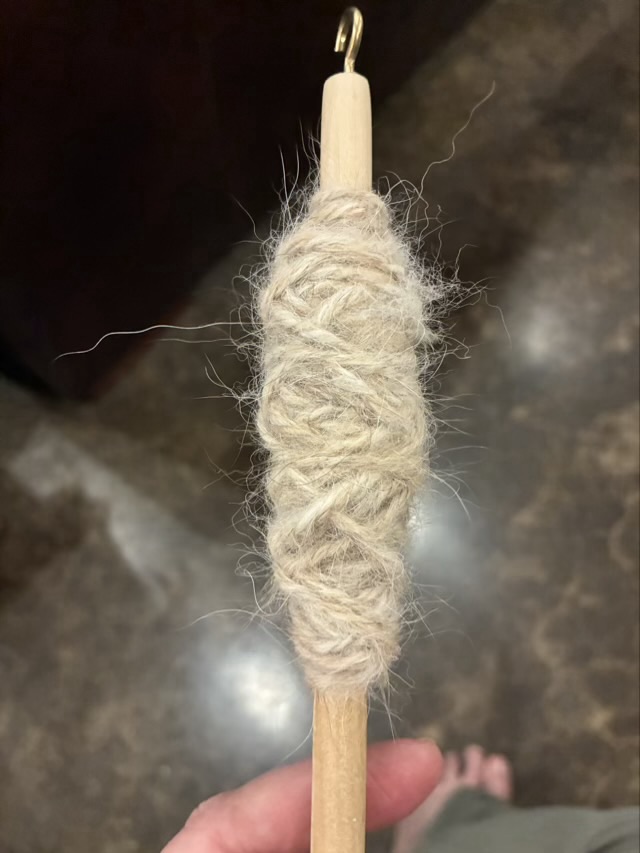
I chain plied the singles to make a three ply yarn. I like chain plying potentially delicate singles because if I do get a break, I can ply it together relatively easily.
Photo description: three ply yarn on a spindle shaft wrapped in a crisscross style
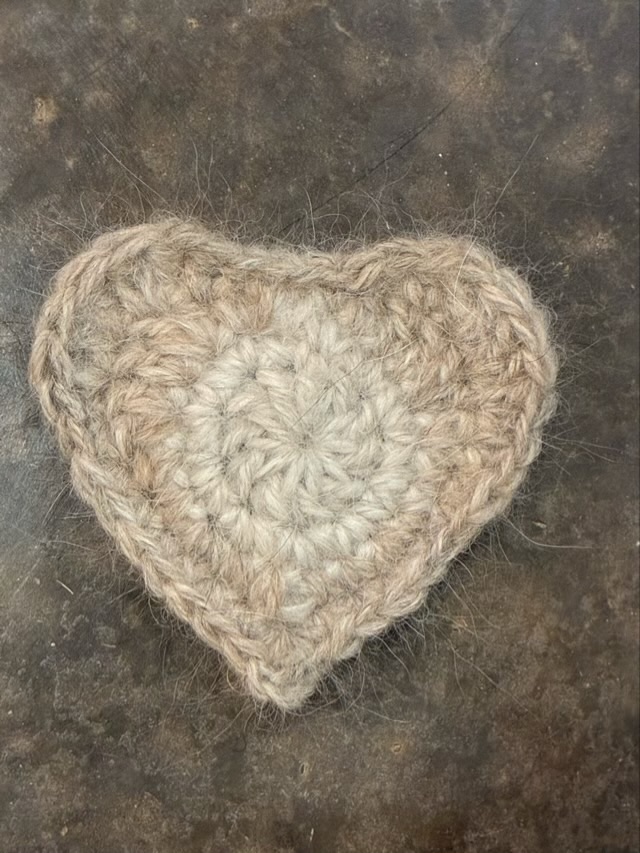
Because Baxter is a beloved pet, I decided to make a small keepsake with this yarn. I crocheted the white yarn in a circle, then used the fawn colored yarn to crochet a heart shape.
Photo description: heart crocheted from two colors of hand spun 100% dog hair
I believe scent is an important link in memories, so I did not block or wash the heart, but instead placed it in a plastic bag to preserve the scent so it will be a comfort when my friend pulls it out in the future.
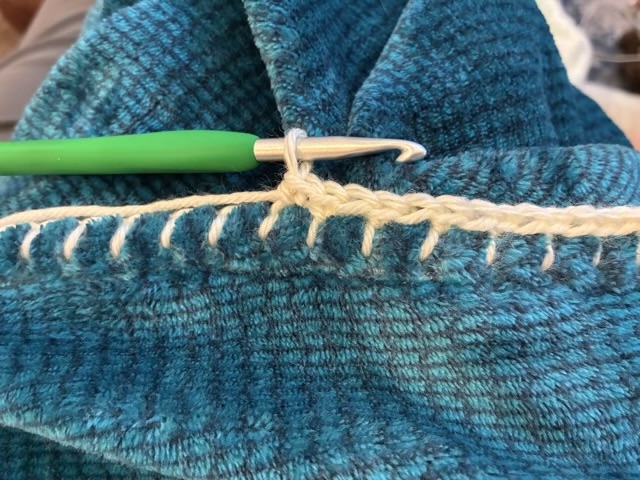
To make the poncho that I made from a free blanket wearable, I used inexpensive acrylic yarn to do a blanket stitch around the neckline, then crocheted into the blanket stitch.
Photo description: single crochet into a blanket stitch, video here
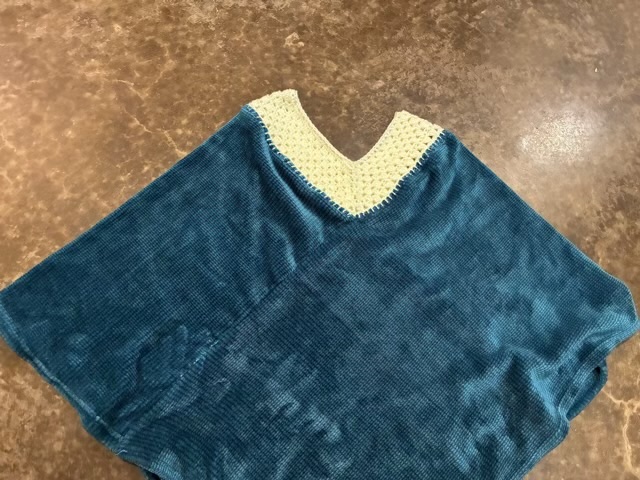
I then alternated rows of shell stitches, 3 on the first row, two on the second, and decreased at the V on each side.
Photo description: crochet added to the neckline of a 2 rectangle poncho
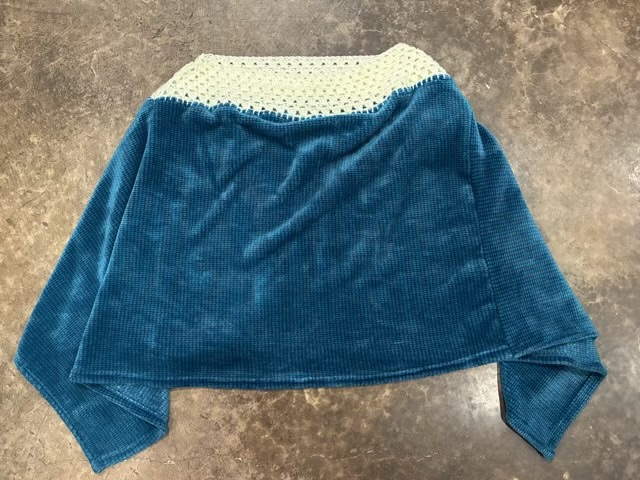
I don’t know why one side has more stitches than the other, but I didn’t count, so that is probably the cause of the error. The crochet did help keep the poncho on, but I still hate wearing it. I even tried wearing it sideways with a “V” on each shoulder. That was better, but the corners on my hands were annoying.
Photo description: same poncho, but turned 90 degrees with the V neck on the shoulders
I’m very glad I did this trial with inexpensive materials, and did not put in hours knitting something that I would hate wearing.
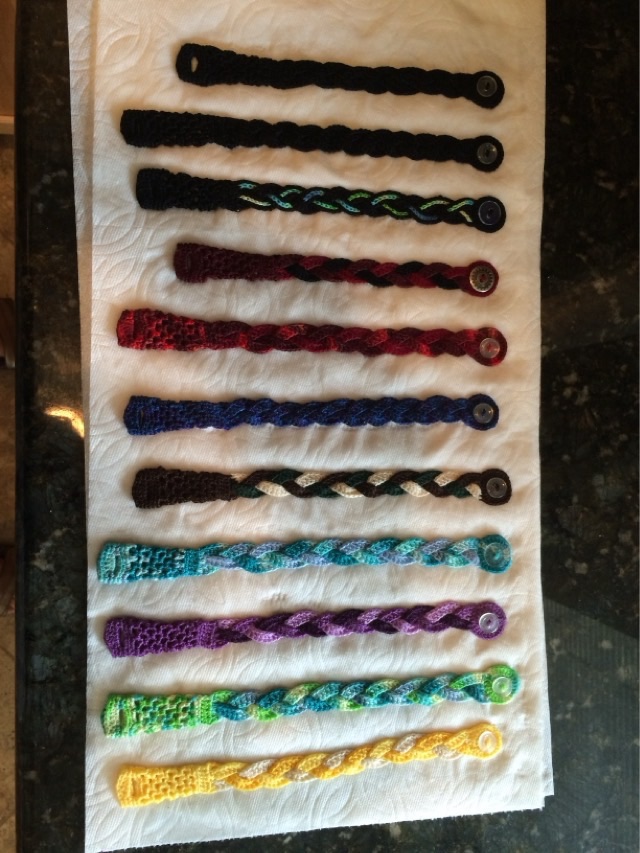
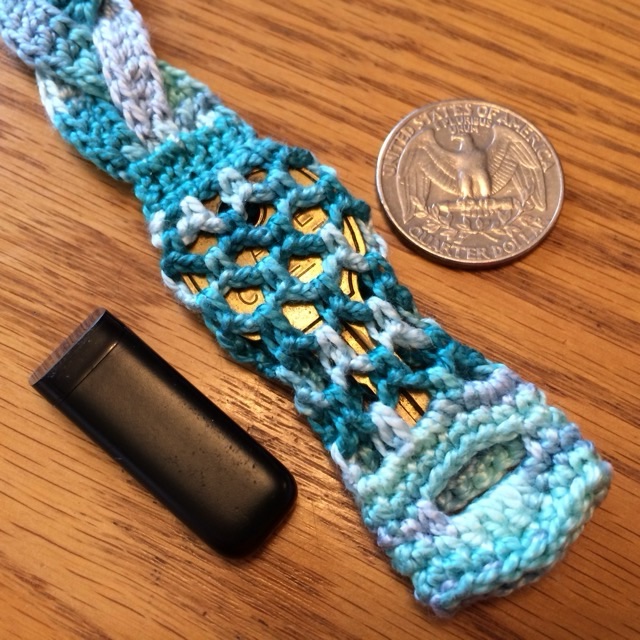
In August of 2016 I was in the throes of crocheting bracelets and anklets with small pockets. It started with being annoyed at my fitness tracker on my wrist. When I walked, I was pushing a stroller and my steps weren’t being counted because my arms weren’t swinging. I had the idea that I could put the tracker on my ankle, but there weren’t any bands big enough to go around, so I crocheted one. I had friends ask for one, so I made a bunch and started to sell them.
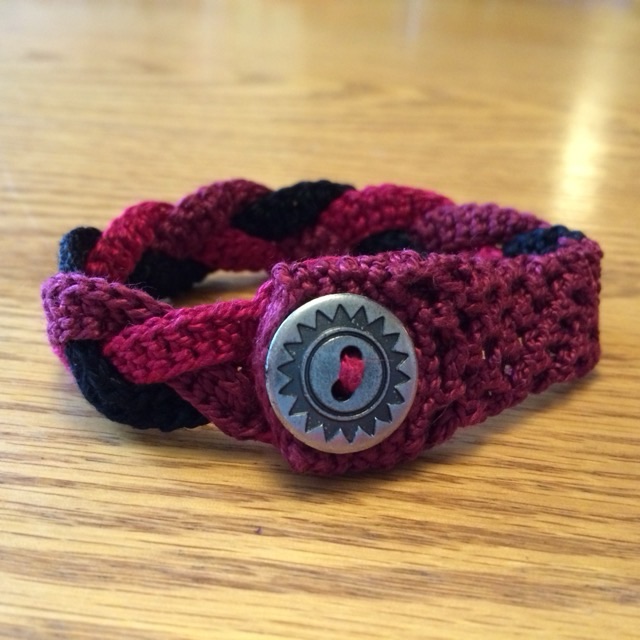
Photo description: eleven crocheted and braided bracelets with button closures and small mesh pockets made from pearlized cotton in various colors and lengthsPhoto description: closeup of the pocket, with a key inside, quarter on one side for scale, and a fitness tracker on the other sidePhoto description: bracelet shown closed
The problem with the crocheted cotton was that cotton stretches with time, and each strap was crocheted to size with no adjustment. The button also wasn’t a reliable closure. Sometimes brushing against furniture would pop the anklet open. I sold a few, but after the design problems became apparent, stopped making them.

 Critters and Craft