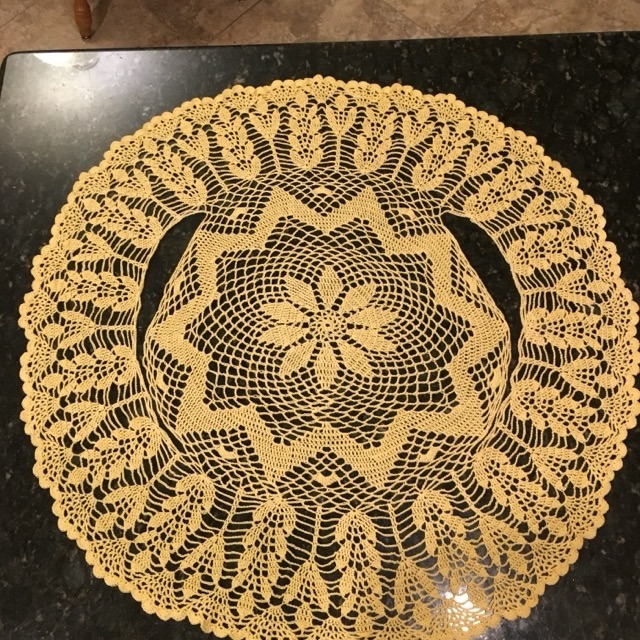
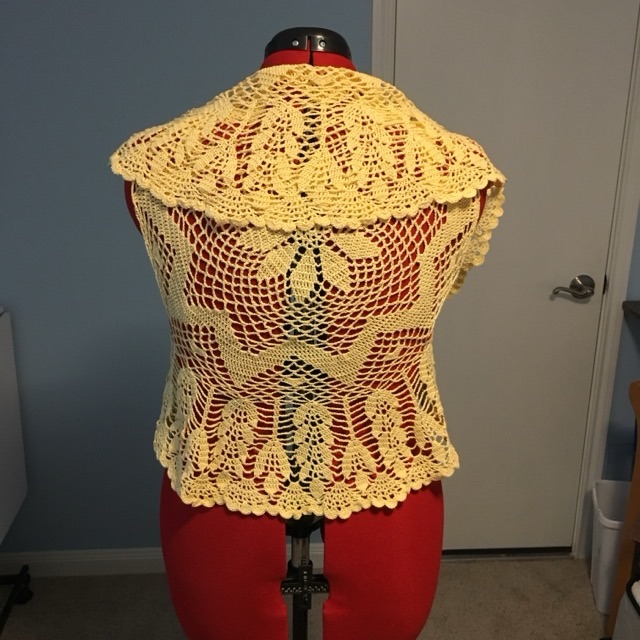
In March of 2017 I was crocheting a yellow lace circle vest for my sister. The pattern included classic crocheted lace elements.
Photo description: yellow crocheted circle vest made with #10 cotton with slits between the center and edging for arms, shown after blockingPhoto description: lace circle vest on a red mannequin showing the fold down collar
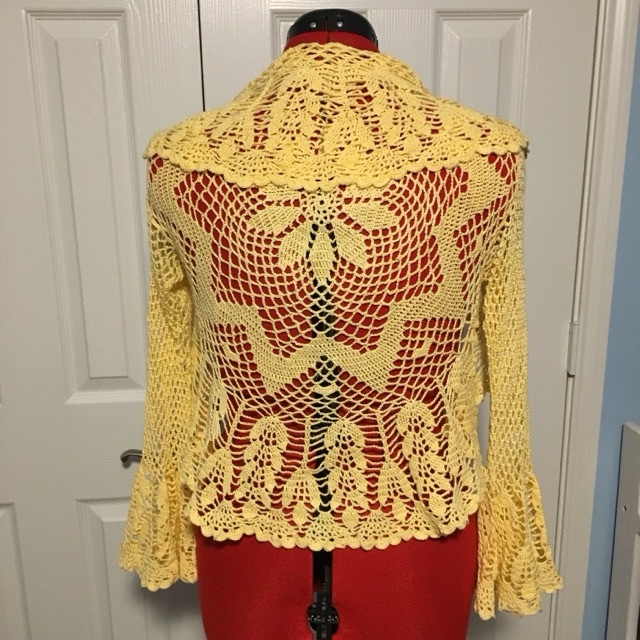
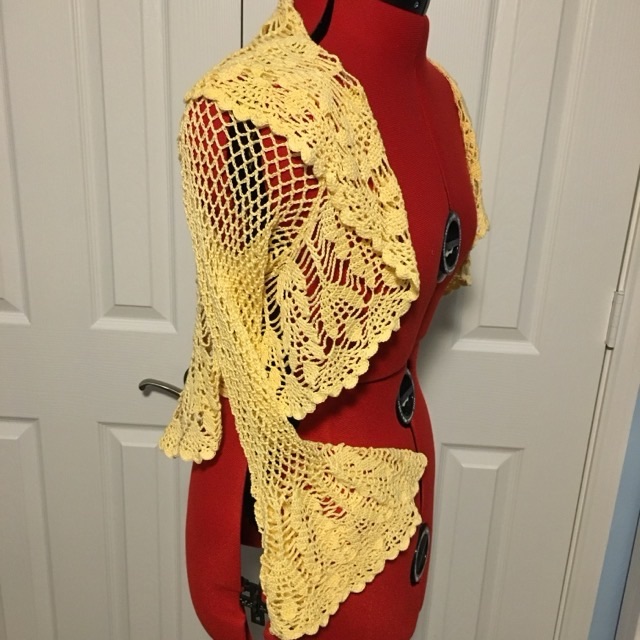
My sister was visiting, so we did a fitting and she requested sleeves. By June of 2017 I had finished the sleeves by doing a simple net for the arms, and a matching edge pattern for the bell sleeves at the elbows.
Photo description: same vest, but now with bell sleevesPhoto description: side view of the mannequin with the bell sleeve spread out a little to show the pattern
Although it was pretty, the delicate lace was, well, delicate. It didn’t hold up well to use.
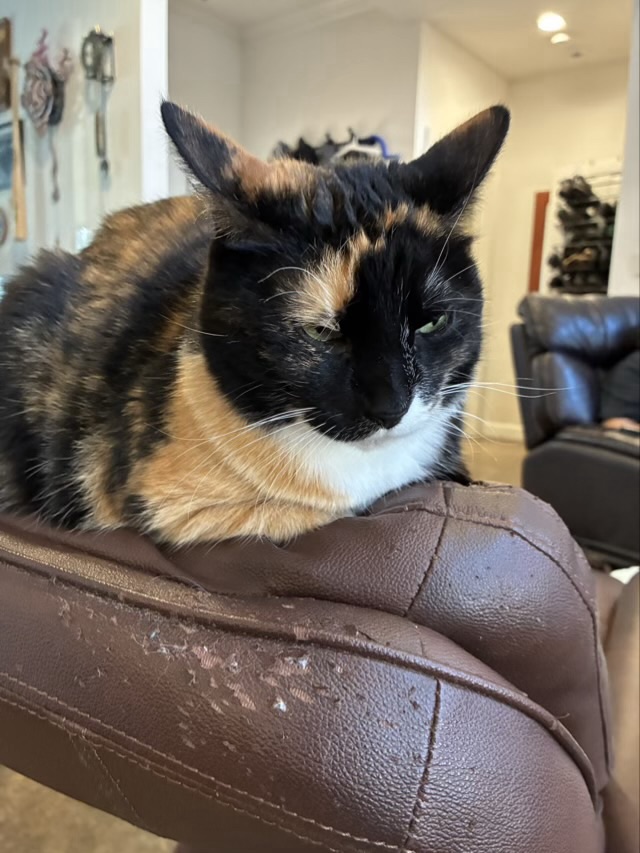
Photo description: Izzy the calico on a Barcalounger chair back she has claimed as her own complete with claw marks
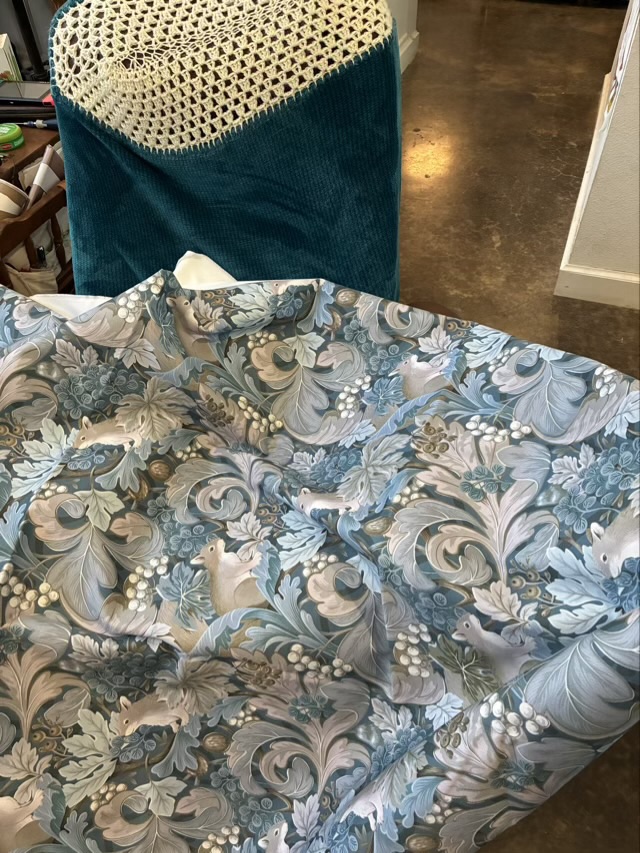
Izzy the cat was quite miffed when I got a new chair and got rid of the hollow she has been carefully cultivating for years. She started the process over with the new chair and decided to add in claw sharpening, much to my dismay. To hide the damage I made a chair back cover with materials from around the house. It worked OK, but kept sliding, so I bought some nice heavy custom-print fabric from Spoonflower to make a new cover.
Photo description: old free chair back cover, with the new fabric across the seat
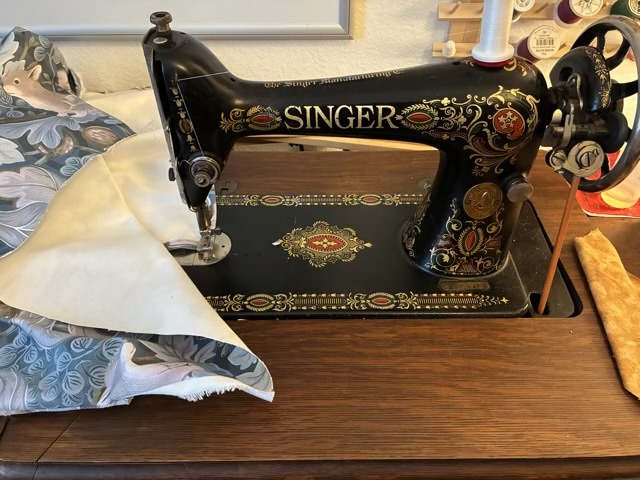
The first decision I had to make was how to construct the back cover. I decided to do a long strip up the sides and top, and a panel for the front and back. I tore the fabric to get straight lines (yes, light denim will tear like cotton plain weave, just make sure to tear at least an inch away from the seam line because the threads distort at the tear.) I then used the treadle sewing machine to sew up a new cover. I did a fit once the side seams were done, adjusted the length, then sewed a hem.
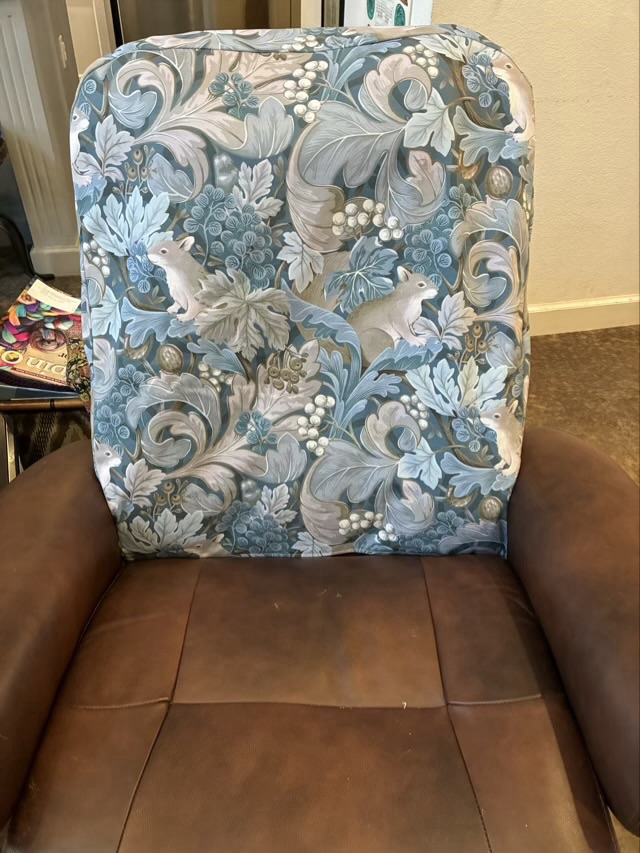
Photo description: Singer model 66 red-eye treadle machine used to sew the chair back coverPhoto description: newly installed custom chair back cover on a Barcalounger swivel chair
I do like the Art Nouveau look with squirrels on the fabric. Izzy has already started to reclaim the new cover. It’s a good thing I like cats more than furniture.
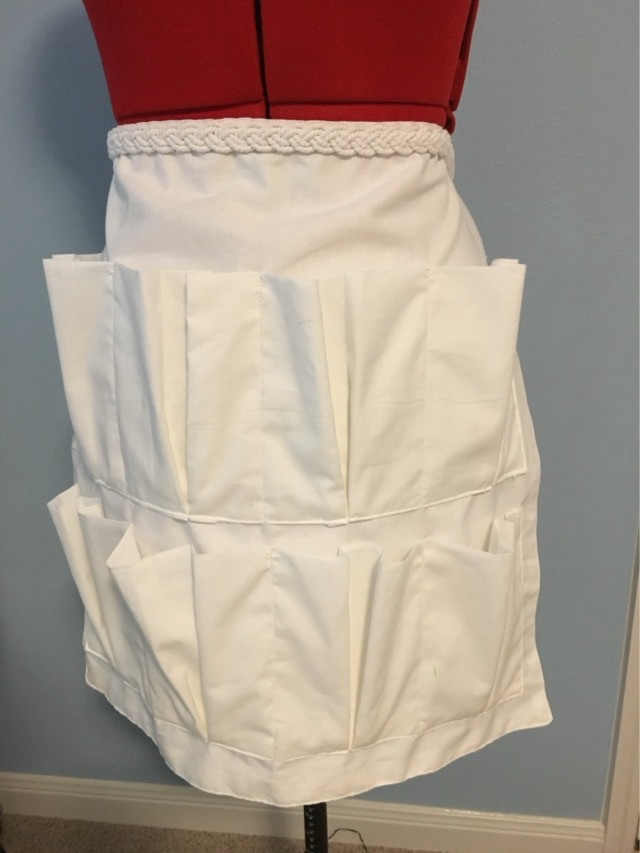
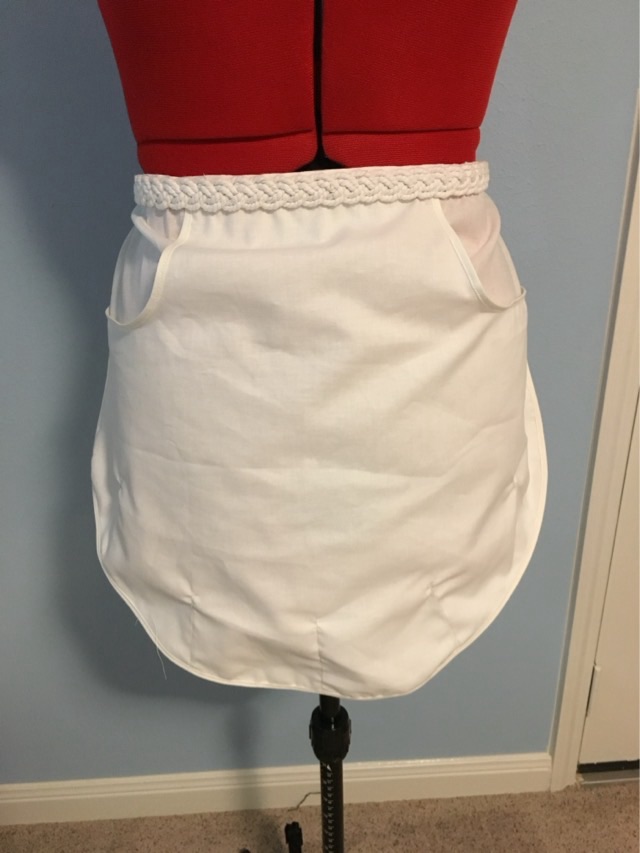
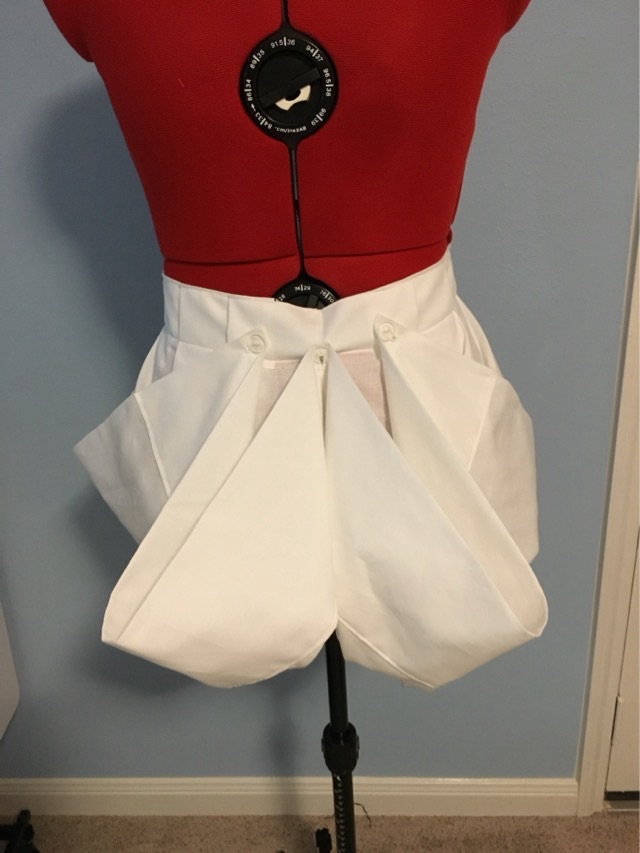
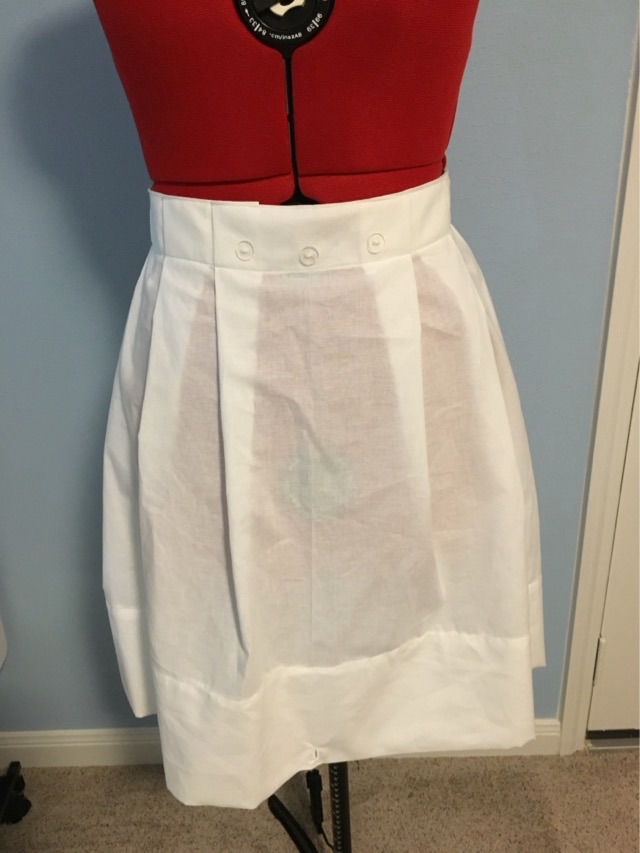
In February of 2017 I did an egg apron experiment for a friend with chickens. I made three kinds of egg apron from simple white cotton fabric that I had in my stash.
Photo description: white egg apron with woven rope tie and two rows of pleated pocketsPhoto description: round bottom apron with braided rope tie, large pocket with two hand access ports and division seams along the bottom edge to keep eggs from knocking togetherPhoto description: harvest style white apron with buttoned up large “pockets” to hold eggs or producePhoto description: same harvest style white apron unbuttoned
The experiment was interesting. The round bottom apron was hard to get the eggs out, the pleated pockets were nice, but if you leaned over too fast the eggs rolled out, and the harvest apron didn’t keep the eggs separated.
Now, with three of my own chickens and one or two eggs, I just use my pants pockets. Even when we had more chickens the aprons were more of a pain than helpful. Egg baskets are a more practical solution.
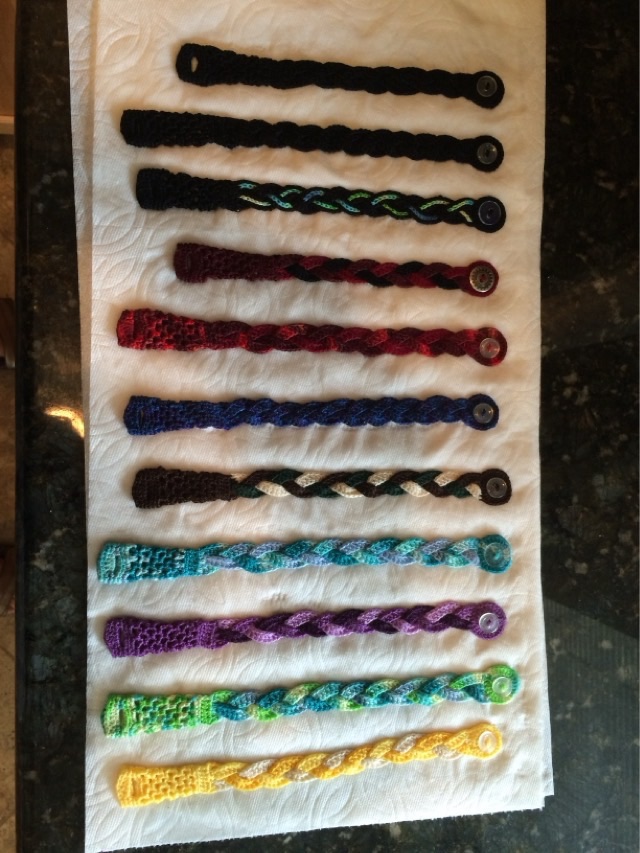
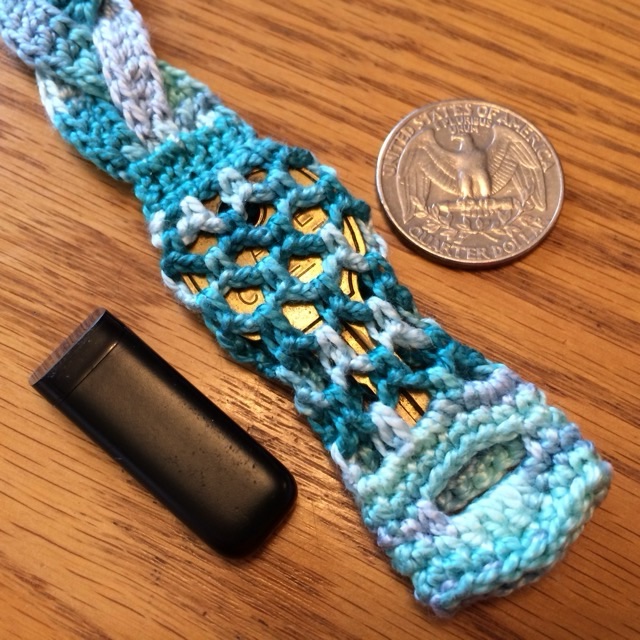
In August of 2016 I was in the throes of crocheting bracelets and anklets with small pockets. It started with being annoyed at my fitness tracker on my wrist. When I walked, I was pushing a stroller and my steps weren’t being counted because my arms weren’t swinging. I had the idea that I could put the tracker on my ankle, but there weren’t any bands big enough to go around, so I crocheted one. I had friends ask for one, so I made a bunch and started to sell them.
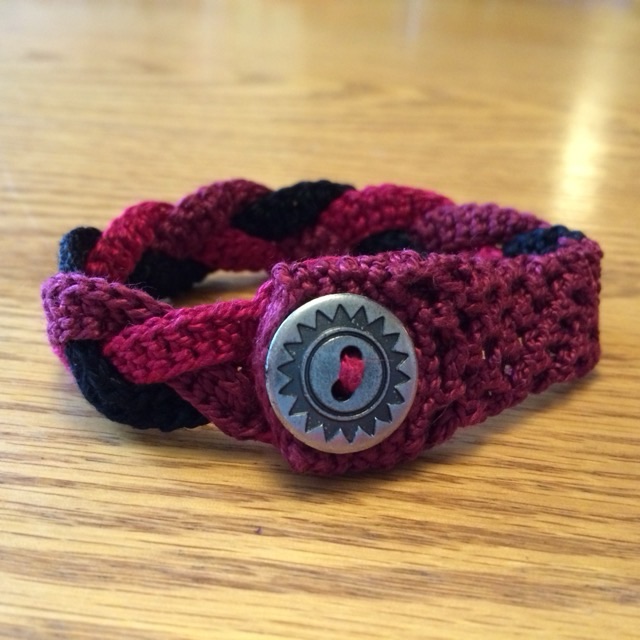
Photo description: eleven crocheted and braided bracelets with button closures and small mesh pockets made from pearlized cotton in various colors and lengthsPhoto description: closeup of the pocket, with a key inside, quarter on one side for scale, and a fitness tracker on the other sidePhoto description: bracelet shown closed
The problem with the crocheted cotton was that cotton stretches with time, and each strap was crocheted to size with no adjustment. The button also wasn’t a reliable closure. Sometimes brushing against furniture would pop the anklet open. I sold a few, but after the design problems became apparent, stopped making them.
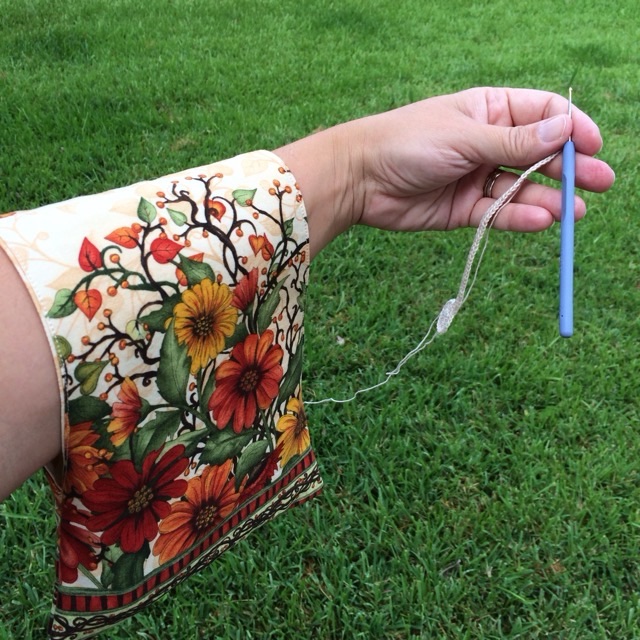
In July 2016 I made my first arm bag using my favorite fabric.
Photo description: vines and floral fabric bag with very wide “handle” that fits over the forearm and can hold a small skein of yarn
I have made many of these bags, and I love them. It is a way to keep my yarn close and still allow me to move around. I first needed it following kids around the house and playground, later I found it worked well for walks, and travel, and waiting rooms. I make mine reversible, and have added small pockets in later versions.

 Critters and Craft