In May of 2014 I crocheted a rather large owl basket for my Mom.
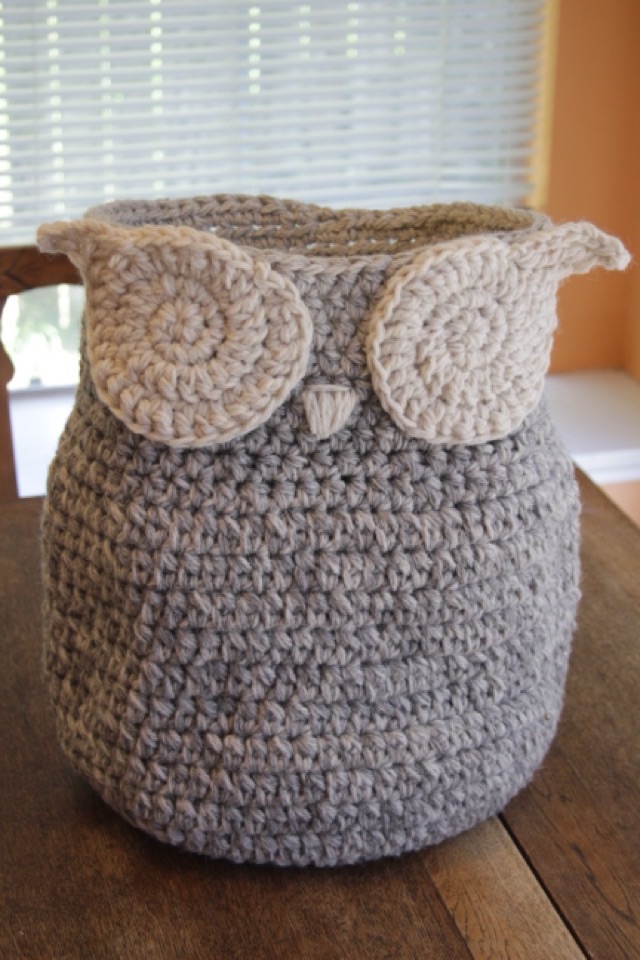
It stands up well when it is filled with towels. I like the spiral eyes as a choice. I believe I used a wool yarn that I had in my stash at the time.

In May of 2014 I crocheted a rather large owl basket for my Mom.
It stands up well when it is filled with towels. I like the spiral eyes as a choice. I believe I used a wool yarn that I had in my stash at the time.
I attended a double-walled basket class taught by my wonderful weaving neighbor. I spent a morning winding #2 reed round and round, happily seeing how to turn at the top, and finish off the bottom. It is my first double walled basket, but I have ideas on how I would do different shaping. One of the other students had a beautiful curve to the sides of her basket!

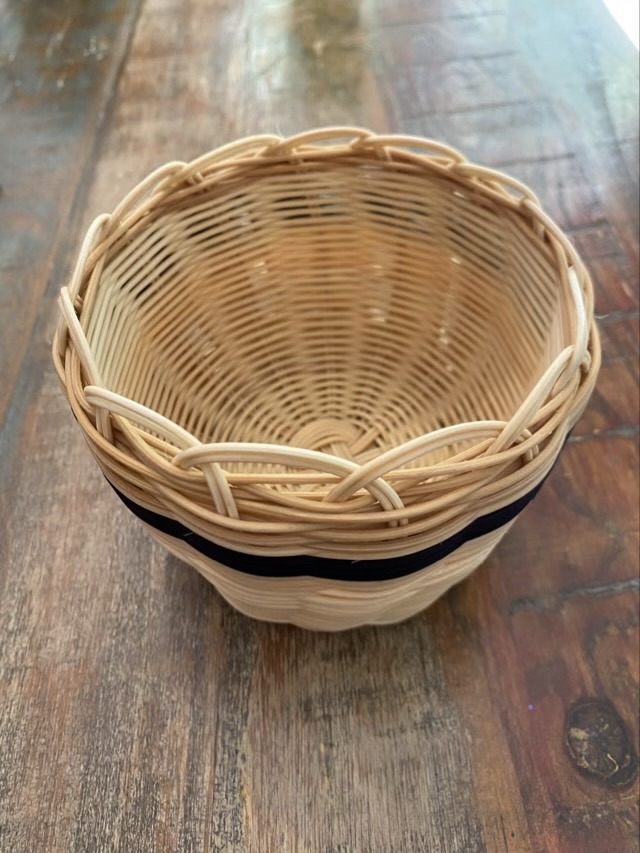

I’m obsessed.
I recently had the great fortune to learn from my neighbor who is an accomplished Cherokee weaver. She started me on a Cherokee style Peace Symbol/Door Hanger and told me that these would hang in the council house and be decorated with feathers. If the feathers were white, they were at peace, if red, they were at war, and if black, the village was in mourning. There are thirteen spokes representing the thirteen cycles of the moon during the year. I thoroughly enjoyed weaving this. I love the style and the way the light plays through the thin round reed.

I am not Cherokee, neither in lineage or registration, so I’m being very clear that what I made is “in the style of” or “like” a Cherokee weaving.
I gathered dead leaves from the base of several iris and daylily plants at my folk’s house, along with some daylily stems. To make them flexible I wet a large towel and wrapped the leaves and stems with it, leaving them in the towel for a few hours.

I chose ten daylily stems for my base stakes and did a plain weave 5×5. I then twined iris leaves around the stakes, creating a square basket. To add a new leaf, I folded the old leaf end into the new leaf end, twisting them together to lock it in.
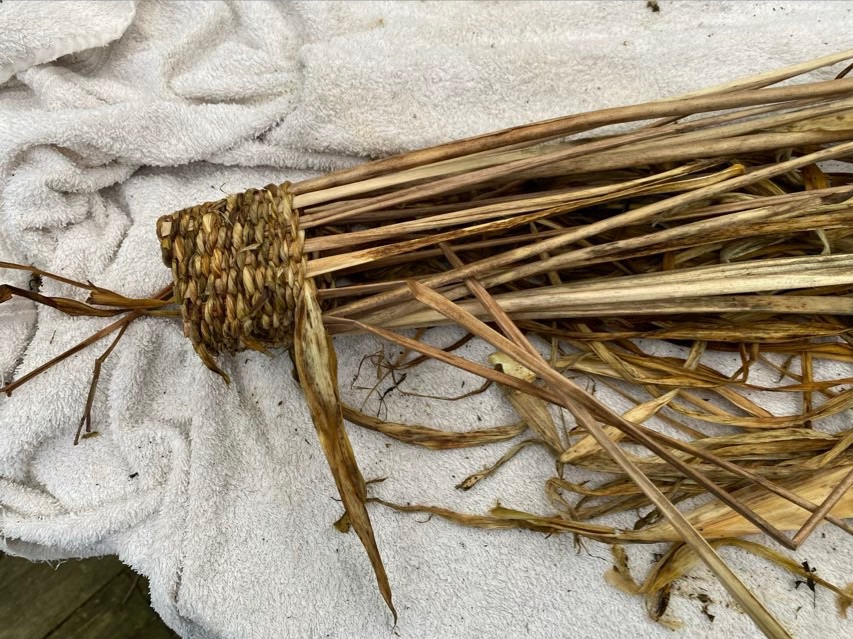
I still need to study how to do borders for the top. I ended up clipping the stakes short and tucking in the twined ends for this basket.
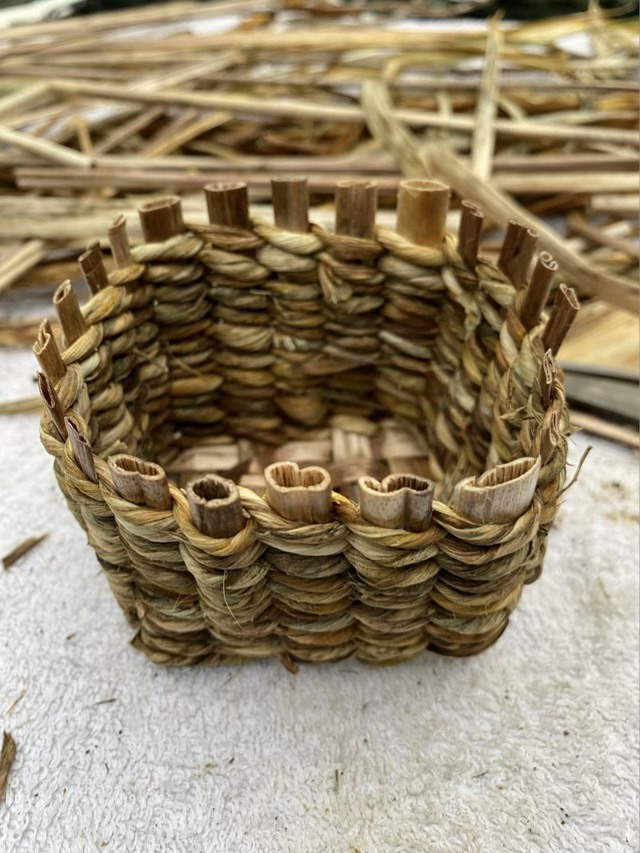
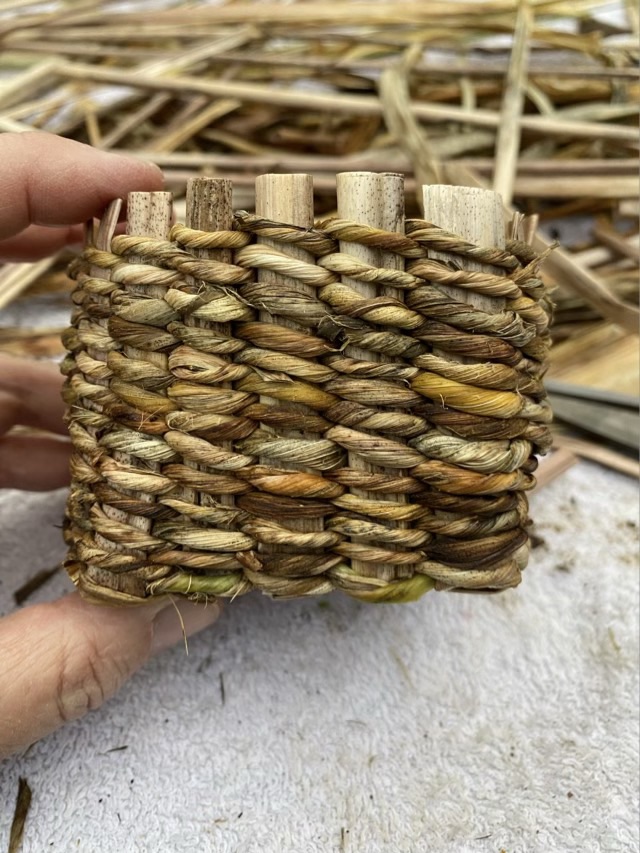
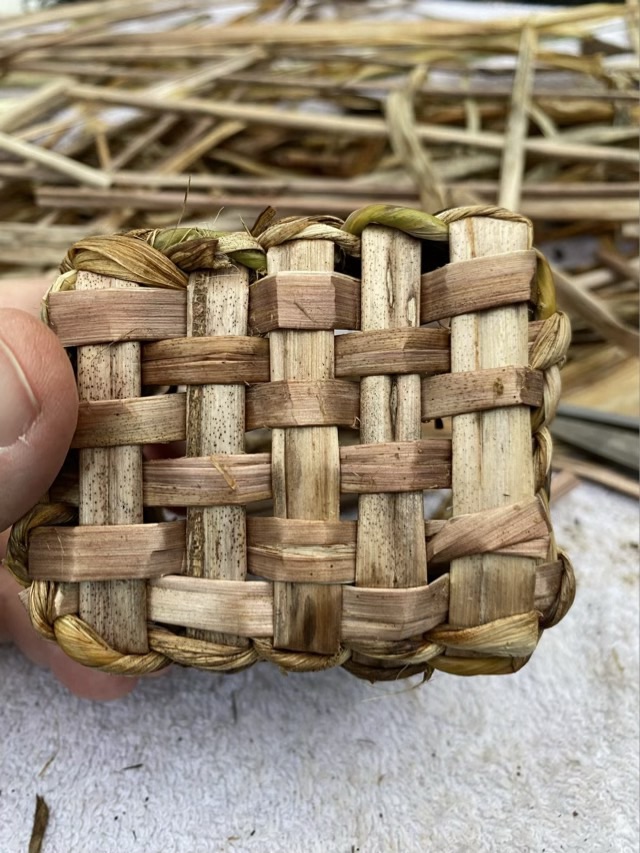
I left the basket at my folks’ place to dry. The leaves had spots of mold, so it shouldn’t be used for foodstuffs, but after a solid coat of sealer, it could be a desk basket.
We picked up a fast food dinner and were given a plethora of paper napkins. I had a stash of straws. Could I make a basket? (Because that is the logical thought process with excess disposable paper products, right?)

I unwrapped and split the straws by running a scissors down the length to obtain four plastic strips from each straw. I wove a square base (6×6 straw pieces). I tore the napkins into 1/2” strips and twined them around the straw “staves”.

It took some time to twine up the sides of the basket. The joining method I liked best was to overlap the end of a napkin strip with a new strip, fold the sides to the middle, then secure with a good clockwise twist. The two clockwise twisted strands were then wrapped counterclockwise around each straw, which isn’t as complicated as it sounds. To finish the basket, I trimmed the end of the straws to a blunt point, and used tweezers to thread them back down through the weaving.
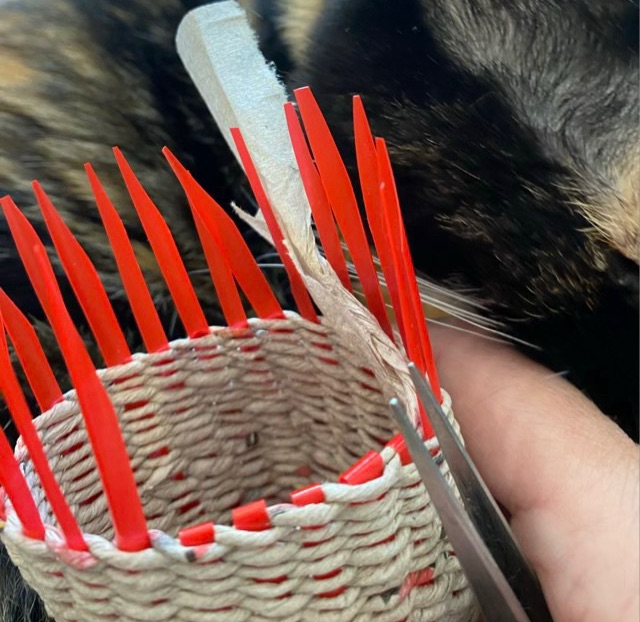
I was quite surprised that the little basket is fairly sturdy. It certainly won’t hold up to water or washing, but it is a cute little basket. I left the end of the napkin twine inside the basket to remember its humble origins.
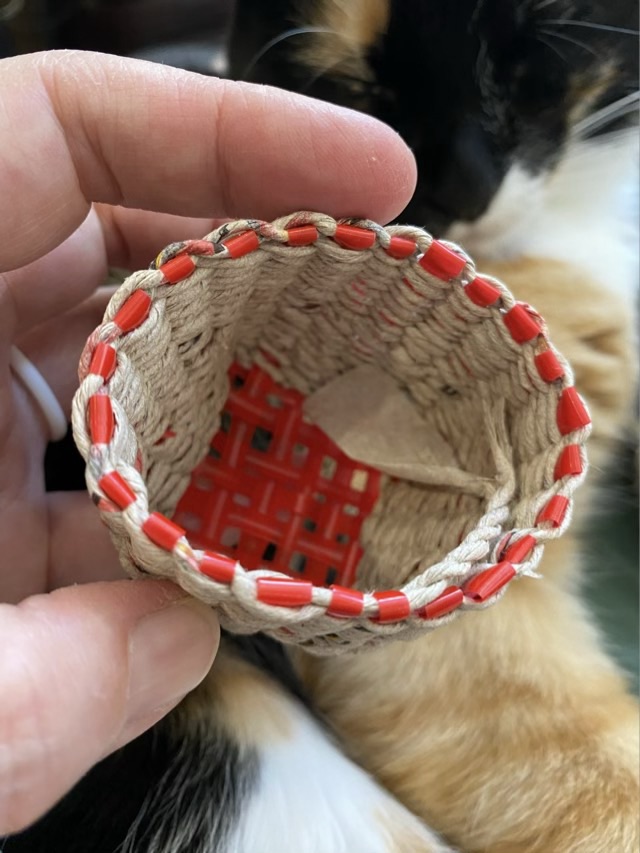

Materials are everywhere.
 Critters and Craft