Iris leaf basket

I made a small basket entirely from dried iris leaves. The spokes are large iris leaves, and I twined multiple smaller leaves together around the spokes.

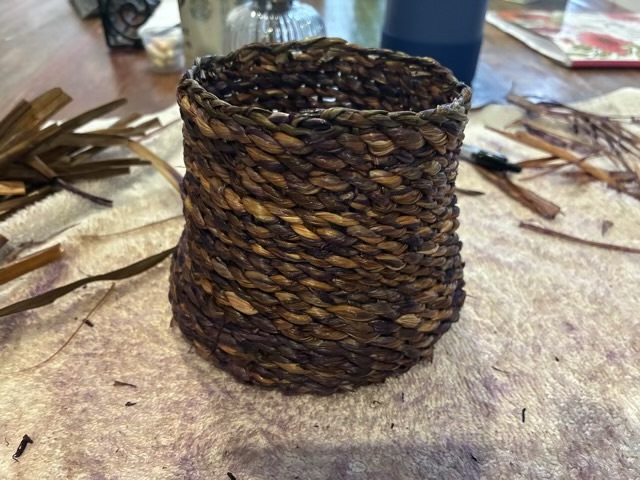
Photo description: starting the twining with dried then rewetted iris leaves
Photo description: finished basket made from iris leaves gathered from my yard

The leaves were soaked more than was ideal for weaving, so to dry it I put it in the oven on low and weighed the basket every twenty minutes until the weight was constant, indicating all the water was gone. Air drying a basket that wet would have given too much time for mold to set in.

I found some iris printed fabric and lined the basket. It took me two tries to sew a liner that fit the shape of the basket, and I ended up with a single layer that wrapped over the top lip of the basket.
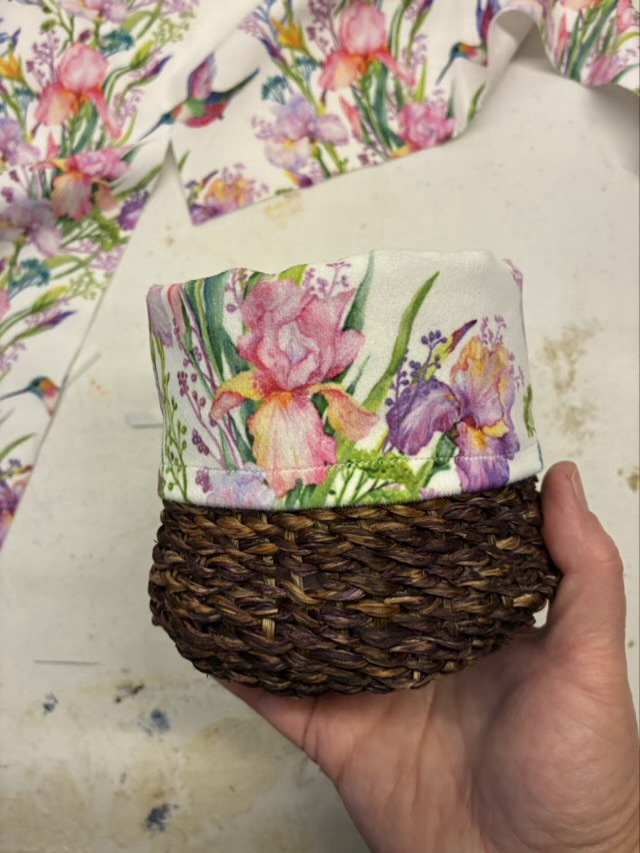
Photo description: iris printed fabric liner on the iris leaf basket

To finish off the basket, I added one of my new leather tags to the edge of the liner.

Photo description: laser engraved leather sewn-on tag that says “iris leaves”

I like twining, so plan on harvesting more iris leaves in the spring, drying, and practicing on more twined baskets.
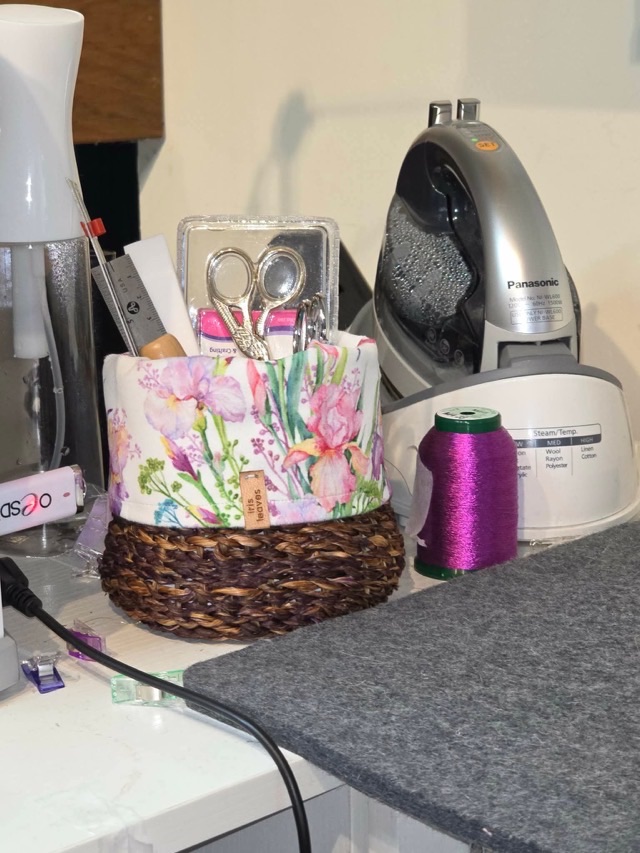
Photo description: basket in use holding sewing tools

Throwback Thursday: wire basket

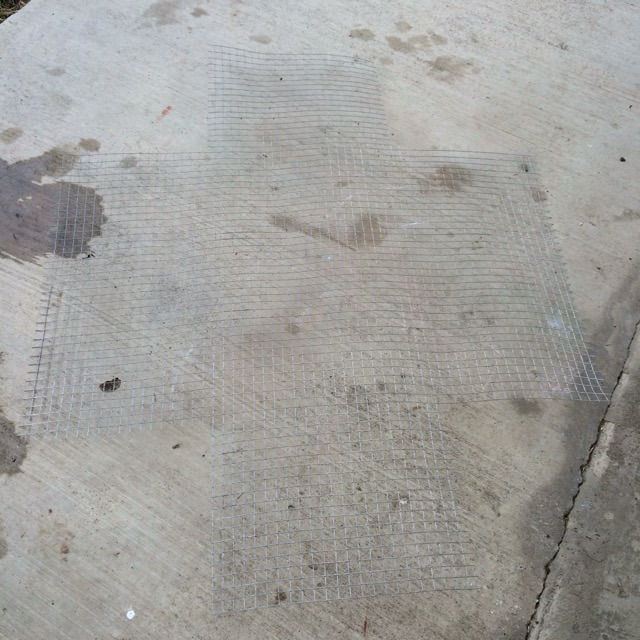
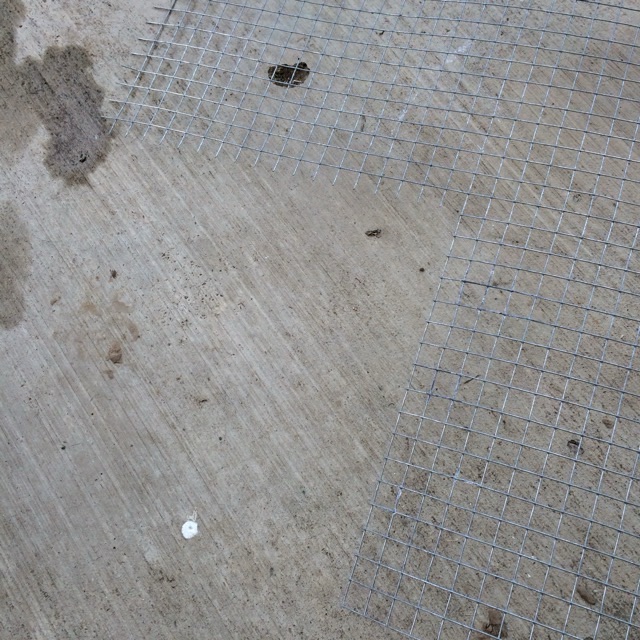
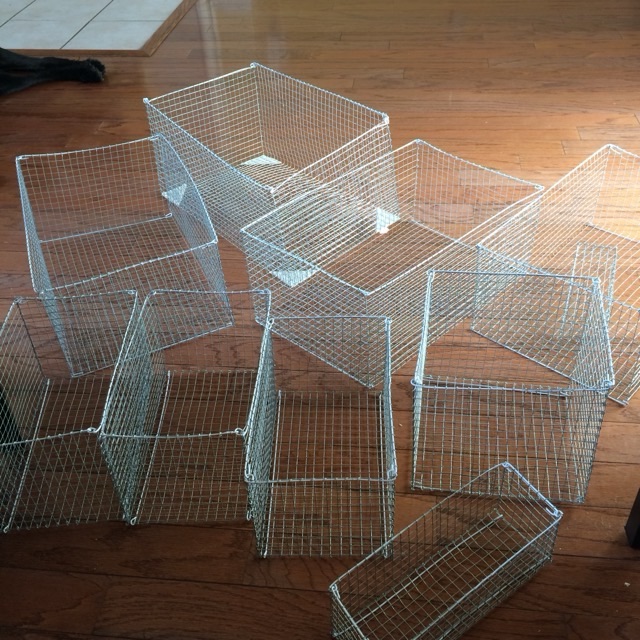
In July 2015 I was making custom wire baskets for a shelving unit in the house. I would draw out the size needed in chalk on the patio, flatten out 1/2” welded wire hardware cloth, and cut it with metal snips.

Photo description: basket pattern drawn on the patio in pink chalk
Photo description: hardware cloth cut into shape

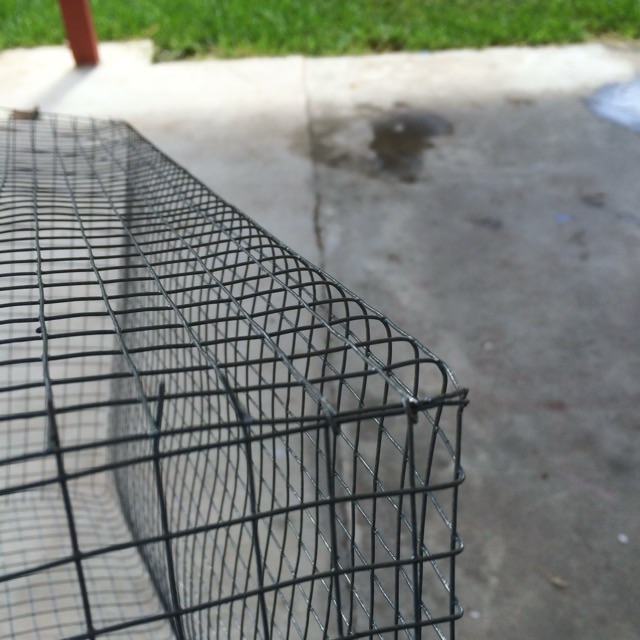
When I cut the hardware cloth, I left one side of the corner seam with a vertical wire, and the other side with horizontal wires free for a half inch. When I folded the sides up, I used needle nose pliers to loop the horizontal ends around the vertical wire.

Photo description: close up of corner cut showing the free horizontal ends and the solid vertical edge
Photo description: close up of how the wire ends wrap around to secure the sides of the basket
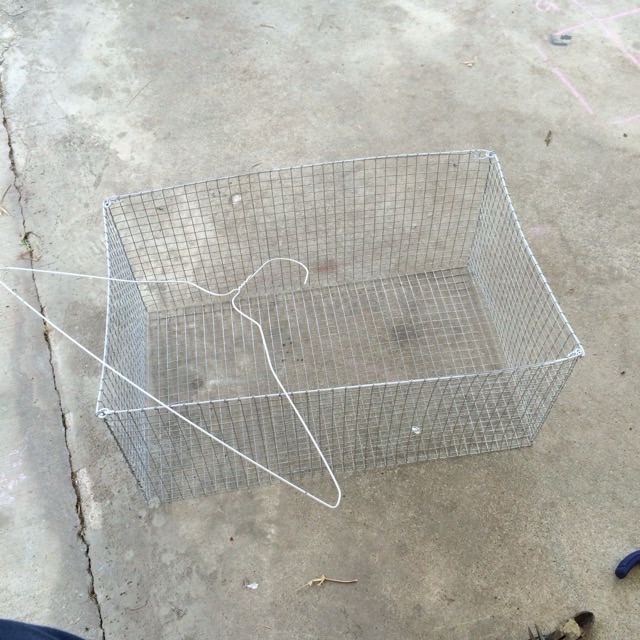
Photo description: finished basket with hanger wire used to stabilize the upper edge of the basket
Photo description: nine wire baskets of various sizes

I experimented with ways to keep the hardware cloth from scraping the wood shelf. I sewed fabric to corners as one solution, and ran hanger wire on the bottom like sled runners on other baskets.

Josephine knot basket

I saw a Josephine knot based basket as I scrolled Pinterest and was immediately captivated. The construction made sense and I loved the look of the starting knot. I still had #2 reed, so I gave it a go.

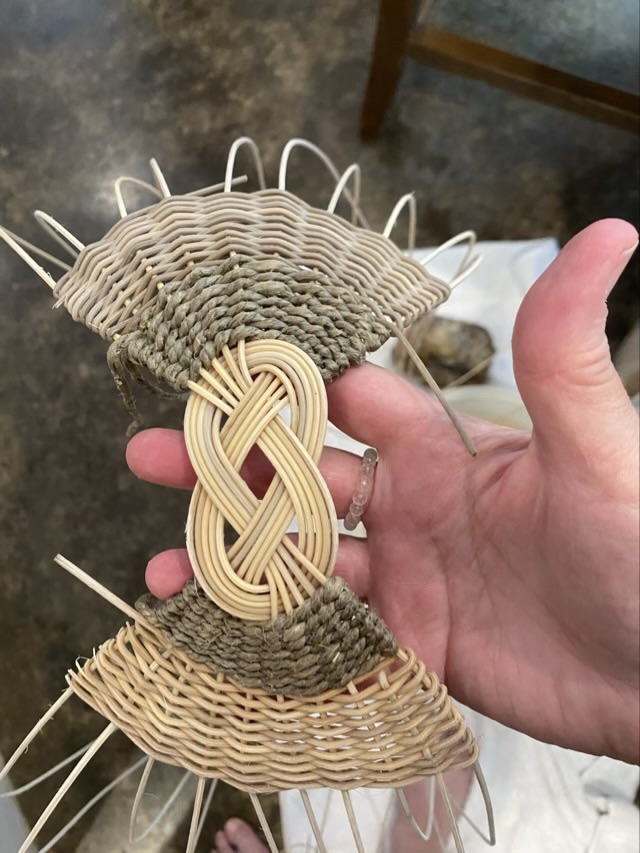
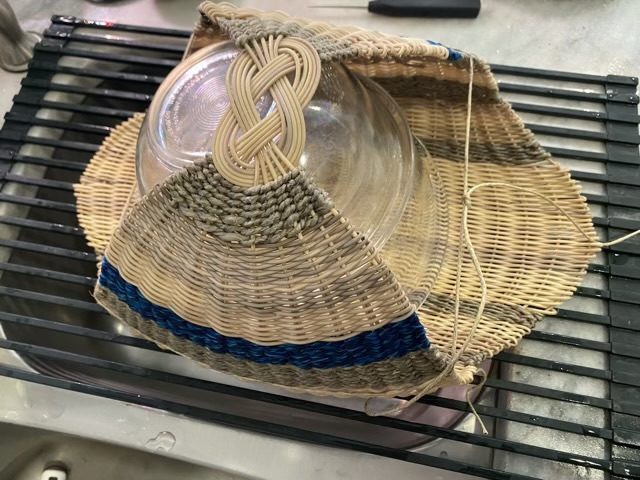
My Josephine knot basket starts with ten reeds divided into two groups and woven together in a figure 8, then the stakes are woven with hemp rope and more reed.
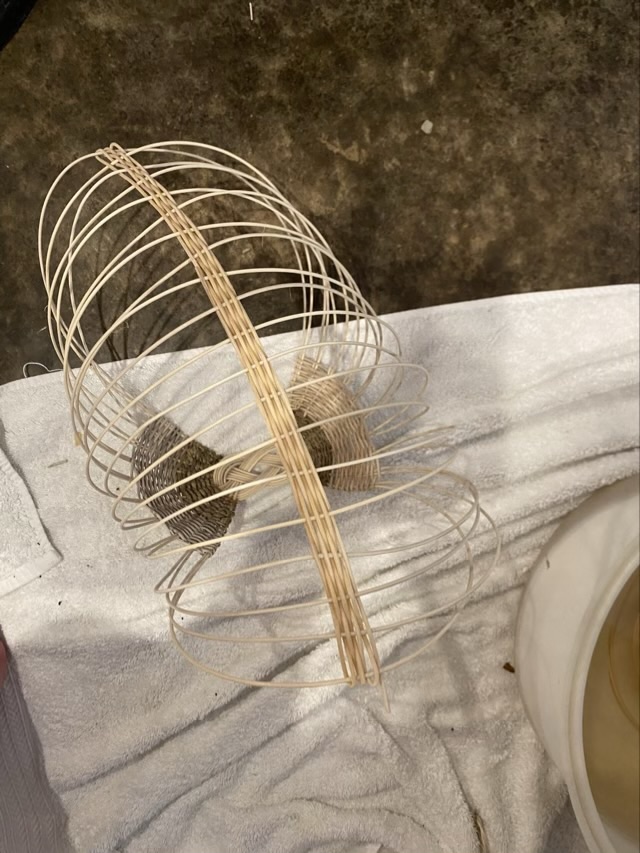
I took the reed from each side and tucked them into the woven sections on the opposite side. I used a rolled mat as a form to get the cylinder even. I still had to adjust the staves as I wove.
Once the staves were set, I started weaving from the bottom of the basket to get the spacing set.
When the bottom section of the basket base woven, I then switched back to weaving down from the sides, which I wouldn’t do again. I think the edge of the basket would arch nicer if I had continued to work from the base up.
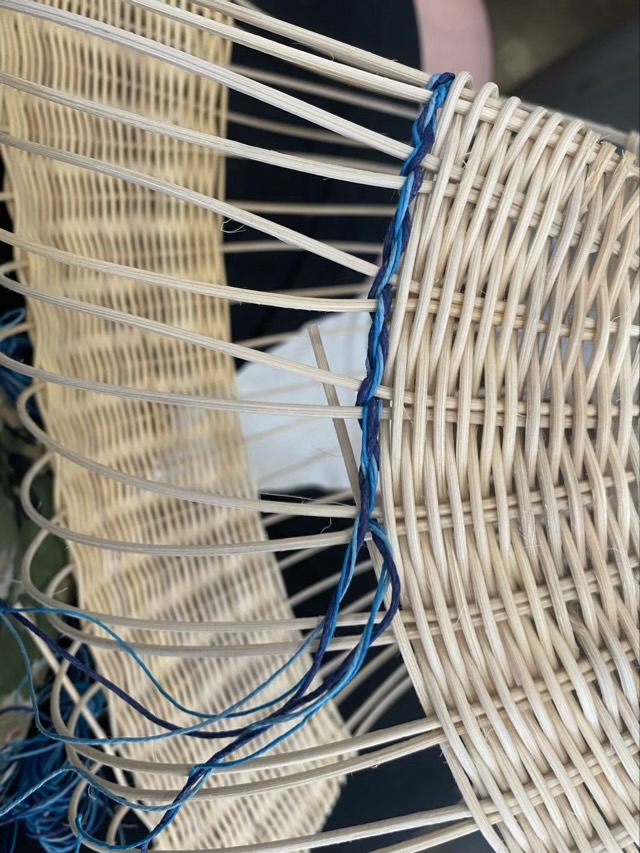
I added some blue colored hemp cord. The cord was thin, so I combined three shades and twisted them together as I twined the two halves around the basket staves.
Where the bottom weaving met the side weaving was a little tricky because there wasn’t much space. I used more hemp rope because it was flexible enough to take tight turns and fill in the gaps.
I soaked the completed basket in water, weighed down with a bowl to keep it submerged.
I used bowls and twine to shape the basket as it dried.
The finished, dried basket maintained the shape, and had a flat bottom which makes it stable on a table. I was pleasantly surprised that I could block the basket as I do with cloth.

When I do another of these baskets, I want to use a larger reed for the knot and staves, but still do a combination of #2 reed and cord for weaving the sides. Once I have the knot secure, I would weave from the bottom up. This basket took me a few days of interrupted time to complete.

Concave double walled basket

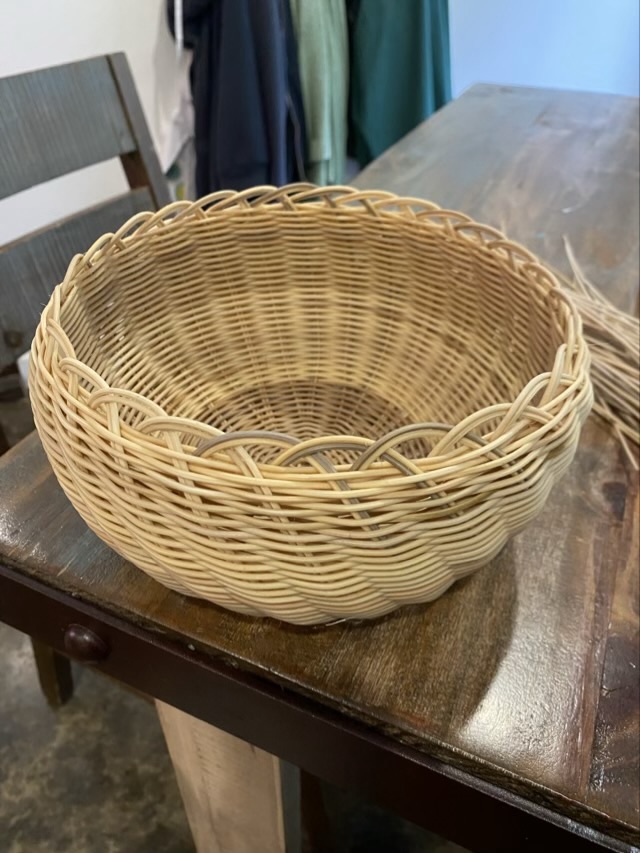
This is my third double walled basket and I can definitely see my skill improvement. I wanted a larger, concave shape, and I was able to achieve the shape I wanted.

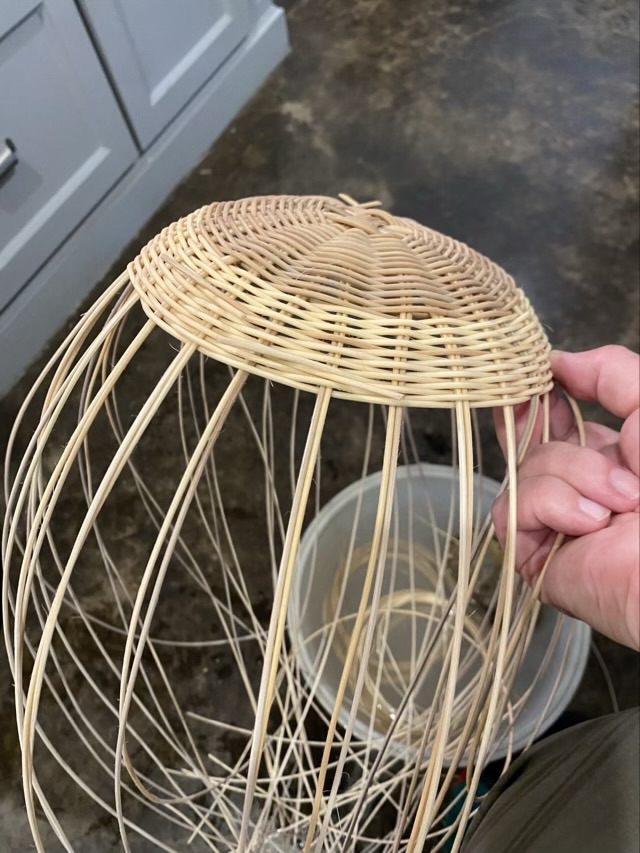
Photo description: starting the inner wall of the basket with added stakes, my next weavers soaking in a bin of water at my feet
Photo description; the stakes turned and weaving the second wall, again I chose to take the spokes at an angle
Photo description: finished double walled #2 round reed basket
Photo description: bottom edge with each stake woven behind, over, behind in a continuous braid, my best finish yet

I love these baskets. Now I want to experiment with different materials.

Convex double walled basket

I’ve made my second double walled basket, this time on my own. I had most of the tools necessary, except clothes pins. I was rather shocked that I didn’t have any clothes pins squirreled away. (I have them now.)

Photo description: soaking a round reed basket mid-weave, I like the way the spokes spiral

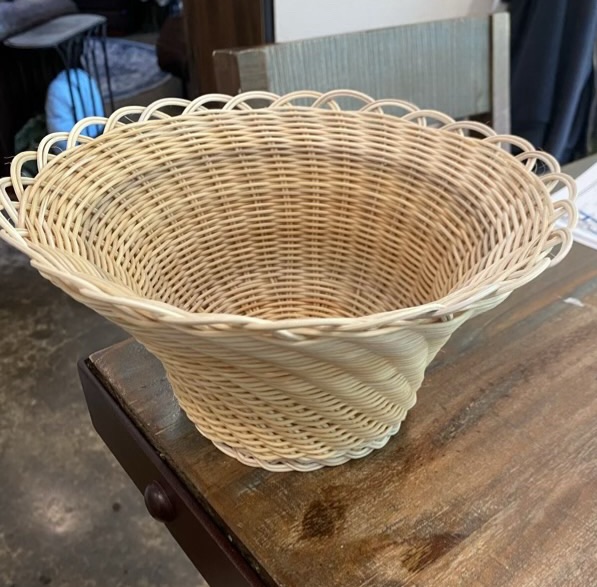
I wanted to make a larger basket, so added in more stakes, but the base was curving up too fast, so I switched to weaving from the inside, letting the spokes flair out, and it gave me a lovely convex curve on the sides of the basket.

Photo description: weaving the outer wall close to the inner wall
Photo description: finished basket made of #2 round reed (rattan palm)

This time around I followed the curve of the reed on the outer wall, rather than adhering to the grooves of the inner wall, which resulted in a spiral effect on the outside that I quite like. These baskets take me a full day to make, and once I start I don’t want to stop, so I have to plan my time carefully.