Spinning on a Great Wheel

I had the absolute privilege of spinning on a Great Wheel from the 1860s.

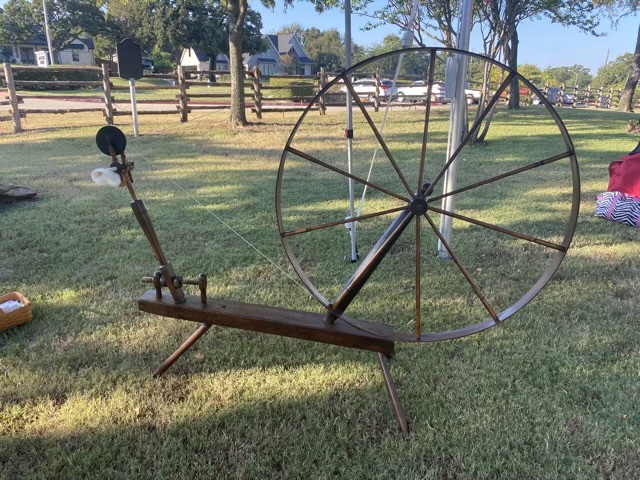
Photo description: double nut New England Great Wheel dated to the 1860s and brought outside to demonstrate spinning for Founder’s Day in Mansfield Texas

The wheel is older than the house she lives in (any item that is 165 years old deserves a pronoun upgrade, in my opinion.) The wheel was used to spin cotton, which was a primary staple in Texas at the time. She was in a private collection for many years, but was placed in the Man House as an honorarium to her former spinner. It is an appropriate placement historically and a valuable display for visitors to see this wonderful piece of human-powered engineering. I was the first to spin on the wheel for ten years, if I have my stories straight, and it was a joy. I did spend an equal amount of time spinning, adjusting the wheel with field-expedient fixes, and talking about the wheel. I took with me Texas Coop cotton sliver and spun two cops of yarn over six hours.

I like to keep these posts relatively short for this blog, so I’m going to spread the deep dive into my spinning experience out over several days!

Great wheel

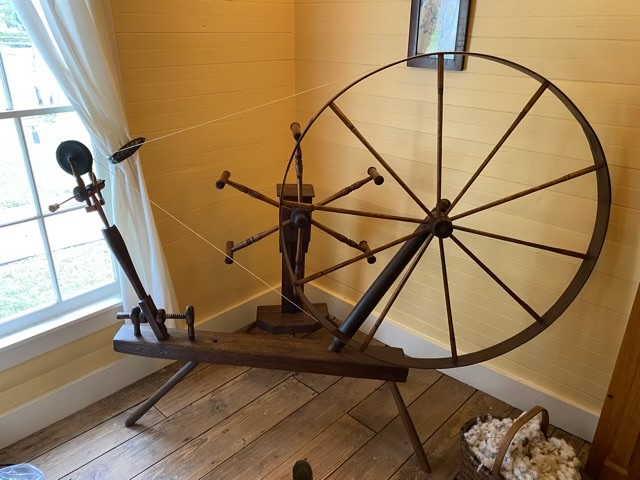
Photo description: 1800s Great Wheel at Man House in Mansfield, TX, yarn weasel in back corner, basket of raw cotton (bottom right)

Y’all, I get to demonstrate spinning on a great wheel, also known as a walking wheel, in October. I recently took a drive out to meet the wheel and see if I could spin with her. We are compatible. I took some Teeswater wool roving to give her a spin, and she has been kept in good working order. There is a little slip in her drive band, but I have permission from the museum to use beeswax if necessary. She has an accelerator head, so was probably used mostly to spin cotton, especially since they were growing cotton in that area in the 1800s. I will take two kinds of local grown cotton sliver to spin in the demonstration. I’m so excited.

Photo description: close up of the spindle head showing the cotton drive bands, accelerator head, and spindle with 15 minutes worth of spun Teeswater wool, and a cork on the spindle tip for safety

The wheel is potentially 200 years old, or at least approaching her 200th birthday. It is a humbling experience and an honor to spin with her.

Phone pouch

I made an experimental pouch for my phone for when I’m wearing pants with inadequate pockets. It strings onto a belt, has quilted sides and an open top. I made it with two pieces of quilting fabric and polyester batting using my model 66 Singer Treadle machine, including the quilting.

Photo description: quilted phone case with golden ivy on a cream background sitting on the table with of a Singer treadle sewing machine from 1916

I like that I made the pocket for the belt with the seam in the back. I like that it is quilted. I’m not sure how I feel that is it open on top. So far I haven’t dropped the phone out of the pouch, but it would ease my mind if there were a small retention flap in there somehow. Hm. I shall contemplate… I think I have an idea. I’ll make another test case.

Three ways

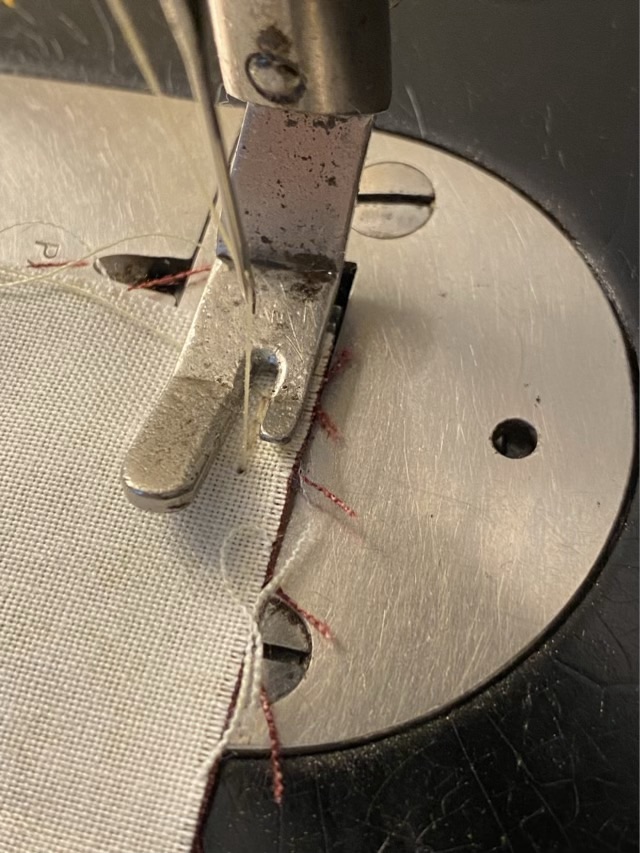
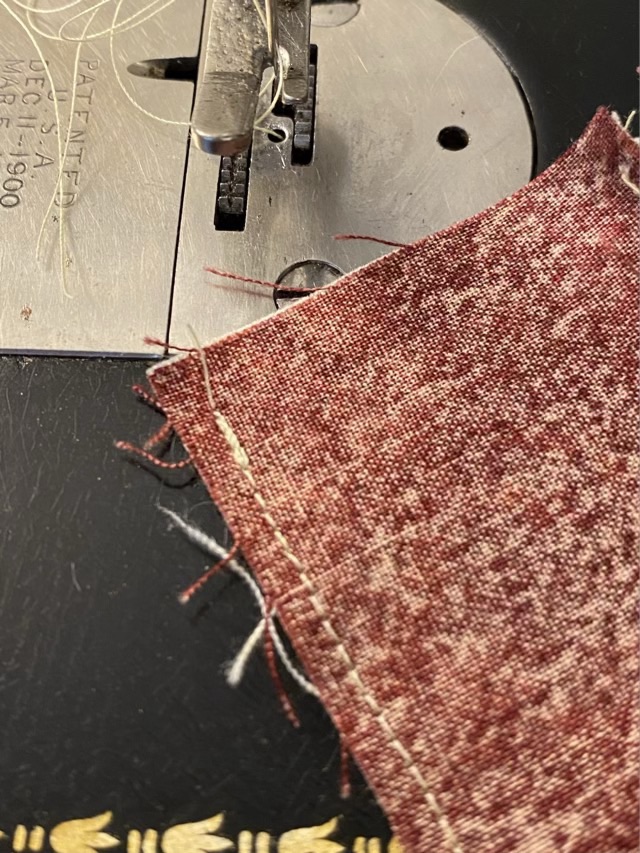
I recently learned another method for securing the start and end of a seam on a treadle sewing machine with no reverse. With this method, you make a few stitches, lift the foot, move the material to the beginning, and stitch over the first stitches.

Photo description: sewing machine foot moved back to the beginning of a seam after a few stitches
Photo description: seam sewn on a Singer model 66 treadle machine using the lift and restitch method to secure the start of the seam

This trick joins my bag with two other methods. There is the turn-the-whole-fabric way, where you turn the fabric 180 degrees around the needle in the down position, put the foot down, sew a few stitches, then plant the needle, lift the foot and turn the fabric back to the original position, lower the foot and keep sewing. Also there is the tiny stitch method, where the stitch length is set to near zero to start and end a seam, but lengthened in the middle. All three methods work well to make it harder for the stitches to pull out.

On more modern machines there is a reverse button that allows the sewing machine to stitch backwards. Treadling an antique machine backwards will at best break the thread, or worse, make a tangled mess of your bobbin.

Antique spinning mule bobbin

Harrisville Designs in New Hampshire has moved their machines back to the original factory floor in town, to strengthen the ties to the community, switch to renewable energy, and return the historic buildings to their original purpose. To celebrate, they offered customers a piece of history, an antique spinning mule bobbin, if you purchased a skein of yarn. I ordered yarn.

Antique maple spinning mule bobbin and new silk and wool yarn from Harrisville Designs

A spinning mule is a machine used to spin yarn on multiple bobbins as once. (Here is a place to get started on more information.) It drastically improved the amount of yarn that could be spun at one time and replaced the spinning wheel as the main production of yarn in the 1700s. This bobbin is between 50 and 100 years old. Fascinating. I can’t collect many antiques, I just don’t have the room, but this is small and will go with my hand spindles.