Today I present some photos of plants around the house, inside and outside, and the reason they are unusual enough to warrant a picture.

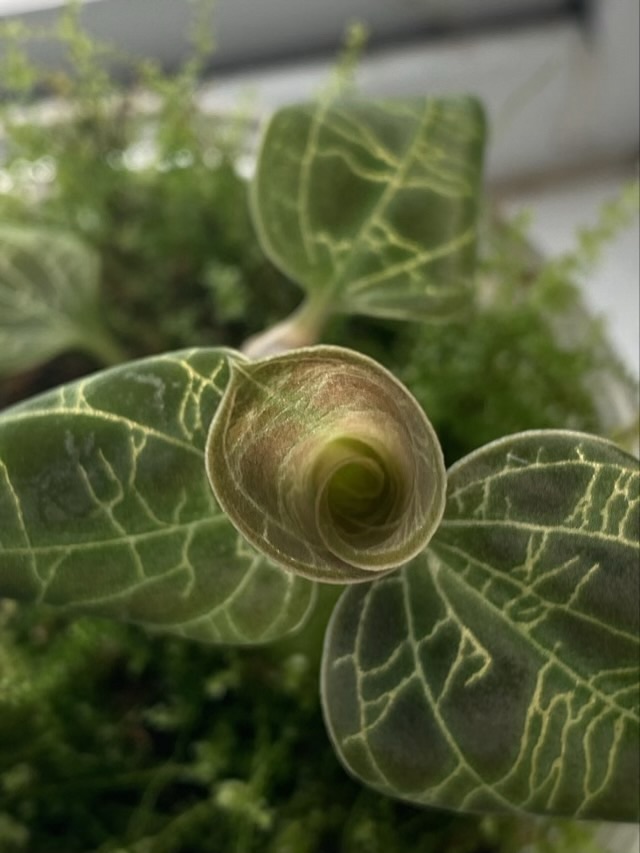


Today I present some photos of plants around the house, inside and outside, and the reason they are unusual enough to warrant a picture.
I needed a stand for poster boards with lyrics printed for my chorus. We are changing a few lyrics of standard songs for a Halloween show, and we don’t need to commit them to memory. I love making frames from PVC pipe because they are light, easy to assemble and disassemble, and relatively inexpensive. I was out of PVC elbows at home, but I did have a ladder ball game, full of elbows, connectors, and tubes.
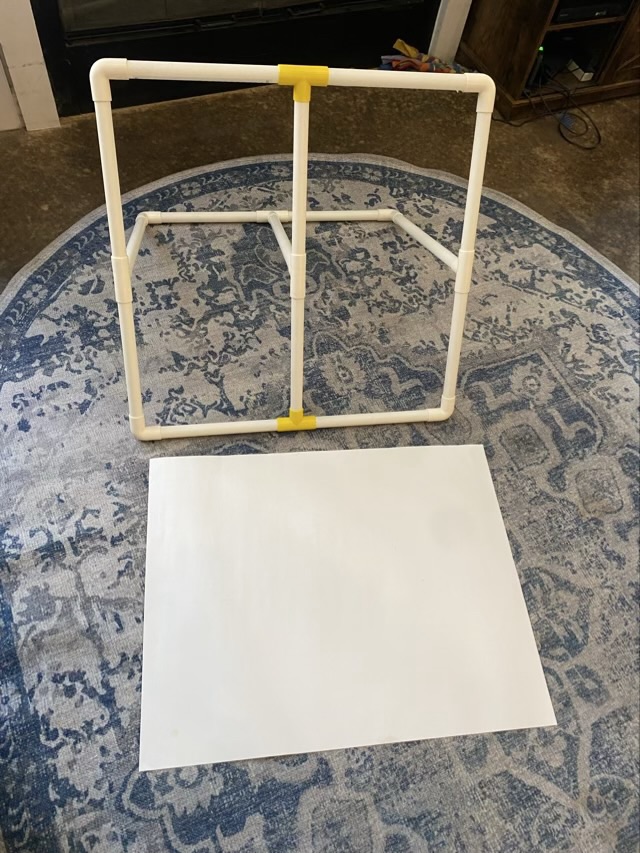
The stand has two positions, a vertical display, or turned 90 degrees, a slanted surface. It is just smaller than the poster board, so the edges of the signs are supported. To hang the poster board, I punched two holes at the top and used book rings to connect several sheets. One sheet always has to be on the back as counterweight, then the assembly hangs over the top bar of the stand.
In April I gathered some iris leaves and let them dry inside on a drying rack.
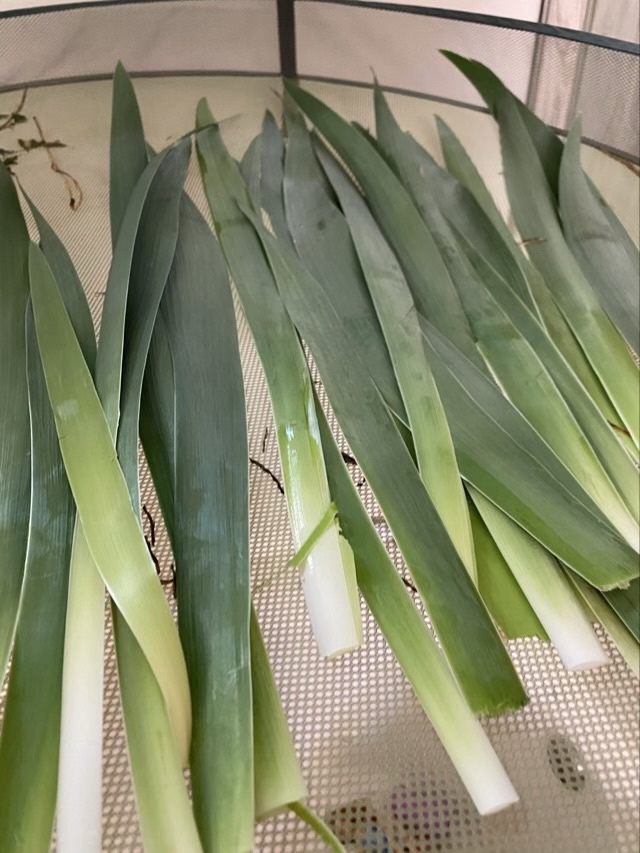
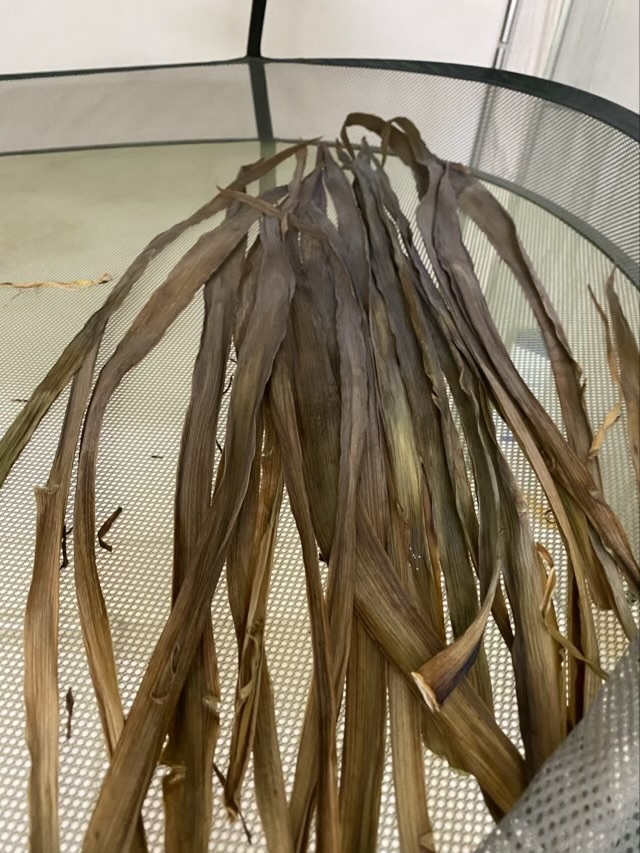
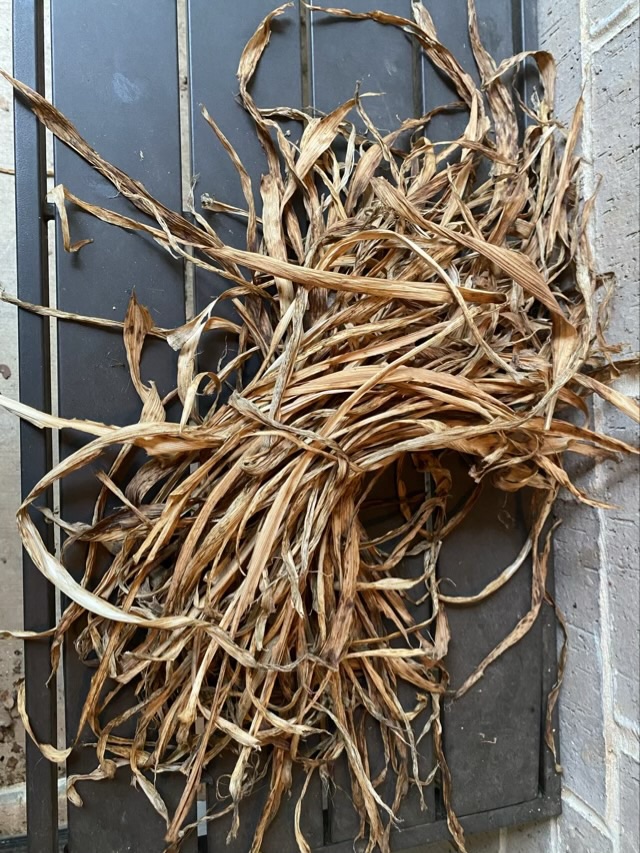
I was surprised at the color difference between iris leaves dried inside, and those left to dry outside. The inside leaves are so much darker, but the color is more uniform. The outside dried leaves are more golden, but with streaks of black. What isn’t surprising is the grasshopper bites on the leaves left outside on the plant. There isn’t much grasshopper activity in April, but as the summer rolls through, and most of the other greenery turns brown, the grasshoppers go after the iris.
The next step is to see if there are any differences in how the leaves weave up.
I started a twined loop-and-twist bag from a flax kit from Sally Pointer, historical educator. With the flax strick from the kit, I drew the fibers from the middle, which created horrible tangles of tow flax at the ends. (Tow flax is shorter lengths of flax, line flax can have strands over three feet.) When I ran out of long line flax, I attempted to continue with combed tow flax, which is doable, but I really like twining with long line flax, so I ordered another strick from a local company. I was smarter with this bundle of flax fibers, and actually read the flax passages in “the Practical Spinner’s Guide” book series. I separated out a section of the new flax, and put the rest aside.
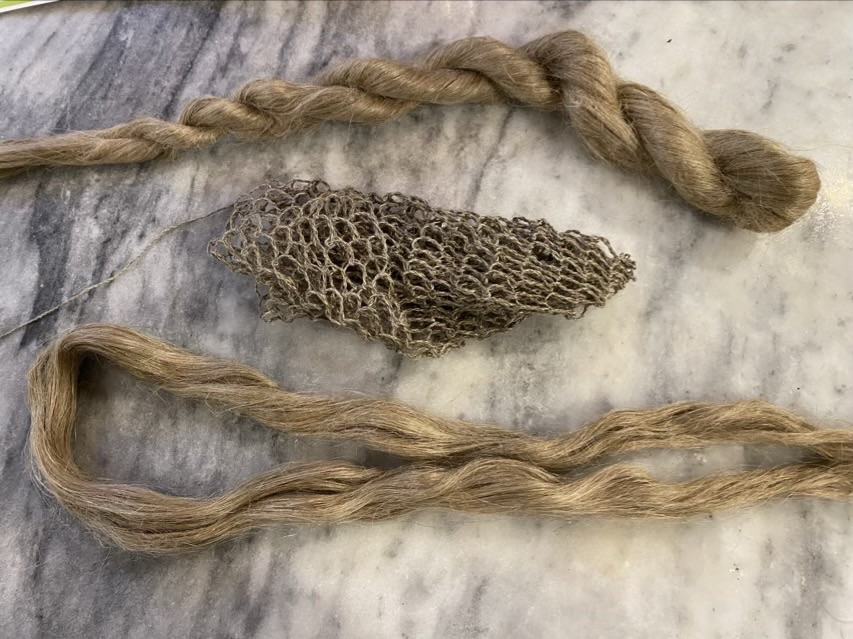
There are several methods of dressing flax to reduce tangles when spinning or twining, I chose to tie a ribbon around and drape the section over my shoulder. I sit on a high backed chair when I twine, so I can keep tension on the fibers by leaning back.

I’d like the bag to be big enough to hold a pound of wool or so. The expansion capabilities of the loop-and-twist bag are quite extraordinary.
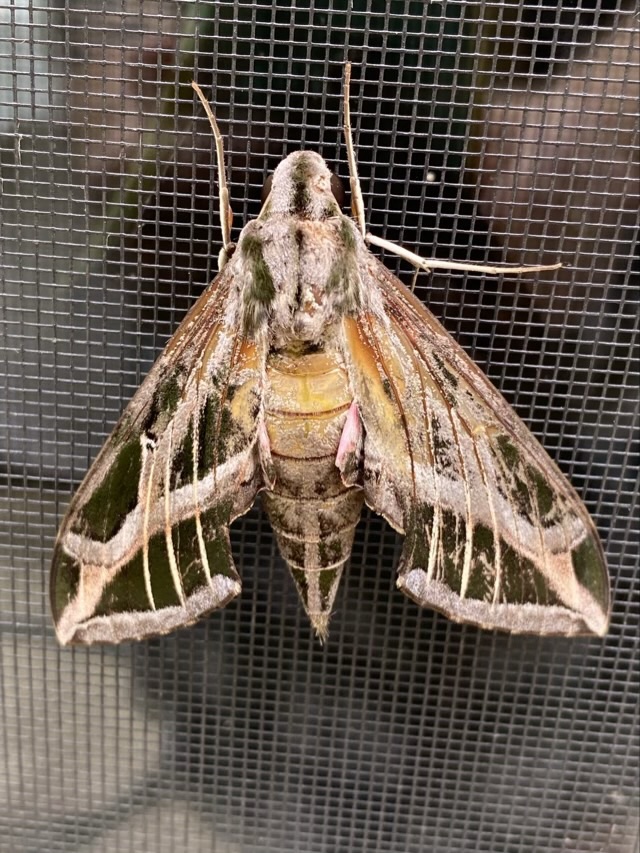
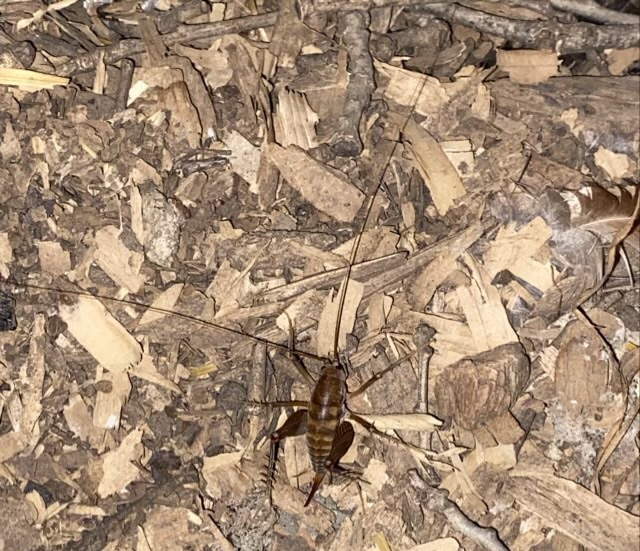
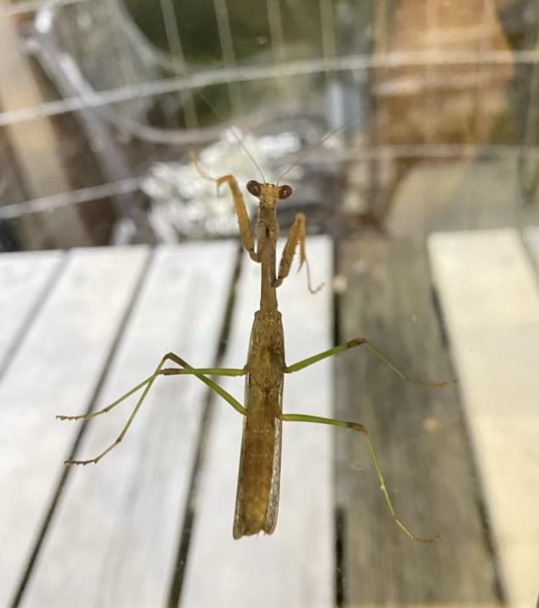
This fall is giving us the opportunity to observe some rather large insects.