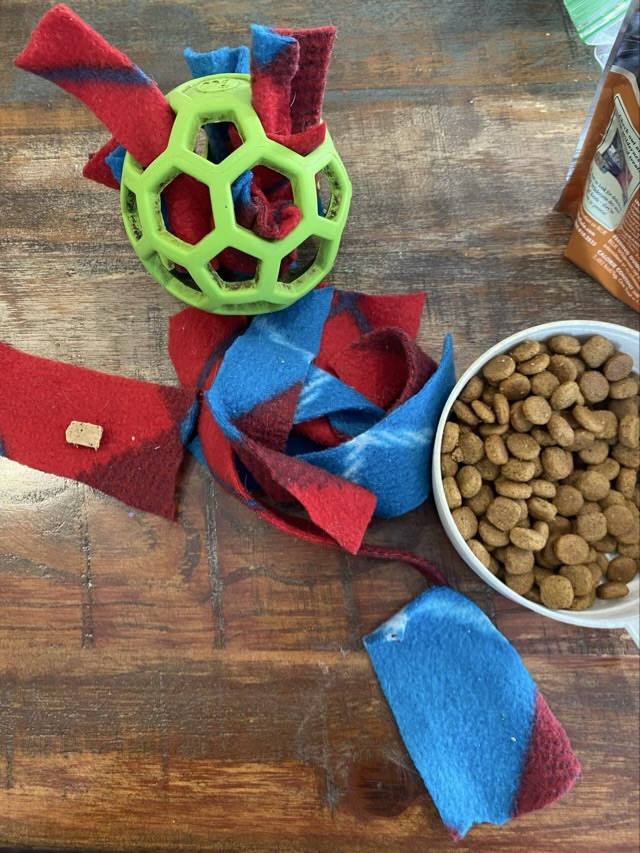
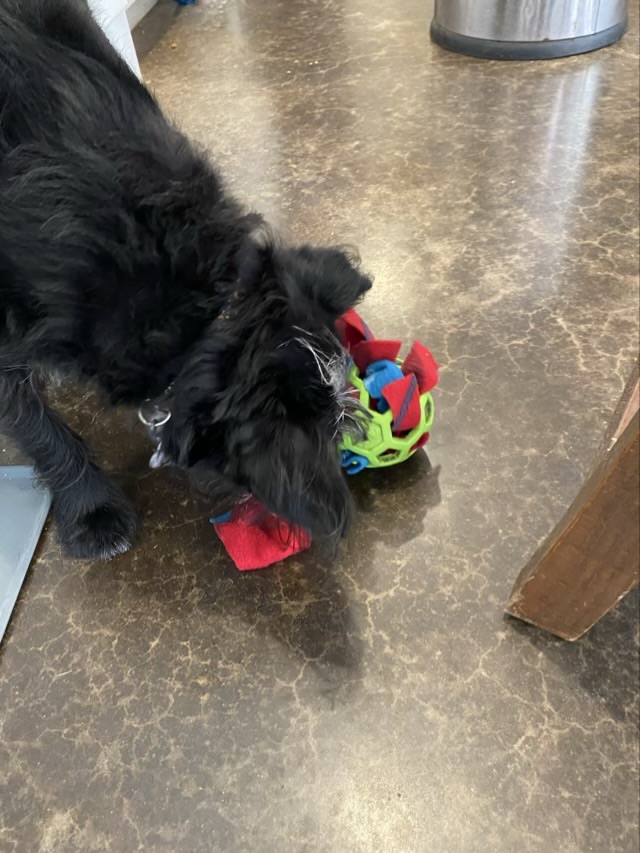
This is the other puzzle my sister introduced while she was visiting: a stuffed ball. She cut small strips of fleece, put a bit of kibble in each, and stuffed it into Missy the dog’s holey roller ball.
Photo description: dog kibble, pieces of blue and red fleece and a green holey roller ball dog toy partially stuffed with fleecePhoto description: Missy the dog taking out the fleece from the ball
I’ve been alternating food puzzles at breakfast time. If I use just one, she isn’t motivated and doesn’t attempt it.
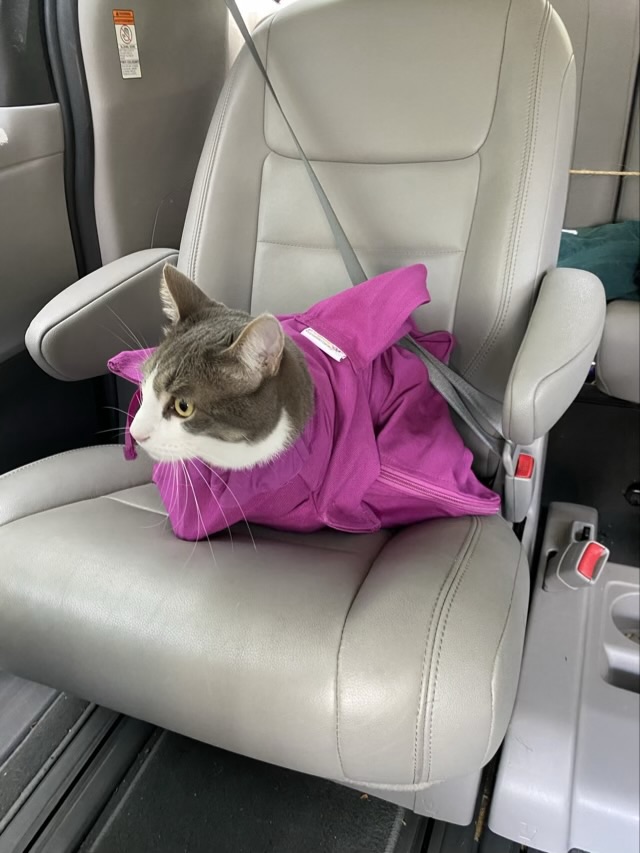
I have high praise for the “Cat in a Bag” cat carrier. My big boy Thor, the gray tabby, went all popcorn Yoda last year when I put him in a traditional cat carrier for his annual vet appointment. So this year I tried the “Cat in a Bag” carrier (size large). I had a little trouble zipping him in because he is a large boy, but other than making sure I wasn’t zipping body parts, getting him in and the neck fastened wasn’t difficult or traumatic. He was apprehensive about going to the car, and once in the car I used the seat belt to secure the carrier through the provided loop. He made one lunge, didn’t go anywhere, and didn’t try to lunge again. I did have to move the seat up to give him scritches, and my youngest sat in the back seat next to him to offer comfort.
Photo description: large gray tabby in a mauve colored “Cat in a Bag” carrier strapped into the back seat of a Toyota Sienna mini van
The vet thought the bag was fantastic. He was able to listen to Thor’s heart and lungs through the bag, and only had to unzip it a little to do the examination and vaccinations. Thor kept his head tucked into the crook of my arm to hide from all the scary stuff, but didn’t have a full freak out. We confirmed his big boy status: 18 pounds.
Photo description: same cat a little more wide-eyed, same bag, same seat, on the way home from the vet
Going home was also easy. I got Thor inside and took him back to his favorite closet, fully expecting him to hide from me when he was released from the bag, but he didn’t. He followed me around for a few hours, then went back to him normal routine. Two thumbs up and four paws safely tucked away in praise of this product.
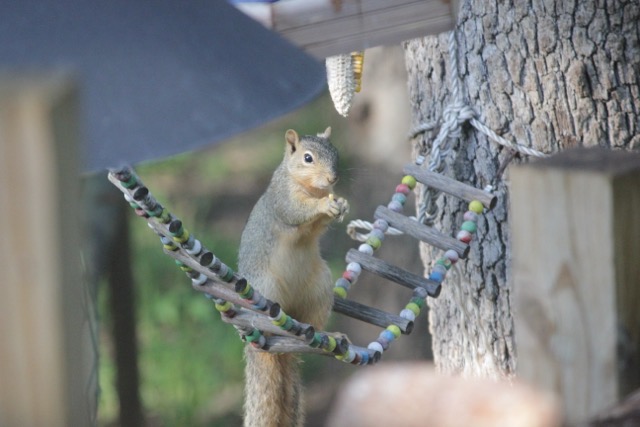
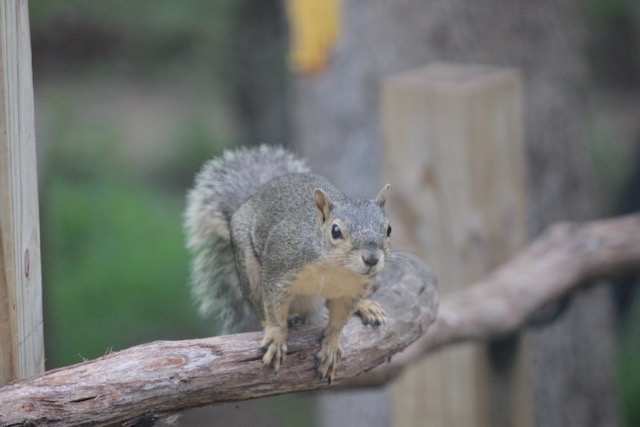
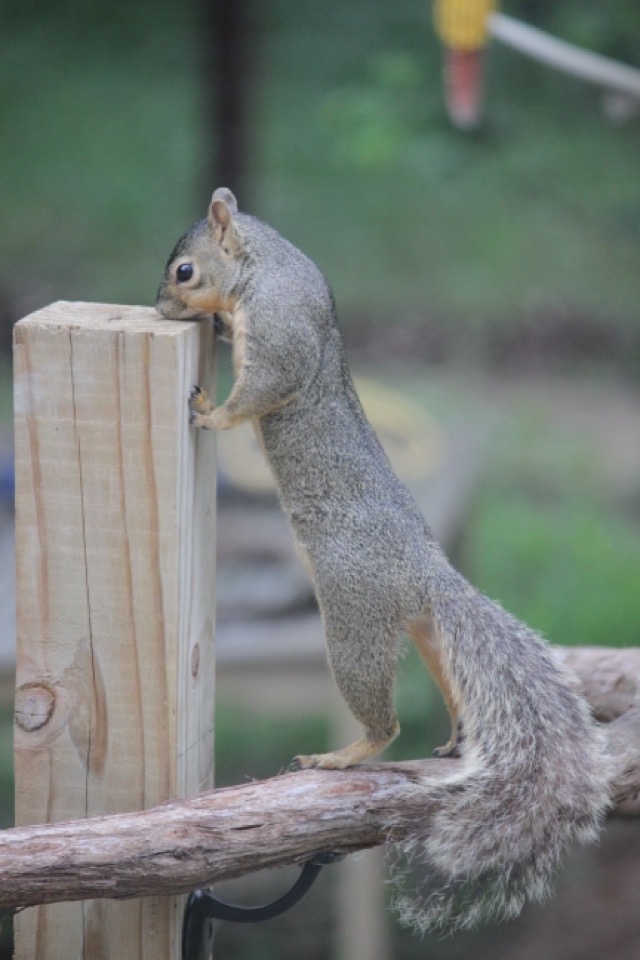
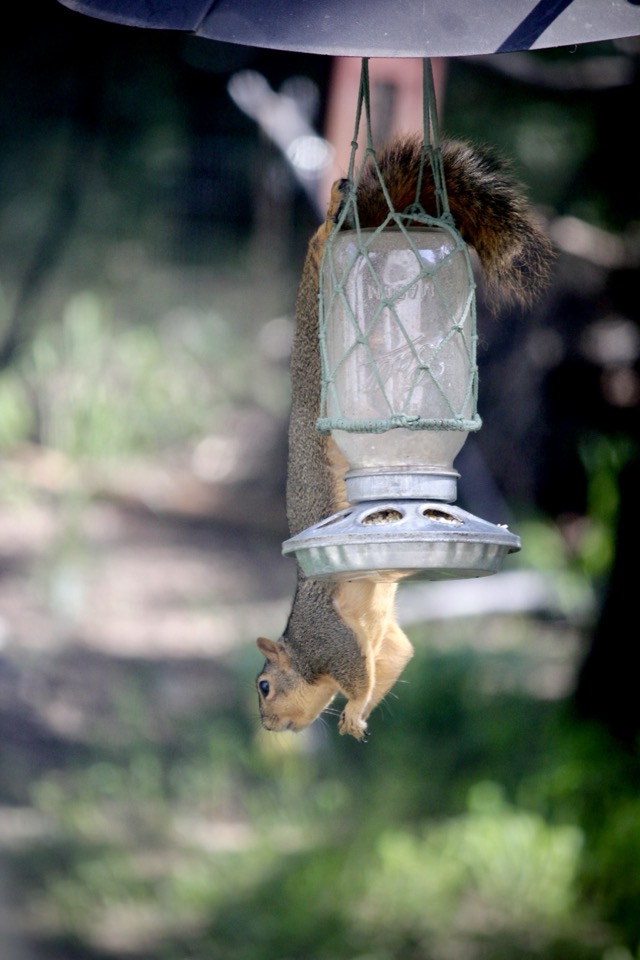
Today I present a photo dump full of squirrels. These are all taken from my breakfast table, looking out to the back yard over the last couple of months.
Photo description: squirrel standing on a bird ladder eating cornPhoto description: squirrel telling me that the corn is out and demanding to speak to a managerPhoto description: squirrel standing on the grape vine rail and looking at the top of a post for peanuts Photo description: young squirrel using the deer antler screwed to the tree as a perch for eating cornPhoto description: squirrel hanging from a repurposed chick feeder eating bird seed
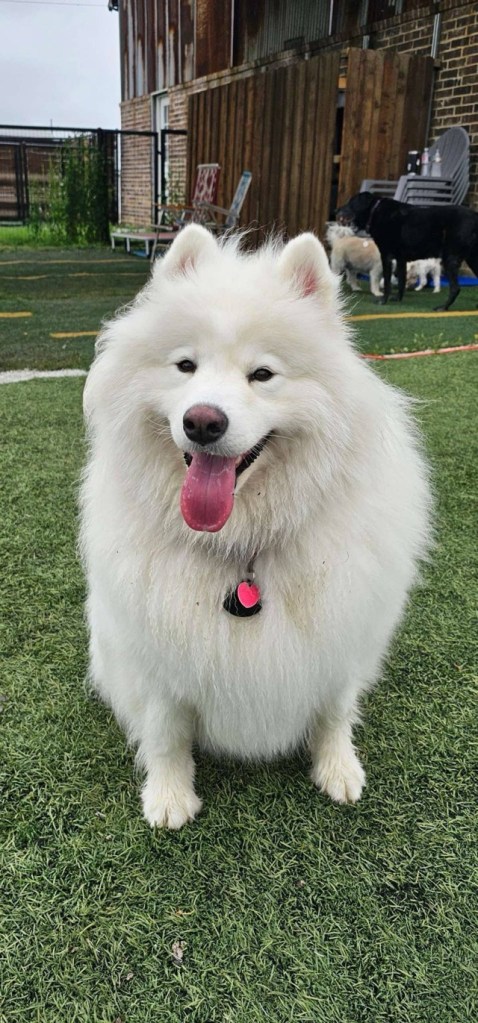
In May I received a mysterious fiber package. There was a tickle in the back of my brain, a shadow of a memory from the previous summer, when I talked with a woman who said her dog’s fur looked just like the Shetland sheep roving I was using for a spinning demonstration. She said she would send me some dog fur, and I gave her my address. I reached out to confirm, and yes! My mysterious package did contain the results of numerous brushings of her Samoyed dog, Sugar.
Photo description: Ziplock gallon bag full of Samoyed dog furPhoto description: Sugar the Samoyed photo from her owner
Samoyed dogs have a thick double coat that is usually white and naturally dirt repellant with very little smell. The fiber was very clean, and did not have much VM (vegetable matter), so I decided to comb and spin it straight from the bag, without washing or scouring. The staple length of the undercoat wool is about 2-3 inches, but the guard hairs can be much longer, I measured one guard hair at 9 inches long. I did not attempt to de-hair the wool.
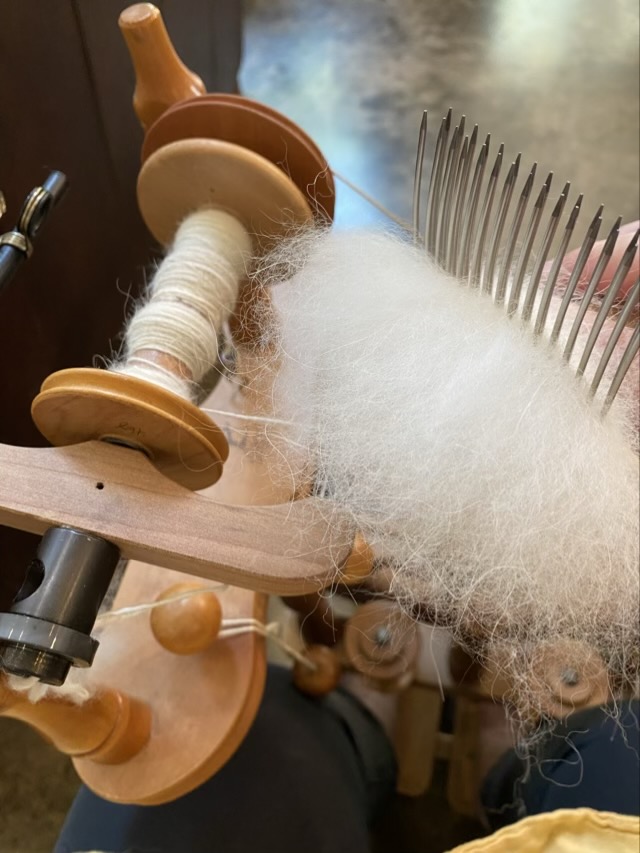
Photo description: using wool combs to align the fibers for spinning on my Ashford Traveller spinning wheelPhoto description: Missy the dog is very interested in the smell of the dog wool, she can smell what I cannot!
The Samoyed wool was very easy to spin, and I was able to get a relatively consistent single. Combing produces more waste than carding, but the results are worth it. The waste fiber goes outside for the birds and squirrels as nesting material.
Photo description: single spun Samoyed dog wool
I chose to chain ply my singles to make a three ply yarn. The Samoyed wool also performed well in plying and I didn’t have any breakage.
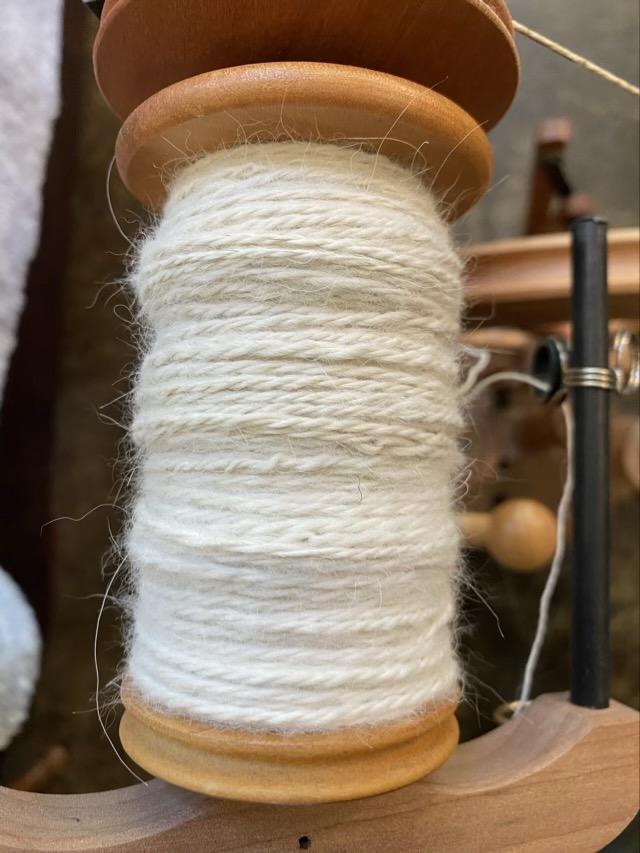
Photo description: Samoyed dog wool three-ply yarn on the spinning wheel bobbin
I’m going to give the three ply yarn a gentle wash and hang it up to dry!
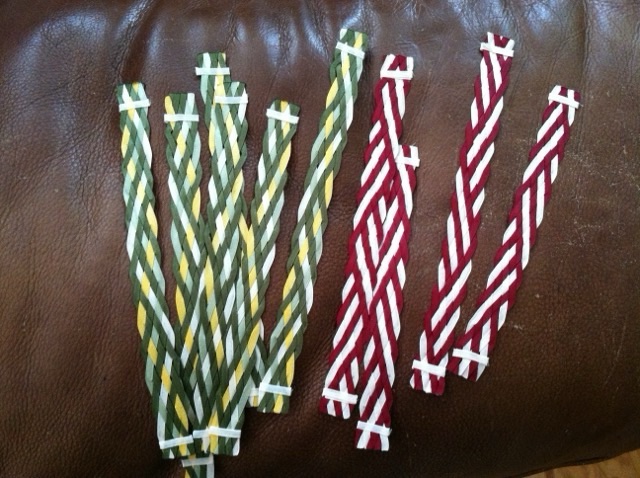
Here is a great throwback for Thursday! I used to make so many of these braided bookmarks. This picture is from December of 2014, and I love the way the red and white book marks have a secondary pattern effect.
Photo description: six green and yellow braided bookmarks, and four red and white
I make these with 1/4” flat ribbon and usually braid a long length, then iron the long ribbon before applying more ribbon as a band with some white glue and cutting sections a good bookmark length, usually about 8”. The trick to these is that the ribbon is never folded as I braid. The seven-strand plait stays flat and the bias weave of the ribbon lets it lay in smooth curves.
It is a fun braiding project, and inexpensive. Materials needed are: 1/4” satin ribbon, scissors, white glue, parchment paper (to protect the ribbon while ironing), and an iron.






 Critters and Craft