Cosplay

My eldest and I collaborated on a little cosplay project. She needed a crown for an English project (they are reading Julius Caesar by Shakespeare), but wanted to do the diamond circlet from Zelda Breath of the Wild so she could use it again at Halloween. She did not want to do it all in wire and have it get caught in her hair, so we raided the craft room for parts. We found non-woven colored fabric that I originally purchased to make mask filters. Surprisingly, this stuff does not take glue well. We ended up layering Modge Podge with leaf cutouts with a wire in the middle of the sandwich, and leaving it to dry on wax paper; when dry it held together and we could trim the extra dried glue.
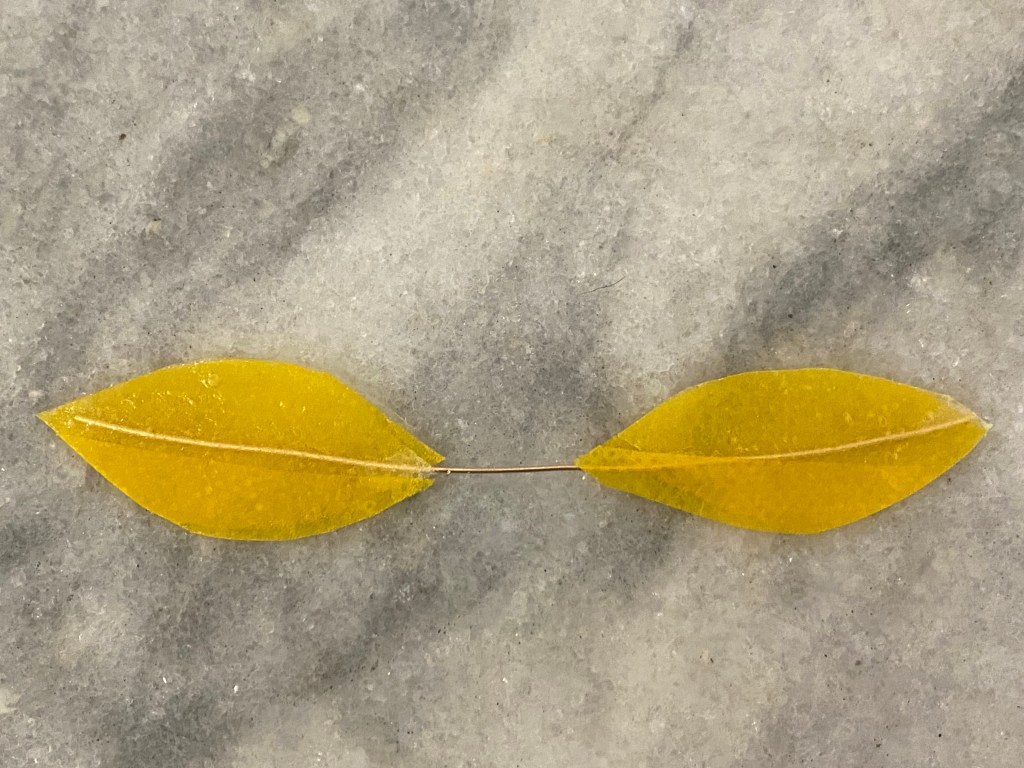
Leaf set made of wire, non-woven fabric, and lots of Modge Podge

I did order clear tear drop rhinestones, but the frames are made of yellow Playdoh because it dries hard after a couple days. The “berries” are wood beads (that were in my stash) painted with yellow acrylic paint. It makes painting beads easier if you put them on a wooden skewer first, by the way. The crown is gold colored aluminum wire (yup, from the stash). I did use the crafter’s panacea, hot glue, very sparingly (so as to not catch hair) to keep everything in place.
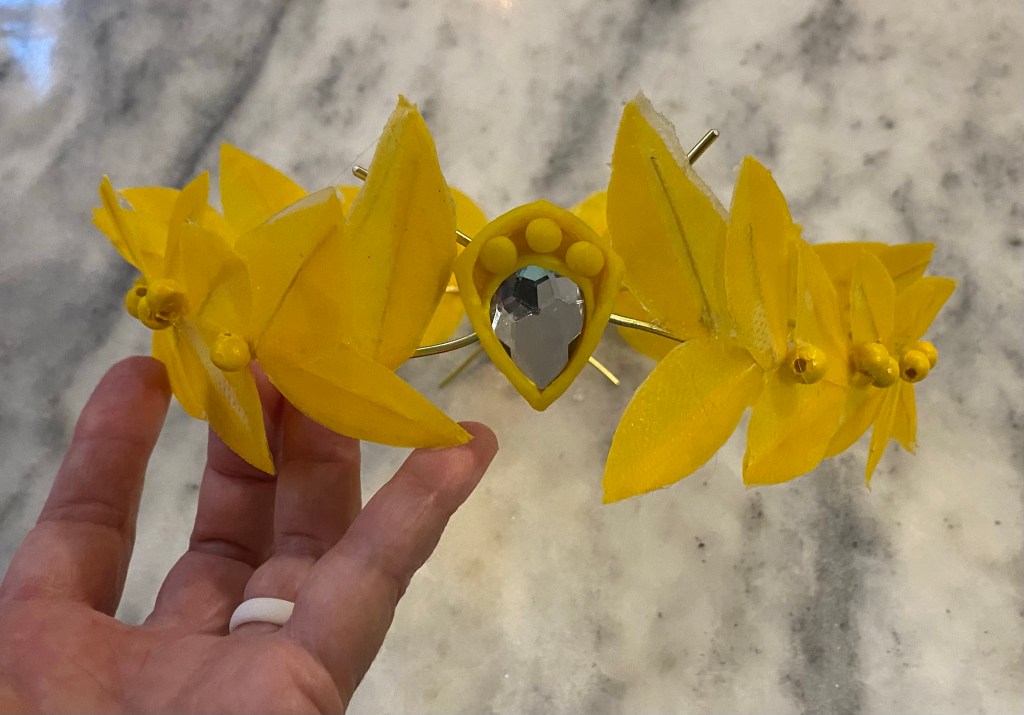
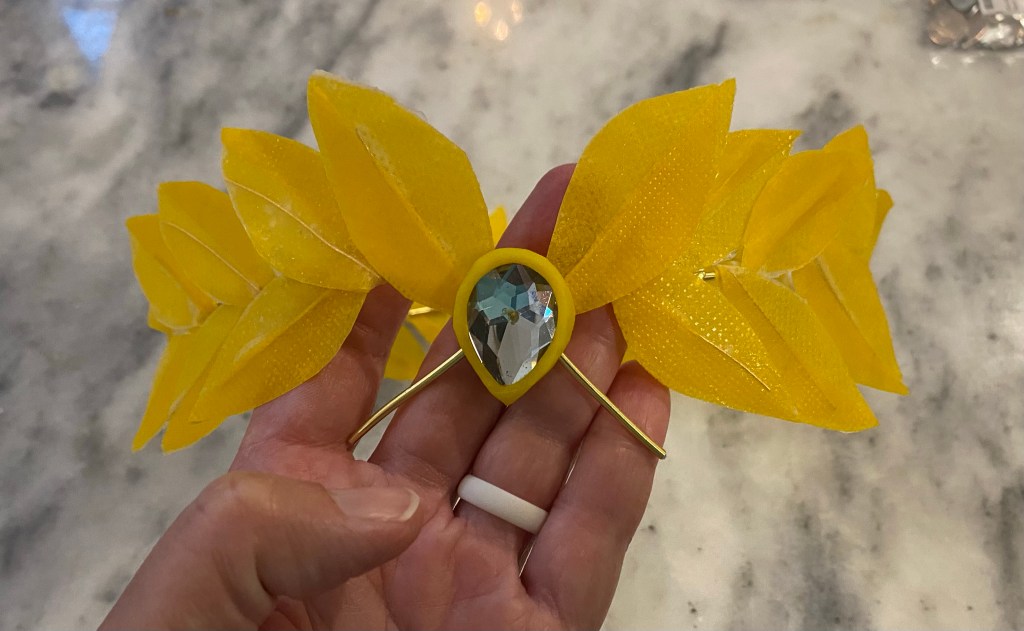
Front of crown
Back of crown

Not a perfect replica, but it is light and easy to wear.
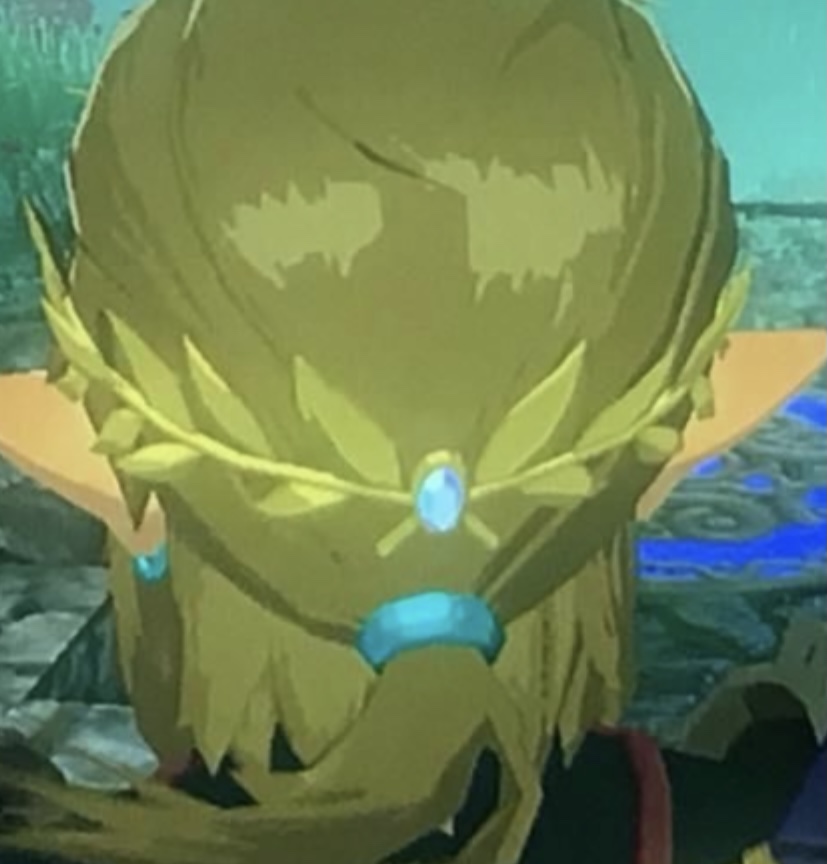
Screen shot of the back of the real circlet from the game

97 eggs

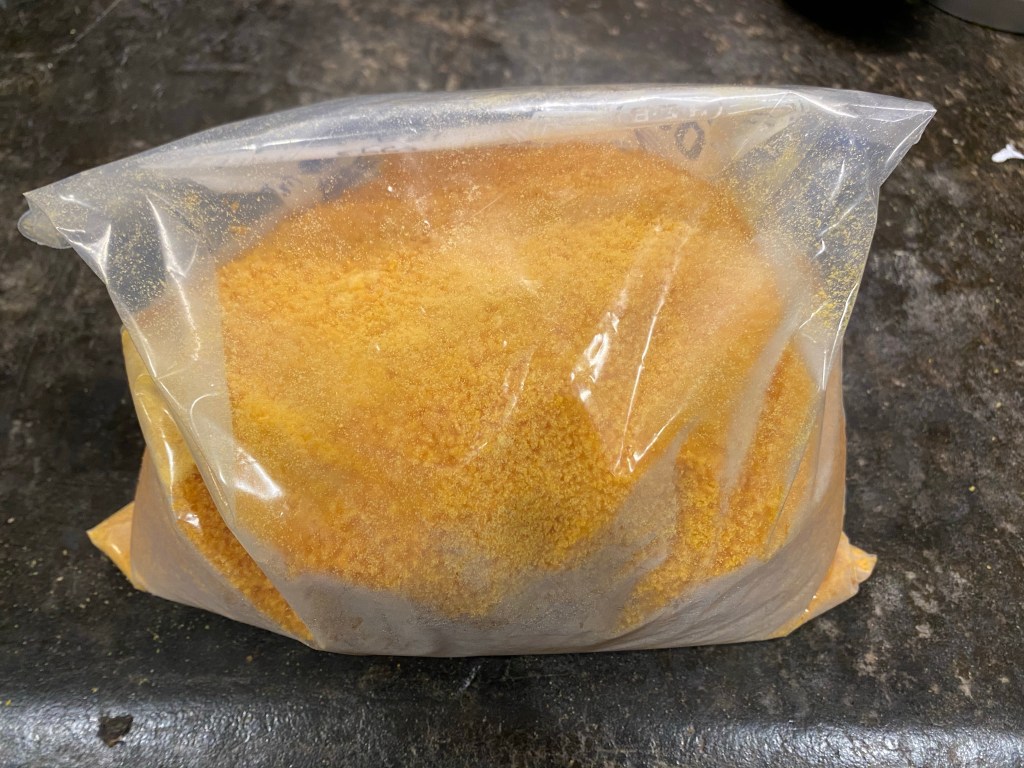
97 dehydrated and powdered eggs

So I can fit 100 eggs into a gallon bag. If they are dehydrated and powdered first! I follow the Dirty Gourmet’s instructions on dehydrating eggs, which works really well. Now to start a new bag and see if I can store enough to make it through the next molt and winter without buying eggs.

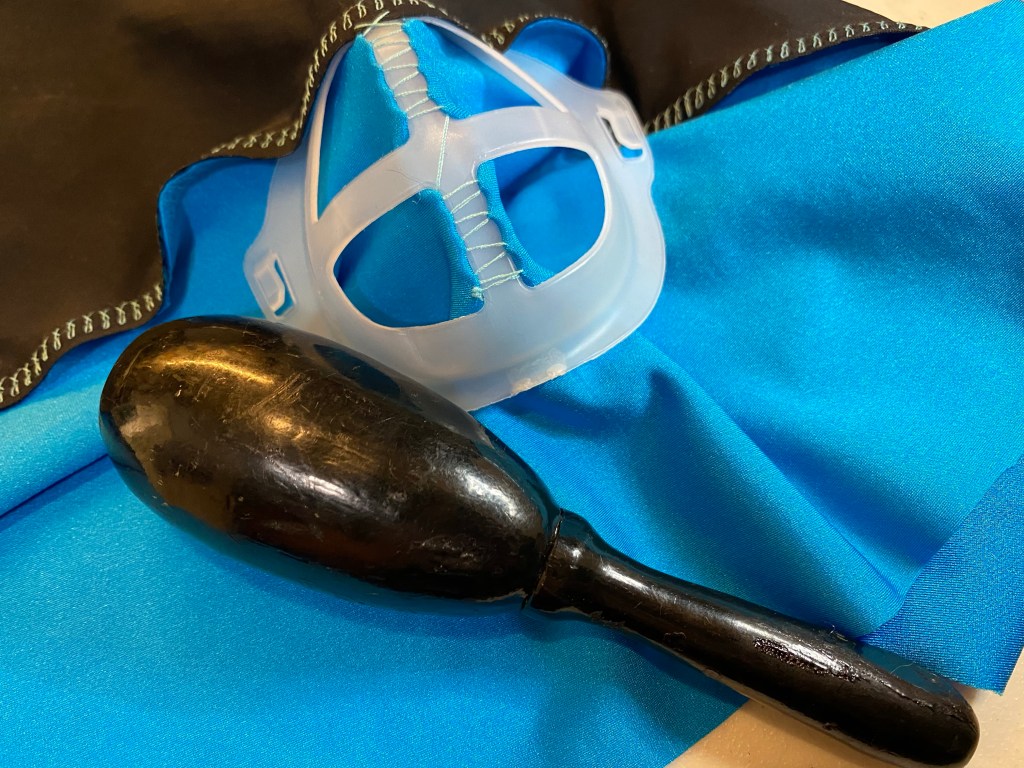
Darning egg

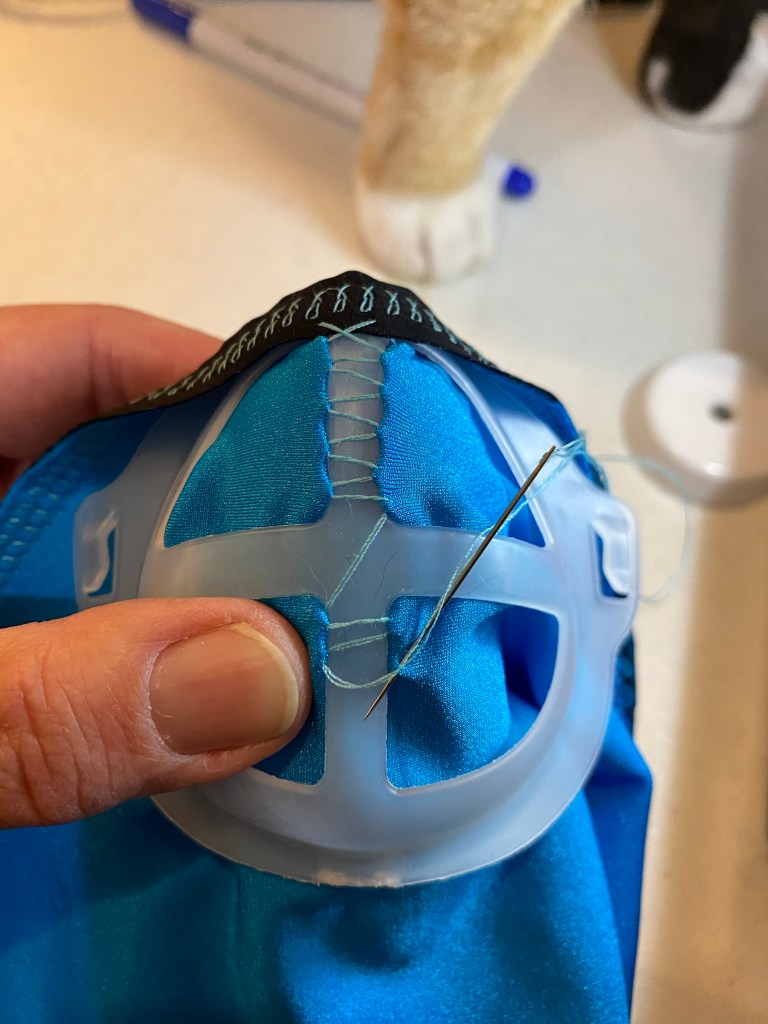
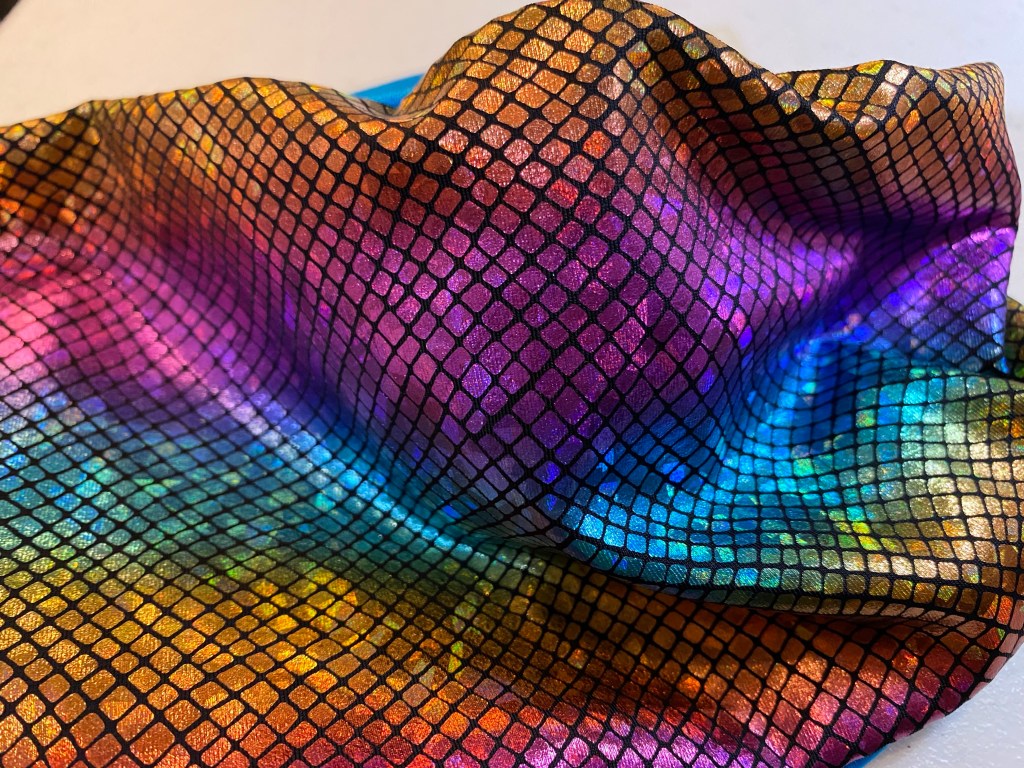
I have an ancient (probably vintage, possible antique, not ancient, but it has been handed down a few times) darning egg with a handle that sits in the bottom of my sewing box. I am making my youngest a new set of masks since she has grown and the old ones are getting a bit snug. She likes the gaiter style, but with a frame sewn in to make it easier to breathe. I use swim material because it dries quickly, and I double layer it. This time she requested material that was “pink and blue”, she is quite fond of the rainbow mermaid fabric I obtained! Because I didn’t want rainbow sparkles against her skin, I made the lining with plain blue fabric.

Sewing the frame to the lining fabric

Here is where the darning egg comes in. Sewing the frame to the fabric is a bit tricky, but the smooth wooden tool fits nicely under the fabric and frame and makes it much easier to stitch. First I use the sewing machine with a jersey stitch to secure the top edge, then I hand sew in in the frame before machine sewing the bottom edge. I turn the mask right side out and sew the back seam.

Darning egg with handle
Shiny rainbow mermaid fabric

Indian Blanket flowers

Our meadow is bursting with Indian Blanket flowers, hurray! I love these colors and that they are doing so well, as some of the other wild flowers have put on a poor showing in competing with the grass.

Indian Blanket flowers in our meadow

Read carefully

Oh for crying in the mud. Sometimes, when following instructions and the product is just not coming out right, it is worth it to step back, walk away, and come back to it another day. That happened to me with the 8-strand plait bread. For my last loaf I abandoned the idea of eight strands and went with four. I tried again, this time armed first with eight strands of paracord. When step 6 says to repeat steps 2-5, but you repeat 1-5, things are bound to get wonky. With paracord (or any other rope), you can undo and try again much easier than with dough. After a few attempts, then some more practice, I was ready to give it a go in dough.

Eight-stand plait loaf (still needs practice, but I’m getting there!)

For my next attempt I think I need to stretch the strands out more at the beginning and as I go to get a longer, thinner loaf (more crust, yum!) I’m still following Paul Hollywood’s recipe.