I think when someone next asks me what I do when the kids are at school, I’m going to tell them that I open doors. It sounds like I’m a mover and a shaker, smoothing the way for grandiose projects and big dreams.
Sophie the cat waiting for her door to openWhen knocking at the front door doesn’t work, Sophie goes to the back “door”
But what it really means is that I let the dogs out and the cat in like I’m a remote controlled revolving door. How many times do y’all really need to go out then come back in? Seriously, I must have “push” printed on my forehead and “pull” on my … leg.
I pulled some scoured mohair from my stash that I prepped a few years ago. This is hair from Rutabaga, an Angora goat, and came from her first shearing. My intention is to spin it up for another fiber log page.
From left to right: yarn spun from brushed fiber, yarn spun from carded fiber, yarn spun from combed fiber
The fibers condensed some in storage, and at the time I didn’t have carders, so had used a cat brush to align the fibers. I tried spinning from the sections straight from the bag, but the pull was uneven and my yarn inconsistent. So I carded some with hand carders, which made spinning easier but I lost some of the shine. I don’t have wool combs, but found some undercoat rakes designed for dogs. I am able to comb small amounts of fiber inefficiently, but I can comb them, which makes the fibers parallel and removes the noils and shorter fibers. The combed sections are much easier to spin and have more shine when spun.
The next step is to obtain actual wool combs, which have longer tines to process more fiber. Properly made wool combs are an investment. Yes, there are DIY versions out there using finish nails, but those nails aren’t mirror finished or very long. As I think about how I would construct combs, hardening and mirror finishing the metal tines seems the most intensive part. Then setting the tine into a comfortable handle in such a way that they don’t work loose under the work load is the next challenge. I am thinking that the combs, although expensive, are not unreasonably so.
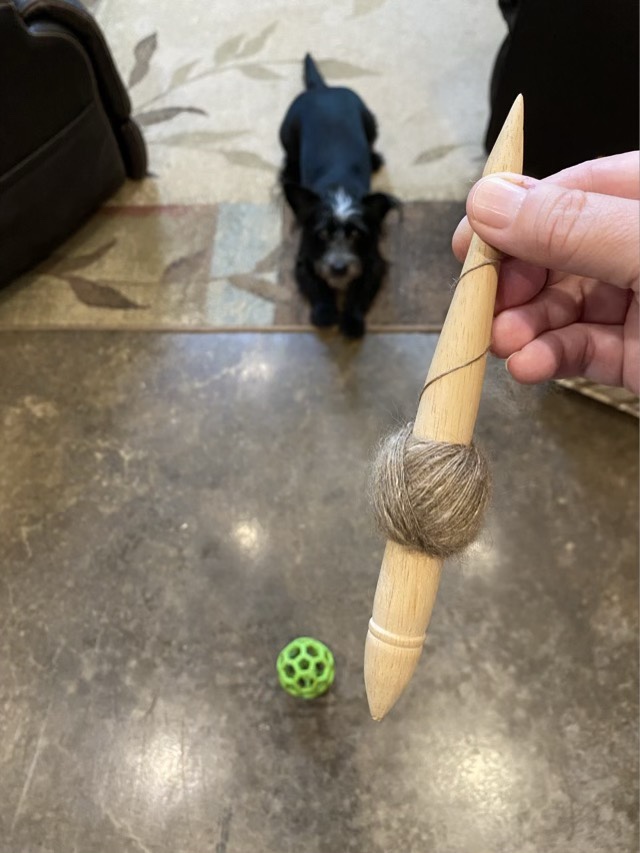
Missy the dog’s hearing is astounding. I picked up a wooden spindle, gave it a spin, and she woke up from sound nap in the other room and came running with her ball. The spindle spinning is not a loud sound, but the tiniest of gentle whirs. Those ears.
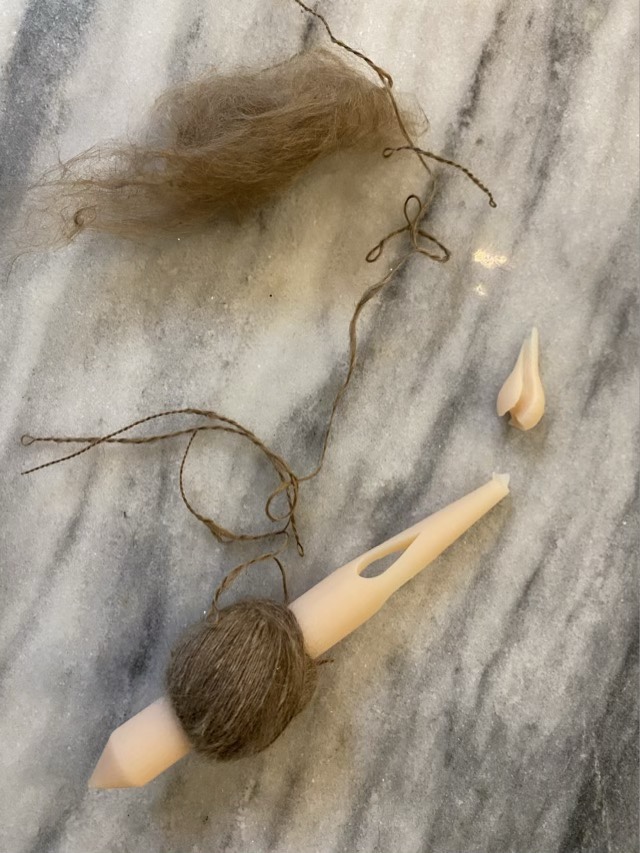
I have been giving my 3D printed spindle a more rigorous testing by using it as a drop spindle. I rather expected a sudden drop might be detrimental, so although it was a shock when I dropped it on the concrete floor and the head broke off, I was not really surprised.
Broken 3D printed spindle (my second design)
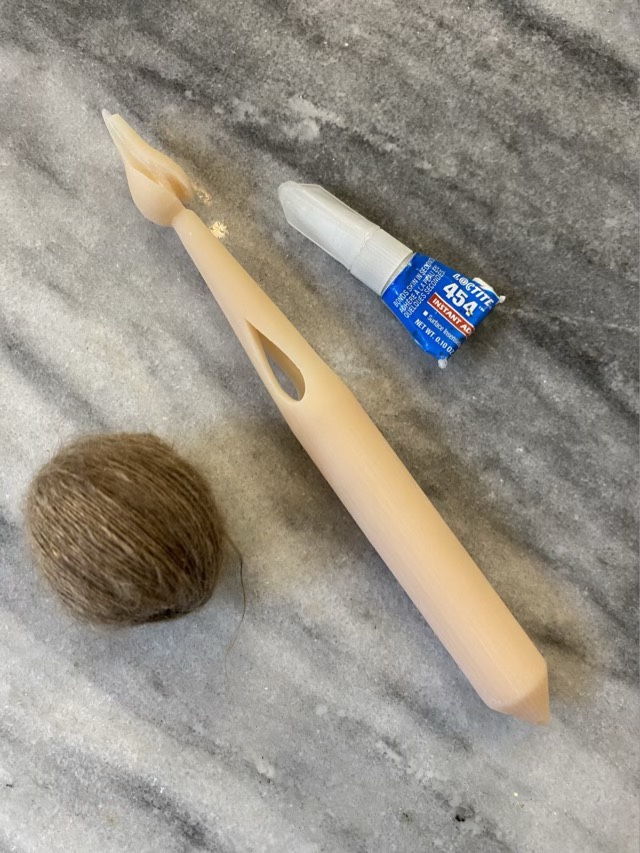
I used Loctite 454 to reattach the head, which worked very well. I couldn’t find one of the top tines, but it will still function as a supported spindle (much less chance of a distance drop).
I guess this melon couldn’t decide on which side of the fence it wanted to hang, so is now wedged in the middle. I had to bend the wire on both sides to free it. (I chose to have it outside the fence because it was less likely to become dog food there. Griffin likes ripe melon.)
Freed melon with wire indentation
There are currently about 10 melons developing on the vines I planted at the beginning of Spring. This is the second round of set melons for these vines. The pollinators have been busy!