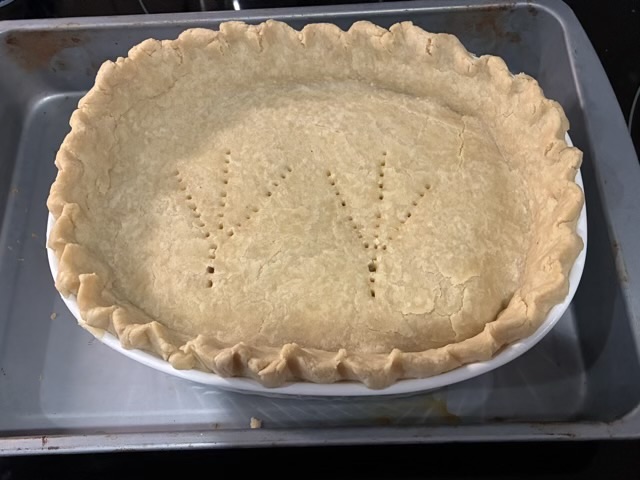
I made a chicken pot pie and when it came to making the vent holes on the top crust, the necessary pattern seemed obvious.
Photo description: pastry crust on an oval casserole dish with vent holes poked with a four tine fork in the shape of two chicken footprints
This was my first chicken pot pie I’ve made, and I mostly followed the recipe from the Gluten Free Gourmet Comfort Foods book, but used her pie crust instead of the biscuit mix. Next time, I will thicken my favorite chicken soup recipe for the filling.
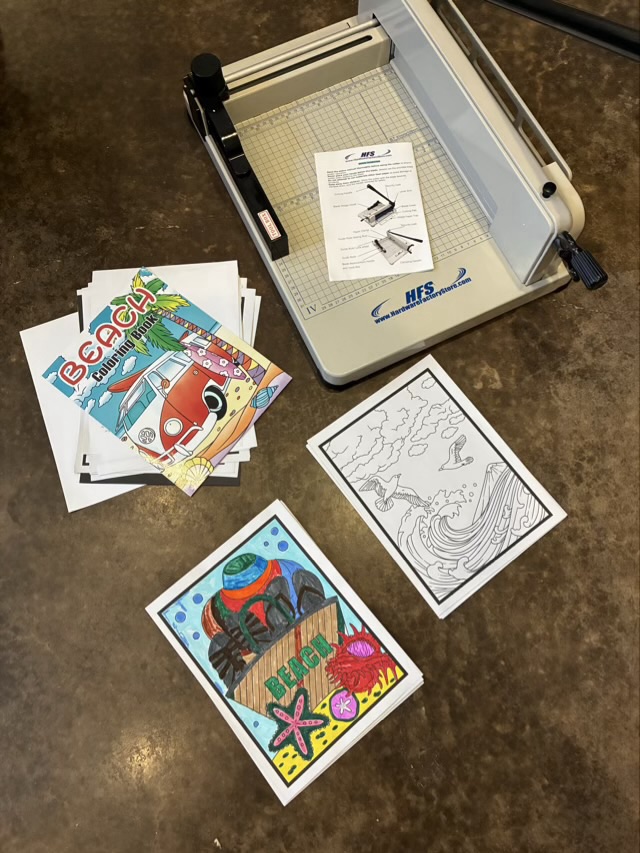
My youngest loves coloring books, but it is difficult for her to find uncolored pages in the bound books after a while. I took my heavy duty guillotine paper cutter and cut off the spine of the coloring book, freeing the pages so they could be sorted into colored and uncolored.
Photo description: 400 page capacity guillotine paper cutter with a deconstructed coloring book, with a colored page and uncolored page pulled out of the stack
My youngest was pleasantly surprised with the fresh stack of ready-to-color sheets, and I was pleased with how fast and clean the cutter worked. Tearing sheets out of a book is often messy and frustrating. By cutting a 1/4 inch off the spine, the pages are freed from the glue easily.
Once my concept was proved, my youngest agreed to let me process the rest of the books. Any book that only had one or two colored pages I left alone, but the books that were mostly colored were cut and sorted.
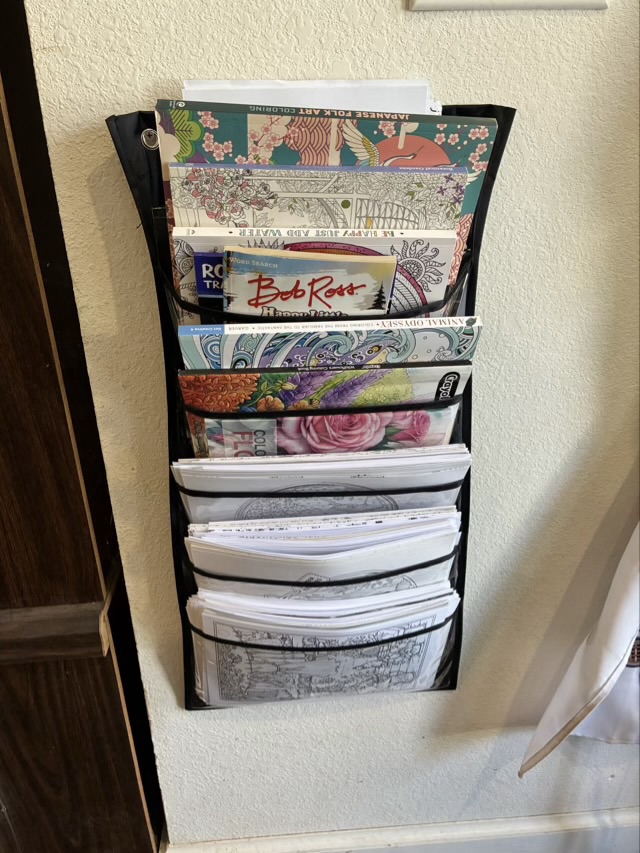
Photo description: hanging organizer with coloring books at the top and individual coloring sheets at the bottom
I now also have a stack of colored sheets that can be displayed and scanned easily for posterity.
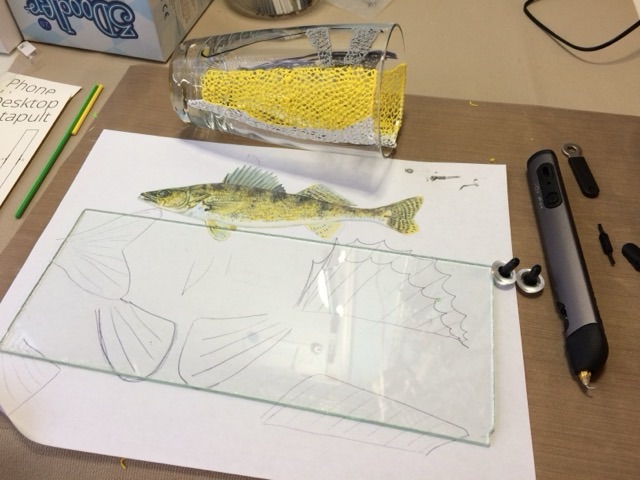
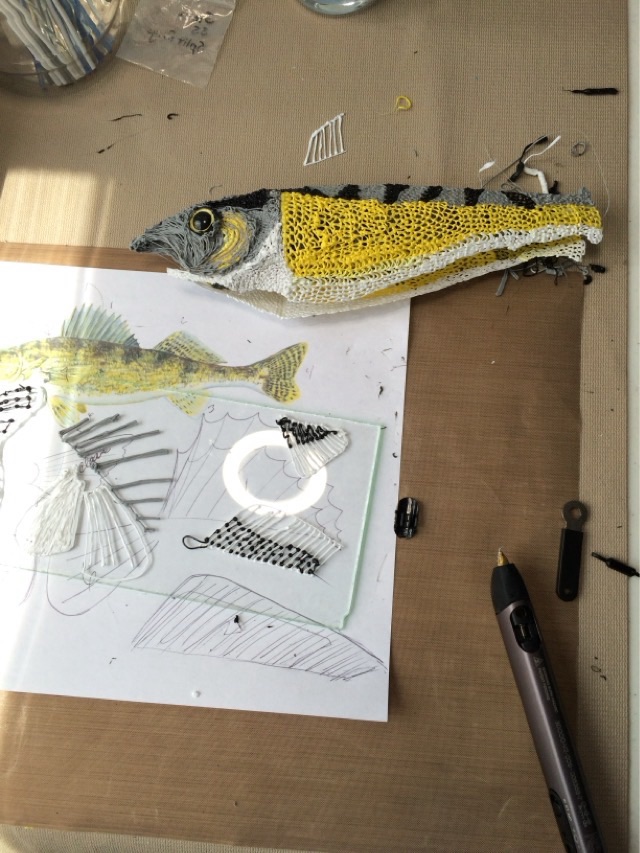
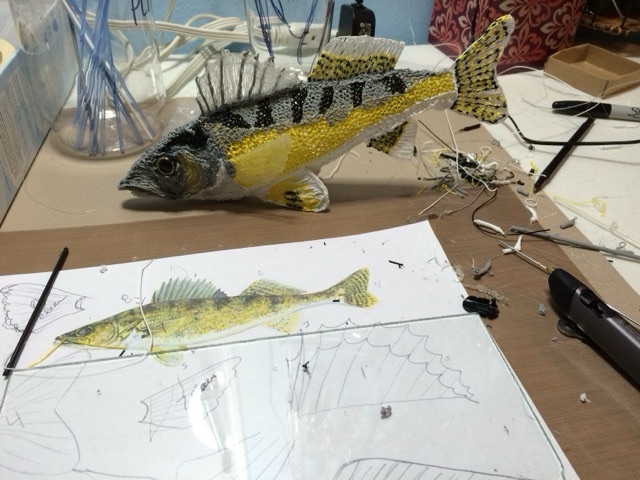
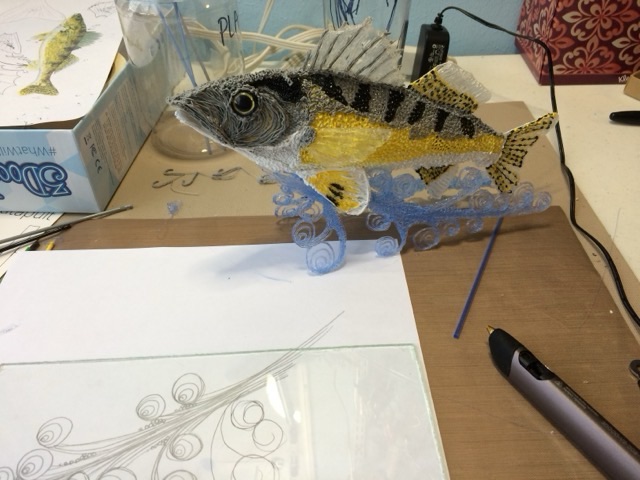
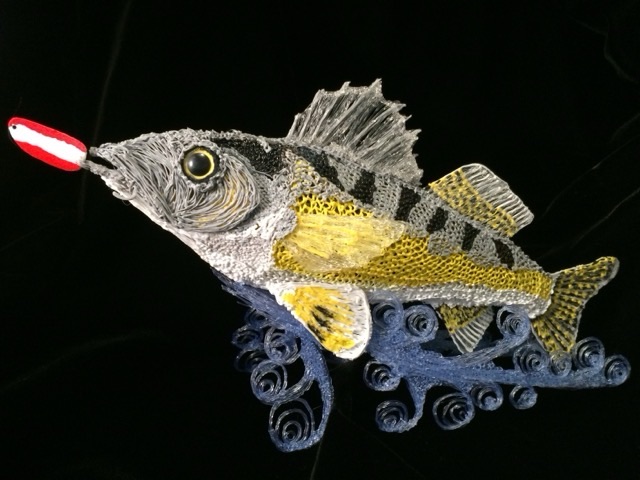
In June of 2016 I was experimenting with the 3Doodler, a pen shaped device that extrudes hot plastic, like a 3D printer, but hand driven rather than computer driven. I decided to make a walleye fish, for my Dad, to experiment with construction.
Photo description: getting started, with the 3Doodler pen on the right, doll eyes, sheet of glass for flat components, and a glass drinking glass for curved components, along with a reference illustrationPhoto description: body constructed and onto the fins, it worked best for me to make the component, then attach it to the base rather than build up from the base, especially for the finsPhoto description: fish complete, but I wanted a better position than it resting on its pectoral finsPhoto description: translucent blue “waves” doodled flat then added as a base for the fishPhoto description: finished piece titled “Hooked” made from extruded plastic with a 3D doodler pen, red and white lure also doodled with plastic, then melted smooth, and plastic doll eyes
The biggest frustration with the project was the tool. The version of 3D doodler I was using needed more breaks than I did, and I would have to walk away and let it rest, which is not ideal in the middle of a creative storm.
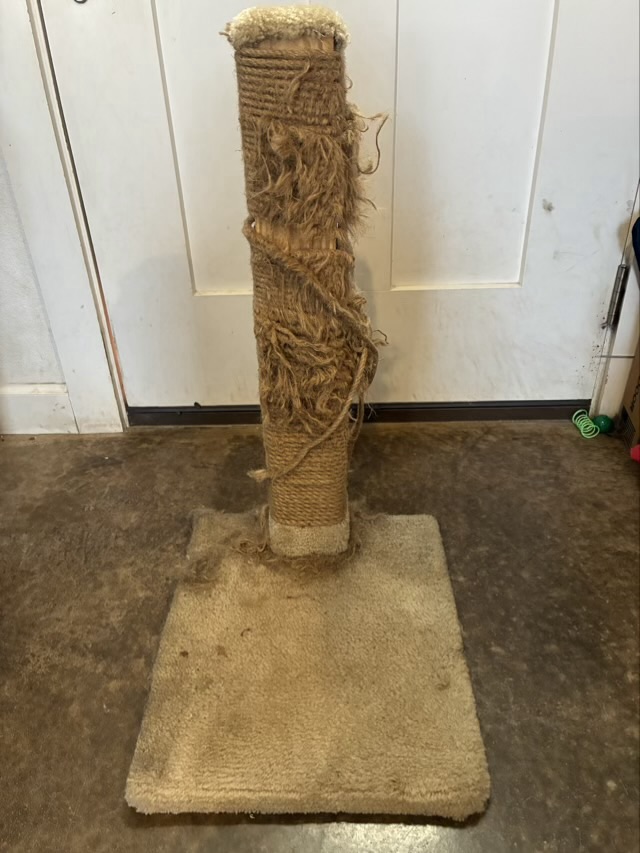
The favorite scratching post in the house needed a fix-up.
Photo description: cat scratching post with the jute rope broken and falling off
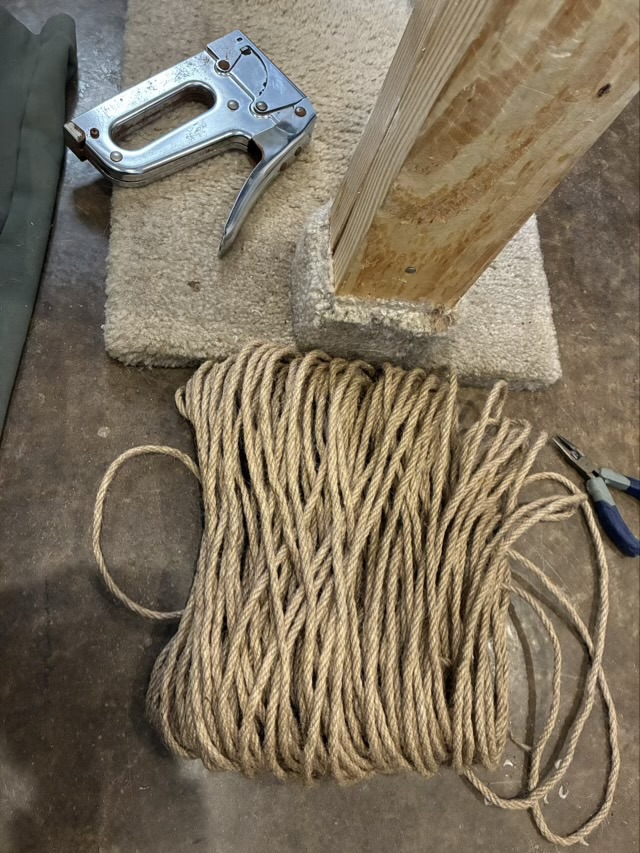
When I last rewrapped this post, I took some of the carpet off the top to provide a higher area for scratching since I have longer cats. From the picture, it really wasn’t necessary, even the big cats scratch the middle of the post. To rewrap this time, I purchased 160 feet of 1/4 inch jute rope.
Photo description: bundle of jute rope, pliers, and a staple gun for the rewrap project
My future self is not going to be pleased with me, because as I wrapped the rope, I stapled it down on the back every few inches. Last time, I only stapled the top and bottom, which made it easy to remove, but I believe shortened the time of use. The last wrap lasted slightly less than a year.
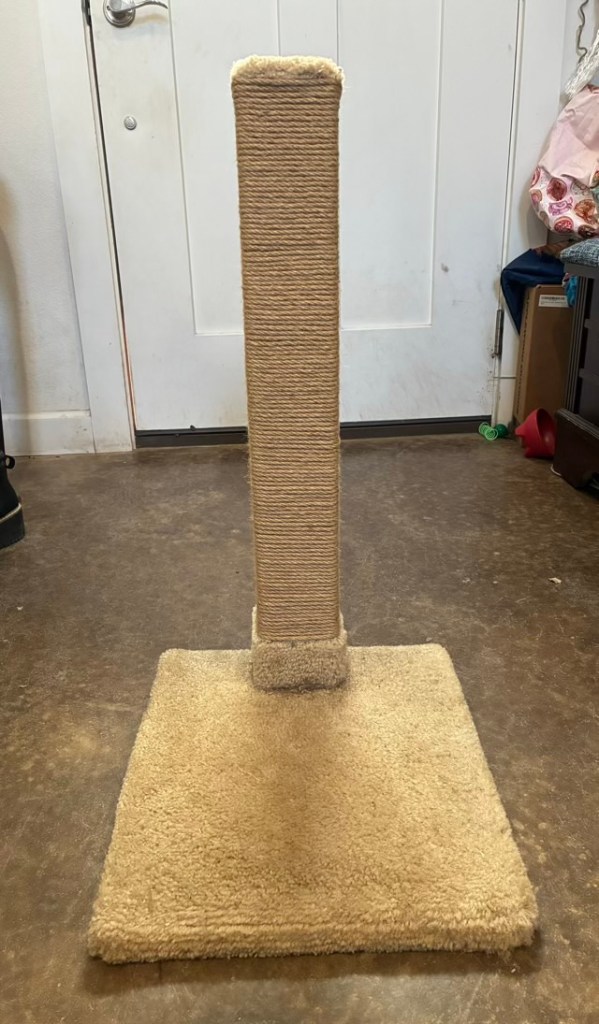
The most helpful thing this time around was that my eldest held the rope above the scratching post, so it was easier for me to wrap the post from the bottom up smoothly.
Photo description: freshly jute rope wrapped cat scratching post
The new rope, while marketed as 1/4 inch, has a smaller diameter than the old rope, and a tighter twist. It will be interesting to see if it holds up better.
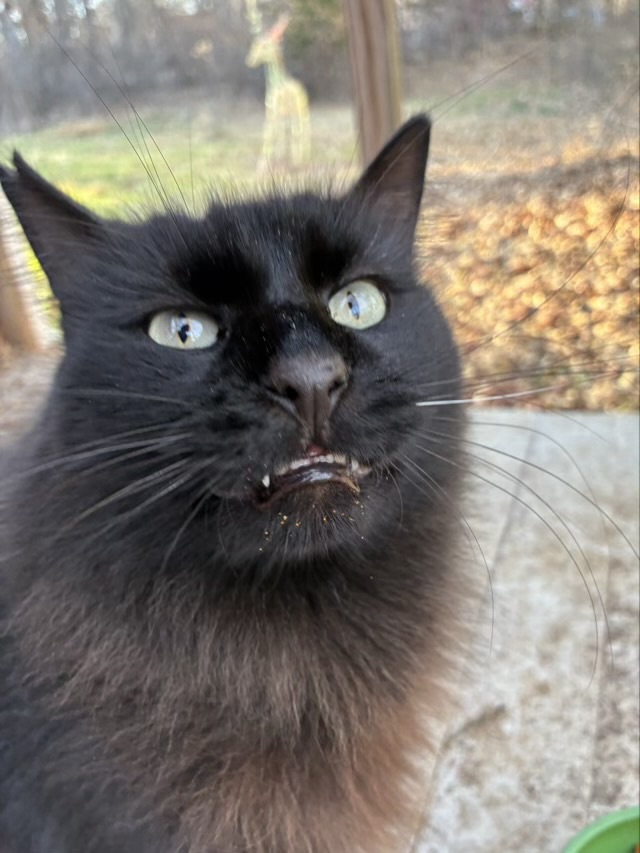
This is Shadow the long haired black meadow cat that hangs out with Mr Tom, my neighbor’s cat. I’m not sure what other names he goes by, I call him Shadow because he follows Mr Tom around and is black. Shadow has one white whisker, but also doesn’t understand photo shoots. He assumes my presence means he gets brushed, so the photo is hilariously bad.
Photo description: slightly blurry picture of a long haired black cat with a comical sneer, and one white whisker

 Critters and Craft