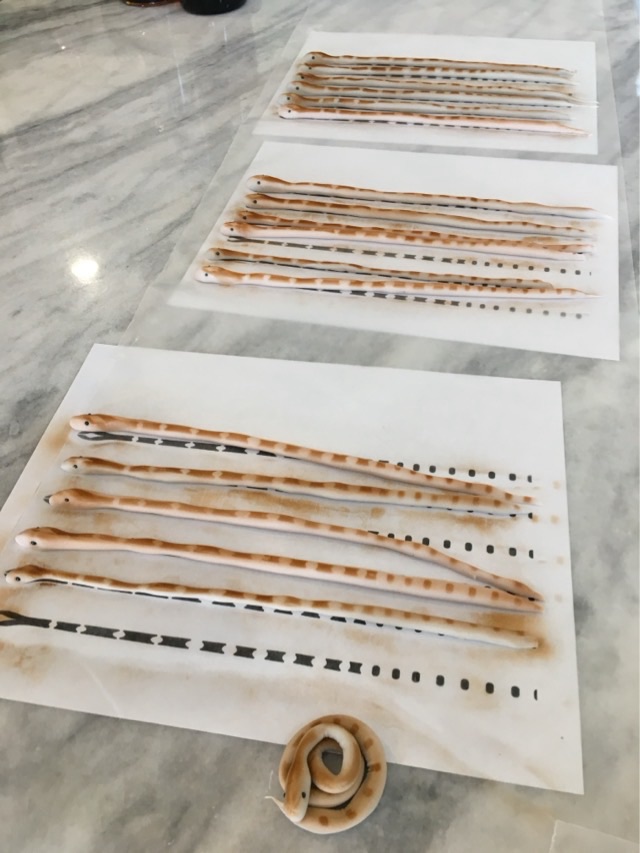
In March 2018 my eldest received a corn snake from her grandparents for her birthday. She requested snake themed cupcakes for her cake, and so we made little fondant corn snakes with air brushed patterns.
Photo description: fondant snakes on templates to make them consistent and for lining up the stencil for airbrushing the pattern
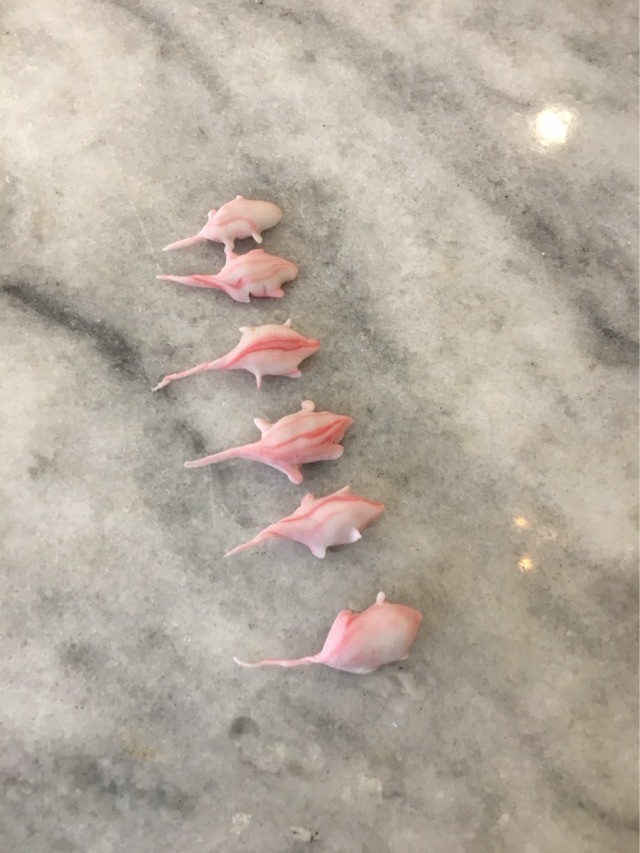
I remember the snake themed cupcakes, what I didn’t remember were the tiny fondant baby mice.
Photo description: baby mice made from fondant icing colored pink
Oh yes, we set up the cupcakes with the snakes and the mice.
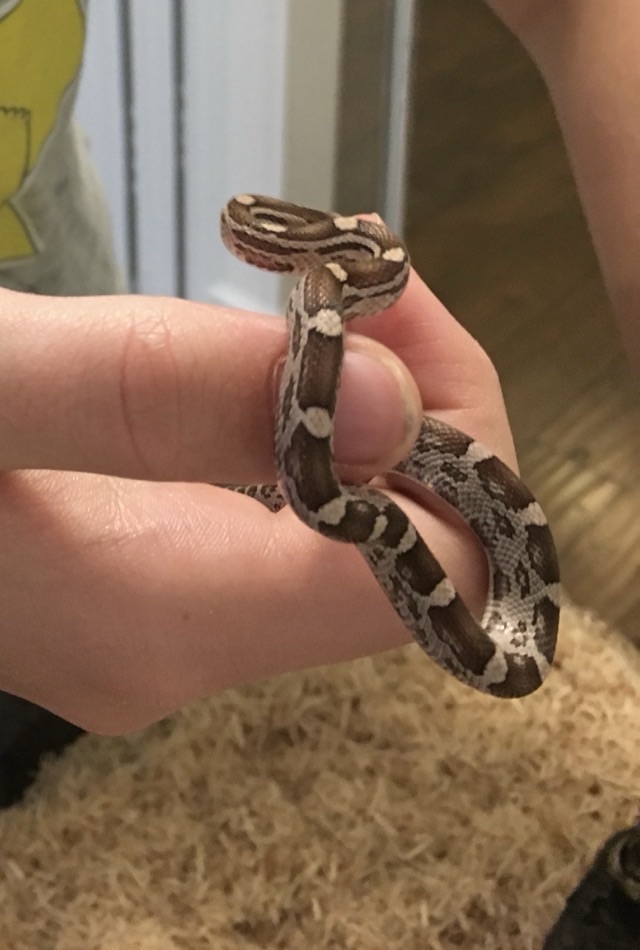
Photo description: finished vanilla cupcakes with chocolate frosting, some with mice caught in the snakes’ coils, some without, and a few extra fondant snakes in betweenPhoto description: real living snakelet held in my eldest’s hand
I found this copper disc lying in my washing machine.
Photo description: copper circle with wear marks
It is an old penny, by the evidence on the other side.
Photo description: badly worn penny
The year is completely worn off, as is Lincoln’s face, but the fact that it is still copper colored and not silvery zinc tells me (according to the internet) that is was made before pennies were only copper plated, around 1982.
I think it was stuck in my washer until it was worn thin enough to escape. I’m keeping it because the wear pattern looks like a tree and roots, very similar to my graphic design logo.
There are so many applications for the word “twining” in crafting. I was going to start this blog post talking about twining wool, but I think I have to specify that I was making twine from wool. Typically twine is made from plant bast fibers: cotton twine, jute twine, hemp twine, for example, and forms a dense strong string. I took a long staple wool, Teeswater, and twined it in a similar manner. Twining wool could also refer to construction techniques in weaving or knitting, but not in this case. Here I am making yarn, nålbinding a few stitches, then making more yarn (I’m going to call it yarn because it is softer than typical twine, yes, I’m splitting hairs (haha)).
The problem I encountered was a strong twist in the small pouch I was constructing. I experienced this with a different project, so decided to try twining the opposite direction, by switching hands, but the twist still happened. I think it is in my nålbinding stitch. I do not enjoy twining with my left hand as much, so I halted the project.
Photo description: start of a nålbinding project that has a Z twist bias making it spiral
Then I had the problem of what to do with the abandoned project. Undoing nålbinding is a difficult, sometimes impossible task, which is what makes it good for items that need to be sturdy. So what could I make from a small bit of wool? Well, a cat toy, of course. Thor the cat loves wool, and steals socks and doll clothes that are made from wool. So I sewed up the seam, stuffing it with un-spun wool as I went, and ended up with a little roll.
Photo description: stuffed tube made from wool
The new cat toy was a big hit with Thor the cat. He loved it and it was very difficult to get a photo of him as he carried it around the house, flipping it and chasing it at speed.
Photo description: large gray tabby going in for the grab of the wool roll
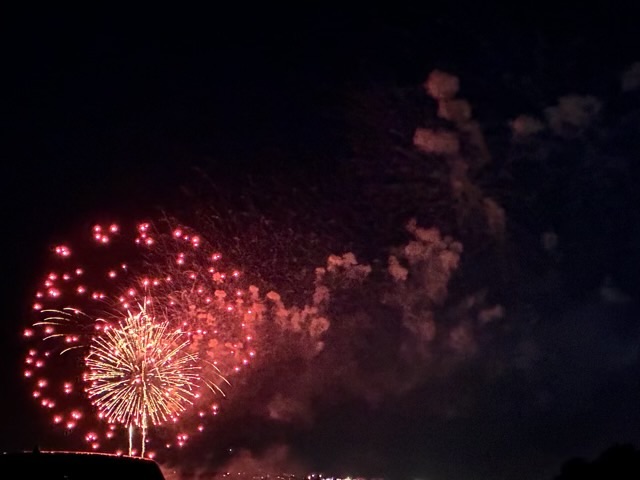
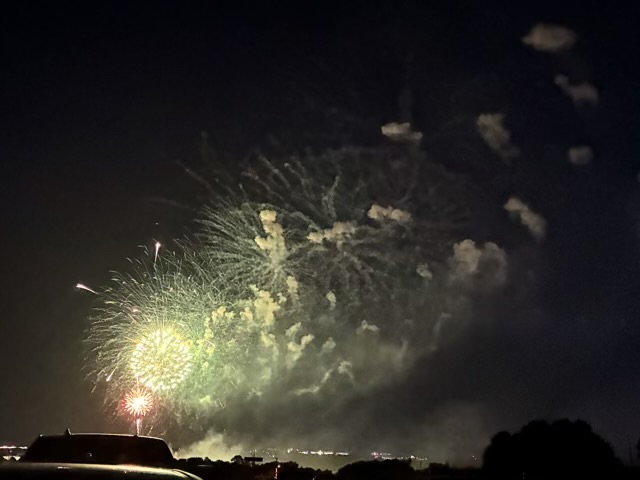
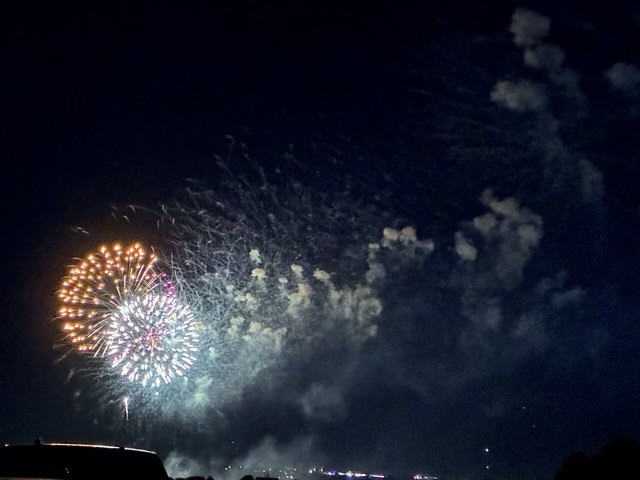
We found a good place to watch the fireworks on Saturday, and there was a gentle breeze that carried the firework smoke off to our right, without overly disturbing the original form of the explosions.
Photo description: fireworks with smoke drifting off to the right, overall red hue
I focused my picture taking on the smoke ghosts, waiting for the active fireworks to light up the ephemeral tracings in the sky.
Photo description: fireworks with smoke drifting off to the right, overall yellow huePhoto description: fireworks with smoke drifting off to the right, overall blue hue
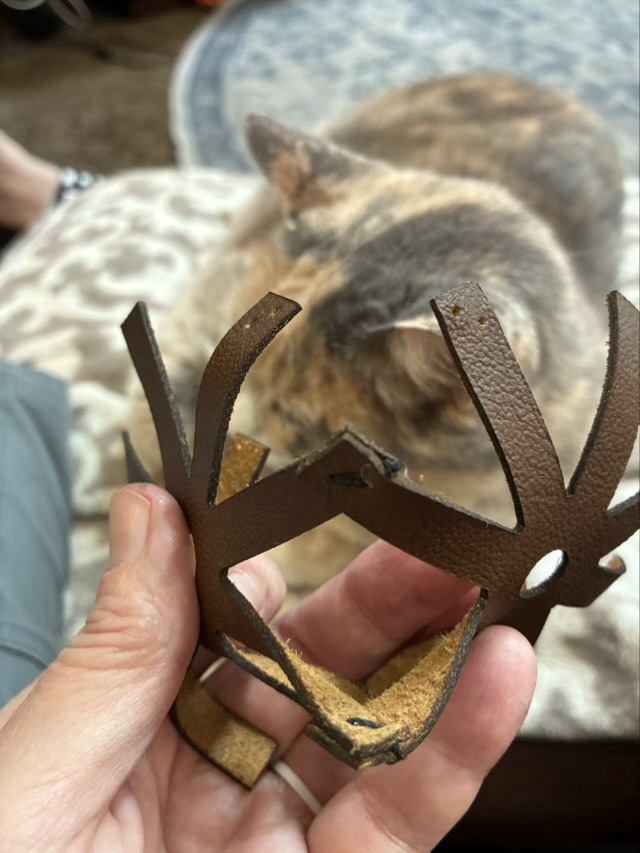
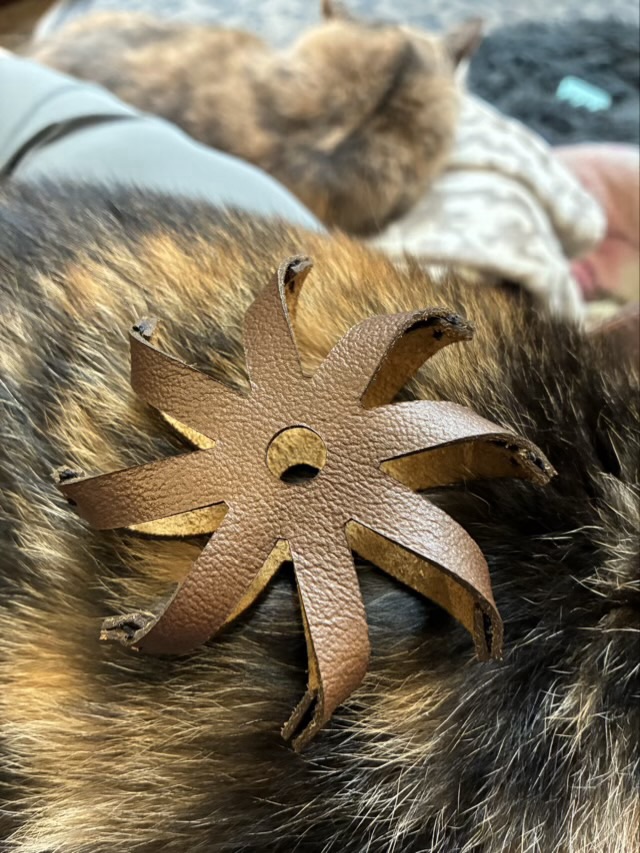
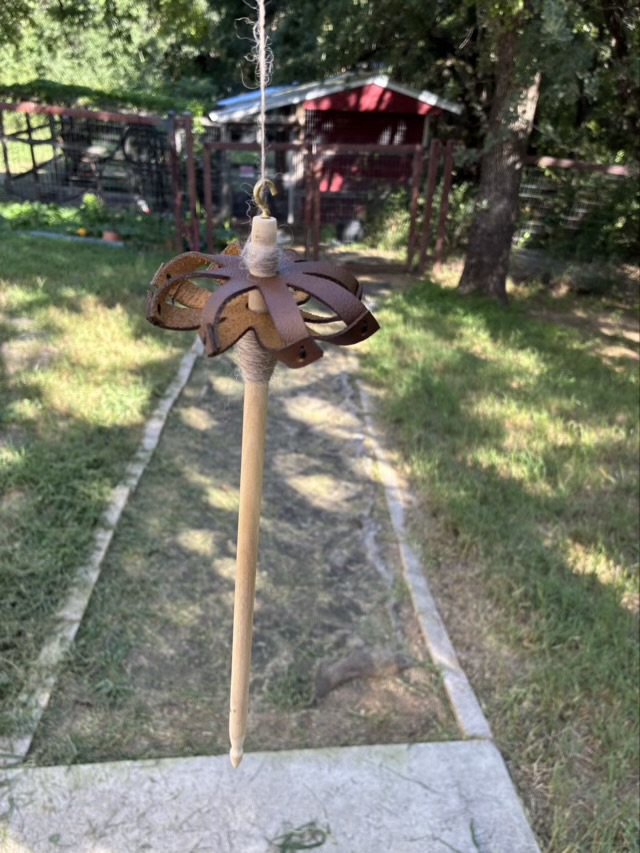
I have had an idea twirling around in my head for a while about having a drop spindle combined with a wind spinner for when I’m walking and spinning. The idea is that the walk and wind will give a little more power to the spindle spin. I needed a material that was easy to work and light, so chose finished leather and cut it with my laser cutter.
Photo description: two leather halves of a wind spinner sewn together at the end of the tabs with waxed cord, dilute calico cat in the backgroundPhoto description: finished spinner on a different calico cat, dilute calico in the backgroundPhoto description: leather wind spinner installed on a drop spindle and used to spin some Romney wool, outside on a windy day, coop in the background
The cool thing is that this spinner only spins one direction when wind is blown across it, so it is easy to tell which direction I have been spinning, and suspended on freshly spun yarn, the wind absolutely spins it. Until the power in the twist in the yarn is greater than the push of the wind, which doesn’t take much. Hm. I have some ideas on how to improve the design. I’m hoping to have something working by fall when I can go out walking again. It is too blasted hot right now.




 Critters and Craft