Shetland wool

A couple weekends ago I spent about five hours doing spinning demonstrations at a local Earth Day market. I was spinning Shetland wool on a spindle that I have demonstrated on before, so only about half the yarn cop was spun that day, but it was enough to fill the spindle. I found that hanging the spindle from my canopy made it easier to off load the yarn. So at home I tried the same thing, but used fishing swivels instead of a loop of yarn, which works much better. Did I take pictures of the full spindle with single spun yarn? Or the nice nostepinne style center pull ball of yarn? No, much to my later self’s dismay. I did the photo record of the two ply yarn, and the resulting skein after blocking.

Photo description: using fishing swivels to hang a drop spindle from a broom rack for ease of off loading the yarn. Two ply Shetland wool on the spindle.
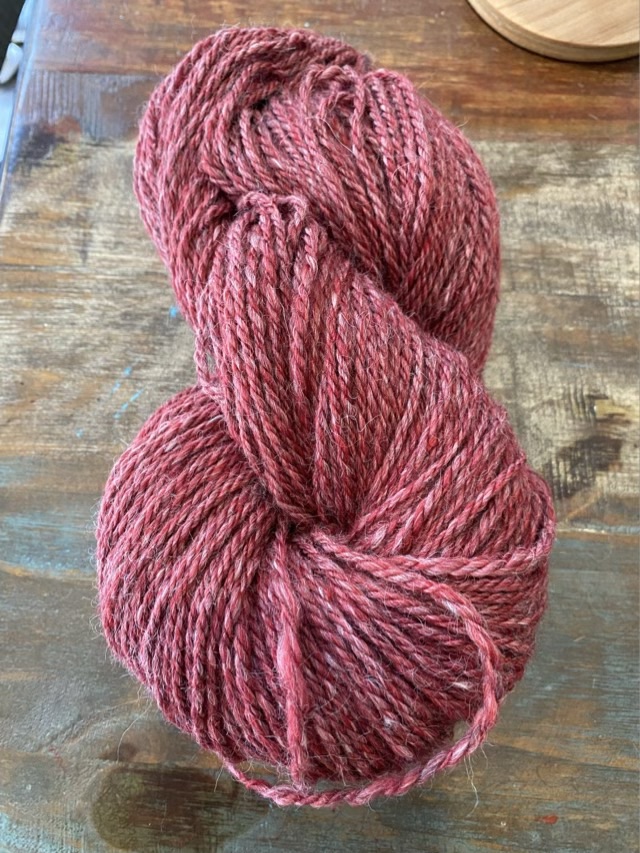
Photo description: two ply Shetland wool skein weighing 28g

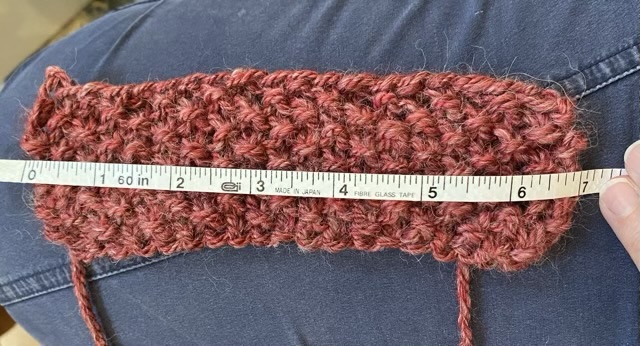
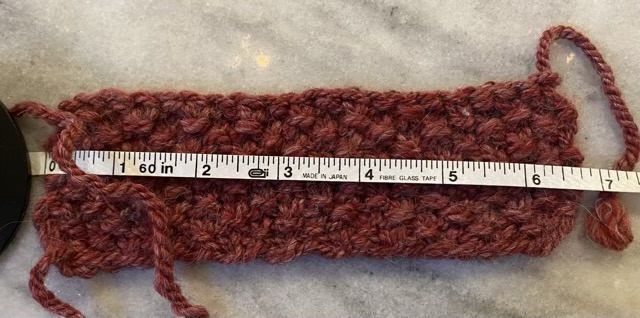
I still have Shetland wool ready to spin, but a factor in off loading and plying this yarn now is that I don’t have a Shetland wool page in my fiber book. Oops. I demonstrating spinning it, but don’t have examples of the finished product. I’ll use this finished portion of yarn to make my swatches and complete a page in my book, then spin up the rest later.

Hello, bee

I was walking by my kitchen when I spotted an anomaly on a box on my counter: a bee.

Photo description: honey bee on a cardboard box

What are you doing inside little bee? And where have you been, and what brought you to this particular landing spot? Mysteries. I put a small amount of white sugar in a spoon and filled it with water and offered it to the bee. It was very thirsty and gladly accepted the offering, but wasn’t keen on leaving the box. I put a small puddle of sugar water on the box, then took the box and the bee outside in the shade. I had to run errands, and when I returned home, the bee was gone. iNaturalist folks identified her as a Western honey bee.

Photo description: honey bee drinking sugar water from a metal spoon

Now I have “give me sugar, in water” stuck in my head from the movie Men In Black (1997).

More pyrography

The pyrography pen is out, all things must be adorned.

Photo description: side view of a small antler lucet fork with animal prints (alpaca, rabbit, cat, bison, sheep) done in pyrography.
Photo description: side view of a medium-sized antler lucet fork with animal prints (rabbit, sheep, bison), and flowering vines done in pyrography.
Photo description: side view of a large antler lucet fork with a Celtic knot, hand drawn, then done in pyrography.
Photo description: wood drop spindle with vines done with pyrography around the edge of the whorl. The top of the shaft, below the hook, is wrapped in waxed red silk to reinforce the wood at the weakest point. Calwood Super Pro II in the background.

Pyrography on antler

We had a little pyrography on wood with yesterday’s throwback, so today is my new obsession: pyrography on antler. I recently made nåls for nålbinding from the tines of deer antler. I’m experimenting with different shapes and curves and am quite pleased with the results. I was thinking of inking them for decoration, but the dried ink literally just wipes off the slick bone surface. I turned to pyrography instead. I have a Colwood Super Pro II wood burning unit, which can be fitted with a vast array of tips. No more messing with old soldering irons. I can also control the degree of heat, which makes a difference. For wood I use the detail setting around 5-6. For the antler I had to crank it up to 9. Even then, it took several back and forth motions to burn the color into the fine lines. I achieved the color without cutting into the bone, which left a silky smooth surface after a light sanding and buffing. I finish each nål with a coat of Renaissance wax. Here is a video short of a thicker nål with a wrap-around pyrography vine.

Photo description: four antler nåls, two with pyrography. The left most nål has four foot prints: alpaca, rabbit, bison, and sheep. The second from the right has a line drawing of a flax stem and bloom. The other two are plain, because people are different.

My nåls sold well at a recent Earth Day Market. The ones that remain I will be selling on Etsy.

Throwback Thursday: Frog carving

Photo description: hand carved wooden frog sitting on a mushroom

Here is a throwback to August of 2004, when I was getting ambitious with my wood carving. I had made a polymer clay model, then used that as a reference to carve the wood. I don’t remember which wood I used, but it looks like it might be walnut. That would be the time that I realized I was not only allergic to walnuts, but to walnut wood and oils as well (makes sense now, was quite devastating then). I like clear coats, and have steered away from wood stain for many years, so the dark surface of the wood is likely not stained. The darkened eye and frog skin markings were pyrography done with an old soldering iron.