Winding a center pull yarn ball

When I was learning to knit and crochet, I was taught to roll up extra yarn into a ball. Generally, you started with a small nest of yarn and wrapped more yarn around, changing directions every so often so it came out more or less round. Inevitably, I would drop the ball, it would roll across the floor, the cat might help its progress, and I would have to wind it up again. When I was older, I obtained a “new wool winder” which winds yarn from a hank into a cake-like structure, but was wonderful because the cake sat still and yarn could be pulled from the center. It did not work so well with small amounts of yarn, and I had to go and find the machine and a place to secure it to use it. Fast forward many years (better just skip, because there is quite a lot of time from then to now), and I was learning about spinning on a dealgan (a Scottish type of drop spindle), and the presenter in the video said the newly made yarn was wrapped around the spindle in the same way as for a nostepinne. What? The resulting cop of yarn could come directly off the spindle and the yarn could be pulled from the center. Hm. New rabbit hole. Nostepinne is a word for a fancy stick. I used a 1” dowel, which worked just fine the first time, but you really don’t even need a stick. A rolled up piece of paper will also work (especially if the cat is comfy on your lap and you can’t reach your stick, but there is a handy piece of paper).
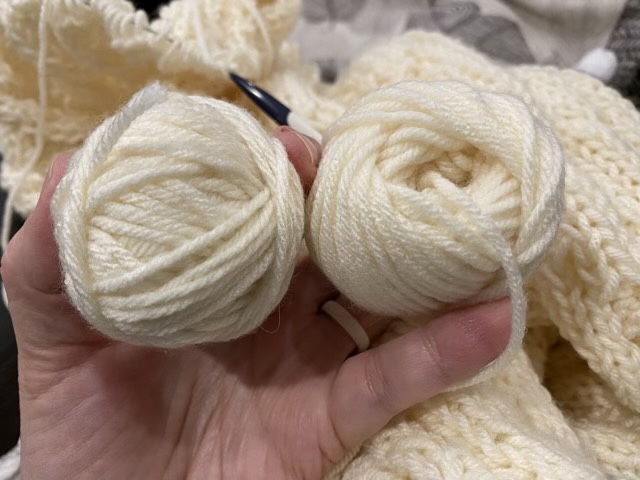
Wrapped yarn ball (left) versus center pull ball (right)

Here is a video: https://youtu.be/Fk6PVyzV6BY

I’m sharing because I really found this way of winding to be life changing. And it is so simple.

On a separate note, Adobe Premier now will make captions from my audio automatically. So that saves me a bit of typing. It still needed editing because “nostepinne” is not in its transcription vocabulary. Shocking. The video isn’t fancy because I’m still learning the software.

Overload

I have reached the max capacity of my media storage for my blog. Oops. As a temporary fix, I upgraded (because that is what they want you to do), but going forward I need to not upload photos directly from my photo album (which saves things in the MB range), but reduce the size first, which is hard to figure out without using a sketchy third-party app from overseas. I retreated to my “poke it until it goes” method of computer programming and was able to put together a shortcut in iPhone to make my photos smaller and put them in a special folder, so I don’t over write my originals. Why is this not easy I do not understand (oh, wait, just addressed that, more money for more storage). Any who, here are the shortcut steps, if any of you need the information. I can’t give you more specific instructions, because I literally just kept trying until something worked. Bah.

Another month

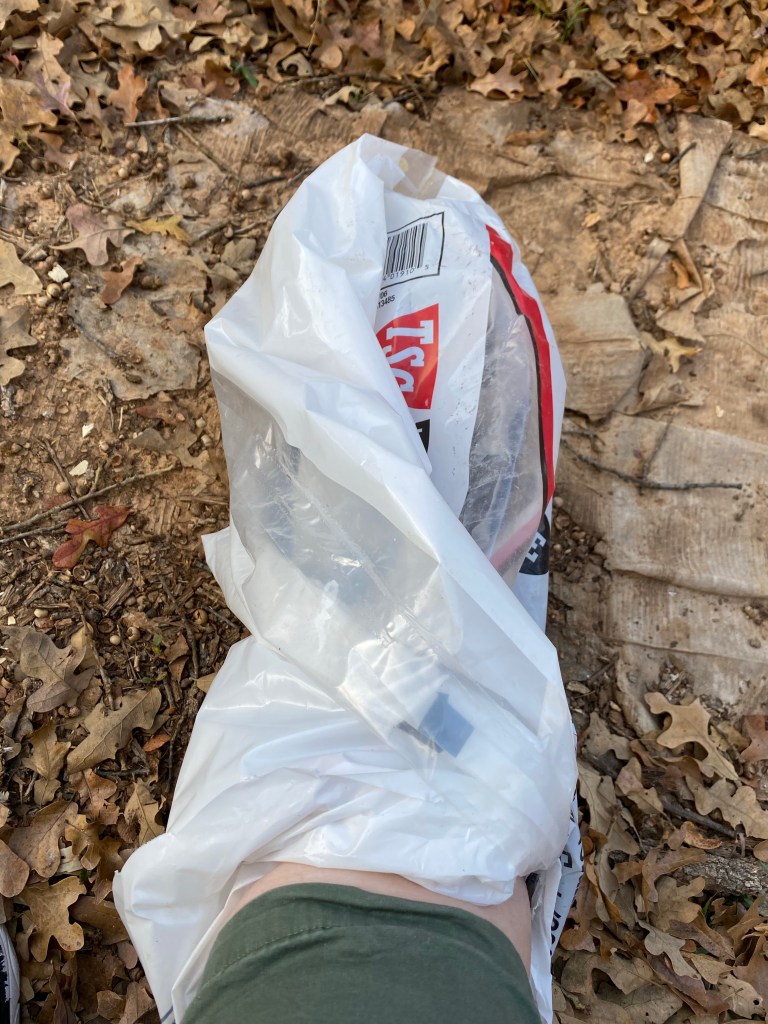
I have to be another month in the dreaded boot to let my achilles tendon heal. I have gone through several garbage bags, using them to protect the boot when I go in the coop, and found that the pine shavings bags are thicker, more durable plastic, and also are the perfect size to wrap around the boot. I just have to thoroughly shake out the leftover shavings and check for holes. The chickens aren’t as afraid of this as well. Bonus.

An empty shavings bag makes a good boot wrap to protect from coop droppings

Adding a book to a binder

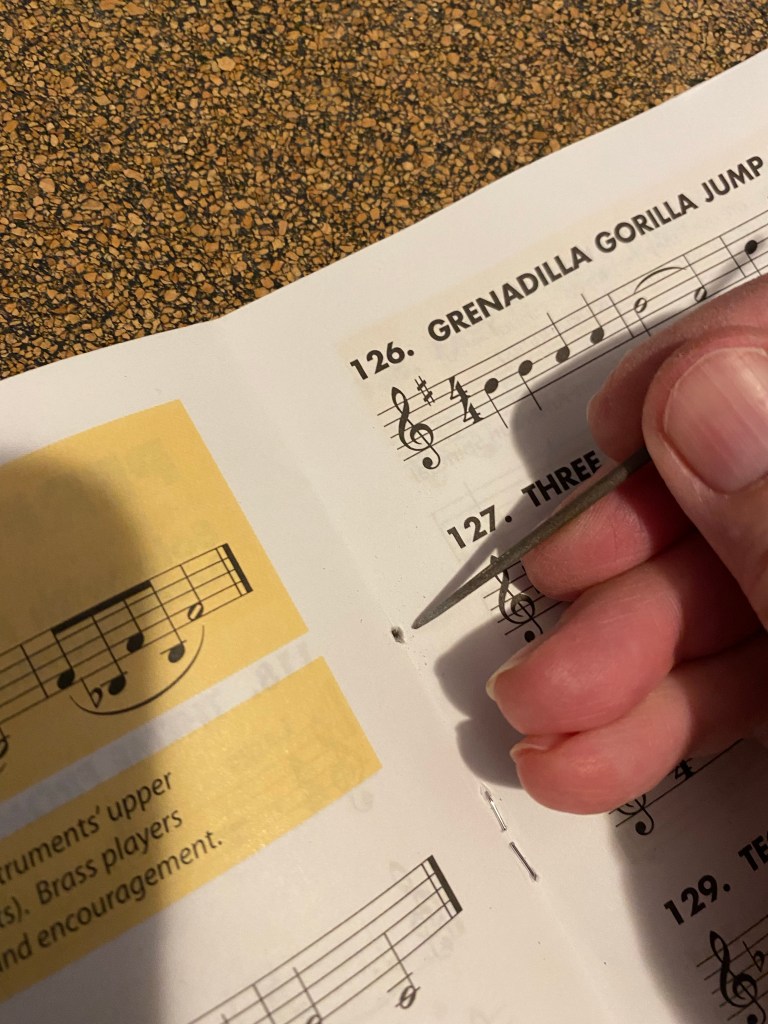
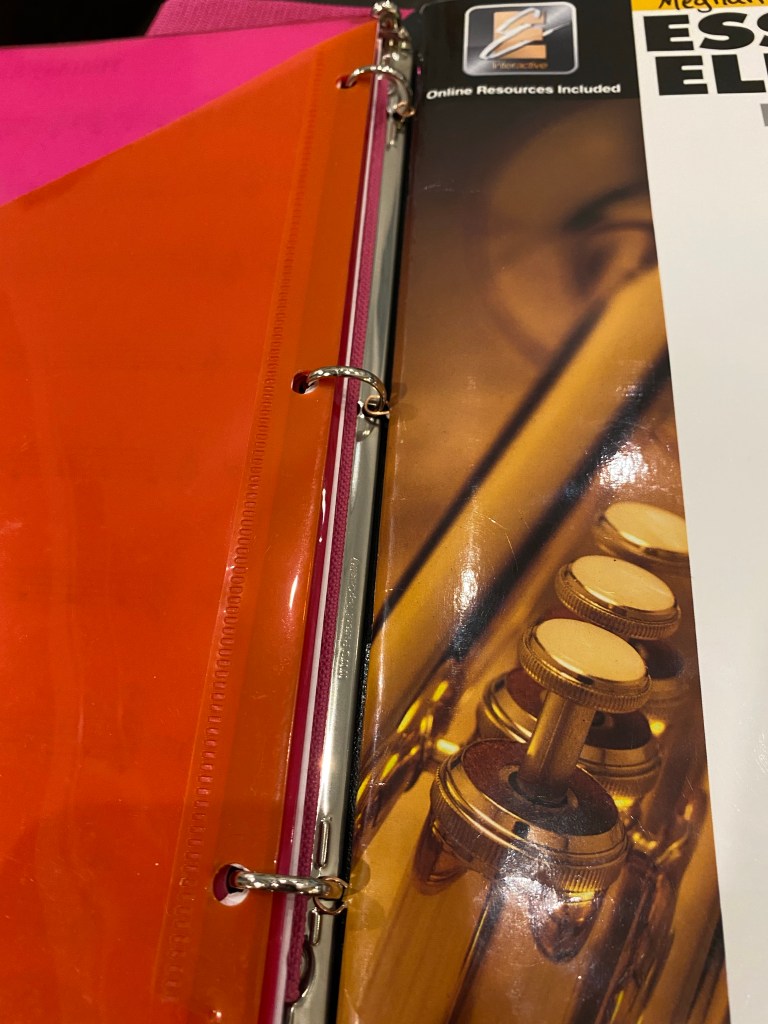
It really helps my youngest to have all her supplies for each activity in one bundle. It means we need to have some duplicates, such as multiple pencil bags, but it also means that music books can’t be placed in a backpack away from the coronet case, and have any hope of being remembered. To keep the book safely with the other music, I added small loops to the fold of the single signature. I opened the book to the center, marked spots for a three-ring binder, and used an awl to poke holes.

Using a awl to poke holes for wire

I then used some 20 gauge copper wire to thread through the holes from the inside out, make a small loop, then go back into the book, repeated for all three holes. I curled the ends of the wire over the top and bottom of the fold, just to keep them out of the way.

New loops hooked into a three-ring binder

The wire holds well!

Binding the binder

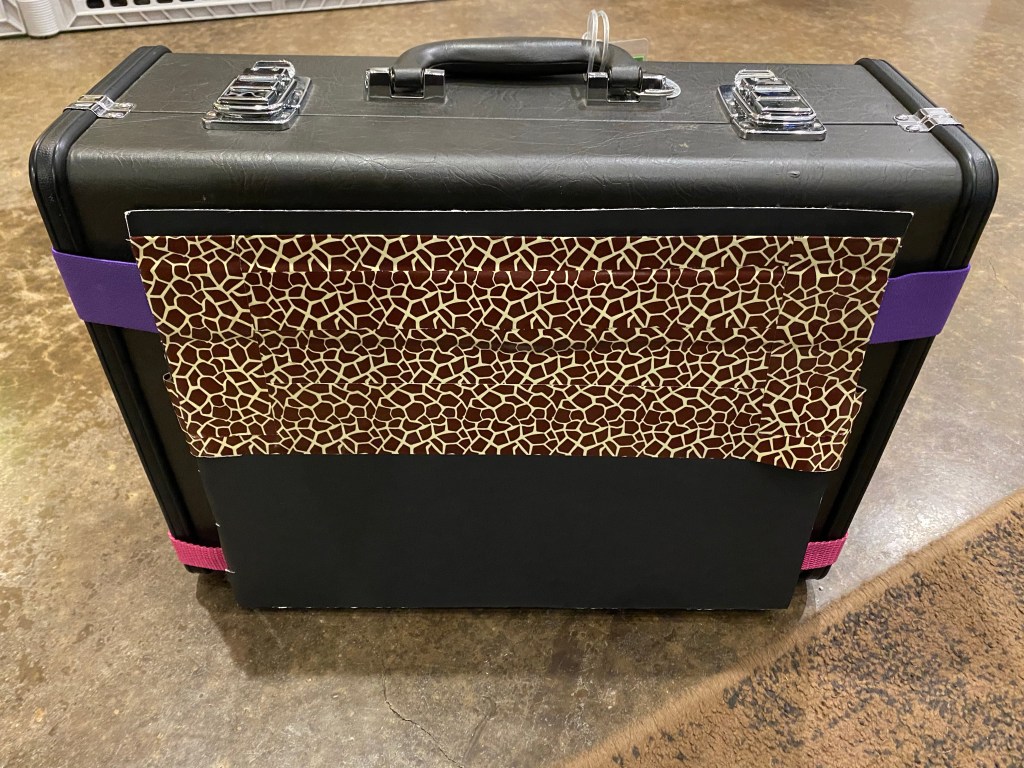
Poster board, duct tape, webbing straps, elastic, thread, and command strips. These are the supplies that went into a new music holder on the side of my youngest’s coronet case. The previous pouch secured with command strips was fine for a music book and a couple loose sheets, but couldn’t hold up to the pressure of a binder. The poor binder hung out in the backpack, lost and forlorn during band practice. To reunite music and instrument, I built a new pouch on the side of the case out of odds and ends from around the house. The bottom of the poster board folder is secured with a strip of pink webbing, looped around the lid, sewn together at the ends, then duct taped inside the folder. The top utilizes wide elastic so it has some give and grip, also sewn together, then duct taped to the outside of the poster board. A couple more pieces of duct tape make guards to keep the binder from sliding sideways, and the command strips now have a minimal job of keeping the whole unit from sagging down the case an inch. The previous command strips removed easily from the case, and they way the new holder is constructed should leave no damage to the case when removed.

Binder holder added to the side of a coronet case