Expanding my fiber book

I’ve been quite frustrated with options for expanding my fiber book. The longest binding post screws I could find were not long enough, and the “extenders” had multiple reviews that that the threads didn’t fit, and I couldn’t find extenders that came with the caps. Bah. Time for a trip to the hardware store, specialty fasteners to the rescue. I found 5 inch threaded rods and some acorn nuts. They aren’t as fancy as a binding post, but they get the job done and I can probably fit another 10 pages in my book. I did have to adjust the cover to accommodate the acorn nuts, but it worked just fine to unfold the edge. A photo book this size would be very heavy and unwieldy, but my fiber pages are light and have thick spacers, so it works. I suppose I could separate up the pages into different books (shocking, right?), but right now I’d rather spend my money on fiber than book covers.
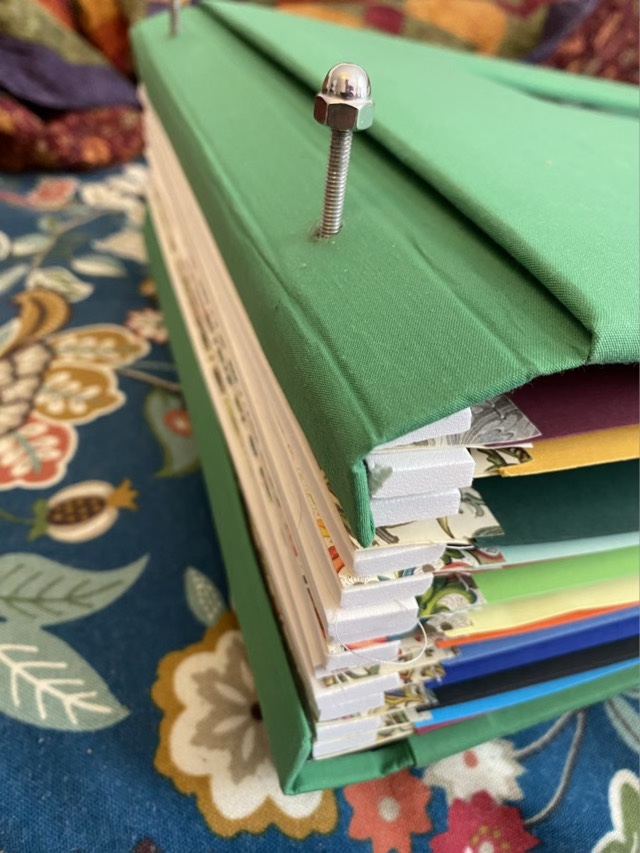
Photo description: Acorn nut on a threaded rod going through the edge of a photo book, sticking up about one inch over the cover, colored pages are spaced with white foam.

It is in my plan to eventually have an elegant external presentation, but I’m still cogitating on how I want that to look. This does the job for now.

Getting better

Our back door deadbolt started to stick (most likely with how incredibly dry we are this summer). The bolt was rubbing on the top of the strike plate. I’ve dealt with this many times since owning a home, and it usually takes me half an hour of swearing and adjusting and fetching tools I forgot. This time I grabbed my 1/2” chisel, mallet, and the electric screw driver and had the plate off, a few millimeters chiseled out of the wood, and the plate back on in about five minutes. I’ll take it.

Photo description: Strike plate for a deadbolt moved up a fraction of an inch

The fix isn’t gorgeous, but it is functional. The deadbolt now slides smoothly into place.

Side gusset

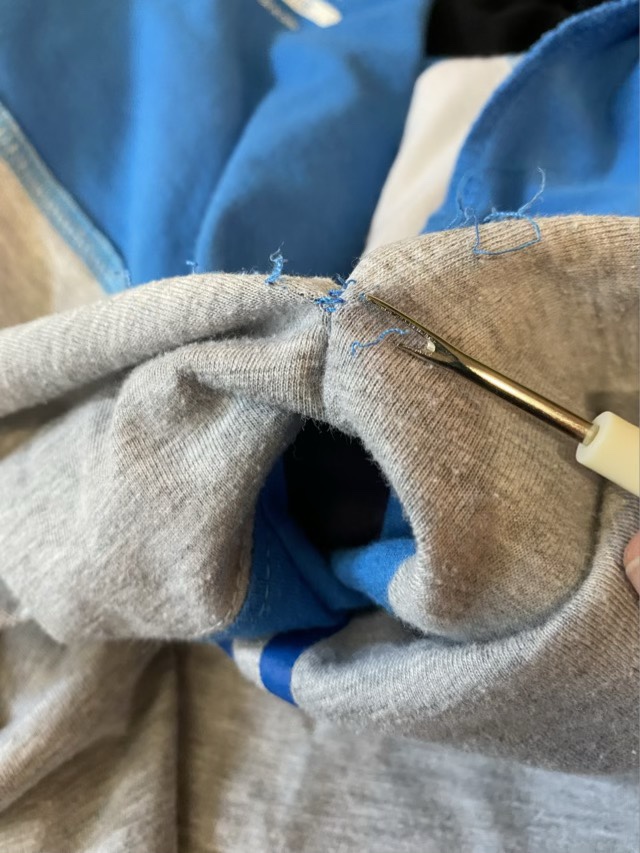
My youngest has a favorite shirt that was getting snug. To prolong the life of the shirt and make her happy, I added a gusset to the sides and up through the arm. First I picked out the side seams about to the elbow.

Photo description: Gray knit material with blue thread and a seam ripper, showing a partially picked seam.

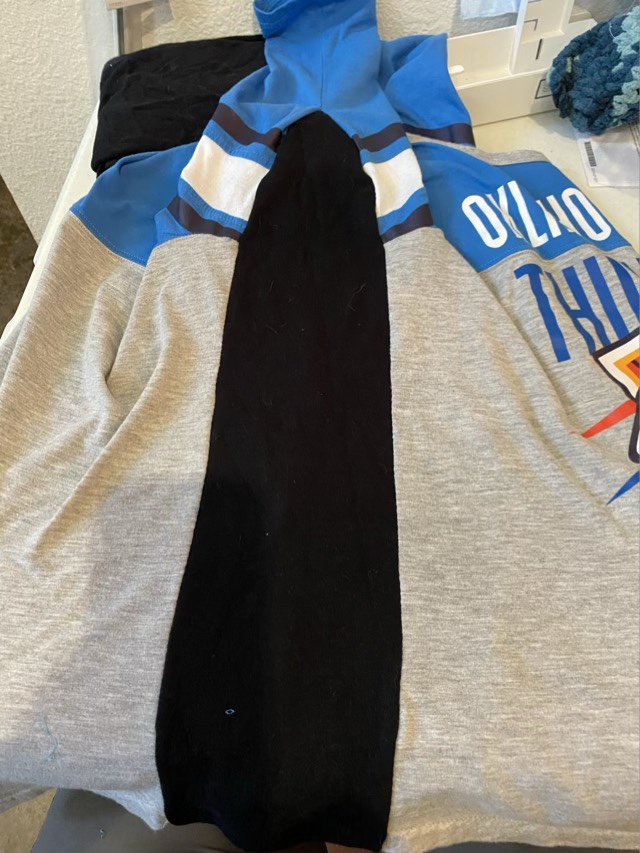
I had her try on the shirt at this stage to see how wide the gusset needed to be cut. Then I cut long rectangles of a similar weight black knit fabric and tapered the end by the elbow.

Photo description: Gray t-shirt on a white table with a black rectangle of fabric laid on top. The top of the rectangle has been cut to a point.

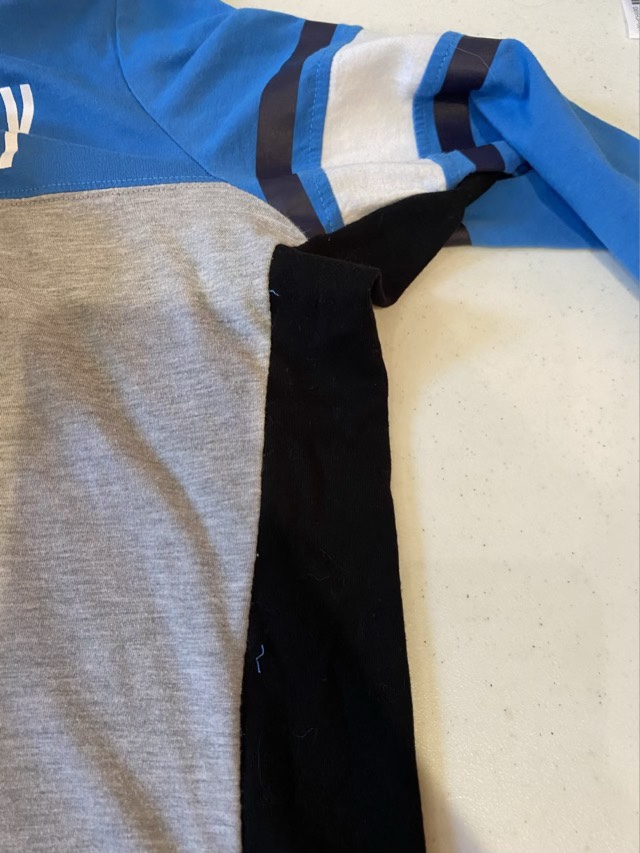
I put the right sides together, and starting at the arm, sewed in the gusset with a stretch stitch on the machine. To finish the bottom edge, I folded up a hem to match the sides and stitched across with black thread.

Photo description: Gray Oklahoma Thunder shirt with sewn in black gusset, side view.
Photo description: same shirt but laid in the table flat showing the front view of the gusset up to the elbow.

I was quite pleased with how the modification came out. The shirt fits better and looks like it was originally designed that way. My youngest is happy because the shirt is now much more comfy.

Protecting pencils

I noticed that my eldest’s Prisma colored pencil case was full of pencil tips. My hypothesis is that the pencils got sharpened, then the tips break in transit. To try to prevent future breakage, I grabbed a strip of foam sheet and used double stick tape to hold it in the end of the box.

Photo description: Shallow metal box with six sharpened colored pencils, and a white strip of foam at the end next to the pencil tips. Off the sides of the box are a pair of scissors, more foam sheet, double stick tape, and unsharpened pencils.

Bed raising

Cube storage shelves installed horizontally under a full sized bed

We are doing a great room switch with the kids this summer, and I found that I had four unclaimed three-shelf cube storage shelves. My eldest needed some more storage space, so we turned them sideways and replaced the metal bed frame with the shelves. This actually works! To add suspenders and a belt, we also used wooden slats to span the space between the shelves, but it wasn’t strictly necessary. We picked up some fabric cube bins so the bed will have drawers underneath. The bins were on sale, so the sum total of the project was $24, since we already had the shelves and slats. The center of each unit is open, which the cats discovered to their delight, so we will be leaving two available for cat egress.