Wrinkled leather

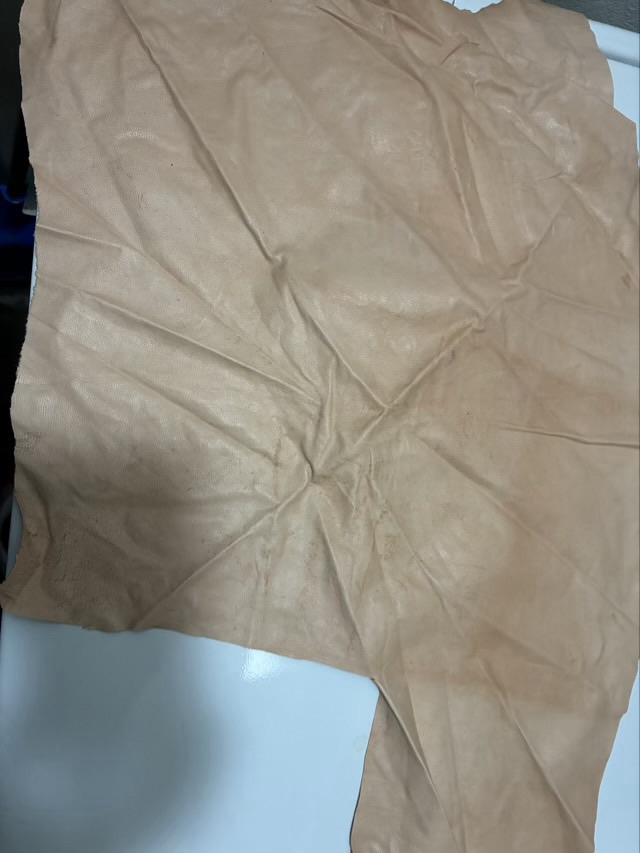
In my stash I have some nice thin goat skin leather. Unfortunately, it was wrinkled and was starting to feel a little dry.

Photo description: wrinkled goat skin leather

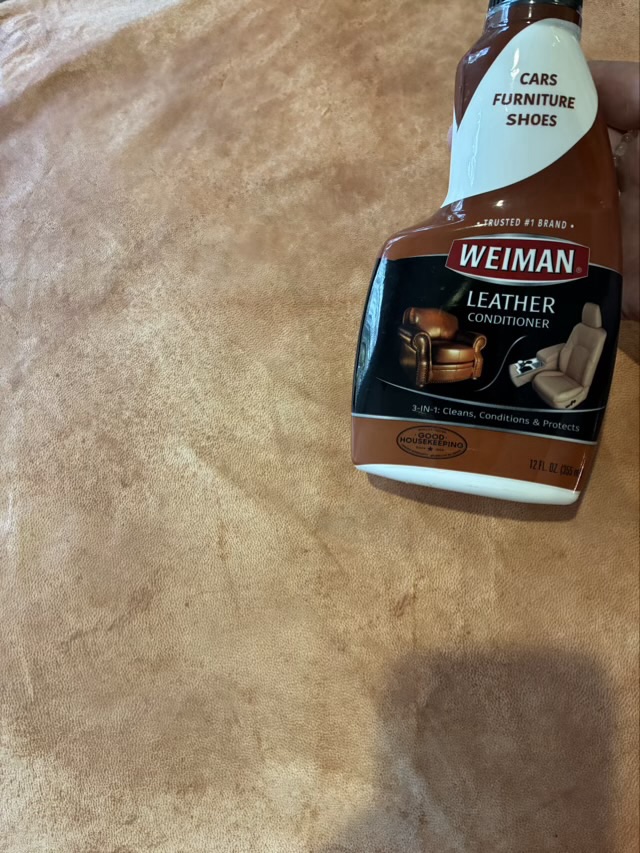
I used a generous application of Weiman’s leather conditioner to ease the wrinkles and return the suppleness.

Photo description: restored leather and a bottle of Weiman’s leather conditioner

Other leather conditioners, such as mink oil, would have also worked to add oils back into the leather.

A little water proofing

The heated cat house behind the coop had been used as a scratching post, compromising its weather proofing. I bought some outdoor canvas and applied it to the roof with hot glue, just to give it a modicum of extra protection.

Photo description: new canvas hot glued onto the top of a heated cat house sitting on an outdoor table

It isn’t my neatest job, but it fixed the issue. It will also be a test of the hot glue to fabric bond as the weather changes.

Sprucing up signs

My chorus had a couple old signs in storage that had old versions of logos and were in need of some TLC. The flexible vinyl sign had been stored folded and had some tape residue.

Photo description: tape residue on a vinyl sign
Photo description: sticky residue removed with Goo Gone

Goo gone removed the glue spots and some time with a hot hair dryer smoothed out some of the creases. We are now going to store it rolled up, rather than folded.

Photo description: masking tape outlining a star shape inside the existing star

We updated our main logo recently to add a white star inside the two gray stars, which gives it a nice pop. My Cricut cutter can’t cut quite big enough to make a white sticker star, so I masked off the star and painted it with four layers of white acrylic paint. My cutter could do the new Sweet Adelines International logo and our website address.

Photo description: vinyl sign updated with web site address, SAI logo, and white center star

We also had a rigid plastic sign that had an old SAI logo and slogan. I used white adhesive vinyl to go over the whole top of the sign, and used my Cricut cutter to cut out the new version of the logo.

Photo description: old plastic corrugated board sign
Photo description: large plastic corrugated board sign with updated SAI logo and white center star

Throwback Thursday: Best DIY card holder

In December 2015 I made my youngest a playing card holder from thin card board and duct tape.

Photo description: card board and “Minion” duct tape card holder sitting on my knees holding thirteen playing cards

The concept is simple, a slot made from two folds of card board, the back fold slightly higher than the front, then a wide base so the cards stay steady. The duct tape holds it all together. I left the card board exposed where the cards are inserted, so the cards will slide in and out easily.

Photo description: side view of the same card holder ten years later, looking a little worn, but still perfectly functional

My youngest can use this to play Uno, even when the hand has nearly thirty cards. I am amazed that it is still working well ten years after I made it, and that it gets frequent use.

Spinning Wheel Field Kit

When I’m going to spin on a new-to-me wheel, I like to have a field kit of things I might need to adjust the wheel.

Photo description: clockwise from the right, tanned leather, cotton string, bamboo skewers, light machine oil, pure beeswax (not pictured, scissors)

Cotton string is useful if the drive band is missing or needs to be replaced. It can also be used to tie up loose parts, or slow the spin on a bobbin (for a Lazy Kate). It is always a good idea to have some string.

The leather scrap is there for making parts. Most often I need a washer to improve the fit, especially on older wheels whose wooden parts have sagged. A heavy pair of scissors and a scrap of leather can make many, many things.

Beeswax is used on the drive band to give it some grip. The most important thing to do with an unfamiliar wheel is to check the alignment of the wheel with the whorl. Then check the tension. A little bit of wax along the string can then give more advantage. Beeswax is good for wood, so will cause no damage.

Oil is for the bearings and places friction occurs, like the connections of the flyer, or bobbin, or spindle. I used it sparingly, usually just one drop is enough.

The bamboo skewers or toothpicks can replace a missing post pin, or be used as a wedge. They were an unexpected bonus to have when I was working with a Great Wheel. I think I will add tissue paper to my next kit, as a bit of tissue paper around a post end can tighten up the fit.

A scrap of cloth for wiping away dust and old oil would be a good idea too.