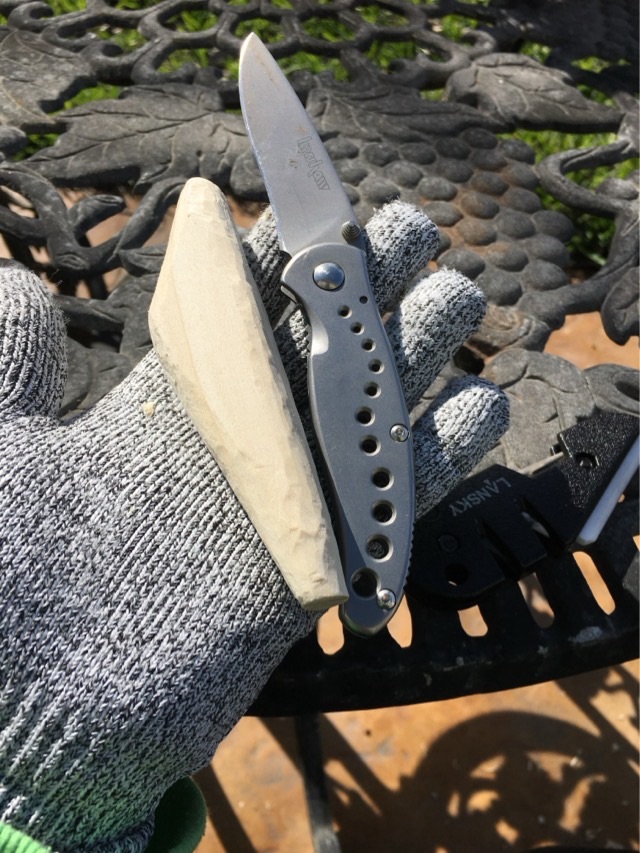
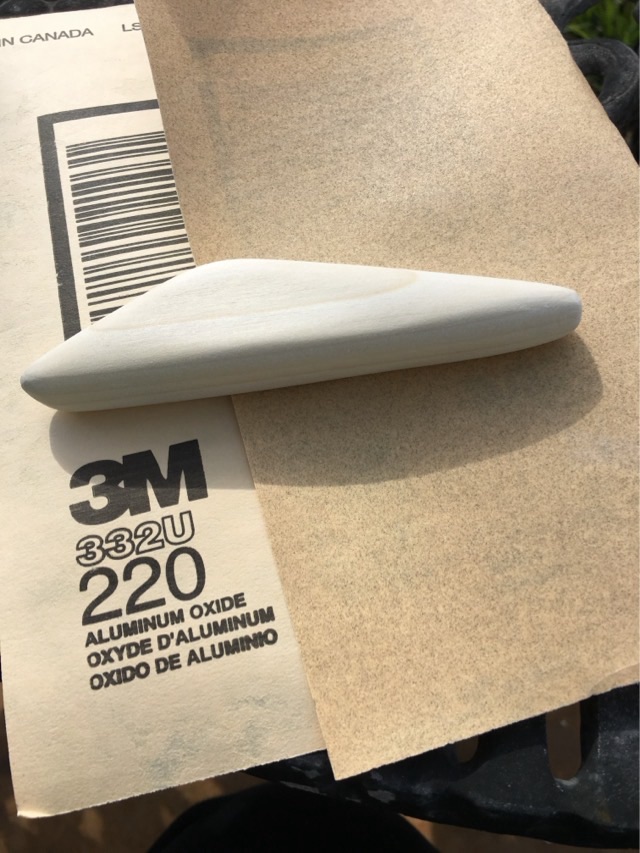
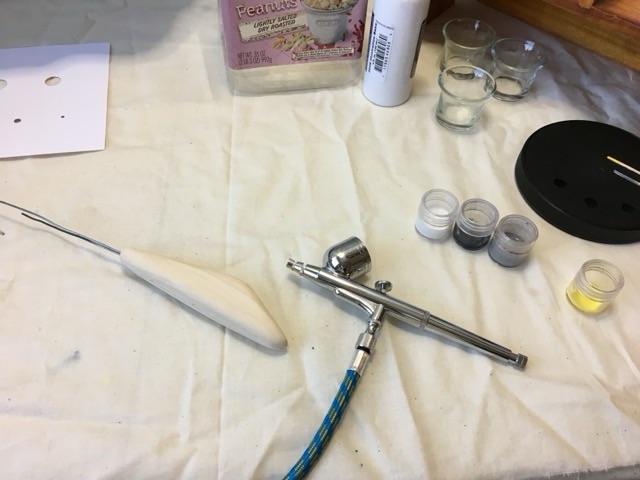
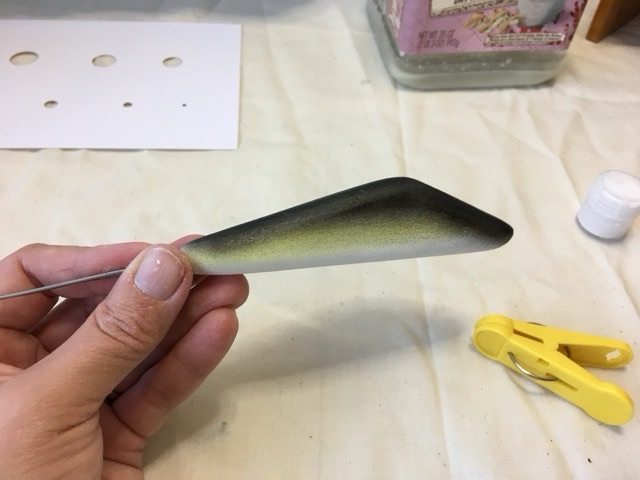
In March of 2017 I hand carved and painted a fishing lure for my Dad.
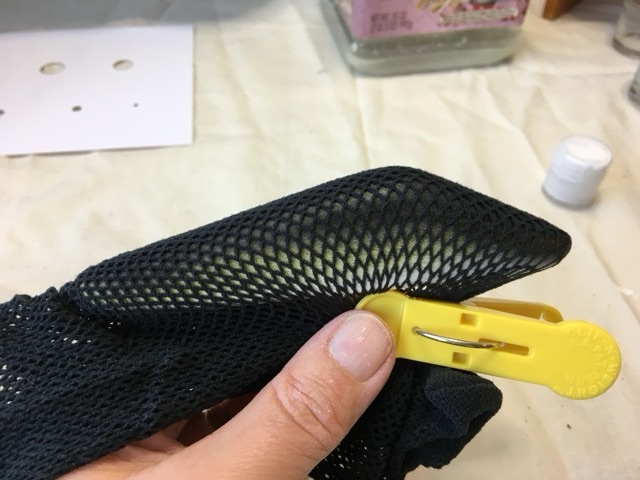
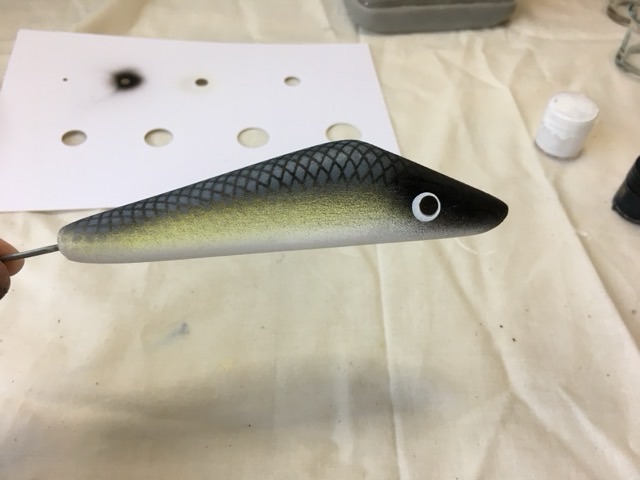
I did coat the lure in a water proof gloss finish, but didn’t take a picture at the time. Below is a picture of the lure in 2026.
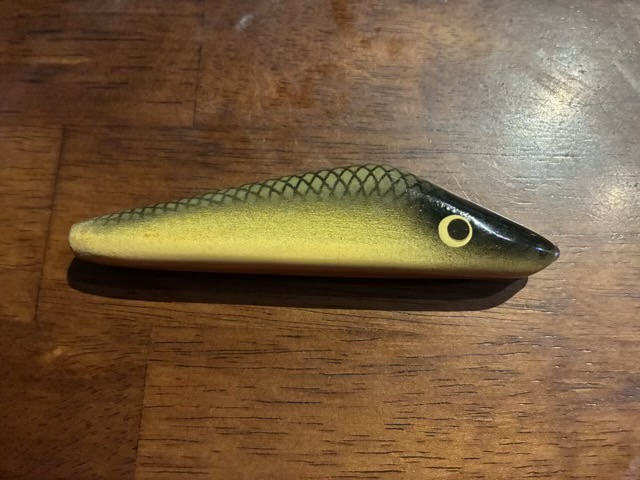

In March of 2017 I hand carved and painted a fishing lure for my Dad.
I did coat the lure in a water proof gloss finish, but didn’t take a picture at the time. Below is a picture of the lure in 2026.
In February of 2017 I did an egg apron experiment for a friend with chickens. I made three kinds of egg apron from simple white cotton fabric that I had in my stash.
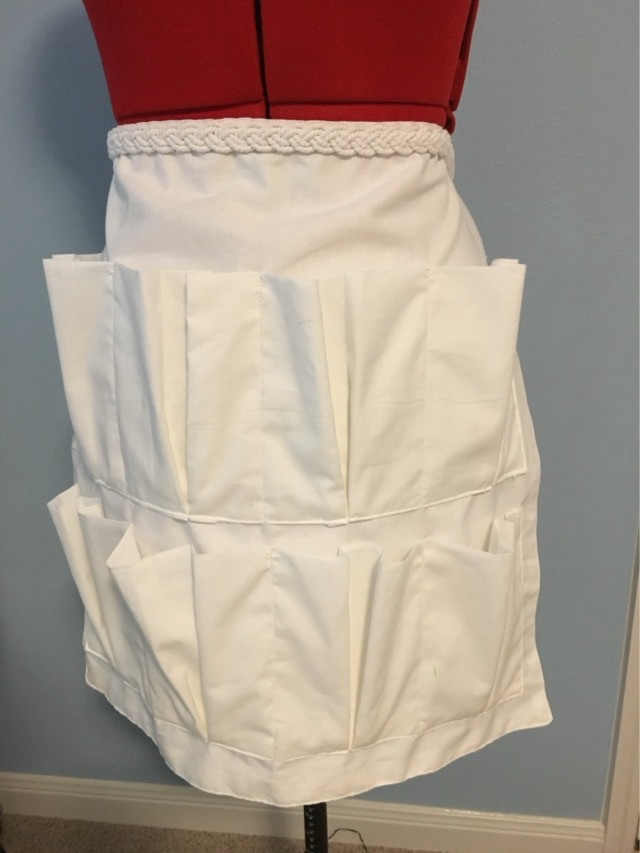
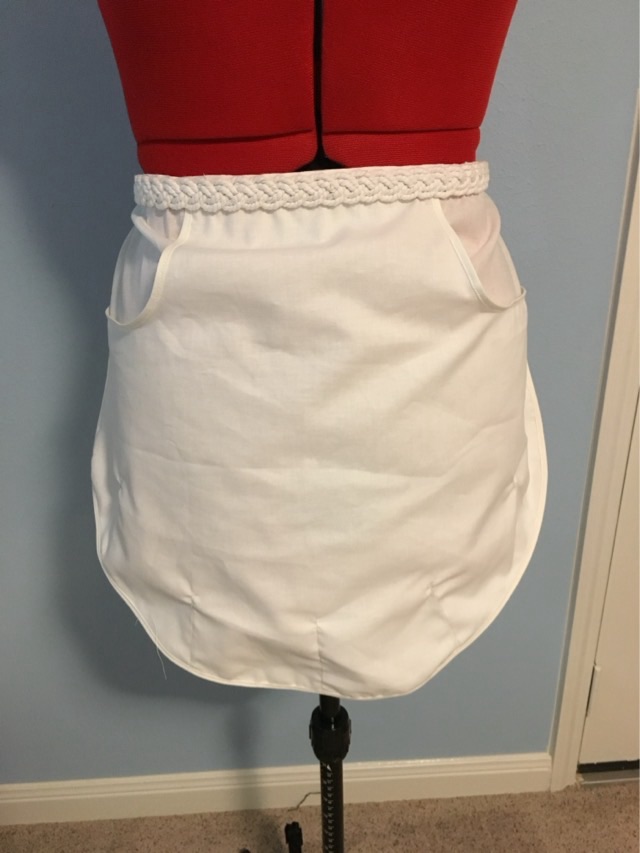
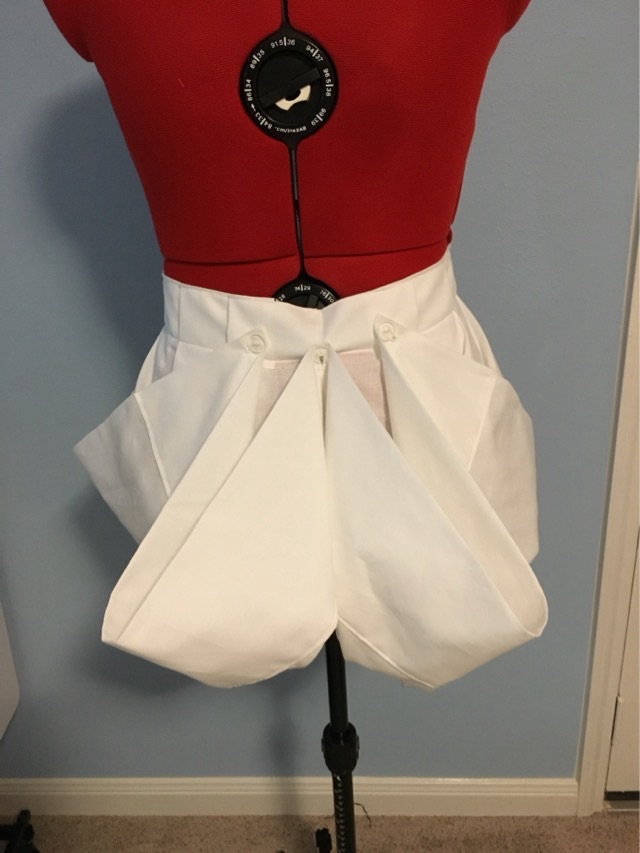
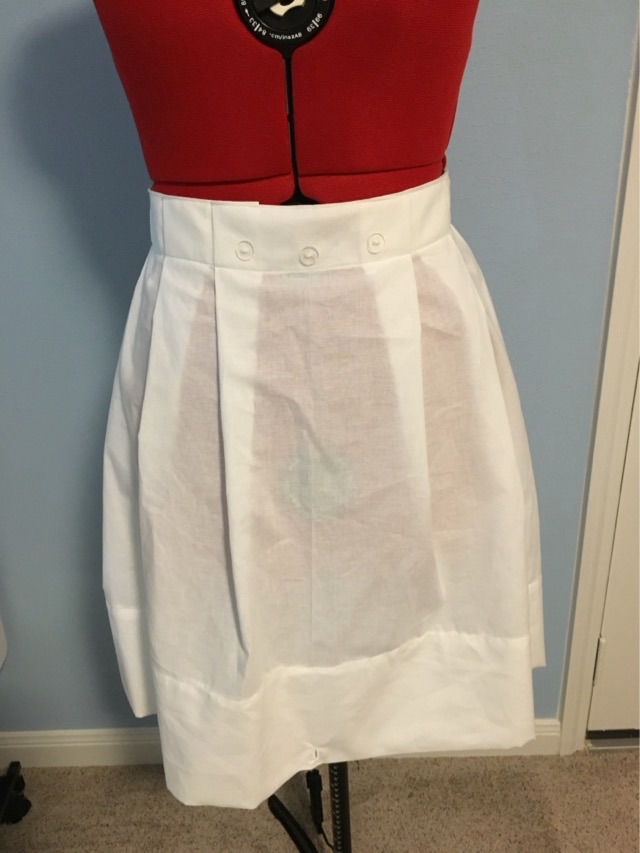
The experiment was interesting. The round bottom apron was hard to get the eggs out, the pleated pockets were nice, but if you leaned over too fast the eggs rolled out, and the harvest apron didn’t keep the eggs separated.
Now, with three of my own chickens and one or two eggs, I just use my pants pockets. Even when we had more chickens the aprons were more of a pain than helpful. Egg baskets are a more practical solution.
Shame on me, really, for not doing my due diligence on my purchase. I wanted to crochet a shamrock, and went looking for patterns. I found one that looked cute and was “on sale” with high ratings and over a thousand purchases for the shop in Etsy. I bought it because I really do want to support pattern makers. The pictures were beautiful, but not helpful, and the instructions were skeletal and incomplete. The layout looked like it was copied and pasted from the free version of ChatGPT version 1. I did attempt to make the shamrock, and found that I had to lean heavily on my own crochet knowledge to puzzle out what to do on a pattern listed as “beginner friendly.” My shamrock had a hole in the middle.
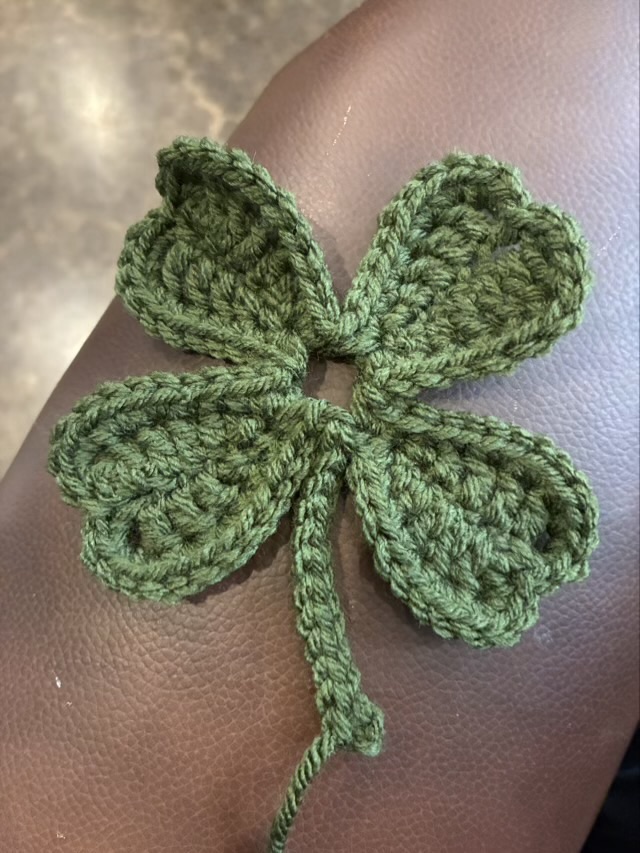
So this post is going to be about what to look for when purchasing patterns.
My $2 purchase cost me more time and hassle than it was worth. What really makes me boil is that there are beginner crafters out there looking for patterns and this kind of garbage causes doubt in their own ability, rather than looking to the pattern as the fault.
And all those 5 star reviews? I strongly suspect that they are all the same person (or group of people?) posting the same fake or pirated photos under different accounts. A complicated ruse, but a profitable one, unfortunately.
This throwback only goes back two years, in 2024 I made my Dad a long Turks-head knot pencil grip with hemp string.
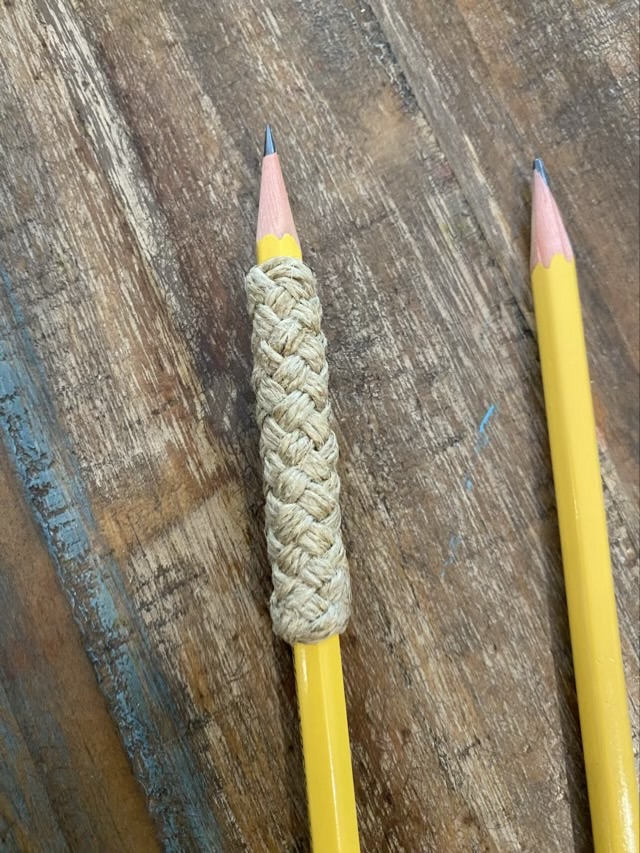
I asked for hints for his birthday and he mentioned that the pencil grip doesn’t fit on mechanical pencils.
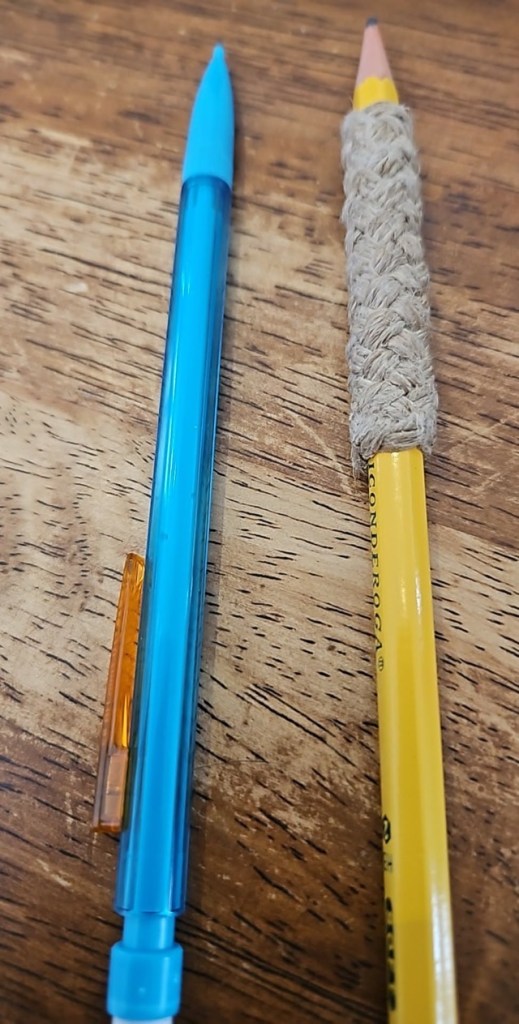
So I made him some more.
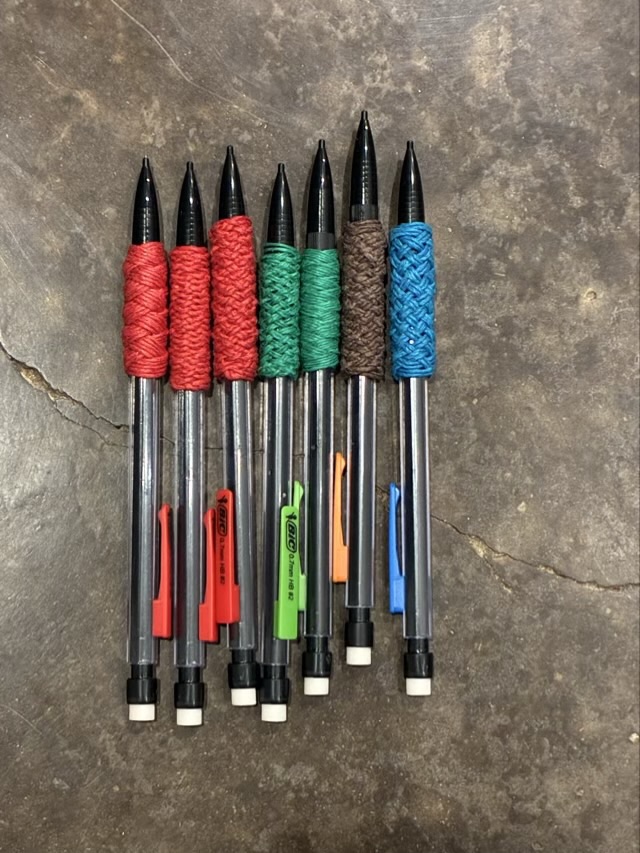
I’m still not confident with knot naming. The pencils in the photo above are laid out in the order I made them, from left to right. Rather than name the knots, I’ll tell you what went wrong. The first one I forgot to split the third time around so ended up with a different pattern. The second was too tight and I was not able to double the knot. The third was a little looser, so I doubled most of the knot, but couldn’t squeeze in the final doubling. The fourth I changed color and was still only able to double most, but not all, of the knot. The fifth I deliberately didn’t split the third pass. The sixth I was able to double some, but not all. The seventh, ah the seventh, came out as I wished, with all passes doubled.
Here is the video I referenced to make my knots: A Long 4 Bight Paracord Turk’s Head Knot (21 lead 4 bight)
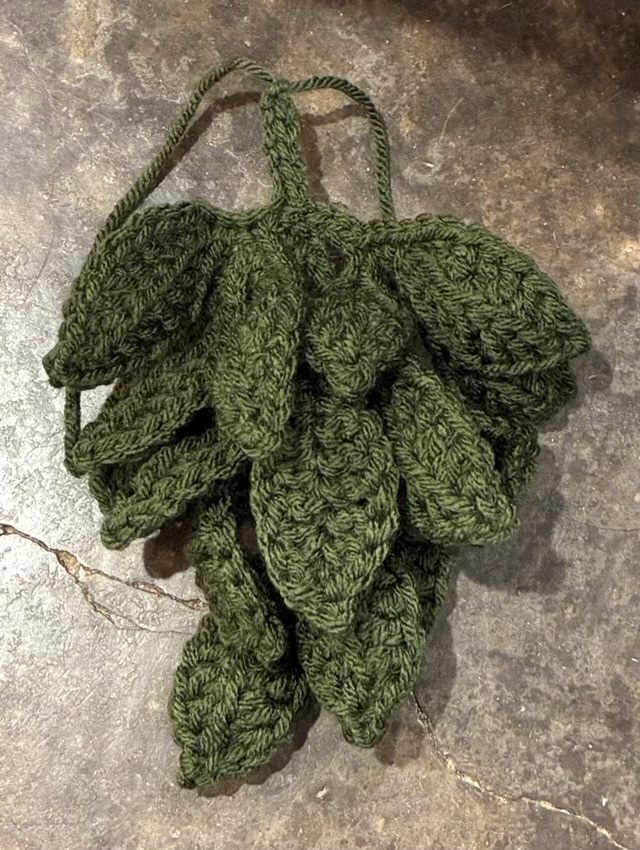
To crochet a simple leaf, my favorite method is to make a foundation row, then crochet in the back loop back down from tip to stem. The foundation row is regular crochet stitches with a single chain added in the middle of working the stitch. This gives a chain-like structure on both sides.
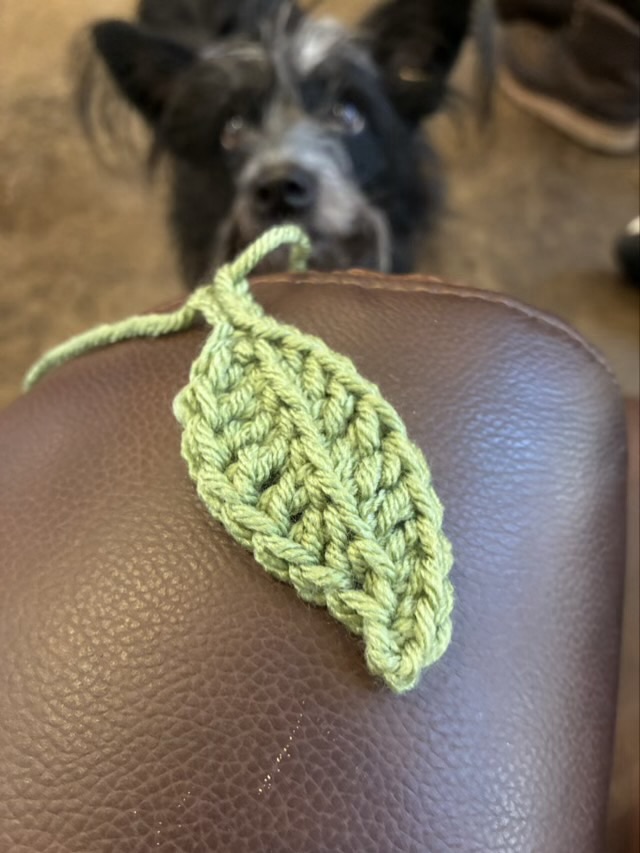
Here is a video, and below are written instructions.
Instructions for the leaf (American notation):
Stem: chain (ch) 5
First Foundation Half Double Crochet (ffhdc): yarn over (yo), insert hook in second chain from the hook, yo, pull up loop, ch 1, yo, pull through three loops.
Foundation Double Crochet (fdc): yo, insert hook through two side loops, yo, pull up loop, ch 1, yo, pull through two loops, yo, pull through two loops.
Fdc again.
Foundation Triple Crochet (ftc): yo, insert hook through two side loops, yo, pull up loop, ch 1, yo, pull through two loops, yo, pull through two loops, yo, pull through two loops.
Ftc again.
Two fdc.
Foundation Half Double Crochet (fhdc): yo, insert hook through two side loops, yo, pull up loop, ch 1, yo, pull through three loops.
Foundation Single Crochet (fsc): insert hook through two side loops, ch 1, yo, pull through two loops.
Ch 3.
Single crochet in back loop (scbl).
Double crochet in back loop (dcbl).
Dcbl.
Triple crochet in back loop (tcbl).
Tcbl.
Dcbl twice.
Half Double Crochet in back loop (hdcbl).
Slip stitch down the initial chain.
To make a sharper leaf tip, slip stitch the ch 3 together. To make different shapes, combine different numbers of stitches. You don’t necessarily need to match fdc with a dcbl.
To make a cluster, finish a leaf, then chain again without tying off. Vary stem lengths. clusters of three work well.
 Critters and Craft