Lazy Kate mockup

Time to ply again! My spinning production took a dramatic downturn with the onset of the stay at home orders, which seems strange. Turns out that it had nothing to do with staying home (although with two kids and crisis schooling I have much less time for my crafts), and everything to do with not wanting to knit. I changed my plan for the yarn to a crochet vest, with motifs rather than a large solid piece, and suddenly I have motivation to spin again. I don’t know why, but even though I can knit, I don’t enjoy it as much as crochet or nålbinding. I like the stretch and feel of knit, I just don’t like ripping it out (which ALWAYS happens). I thought about nålbinding the vest, but that would be a two-year project, which also makes me go “ugh”. So the current plan is to make crochet motifs and join them together into a vest (note: this may change!)

Any who, I am still looking for the best plying method for me, and have been researching what works for others. I’ve seen many wooden contraptions, in many different styles. I like working in wood, and I have scrap wood in the garage, but before I render anything in wood, I thought I should try it in cardboard first. So I took the box that I tried a sideways method to hold the spindle shafts, and poked holes in it and tried an upright method. This worked better, but needs a weighted bottom. I actually think a slight angle on the shafts also works nicely. Now to think on how I want to make a wooden one.

Cardboard lazy kate experiment

Easy does it

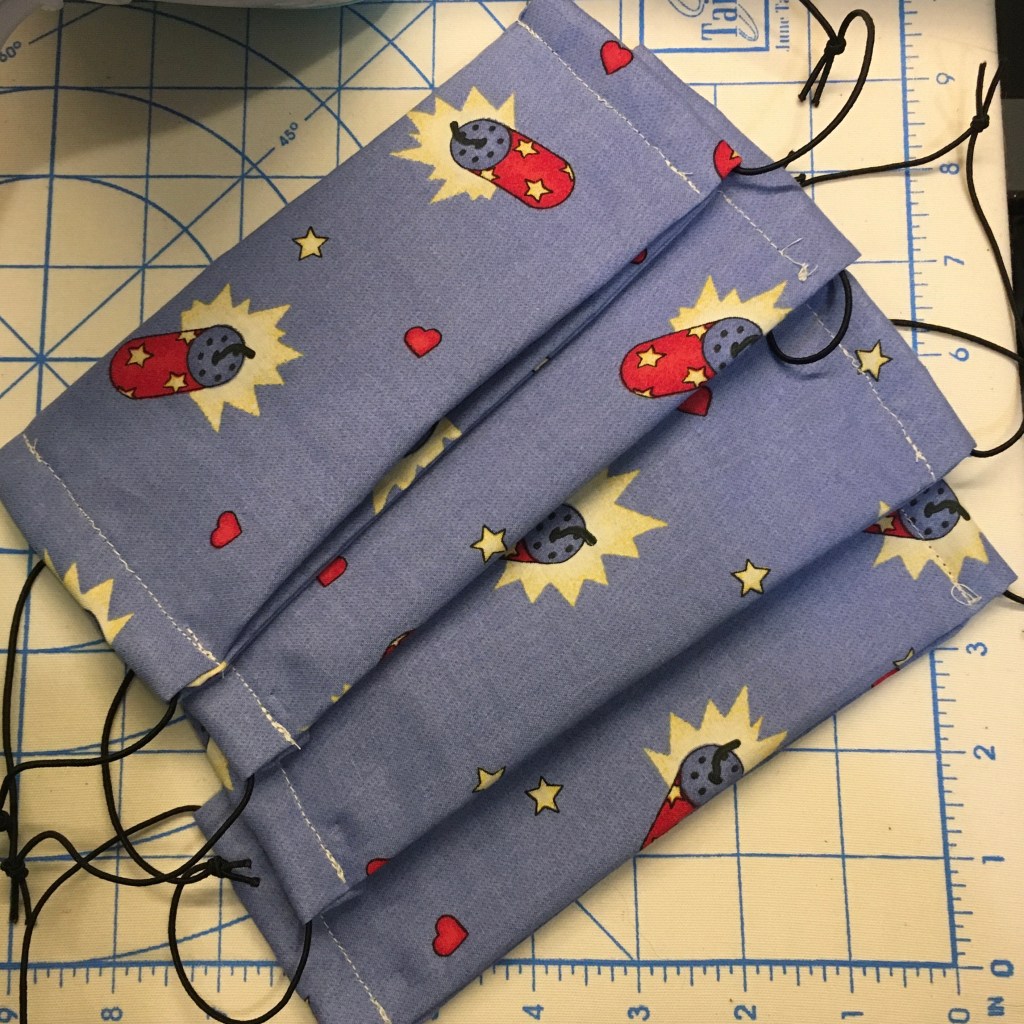
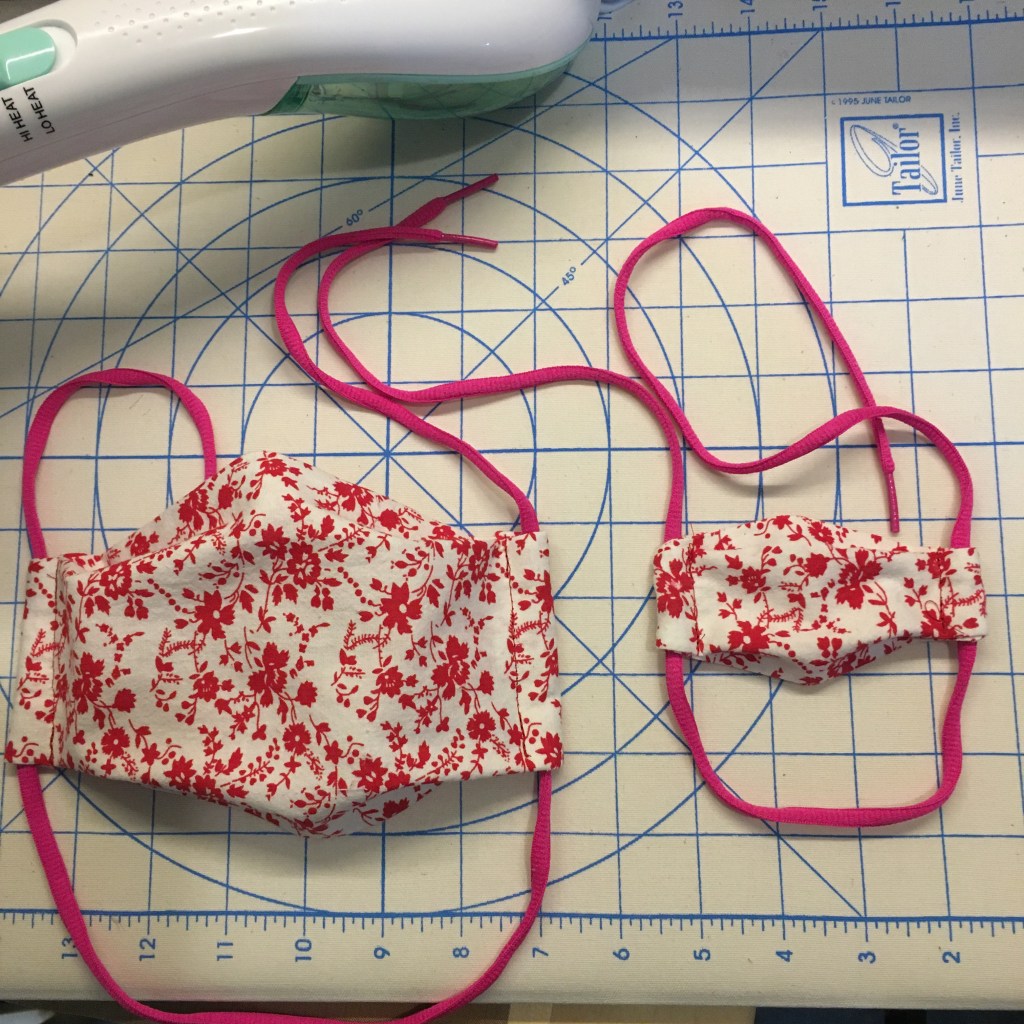
Masks for my youngest

Is the mask on the right a little small? Yes, yes it is. It is for my youngest’s doll. We put the mask on the doll first, then put her mask on. Just in the house, just for a minute, just to start adjusting to the idea. My youngest wears glasses with a strap and has hearing aids, so no “behind the ears” elastic for her; she has enough going on behind there. These are unused shoe laces that I found in my stash (and they’re pink, so perfect). The loop goes behind her neck, then the ties tie behind her head. It works. We all now have cloth masks, and will start wearing them a little at a time to get used to them. Turns out my eldest needs this gradual introduction too. I was not expecting her aversion to mask wearing. So here we go, taking it easy, one baby step at a time.

Nose wires and ear ties

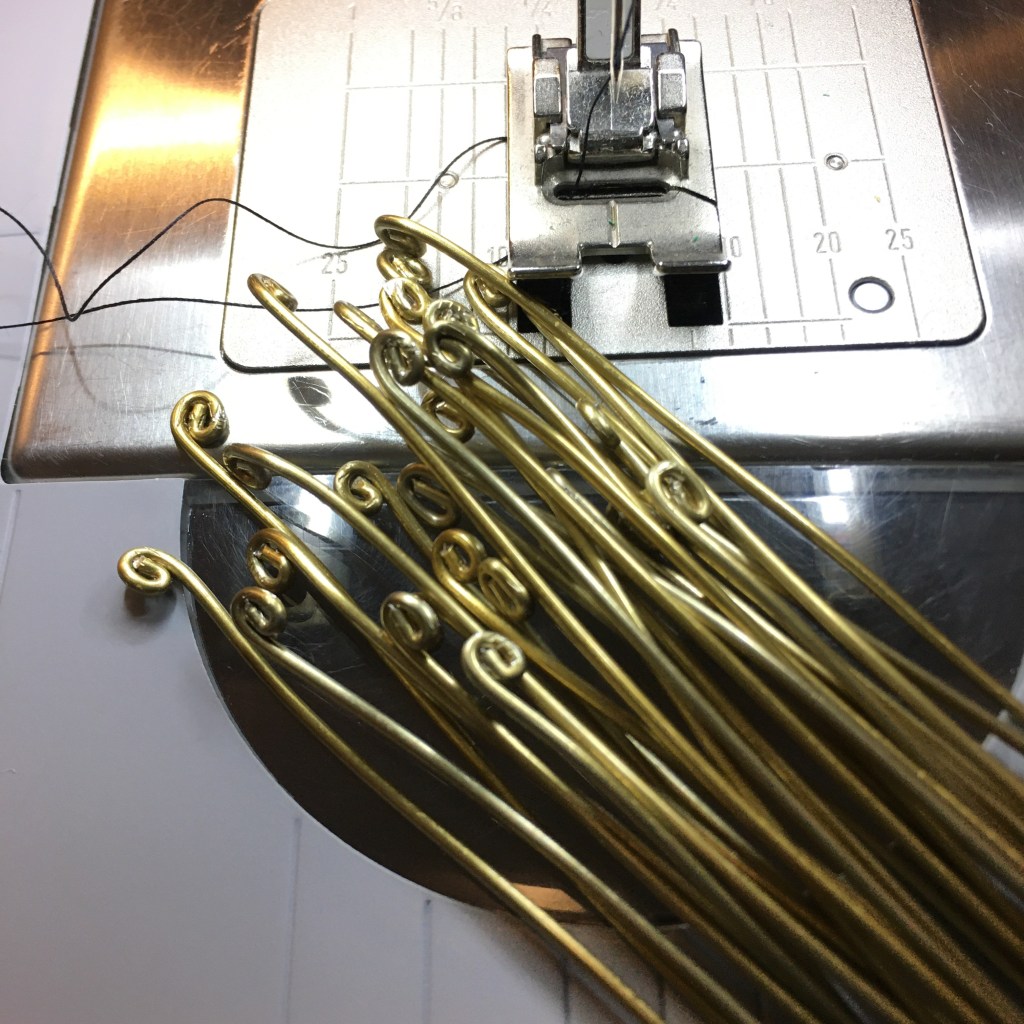
Aluminum wire prepped for masks

The pattern for the cotton masks I’m making calls for using twist ties. Probably because they are readily available, except in my house. But, as wire is one of my favorite media for crafting, I have a large supply of spooled wire and can “shop” in my craft room. I chose aluminum wire because it is light and bends easily, which makes it easier to conform around the bridge of the nose. I made them about 6”, then curled the ends in twice so it can’t poke through the fabric. The wire pictured above is about 18 gauge (that describes the thickness of the wire), and dead soft (that describes how easily it bends or the “hardness”). I won’t soon run out of wire; I even have a spool of electric fence wire that is aluminum and 17 gauge, and although it is a little harder, may still work. I might have to anneal it though. Hmm.

Making easy semi-elastic ties

Elastic is again running low, even after I cut up all my 1” elastic. For our own masks, I’m making ties from old t-shirts. I cut 2” off of the shirt and pull it to make it curl in on itself. No sew, and more comfy than ribbon. I’ll save the elastic for the donated masks, though, since the hospitals don’t want things made of used (even if clean) clothing!

And yes, the title of this article particularly amuses me. Six months ago it would have had very different connotations and would have fit better in a piercing blog than a craft blog!

Production time

Well, I say production time, but it is really an hour or two squeezed into the day when my youngest is occupied with something that doesn’t need close supervision, like before she wakes up! But I have fabric, and now elastic, and am a decent seamstress, so I feel like this is a way to make a contribution.

First round of masks to donate

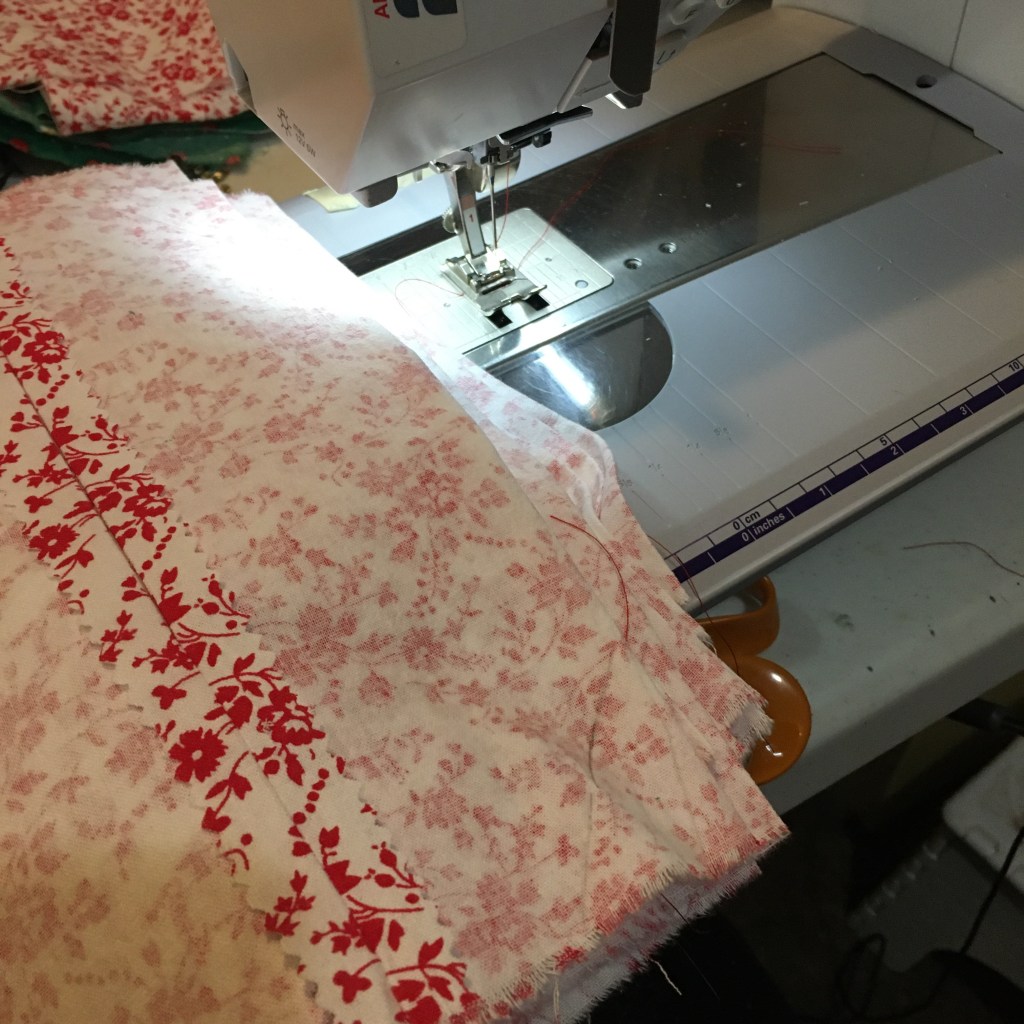
I’ve been doing a kind of assembly line for the masks. I make a stack of rectangles (good quality cotton fabric will rip in straight lines, so I rip rather than use scissors or a wheel cutter), and do one step at a time on the whole stack, rather than finish one and start on another. This reduces my mistakes, because there is less “where am I?”, and I am hoping it speeds production. It is hard in the middle of the process to appreciate the time savings, since after two hours I have a stack of pockets, but it is rewarding at the end when I have a nice stack of masks done at the same time.

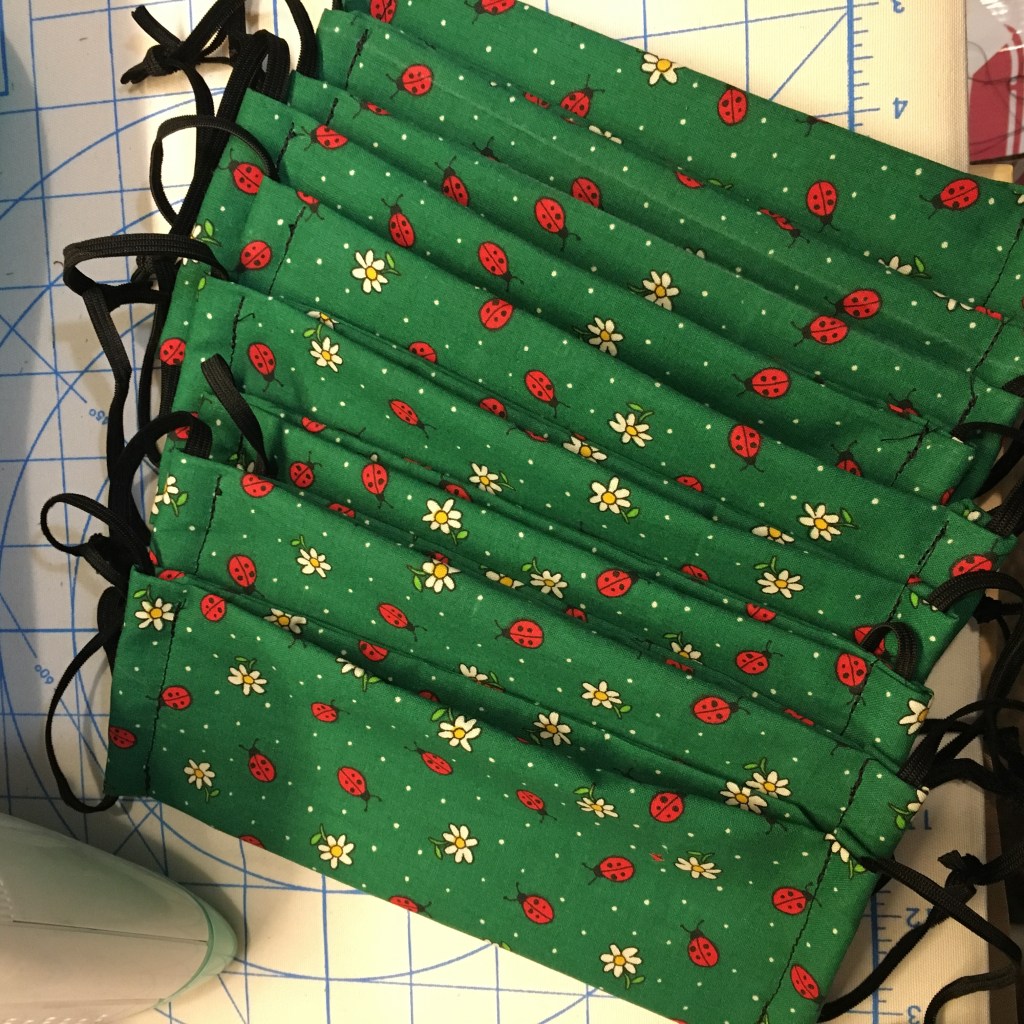
Most of batch two (there were 12 total)

I do wash the fabric on hot first, then dry using my dryer’s sanitize setting. I also use my steamer to press the fabric twice during assembly. At the end, I put the masks in a plastic bag so the cat doesn’t sleep on them.

Next set in process

I handed off the first batch to my neighbor who works for our local children’s hospital!

Well that blows my mind

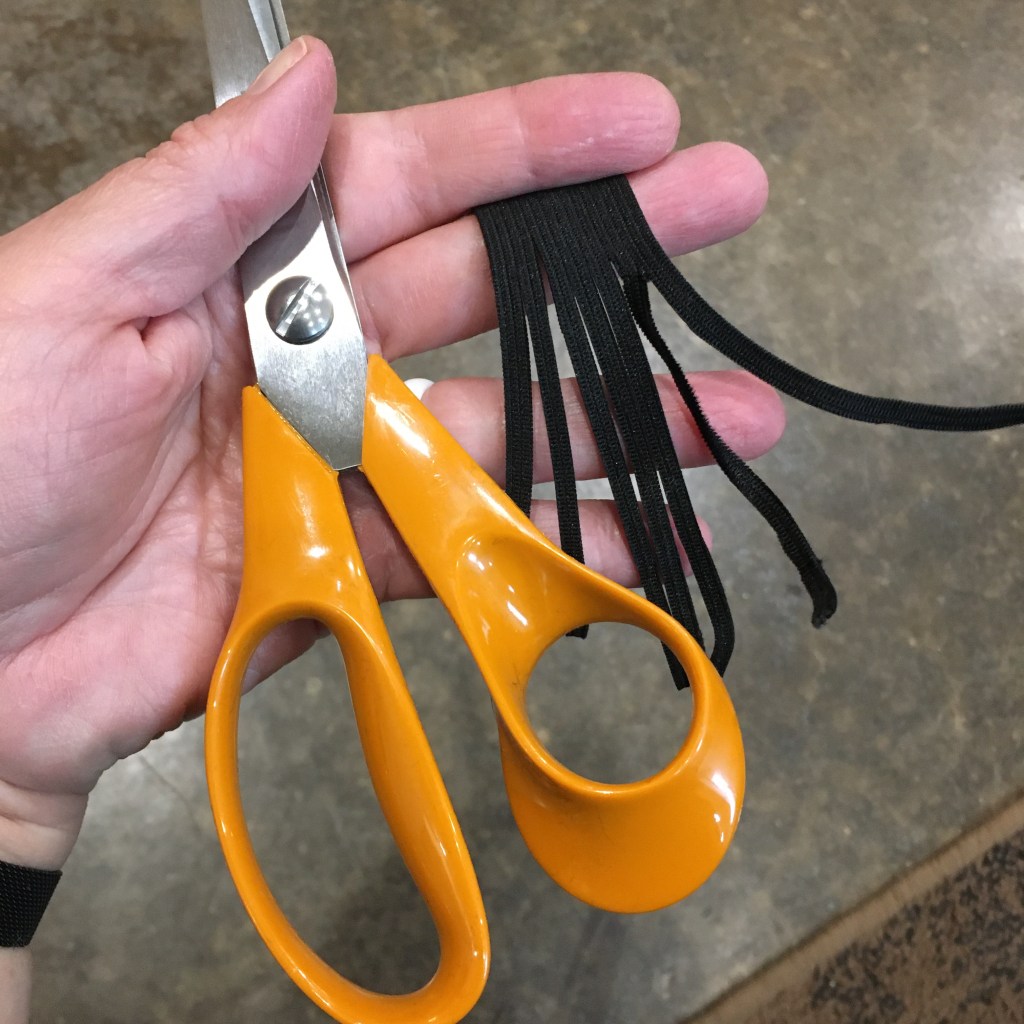
Elastic for masks is hard to come by. I’d like to use up my cotton fabric stash making masks for our local children’s hospital, but I have no 1/8” elastic. None. Nada. But I do have 1” elastic, and JoAnn’s fabric website has a useful video on how to cut wider elastic into smaller strips. So I tried it. THEY DON’T UNRAVEL. What?!? How? Well, the how will have to wait until later, I have elastic straps to make. I do seal the short ends of the elastic by melting with a flame (just a little, just to melt the fibers, not to burn). Then I use sharp scissors to cut down the channel between the elastic ridges. I do not need to seal the long edges of the elastic. As long as I cut in the valleys and don’t accidentally cut across a ridge, the new smaller strip does not unravel. I pulled on it, hard, ran it back and forth between my fingers, and all the fibers stayed in place. Wow. Neat. Ok. Onto production!

Cutting 1” elastic into 1/8” elastic (about)