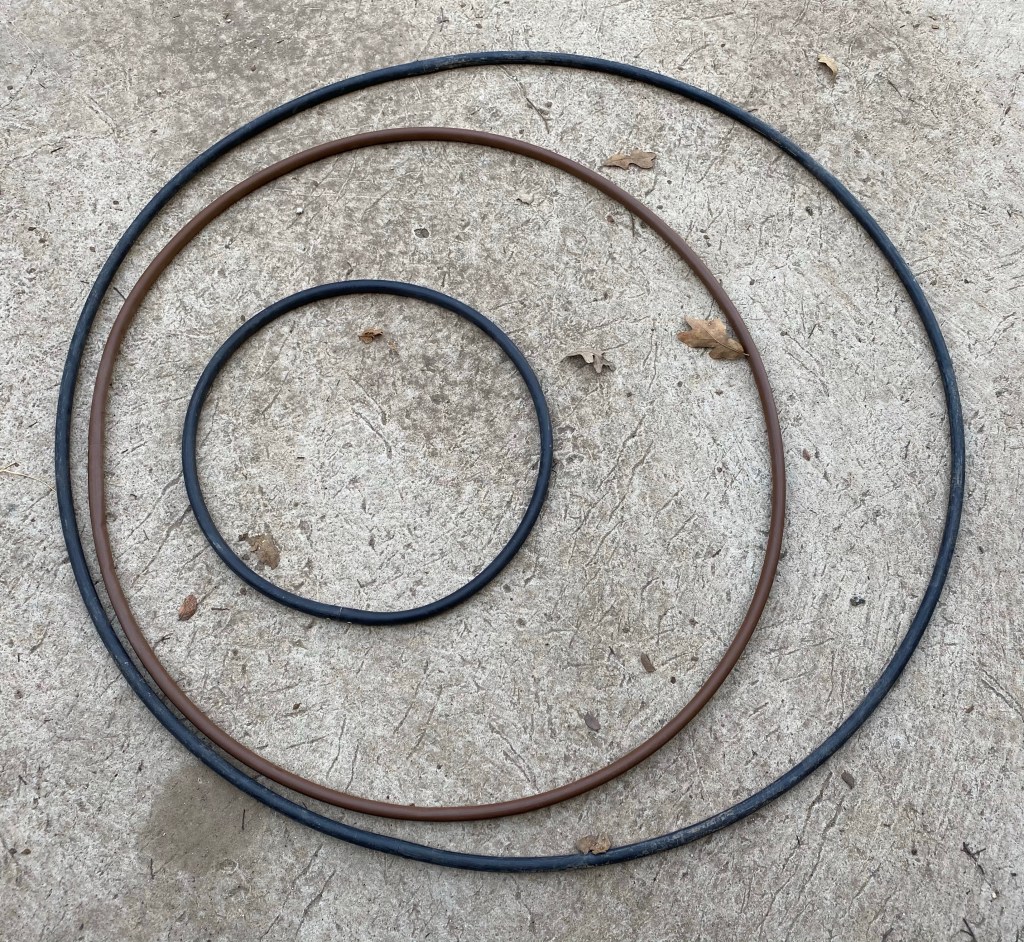
We had left over bits of irrigation tubing, and my eldest expressed interest in teaching the puppy to jump through hoops. Now we have three different sizes to practice with!
Hoops made from irrigation tubing
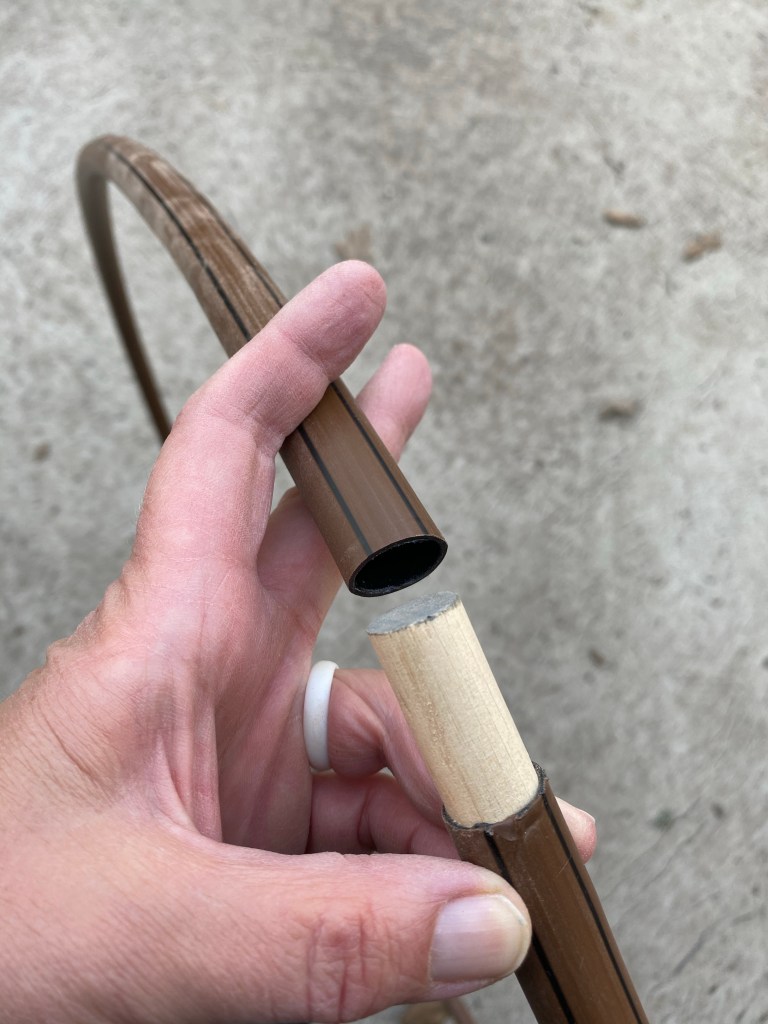
I found a 3/4” dowel that fit snugly into the drip hose, so cut about 3” off that and slid both ends of the tube onto the dowel.
Dowel inside the tubing to keep it in the round
To keep the dowel in place I used some small screws that bit into the wood, but didn’t go all the way through.
Two screws hold the dowel in place
The solid tubing had a bit smaller inside diameter, so I sanded down the dowel until it just fit and I could push the tube ends on.
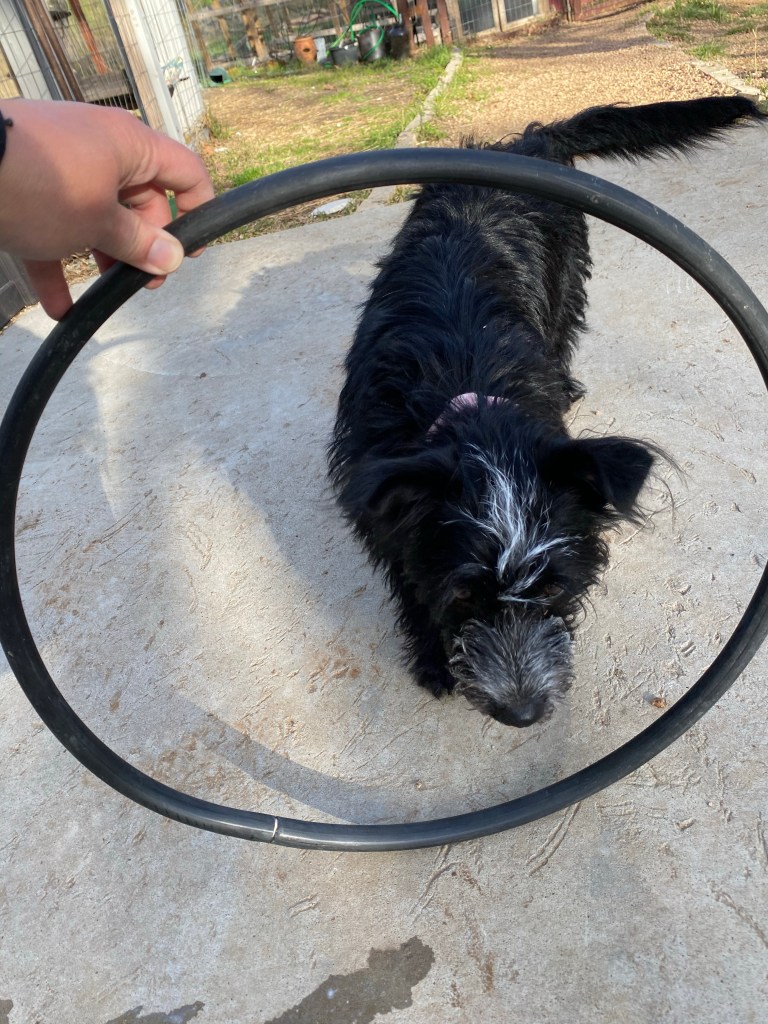
Missy walking through the small hoop
Missy already knows how to walk through a hoop! As recommended by the backyard agility article we read, we’ll wait until she is a year old to start the jumping part since jumping is hard on growing bones.
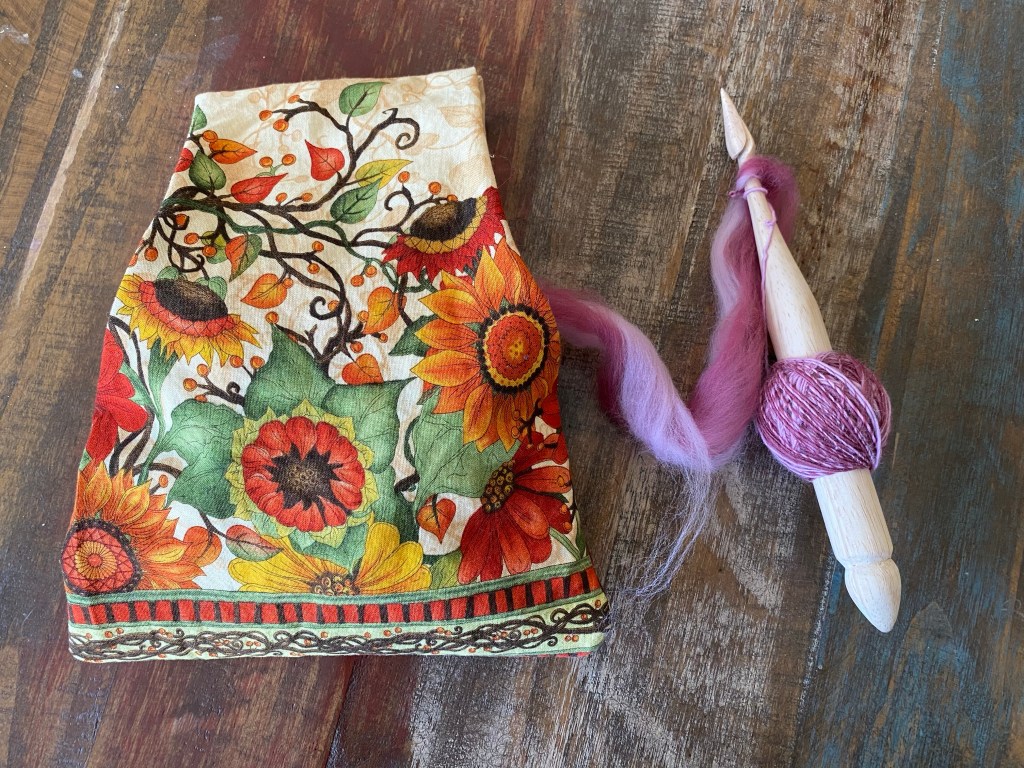
I have a small arm bag that I made to hold my crochet yarn while I work. It hangs on my arm, so my supplies are close and don’t get tangled. I thought I would try the bag for fiber management for spinning, but the bag is full of a current crochet project, so I made a new one! This is my favorite fabric. When I found it in the store years ago I bought the whole bolt. I have been slowly working through it for various projects, and each time I marvel at the colors and the composition. Since it has a thick border and the rest is a more subtle background vine, it works perfectly for a lined bag.
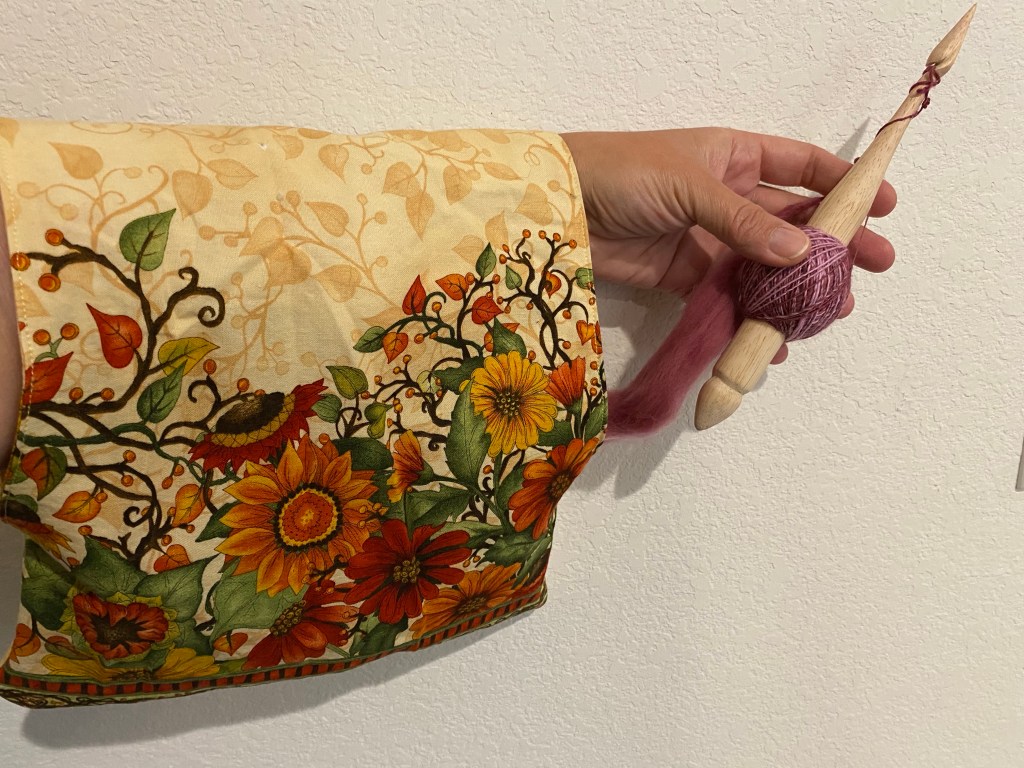
Small arm bag to hold fiber for drop spindle spinning
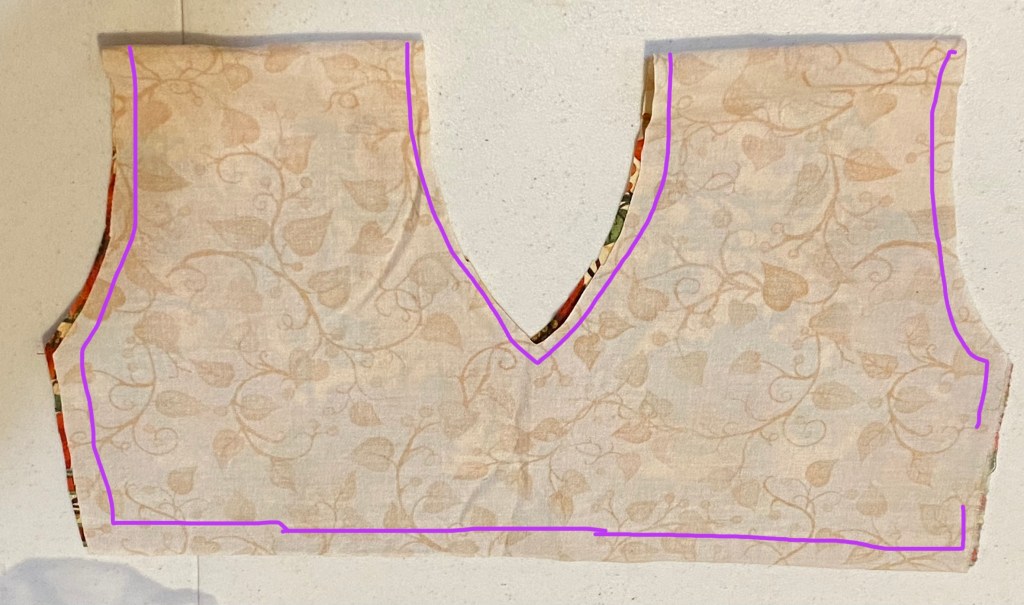
I started by folding my fabric to the height I wanted for the bag plus seam allowance (about 11”). With the folded fabric cut for height, I then cut the width double at 17” (to avoid one seam). I folded this piece in half and cut shallow arcs from about two thirds down, to the top, which makes a wide strap to hang on my forearm. I opened the side fold, then with right sides together sewed along the cut edges, leaving a space in one side to turn it right side out.
Purple lines indicate sewing path, with gap so the fabric can be turned right side out
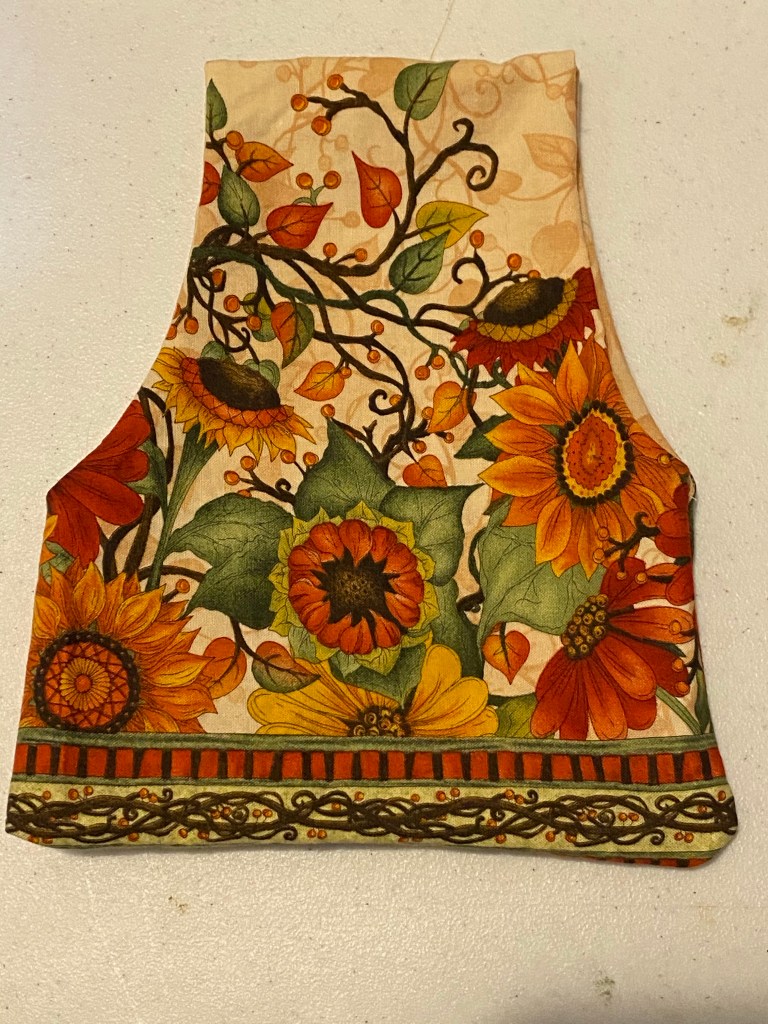
I clipped corners and turned the piece right side out, then with the patterned sides together, sewed the bottom three sides and the top, leaving the arcs open. Another inside out and the bag is serviceable! A nice touch is to over sew around the arcs to keep the seam neat.
Serviceable small arm bagA larger version of the arm bag to hold more fiber! Shown in use.
I’ve started to reread the book that started me spinning “Respect the Spindle” by Abby Franquemont. I don’t reread books often (Terry Pratchett excepted), and usually use books on craft as quick reference, but since I’m really enjoying spinning, and have been spinning daily, I thought I might understand the text better now. And I do.
The half hitch on my bottom whorl spindle has been giving me trouble, slowing down the production and acting a a frustrating bubble in an otherwise smooth flow (for a relative beginner). In her book, Ms Franquemont mentions many different methods for securing the yarn before adding twist, including using a notched shaft. I don’t have any notched shafts. So I made one. Rather than notch the shaft of my thin olive spindle, I started with a scrap of dowel from the garage. I shaped it using my belt sander, started the notch with a small saw, and refined the shape first with needle files, then with folded sandpaper.
Drop spindle shaped from a dowel
I kept the dowel thickness in the middle to try making yarn balls as one would with a nostepinne (yup, that is new to me too, but so cool!) The shaping is like a Russian supported spindle (roughly, the pictures I’ve seen are more elegant), but I’m using it also as a drop spindle (so I can walk and spin). I had to start spinning to test the notch, so my yarn may have a bit of wood dust as I refined the shape, spun, and refined some more.
View of notch grooves from the top of the spindle
My goal with the notch was to get the yarn closer to the center of spin as well as be functional for spinning clockwise or counterclockwise. The cone tip helps with flicking the spindle to spin, and the grooves actually help with grip. I have not applied any finishing oil as I may still tweak the shape. Sanding down to 400 grit though keeps the yarn from catching on the wood.
I recently bought a sweater for my youngest and the sleeves were WAY too long. I knew this when I bought it, but figured I’d sew seams like I did for her jacket. Well, when I started investigating the construction, I saw that the sweater wasn’t just knit material sewn with thread, but actually knitted to shape and the seams joined with yarn. Hmm. I’ve seen a bunch of Pinterest pins on grafting, maybe I should try that.
Seam picked out on the arm of a sweater
I attacked the first sleeve by undoing the seam and using that yarn to stitch the cuff where I wanted it, then undid the knitting. Nope. It is functional, but not seamless.
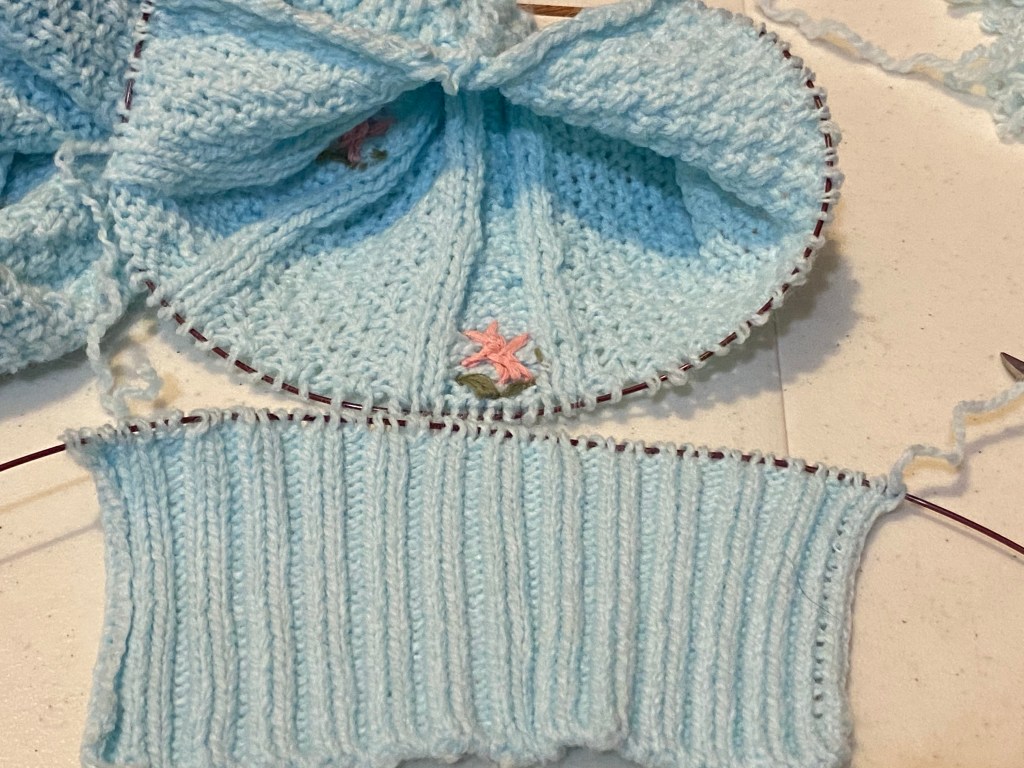
On the second sleeve I removed the seam first again, then clipped the knitting at the top of what needed to go. I carefully (oh so carefully) undid the stitches and picked up the loops on a circular needle as I went. (I tried putting the circular needle in a row first, but kept accidentally switching rows.) I then frogged it (rip it rip it rip it), down to the cuff where I carefully picked up loops again on a circular needle.
Loops kept on a circular needle after removing excess
The sleeve had more stitches than the cuff, so I had to center the cuff and use some of the now spare yarn to graft the loops from the two needles together following these directions. Then I sewed the seam and did have to trim some knit fabric off. I did accidentally graft from the inside, but it was a happy accident because the perl side went better with the sweater pattern!
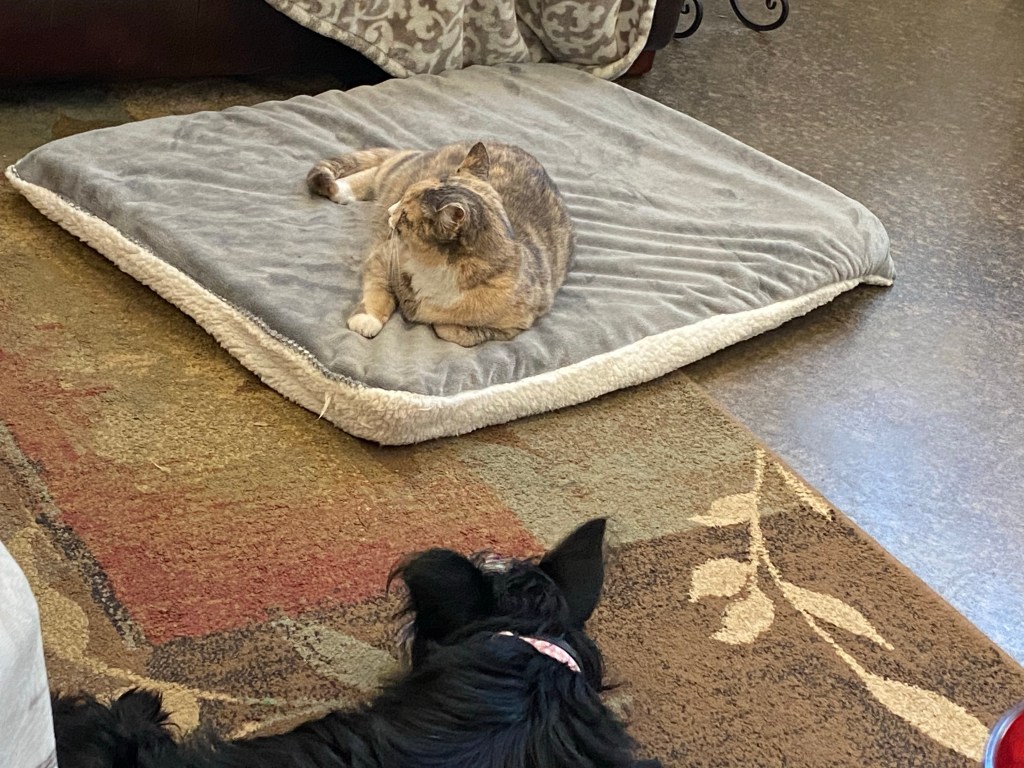
Awhile ago I bought a pet blanket I intended to go in the car. It was fuzzy and water resistent, and I thought it would entice Griffin, our older dog, to the back seat. Well, the thing had two layers and wasn’t quilted, so was crazy slippery. Not good to cover car seats! Flash past the initial purchase, the failed attempts, and the months of no car rides (we are easing Missy back to the car rides), and the blanket and some left over egg crate foam were taking up space in my craft room. So I used the blanket to make a pet bed. I cut the foam to make two layers, cut enough fabric to cover, sewed velcro to close (next time I’ll do a zipper, which is easier to sew than velcro), and sewed the open seams. The pets now compete to lay on it.
Missy on the new pet bedIzzy on the new pet bed, and Missy very confusedSophie on the new bed, Missy just watching.But Mom, it is my bed!
Oh yeah, and it is National Puppy Day! I don’t think the cats got the memo.