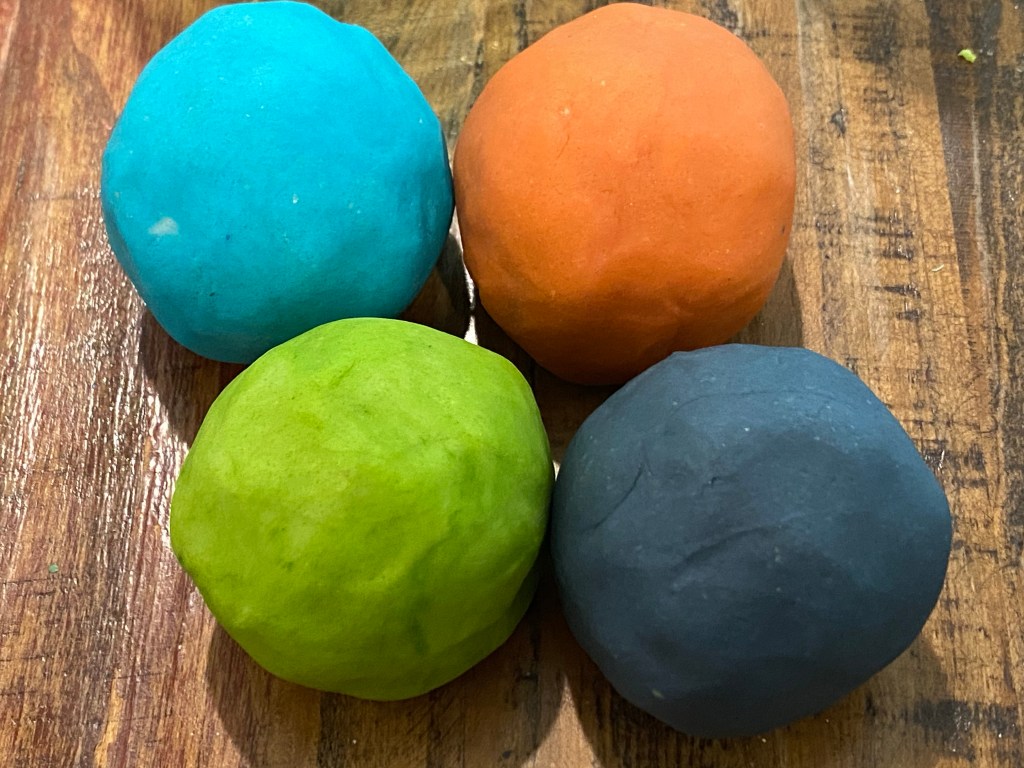
Growing up with a gluten-free Mom has meant that my kids have never had home-made play dough. I never had gluten containing flours in the house. (Although they were provided a steady supply of the manufactured kind, so no real hardship.) Until now. We used the Heritage Wheat to make play dough and color it with gel colors following this recipe. This is NOT the way to make play dough cheaply, as the Heritage Wheat is not inexpensive, but it was quite interesting to actually make it (I didn’t realize it had to be cooked), and the texture is more satisfying than the canned variety. They had the most fun kneading it.
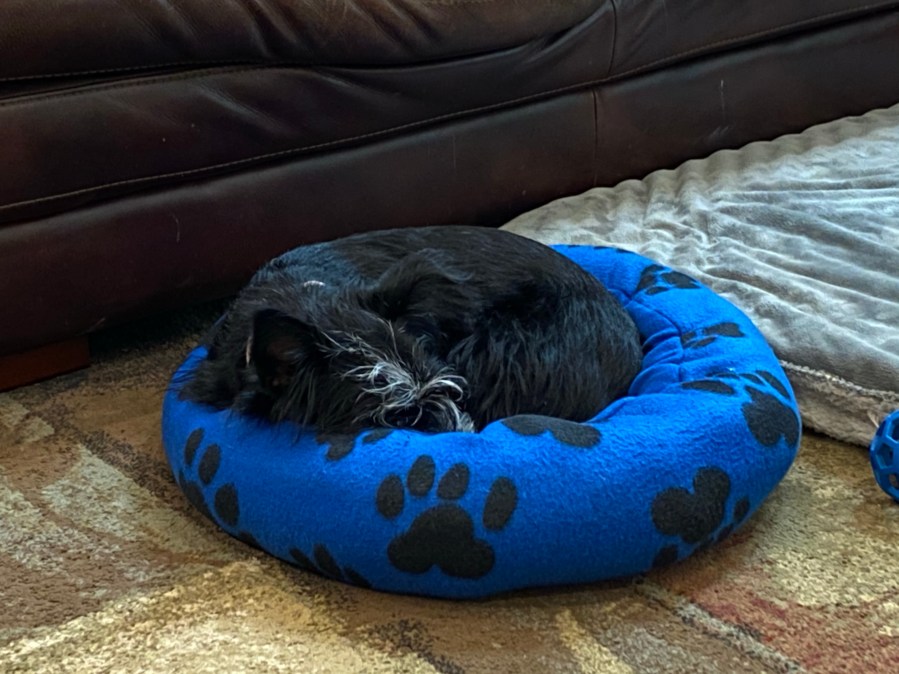
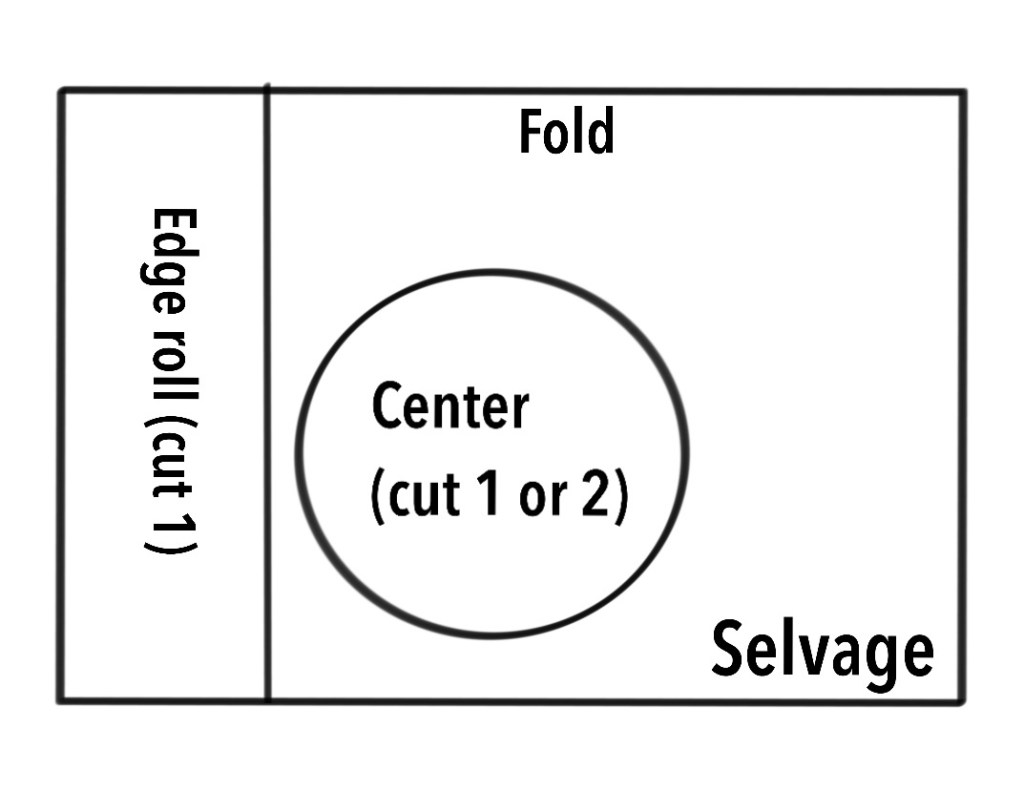
I read that some dogs find comfort in the donut style cuddle beds. I had some fleece and stuffing so decided to make one. I started by cutting off about 14” from one end of the fabric, from selvage to selvage. This will form the roll. Then I laid the strip loosely in a circle with ends overlapping a couple inches on the remaining fabric and cut a circle to the outside diameter. (If you want a stuffed base, cut two circles.)
Using the cut end to cut the center roundSketch of cuts for donut bed (not to scale)
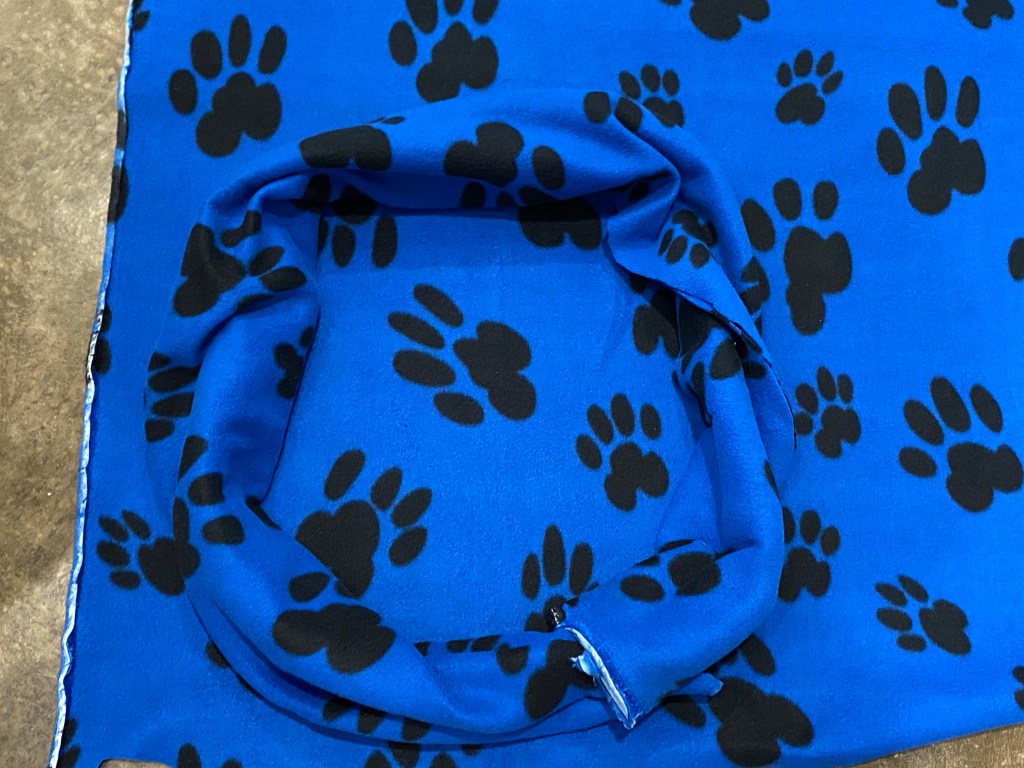
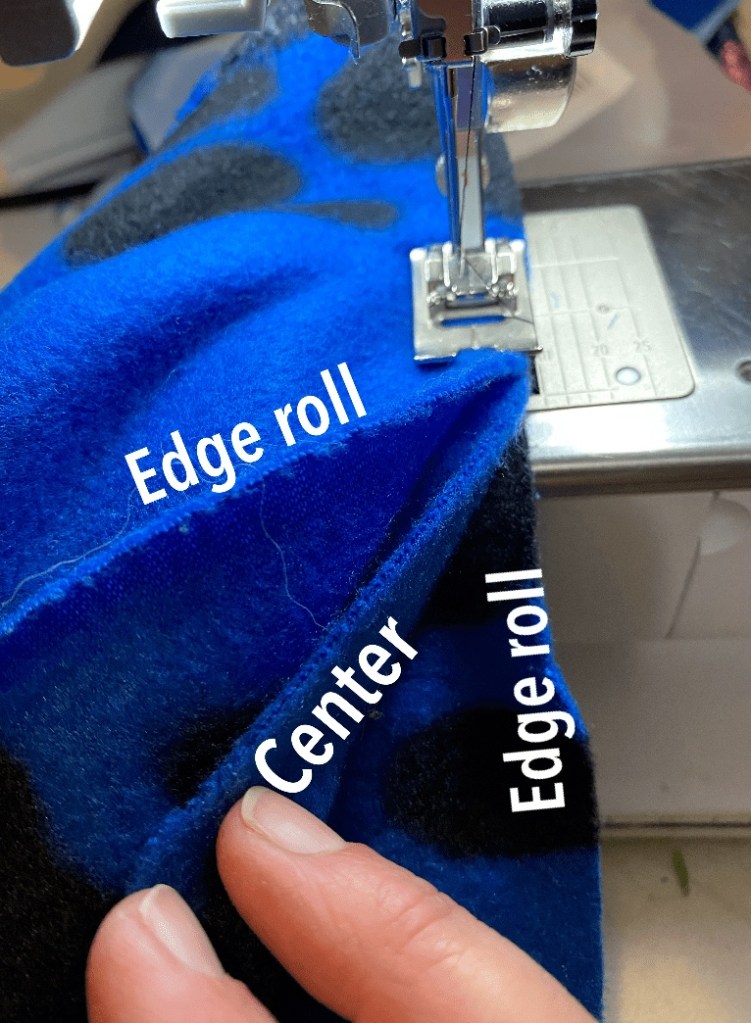
To sew, fold the edge roll in half length-wise, with the circle inside and one section of the circle edge lined up with the edge roll cut sides. I used a jersey stitch on my machine. Start an inch or two into the seam.
Showing how the cut edge of the circle lines up between the edges of the folded roll fabric
If you have ever sewn trim into a seam, this is a similar technique. The center is sewn inside the tube, so that when it is turned right side out it lays correctly. It is a little fiddly sewing the layers together without catching unwanted fabric, and the circle bunches up inside the roll, but it turned out easier than I feared! It wouldn’t be a problem to make two circles so the bottom could be stuffed. I sewed the entire circumference of the circle, but to stuff it, stop short a few inches. I used polyfil to stuff the edge roll, but shredded memory foam would work too. If you cut two inner circles, stuff those as well before hand sewing everything closed. I ended up with some extra fabric on the edge roll, which I just tucked in before sewing.
Finished cuddle bed, with seam rolled underMissy likes the cuddle bed
I am doing a spinning experiment (the results of which will be posted later, but this was funny, so I thought I would share.) The gist is that I am spinning bits of fluff as I am walking, which gets a bit problematic when there is some wind and a loose tuff of fiber. It must have been quite the scene with my bit of alpaca fleece rolling merrily down the street with me chasing after it.
Alpaca fleece rolling down the road, making a run for it
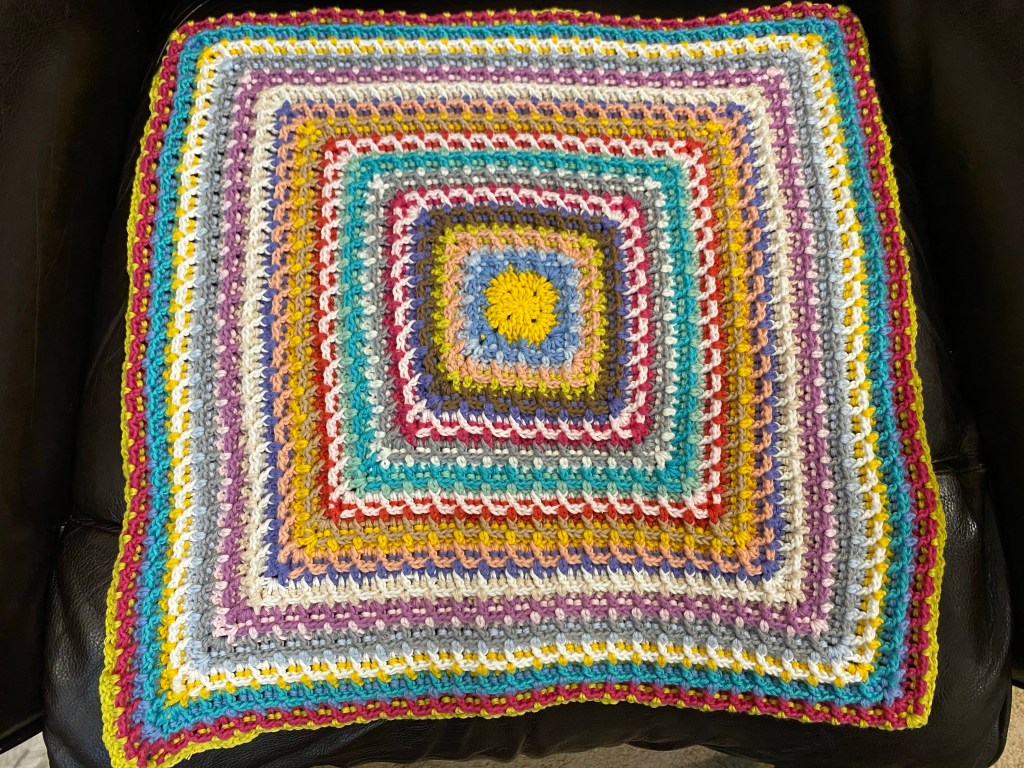
I had a small bag of little skeins of cotton in a variety of colors. The bright hues and soft cotton seemed a good match for a baby blanket. I found an intriguing pattern for a waffle stitch blanket that starts in the middle, which is ideal for an item made of odds and ends, as when the yarn is done, so is the project. I also wanted stripes (which frankly made my project more complicated for yardage calculations, but the color interaction in this stitch was worth it). The reason the stripes increased the difficulty is that I needed enough yarn of one color to make it all the way around. Not a problem at the beginning, but quite the conundrum nearing the edge. I ended up weighing the last few skeins and putting them in order from lightest to heaviest to make it more likely to have enough.
Baby blanket in cotton, crocheted waffle stitch, center start
The instructions had me turn the work at the end, which to me seems to defeat the purpose of crocheting in the round. I do really like the two-row repeat, which makes it a very easy pattern to memorize, and the simple row pattern makes it easier to recognize where the stitches need to go. This idea works fine working only from the front, with no turns. To illustrate, I put together a chart (I like charts better anyway). I made this one in Adobe Fresco, but I think if I needed to make one with any more rows, I would work on a desktop in Illustrator so I could align the rows more precisely.
Crochet chart for waffle stitch with a center start, to increase size, repeat rows 3 and 4
I’m still a student of colors and how they interact (and probably always will be), and the fascinating thing about the build of this blanket was the way the the colors looked pastel crammed together in the bag, but became quite bright the way I ordered them in the blanket. I made a hat in double crochet stitch (American notation) from the bits and bobs left over from the odds and ends of the blanket and the overall color feel is quite different.
I know skinny t-shirts are a thing, but there are times when they are too skinny! My eldest has a favorite print shirt that fits this category, and drives her crazy when it rides up. We did look for a larger size, but it has been a few years since she received it as a gift. To fix it, I found a thin knit fabric that matched the weight of the shirt (and coordinated with the print), then picked out the side seams all the way up, including the sleeve seam. Using a different, well-fitted shirt as a guide, I cut 3” strips of the new fabric and sewed them in using the jersey stitch on my sewing machine.
Skinny shirt given some wiggle room by adding side panels (shown on a dress maker’s form)