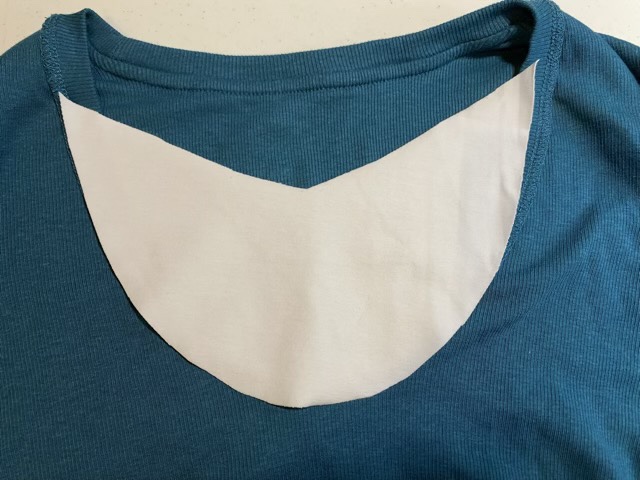
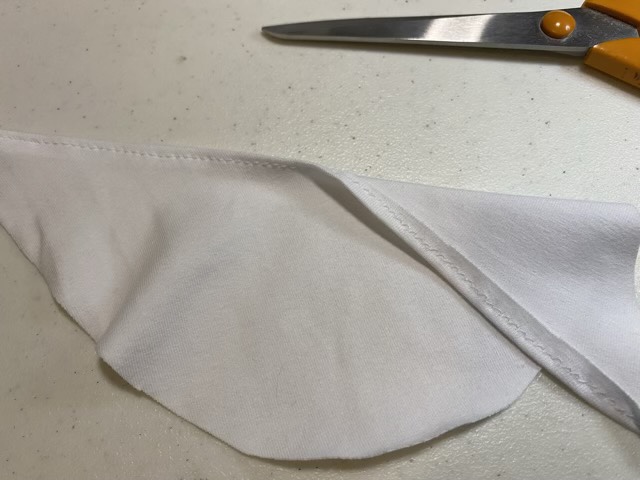
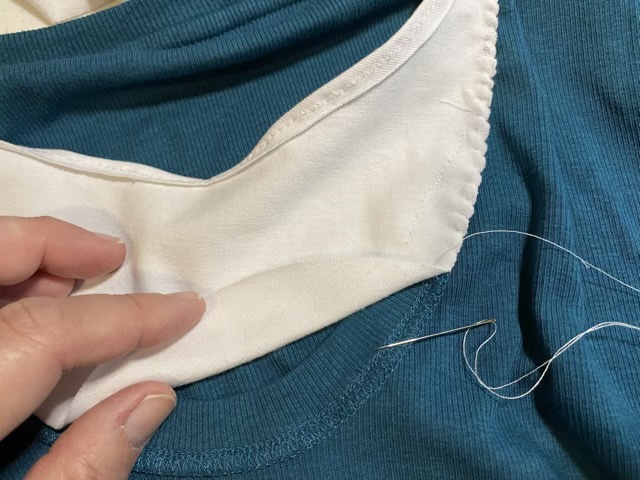
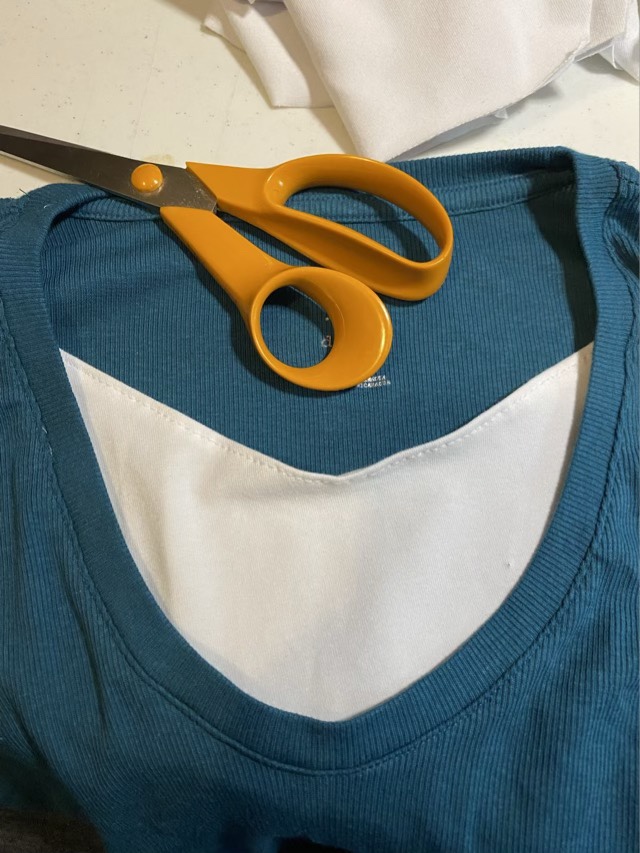
I picked up a shirt when shopping with the kids and the neckline turned out to be way too low. So I added a modesty panel using cotton knit material. I did attempt to do the whole alteration on my machine, but I had a terrible time feeding the thin knit material consistently under the sewing foot. Frustrated, I turned back to hand stitching; the inside of the neckline had a convenient seam that made making an invisible whip stitch easy. I think the next time around I will hand stitch a decorative edge on the top as well, leaving the machine work for woven cotton and inside seams. The finished product has the look of layers, without the bulk.
Crescent of material cut to cover the low neck line of a knit shirtMachine stitched top edgeHand stitching panel to inside of shirt with a whip stitchInstalled modesty panel
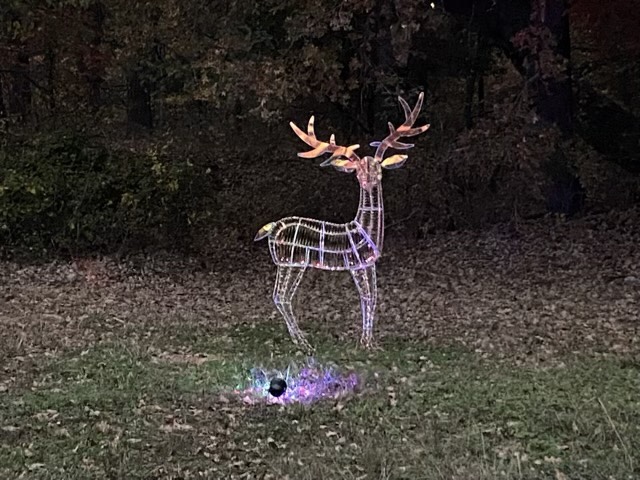
Last year’s purchase of a pre-made pre-lit deer decoration has gone through a series of changes at my house. I liked him standing in my meadow so much, I took off his festive holiday bow so he could stay there all through spring and summer. He moved to the back woods when it was time for the ghost to come out, but you could still see him through the branches which was neat. In early December, I stripped out all the old LED light strings and instead set up a LED wave light in front of him set to a multi-hued pattern. The light does a much better job showing of his iridescent trappings, and looks stunning in the full dark.
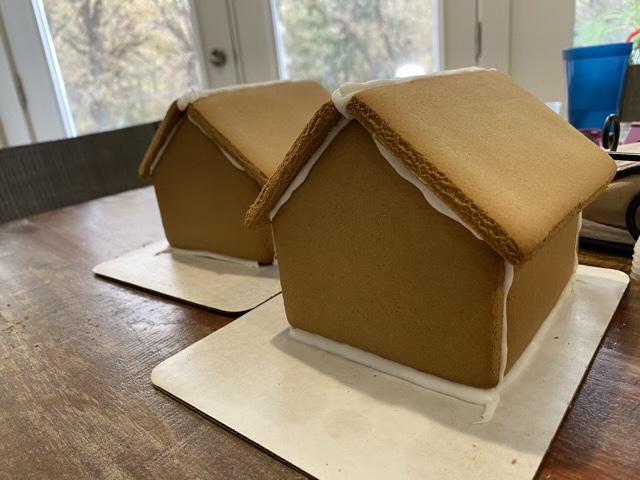
When I tried to assemble gingerbread houses last year for my kids, it was a struggle to get the sides and roof to stay up until the frosting set. This year, they went together much easier. I did actually get out the big knife and trimmed the side walls square, this time. My youngest also helped stabilize as we built. Life lessons: live and learn, follow directions, and accept help.
Gingerbread houses assembled and drying before decorating
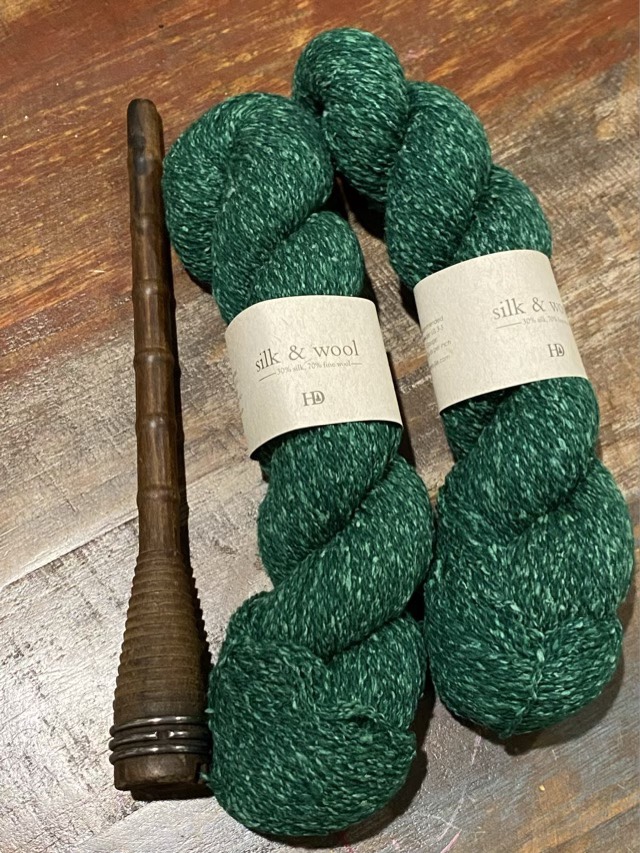
Harrisville Designs in New Hampshire has moved their machines back to the original factory floor in town, to strengthen the ties to the community, switch to renewable energy, and return the historic buildings to their original purpose. To celebrate, they offered customers a piece of history, an antique spinning mule bobbin, if you purchased a skein of yarn. I ordered yarn.
Antique maple spinning mule bobbin and new silk and wool yarn from Harrisville Designs
A spinning mule is a machine used to spin yarn on multiple bobbins as once. (Here is a place to get started on more information.) It drastically improved the amount of yarn that could be spun at one time and replaced the spinning wheel as the main production of yarn in the 1700s. This bobbin is between 50 and 100 years old. Fascinating. I can’t collect many antiques, I just don’t have the room, but this is small and will go with my hand spindles.
Here is how to make a smaller box from a big box. We get a regular supply of cardboard delivered to the house, but they are usually too big to use to wrap gifts directly. So I use them make smaller boxes.
What you need:
Large cardboard box (or sheets of cardboard)
Heavy scissors (I use kitchen shears)
Ruler
Pencil
Length, width, and height for the new box
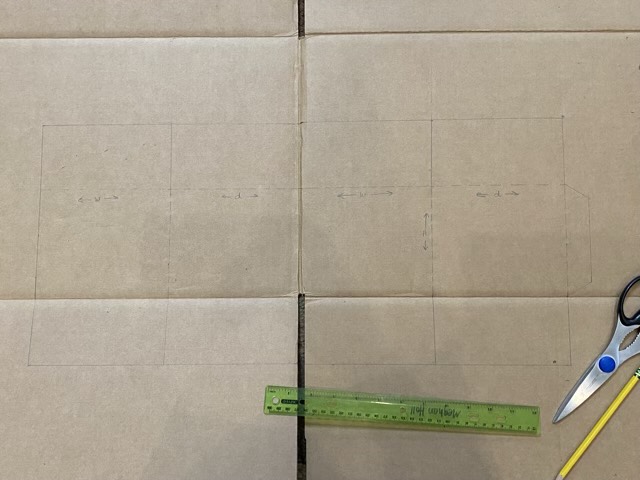
Start by deconstructing the old box. Most cardboard boxes have a single glued seam along a side edge that can be pulled apart. Lay the box flat and layout the cut and fold lines for the new box.
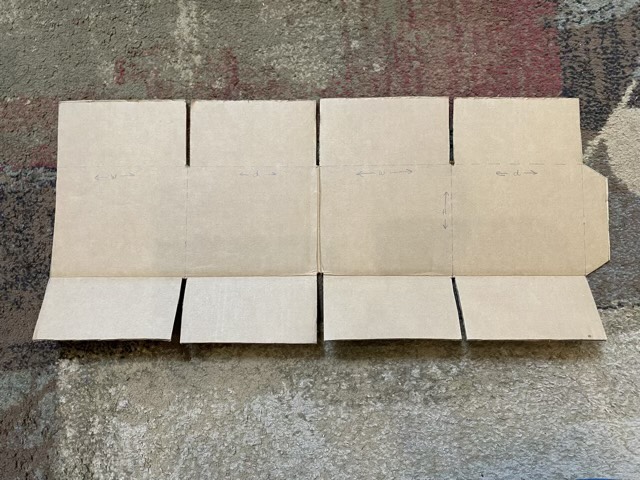
Cut and fold lines laid out on cardboard
I recommend using existing fold lines if possible. Measuring out from the center, mark the width of the new box with dotted lines (for folds). My box is 6x6x5, so the sides are all the same width. If you need different width and length, alternate the values as shown in pencil in the picture above. Mark the height of the box across the sides also with a dotted fold line. Make a one inch tab on the end (mine is on the right). Above and below each side, measure out flaps that have a height equal to 1/2 the width. Then using heavy scissors, cut out along the outside lines.
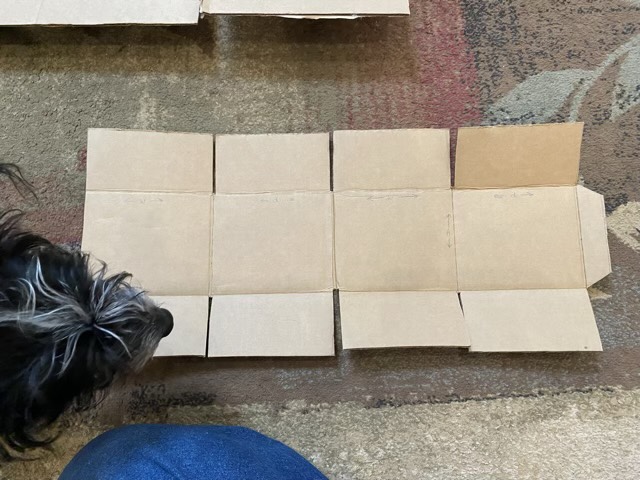
Box pattern cut from larger box
Cut the flaps free by making two cuts on either side of the line. This makes gives room in the corners when the box is assembled.
Box flaps cut free
Before folding the sides, tab, and flaps, gently score the lines using a ruler and a pointy, but not sharp implement (such as the outside tip of the scissors, or a dull pencil). Then gently fold the cardboard along the line. If the cardboard buckles instead of folding neatly, score again a little harder, and work the fold with your fingers close to the line.
Flaps, sides, and tab prefolded
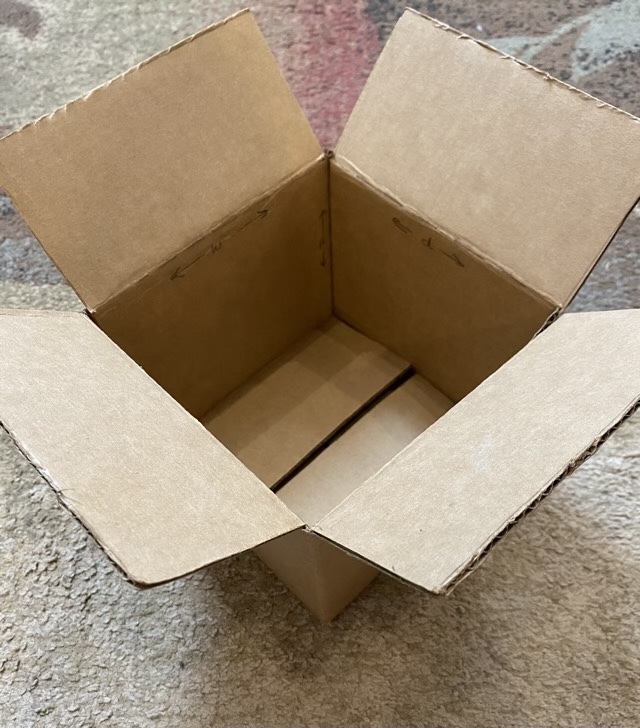
Check the box by folding it together with the flap inside the opposite edge. If it looks serviceable, use hot glue to secure the tab in place. The box can be store flat, or assembled with packing tape.


 Critters and Craft