Wrist strap

I’ve been pinning many pictures of things I can do with my Inkle loom woven straps. So many things, but what caught my attention this time were wrist straps. Most of the articles talk about attaching keys, but I also saw wrist straps used for walking canes, cameras, and small bags. I also saw a method for securing the end of the cut woven strap with clear flexible glue. I used Modge Podge, which worked well painted on the ends and allowed to dry.
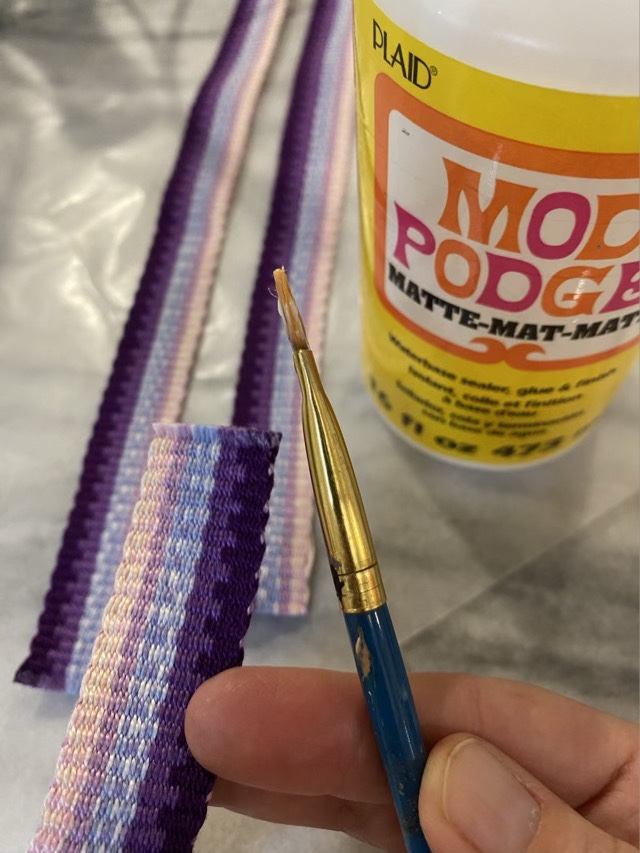
Securing cut ends by painting on clear glue

There is metal clamp hardware that make the creation of a wrist strap quicker, but I preferred the sewn leather direction. I noticed that leather makers use a wooden clamp that is similar to my bookbinding clamps. My clamp is larger, but it worked well to hold the pieces together while I stitched. I used a single ply of waxed nylon thread to sew a loop of leather to the ends of the strap.

Stitching leather using a book clamp

Rather than a D ring, I used a split ring and a toggle clasp because these can be removed if the strap needs to be modified with different attachments.
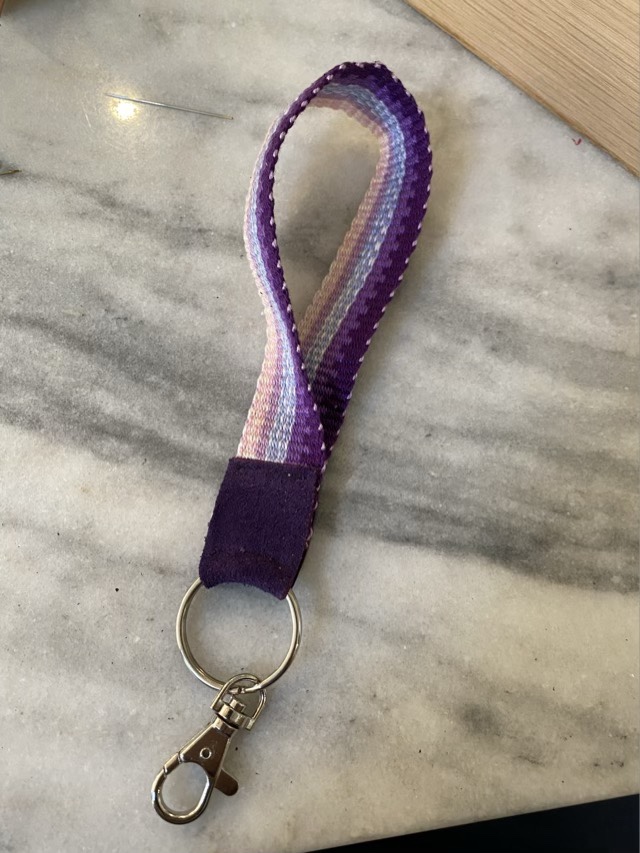
Wrist strap made from an Inkle loom woven strap and leather

I liked how this one came out, so I made more.
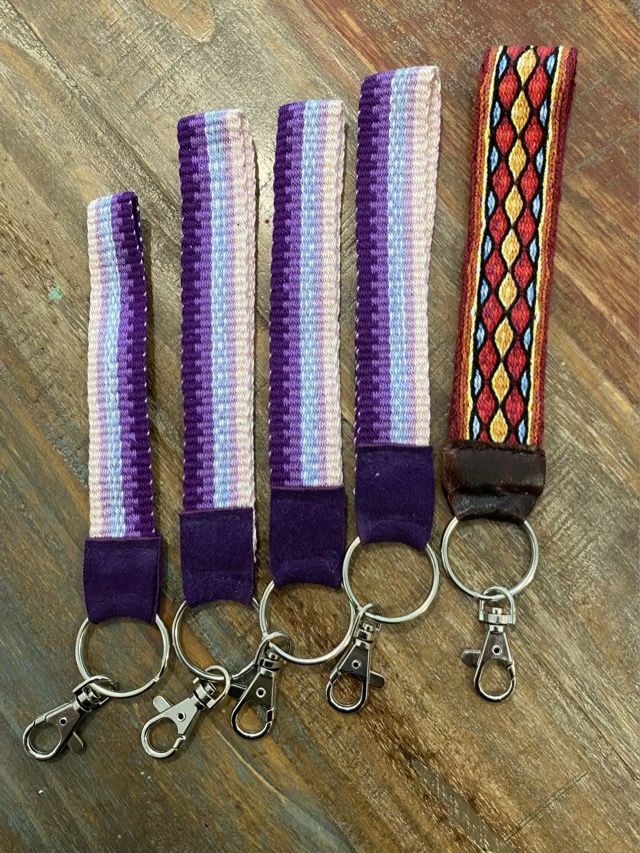
Hand woven, hand sewn, cotton and leather wrist straps

Spinning hemp

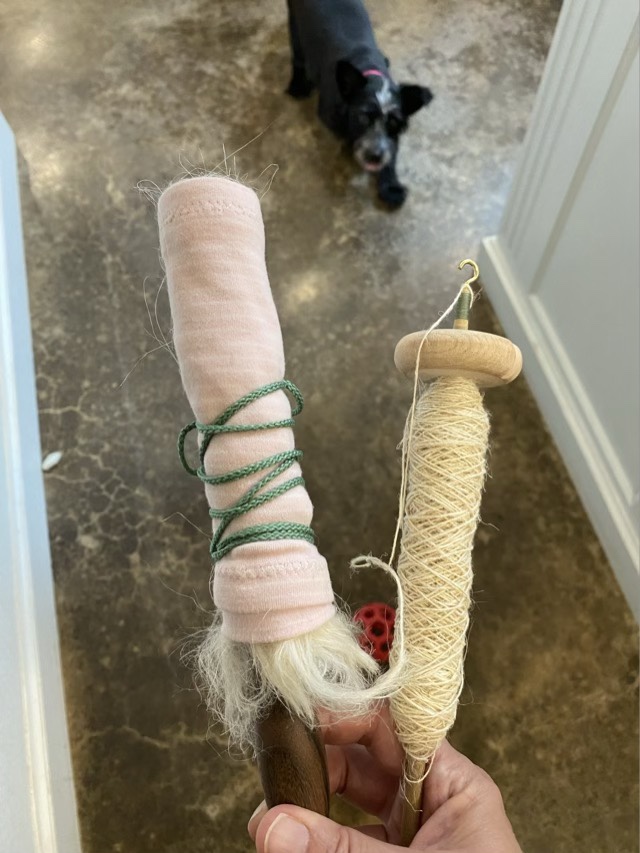
I am delving into the fiber samples my sister gave me, starting with hemp. I tried spinning the hemp as I would wool, with a drop spindle and dry. The fly aways were epic. Since I had luck spinning flax roving using a bit of moisture from a sponge, I tried that method with the hemp. It meant I had to transfer what I had spun to a long shaft drop spindle (wrapping the yarn along the shaft at a low angle reduces the stress on the fibers).

Moving the spinning operation from a single spindle to a spindle and distaff setup

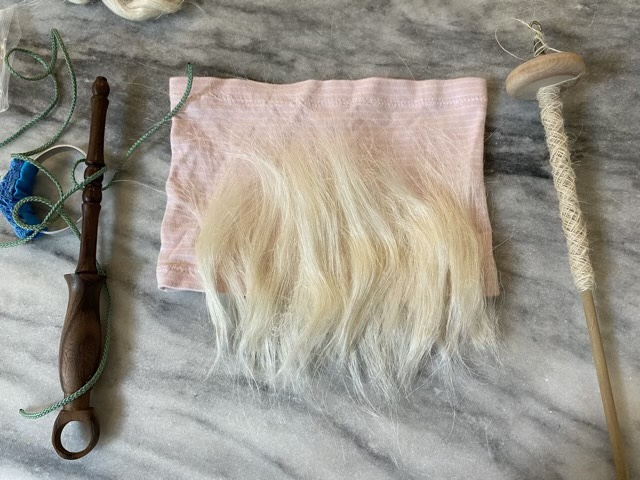
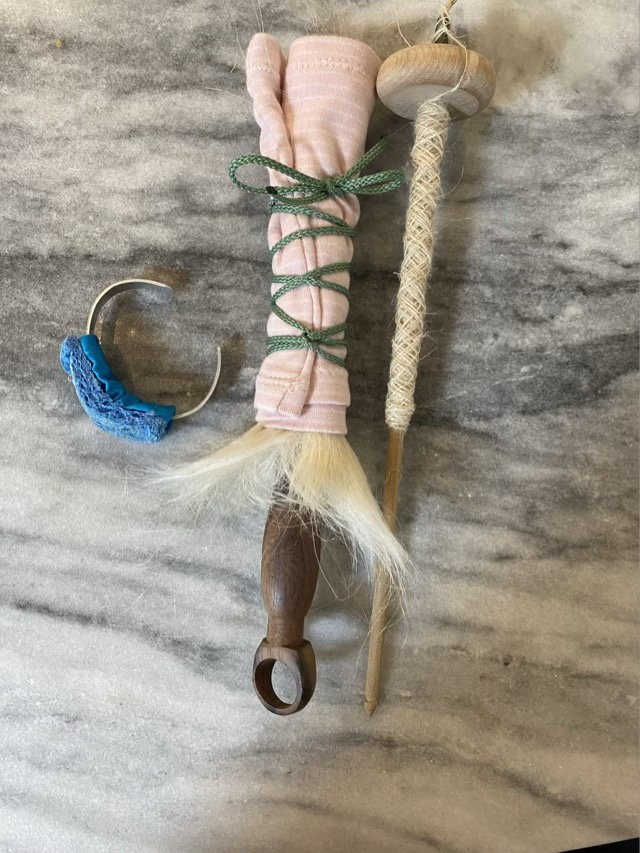
Rather than spinning directly from the roving, I separated bits of roving and laid them on a rectangle of fabric (all those old masks came in handy), taking care to lay them in the same orientation. I then rolled the fabric around the distaff and tied it loosely with some cord.

Dressing the distaff with hemp by laying down the fiber on a cloth
Sponge bracelet, dressed distaff, top whorl drop spindle

As I spin, I wet my fingers on the sponge before gripping the fibers to draft. It helped tame the fly aways and gave me a smoother spin.

Spinning progressing

Nearing the end of the rainbow

Rainbow colored yarn

I’ve been slowly progressing on my brioche rainbow scarf project. I’ve made it down to where the colored yarns need to be rewound because as I pulled from the center, the yarn was getting tangled. Since this is a waiting-in-the-car project, I rolled up a park map to use as a nostepinne to rewind each color then pop it back in the split pool noodle (which really works well to hold all the colors). I still have many hours of work left, but the end is nearing. It is funny how I used to consider scarves quick and easy projects.

Spinning flax roving

I have finally finished spinning the flax singles from my flax roving. Flax prepared as a roving is not the traditional form, but I didn’t know this when I made the purchase. It has been a challenge to spin, but I’ve learned new techniques and have produced a yarn.

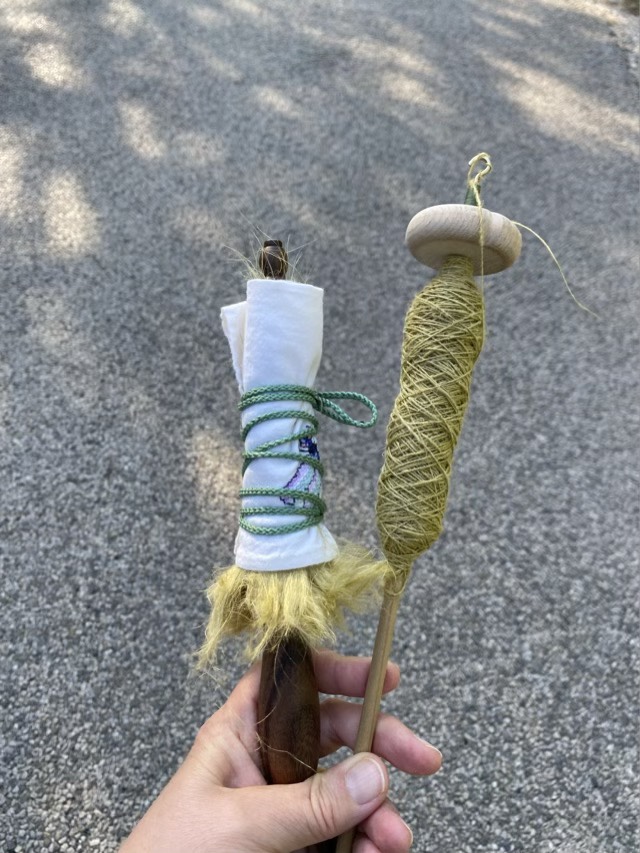
Dressed distaff and drop spindle

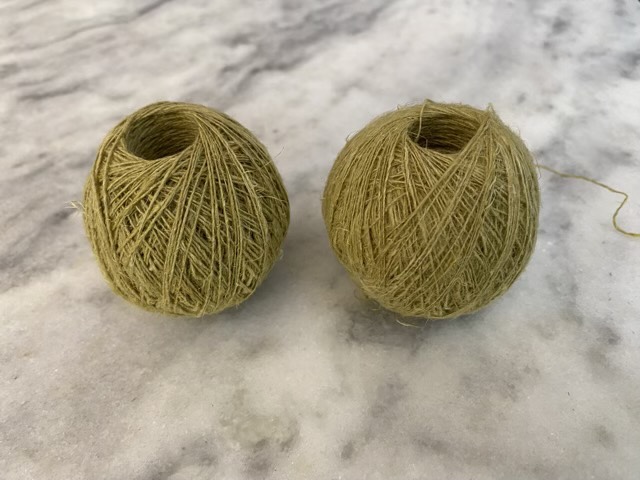
I wound off my singles nostepinne style into two center pull balls.

Center pull balls of flax singles

I plied the two balls together to even out the thickness differences. Despite weighing out the roving, the balls were different weights, but I solved the excess issue by doubling up the leftover. I plied using my spinning wheel. Flax when spun is called linen. I suppose I should use that term for my yarn!

Two-ply linen on a spinning wheel bobbin

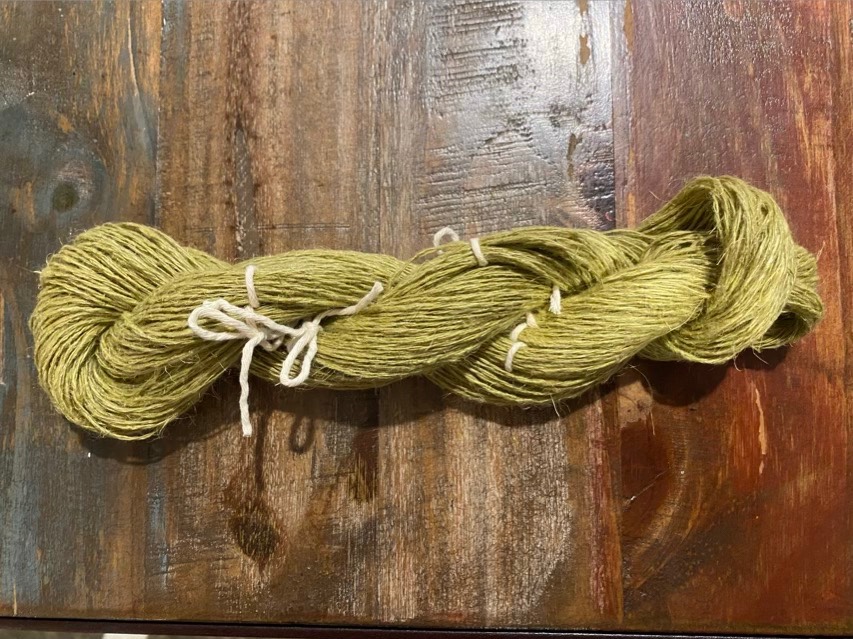
I wound off the two-ply yarn onto a niddy noddy, to make a skein.

Two-ply linen skein

My book tells me that the next step is to boil the skein. I’m going to have to work up my courage for that, so I will share in a future post.